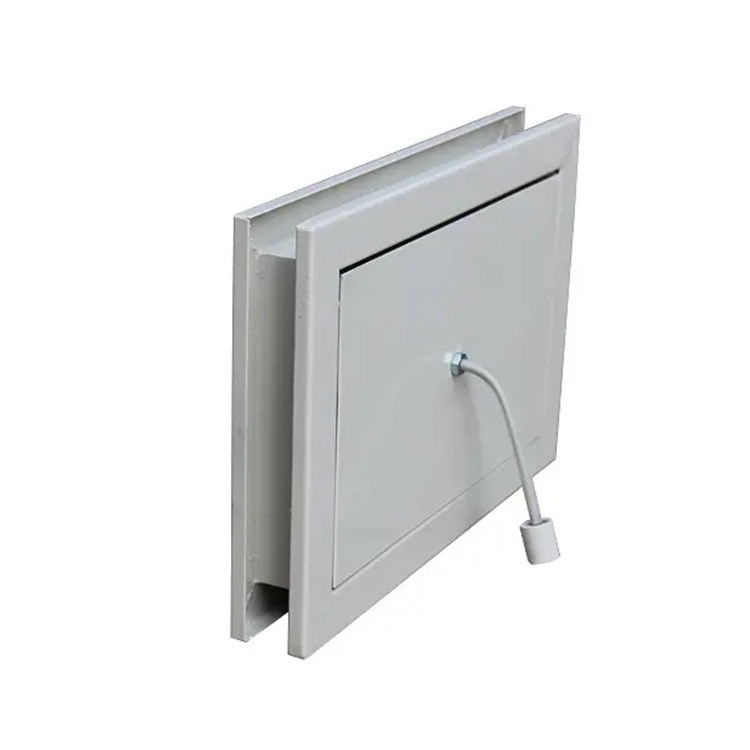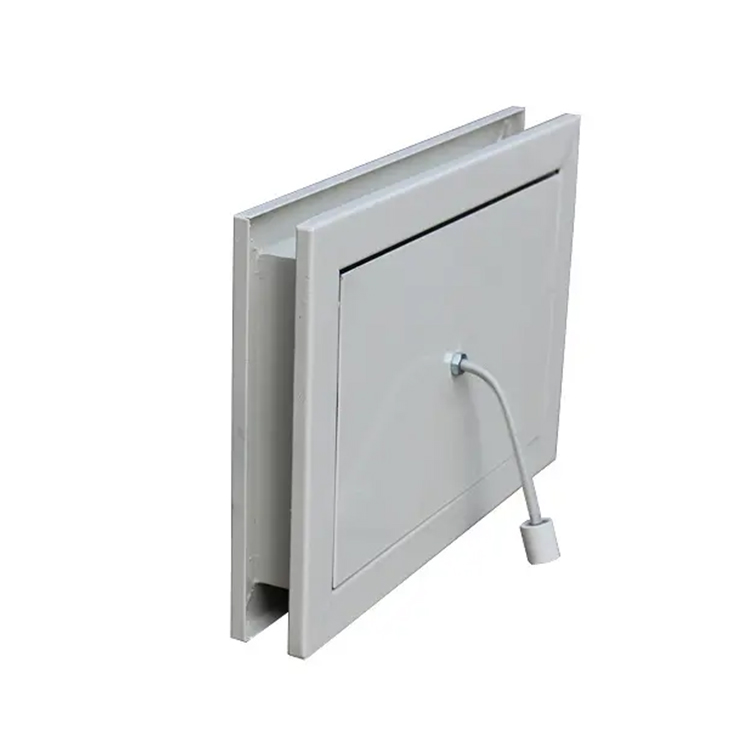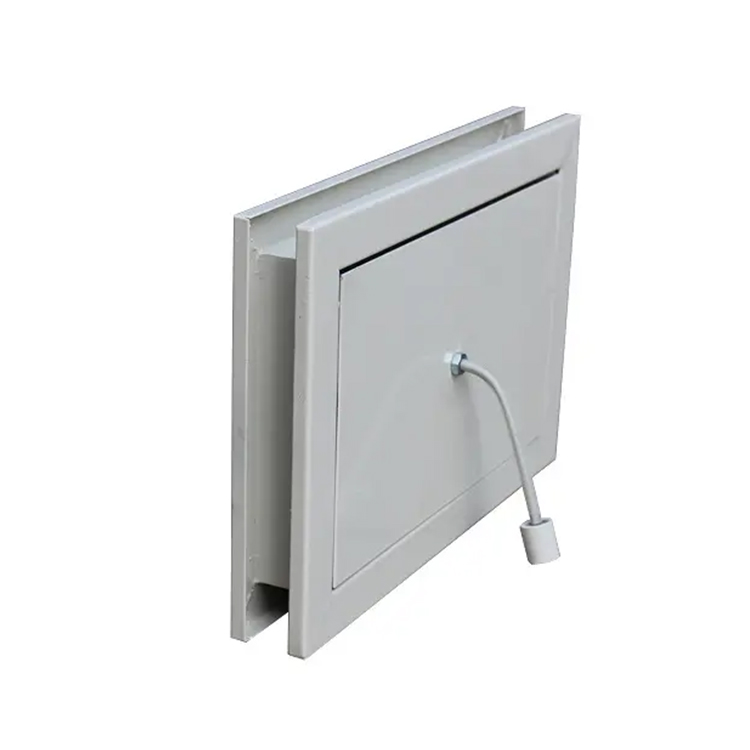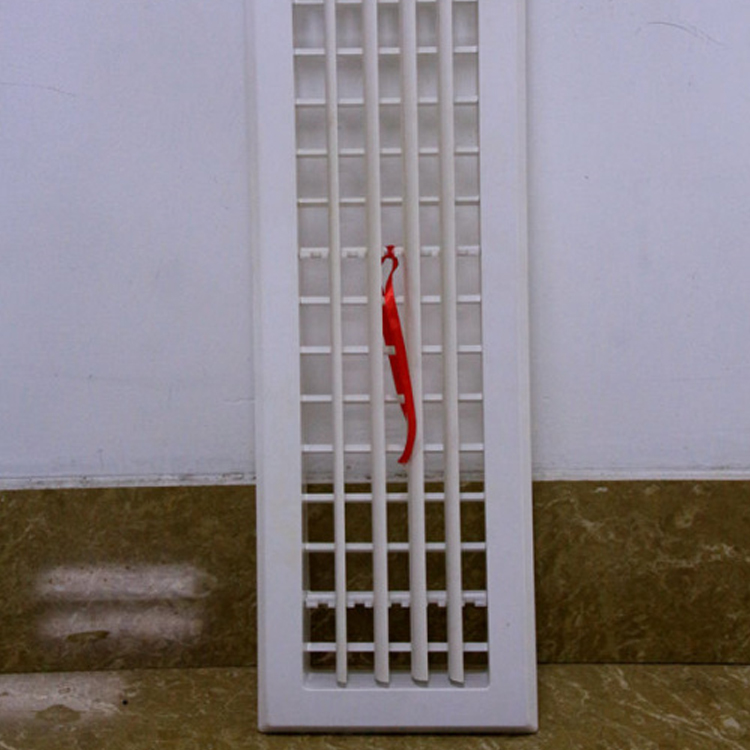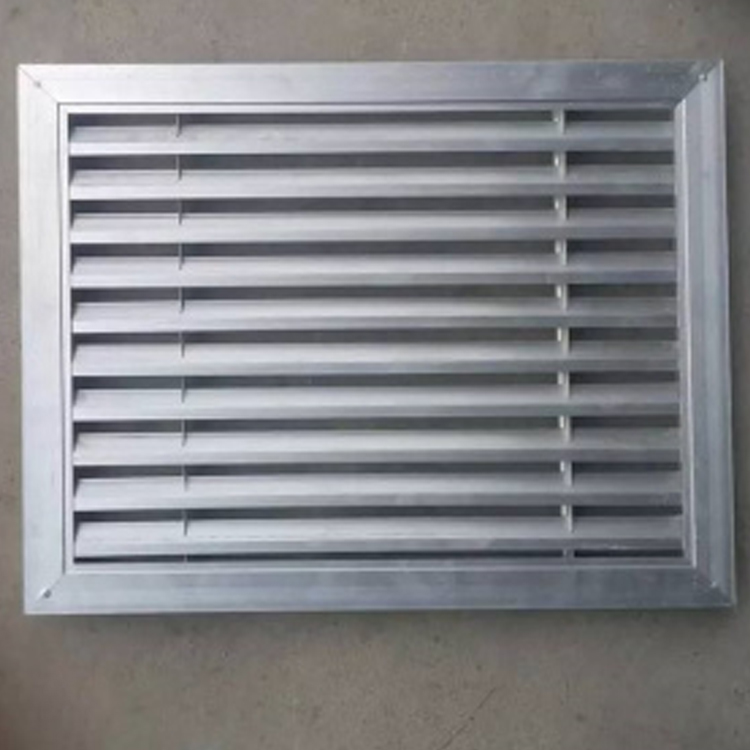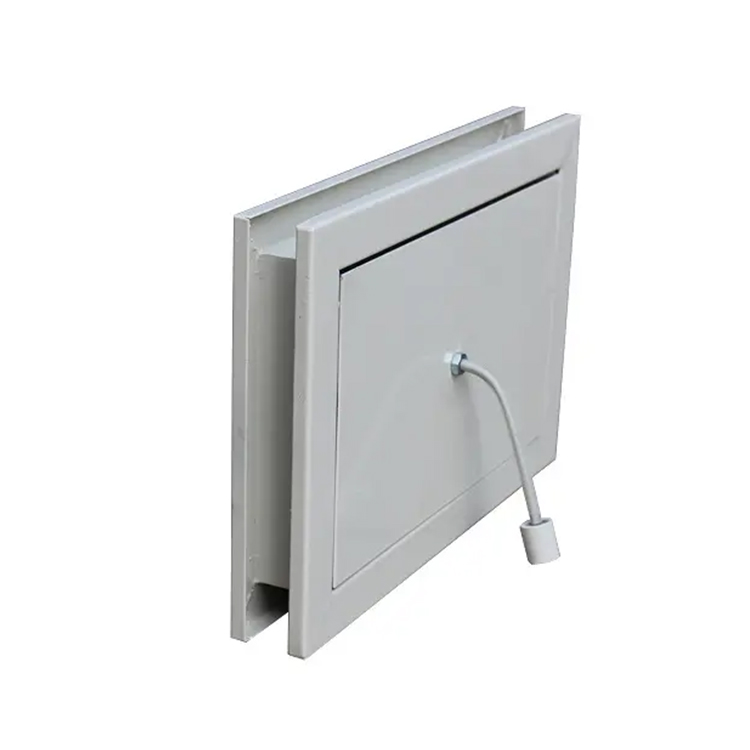

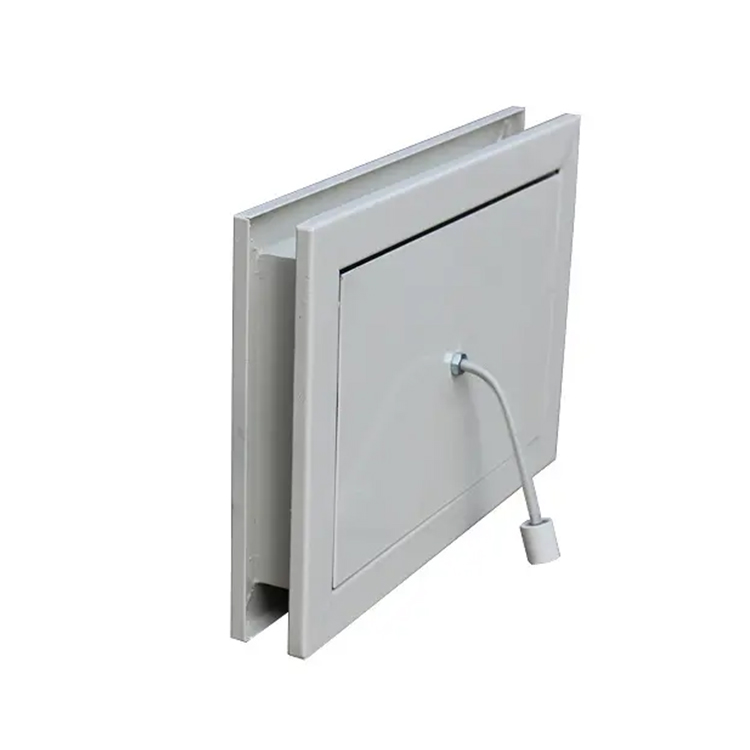

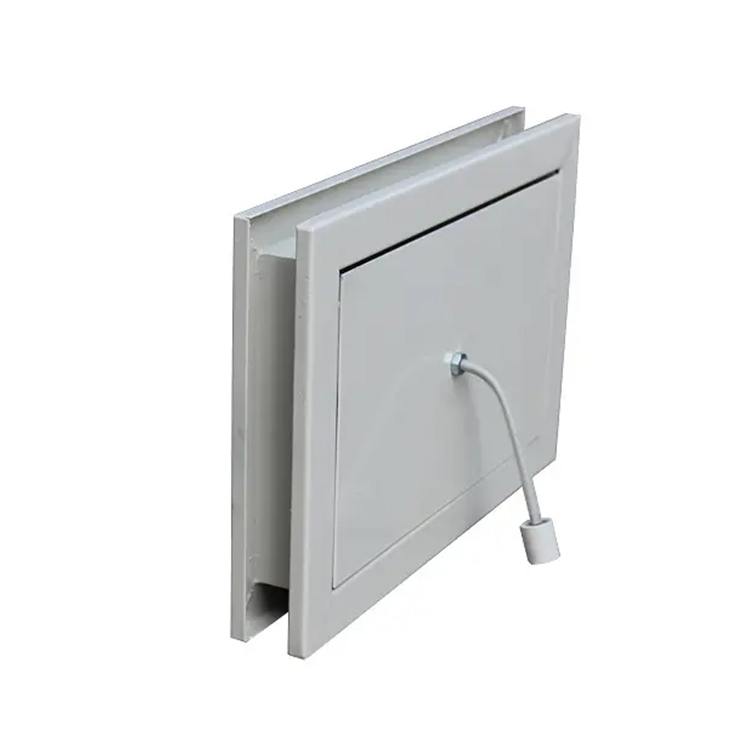







A pressure relief valve is a unidirectional airflow regulating device that adjusts its opening based on static pressure difference, balancing the air pressure with the position of a heavy hammer. The airflow through the pressure relief valve typically ranges from 100 to 1200 m³/h, maintaining a pressure difference between 5 and 40 Pa. The pressure relief valve is well-suited for abrupt changes in static pressure and is generally recommended to be installed on the downwind side of the exterior wall between cleanrooms with different static pressure differences, and should not be placed in locations that would significantly affect the indoor air flow on the downstream side. When the smoke-proof staircase is pressurized for ventilation while the anteroom is not, a pressure relief valve may also be installed in the wall separating the staircase from the anteroom. The device consists of an outer frame, a valve plate, and a counterweight, with the valve plate having a maximum opening angle of 45°. It is widely used in clean rooms or purification workshops to maintain a positive pressure difference between the indoor and outdoor environments, allowing excess indoor air to be expelled and preventing outdoor air from infiltrating.