PY Series Mixture Instrument
User Manual
Sample weighing is no longer so stringent, and then, press the liquid preparation key – a solution with 0.1% concentration accuracy is prepared, done.
The PY series of liquid preparation instruments are designed and produced for automatic viscosity testing solutions. They address the issue of low accuracy and poor repeatability in manually prepared solutions, providing a favorable premise for accurately testing the specific viscosity of samples.
The PY series dosing instrument features high automation, easy operation, and is simple to learn. After weighing the sample, just a light touch of the screen button will automatically prepare the required solution.
This is one-click blending.
Current status of liquid mixing, there are currently two methods:
Volumetric flask method.
This is the method with the highest potential for significant errors. Since volumetric flasks are marked with a graduation line as the standard capacity (e.g., 25mL), the precision required for sample weighing is quite high, such as (0.1250 ± 0.0001)g, which is challenging to achieve in routine work. Additionally, as it is a volume, it also demands a high level of temperature control, which is difficult to attain in practice. This inadvertently sets the stage for potential errors in the concentration of the solution. The standard capacity graduation line has a certain width, and relying on human vision to judge the liquid level introduces a lot of error, which varies from person to person. Moreover, the manufacturing error of the volumetric flask itself has become an indispensable part.
2. Weighing Method.
This method makes the quantity of the sample less precise, allowing for slight variations. Based on the calculated amount of solvent added, it can be transferred using a pipette and weighed on a balance. However, the process is繁琐, and why must weighing still be done? Because, one, pipetting volume is closely related to temperature; two, the accuracy issue of the pipette – you don't know until you use it. For preparing concentrated polymer solutions, it is insufficient.
The PY series automatic liquid dispenser solves the aforementioned issues; it allows for convenient automatic liquid mixing under a relatively isolated environment for the human body and solvent (as much isolation of harmful gases as possible), achieving mixing accuracy up to 0.1%.
I. Composition of the Liquid Mixture Instrument
The liquid preparation instrument is composed of a stable electronic balance with 0.1mg precision, solvent bottles, and a liquid preparation computer system.
1
Section II: Instrument Installation
Select a stable workbench and a temperature and humidity-controlled laboratory.
2. Place the volumetric dispenser and balance on the same work surface. If necessary, a vibration-damping pad should be laid between the dispenser and the surface.
3. Connect the communication cable to the balance and the liquid dispenser's RS232 communication interface, then tighten and secure the locking screws.
4. Connect the outlet tube to the balance, the inlet tube to the solvent bottle, and the in/out tubes to the instrument, then secure them.
Plug the fluid dispenser's power supply (220V AC, with good grounding) and turn on the power switch.
6. Plug the balance power supply into the 220V power outlet on the back of the liquid preparation instrument.
7. Adjust the balance scale according to the instruction manual and perform calibration.
8. Prior to first use, set the balance interface parameters. Under the balance PRINTER item, select PRT.ALL, then set the INTERVL value to 1. Refer to the balance manual for the setup method. Both parameters are located under the "INT.FACE" menu.
9. Initialize the Liquid Mixing System (see Section 4.1)
III. Liquidation Steps
1. On the main page, select the solvent from the solvent name field, enter the desired concentration and density of the solvent (if required).
2. Place the balance at the center and align it with the outlet, then zero it out. Once stable, add an appropriate sample (such as ±10% of the standard value to make the addition more convenient), and the computer will calculate the volume and mass of solvent to be dispensed in real-time based on the set concentration and solvent density, displaying the results on the screen at the corresponding location.
3. Once data is stable, verify the solvent density and solution concentration are correct, then press the "Solvent Output" button. The instrument will automatically prepare the solution, and upon completion, it will display "Mixing Complete" and the data.
4. During the mixing process, if an accident occurs, press the "Stop Mixing" button to terminate the mixing.
IV. Menu Options Description
Initialize the dilution system
The liquid dispenser must be initialized before the first use or when changing solvents. This involves emptying the gas in the liquid pump and inlets/outlets, and filling them with solvent. If a single initialization does not achieve the desired effect, repeat the process several times until no bubbles remain in the outlet tube.
2. Rinse Solution System
After startup, according to the set number of rinsing cycles, repeatedly suction and extrude the liquid. When the number of rinsing cycles is too many, be mindful.
2
Is the balance overloaded? Is the container's capacity exceeded (see 5.1)?
3. Quantitative Solvent Output
Set the required solvent volume, press the "Solvent Output" button, output the solvent, and it will automatically stop upon completion.
Stop, if an accident occurs during the output process, press the "Stop Output" button to terminate the output.
4. Data Review
View the data for the last 9 batching operations.
5. Parameter Settings
5.1 Container Overlimit Settings
The maximum capacity of containers placed on a balance (such as volumetric flasks, Erlenmeyer flasks), this value is generally less than the maximum capacity, and cannot exceed 70 or 180 mL. During the preparation of solutions, if this capacity limit is exceeded, terminate the preparation.
5.2 Method of Preparation
5.2.1 Quality Method
A method of adding a corresponding proportion of solvent to a certain volume.
For a concentration of 0.5g/100ml, weigh 0.1250g of sample, then prepare 25ml of solvent. The final volume of the solution is the total volume of 25ml solvent plus 0.1250g of sample.
But achieving an accuracy of 0.1250g is not easy, so for convenience in weighing, sample weighing is permitted with a tolerance of ±10% or more (subject to the solubility bottle and experimental conditions).
The instrument defaults to this method.
5.2.2 Volume Method
Accurately weigh the sample to the standard value, such as (0.1250 ± 0.0001) g, and add the solvent to the calibration line of the volumetric flask at the predetermined experimental temperature. This is the process referred to in the standard.
Accurately weighing 0.1250g is not an easy task, so for convenience in weighing, the sample can be allowed ±10% or more (depending on the solvent in the dissolution bottle and experimental permissions). Then, calculate the required solvent volume for setting. Note that the solvent volume is closely related to temperature and should be strictly followed according to the requirements in the experimental standards.
You can also input the current accurate density of the sample to calculate the volume of the sample's mixture.
V. Technical Specifications
Analytical balance, 200mg/0.1mg (or as specified), with output port.
2. Solvent Output Quantity: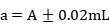
In the formula, A — nominal solvent output, mL.
3. Liquid concentration accuracy ±0.10%.
If the sample weighs 0.1250g, the required concentration C is 0.5g/100mL, the concentration accuracy of the prepared solution can reach ±0.08%. If the sample weighs 0.2500g, the concentration accuracy of the prepared solution can reach ±0.04%.
4. Voltage: 220V, (50-60) Hz, 1A
3
5. Rated Power: 0.1 kW
6. Applicable Solvents: The PY series mixing instrument is suitable for solvents such as phenol, sulfuric acid, cyclohexanone, chloroform, nitrobenzene, toluene, trichloroethane, tetrafluoroethane, sodium chloride solution, chloroform, and dichloromethane.
Please note the following solvents: Ethyl acetate, copper ethylenediamine solution, o-dichlorobenzene, formic acid, m-cresol.
Dimethyl acetamide, 4-chlorophenol, etc.
Section 6: Application Environment
Lab Environment: Temperature (15~30)°C
Humidity < 80% RH
No perceptible vibration.
No air flow.
No strong magnetic field interference.
Section 7: After-Sales Service
This product comes with a one-year free warranty against any non-manufacturing defects (excluding scales, which are subject to the after-sales service policy of the scale manufacturer), and lifetime repair service.