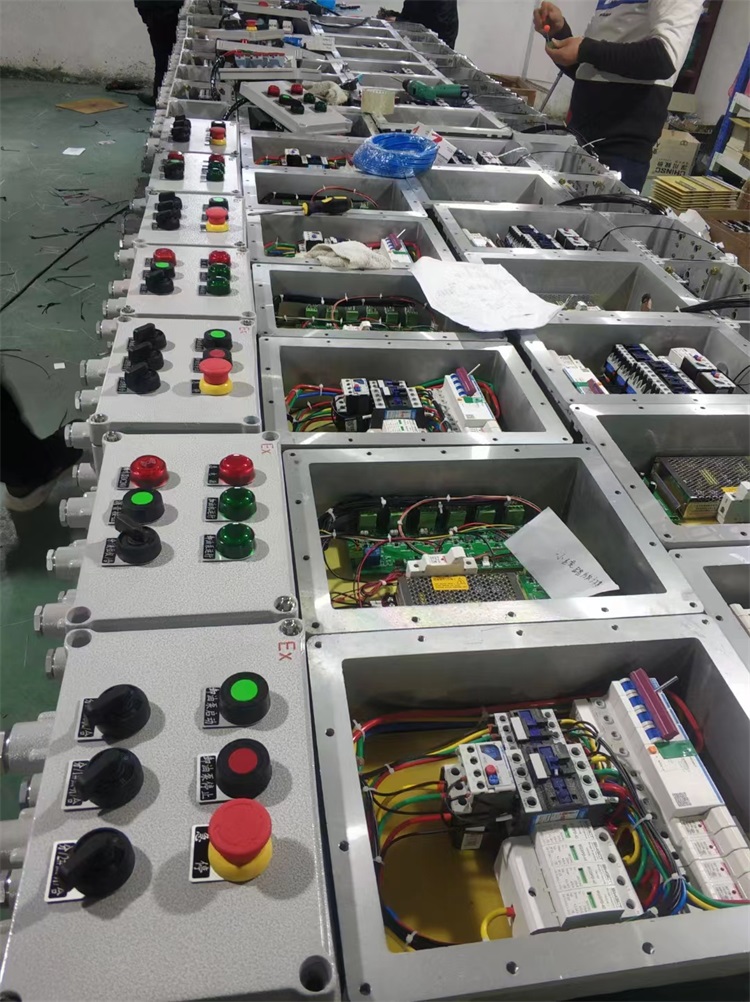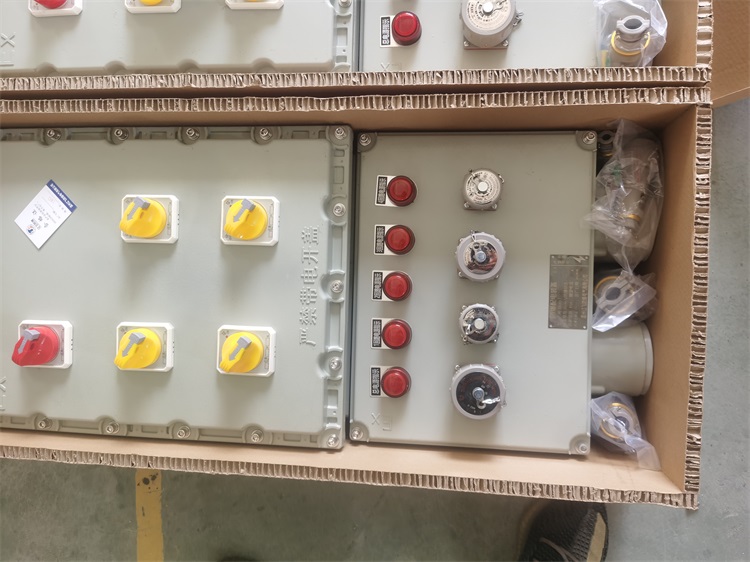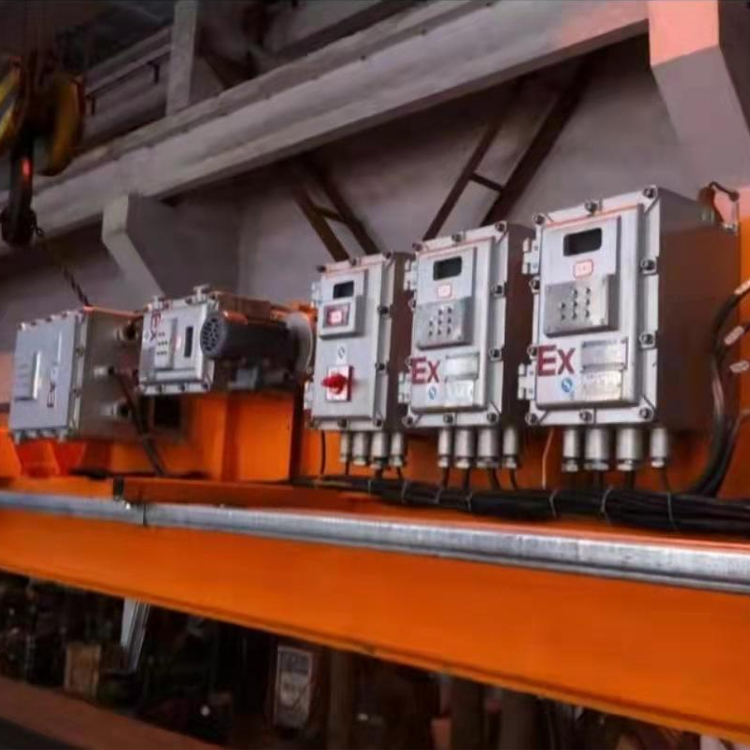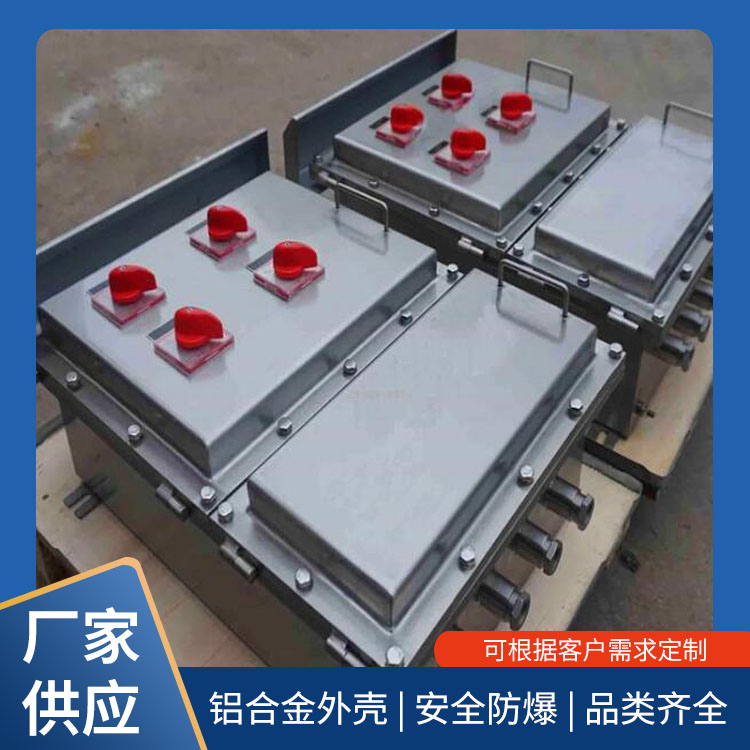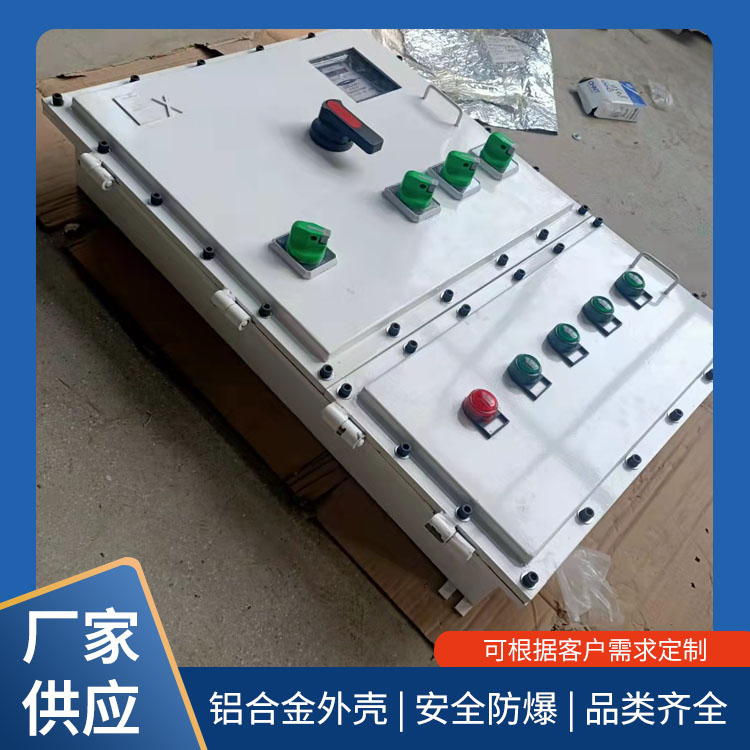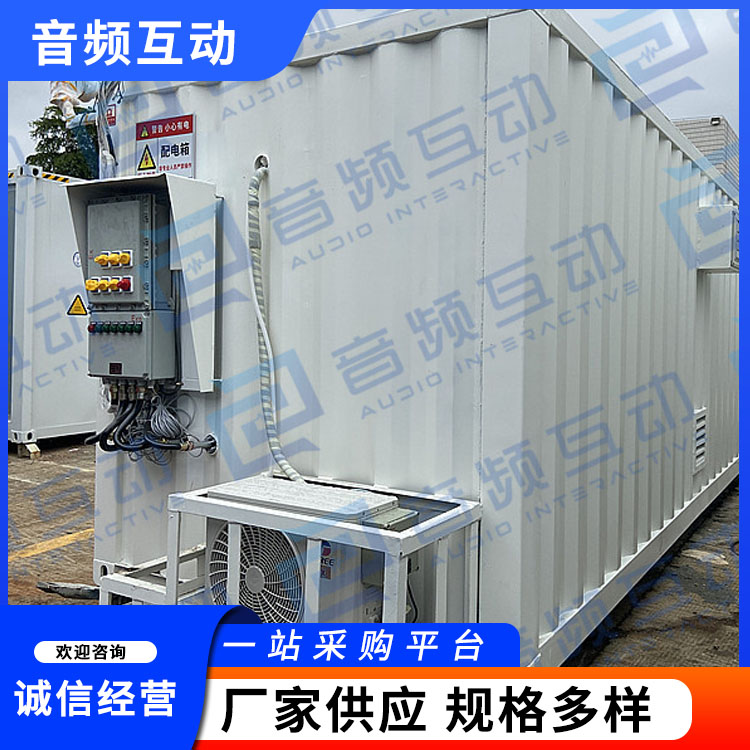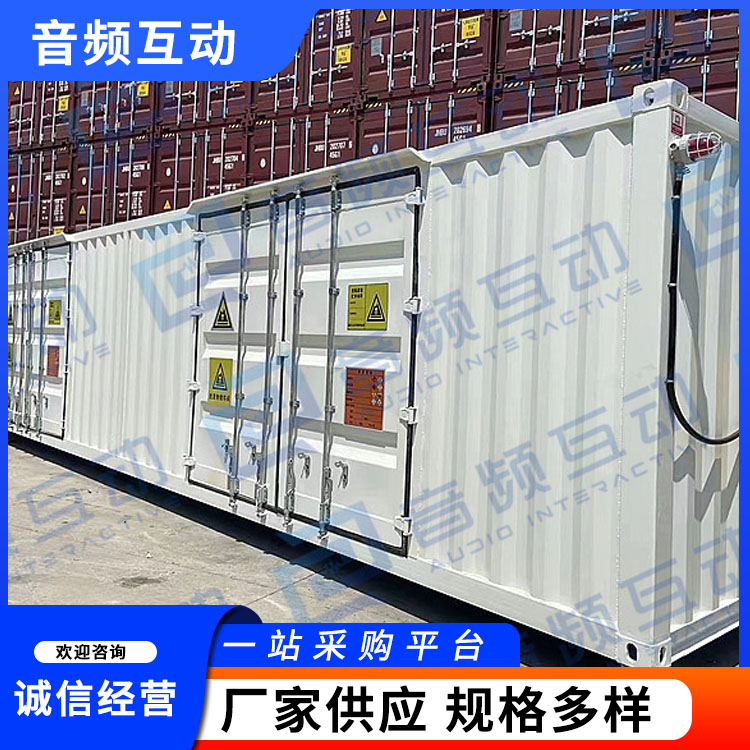


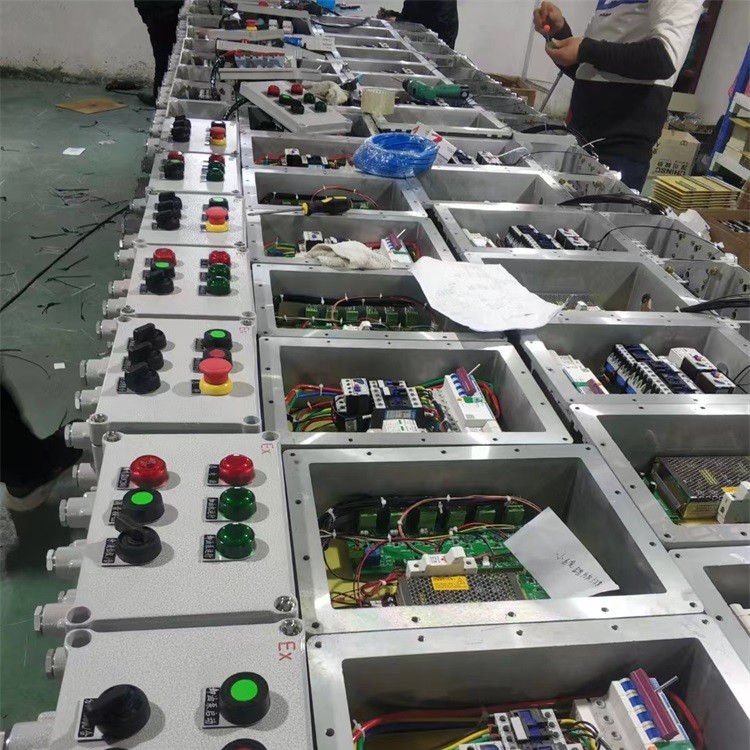
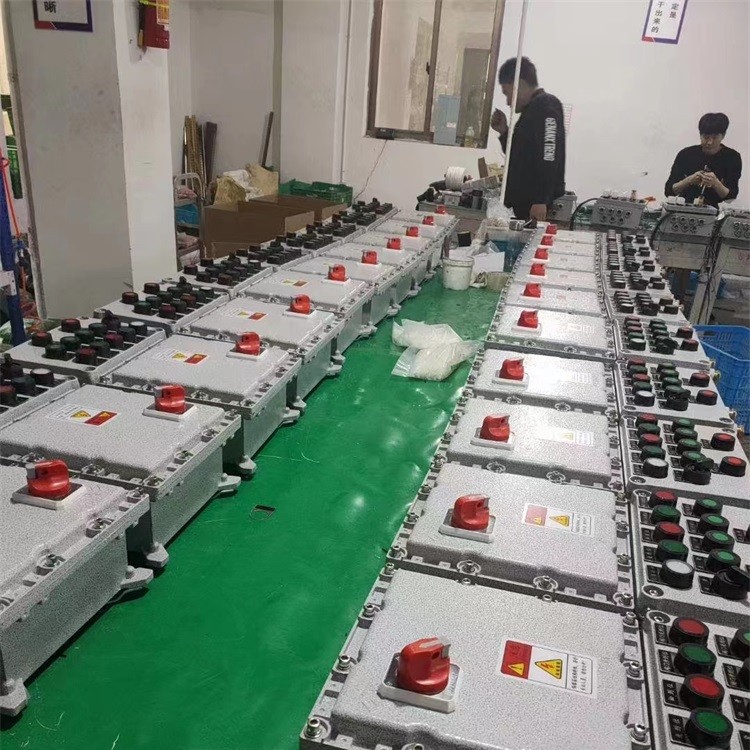
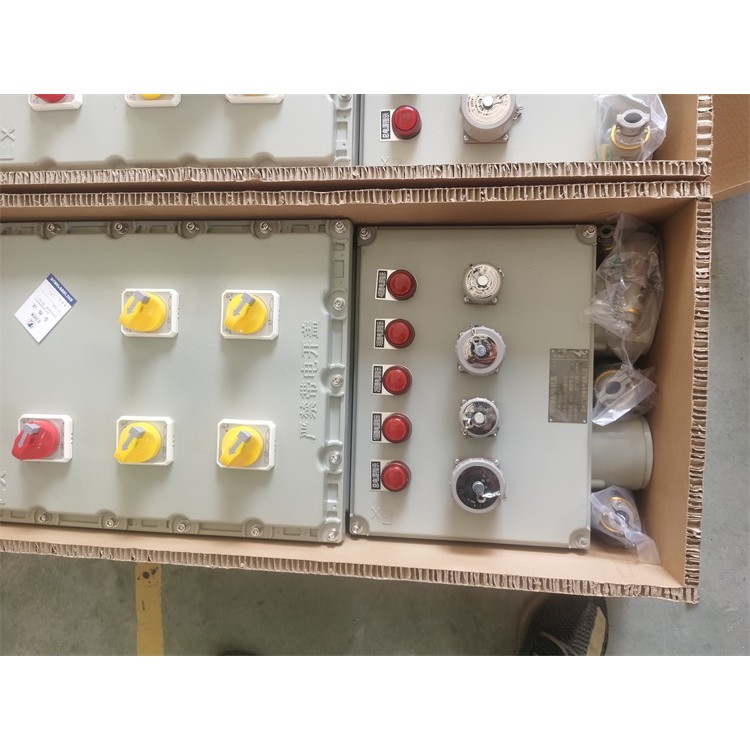


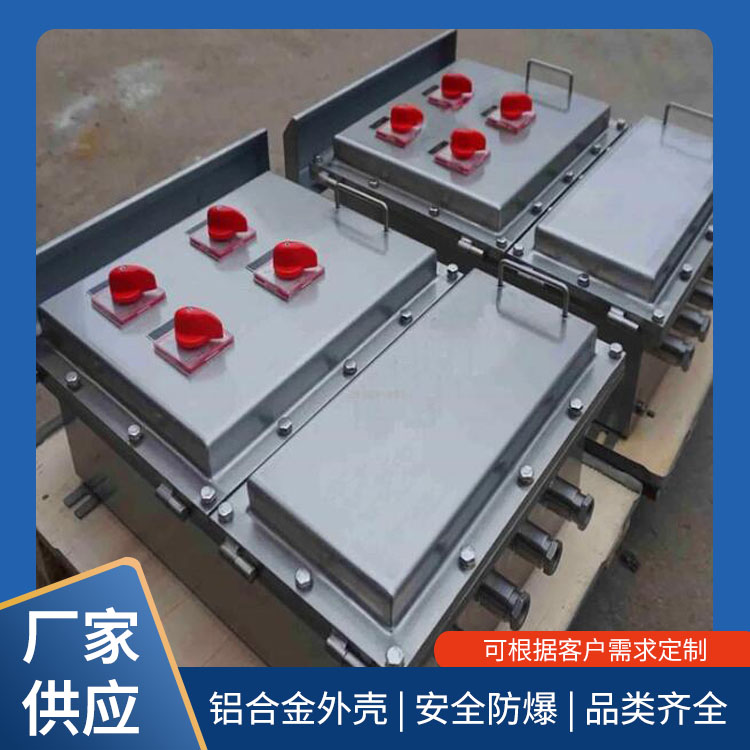
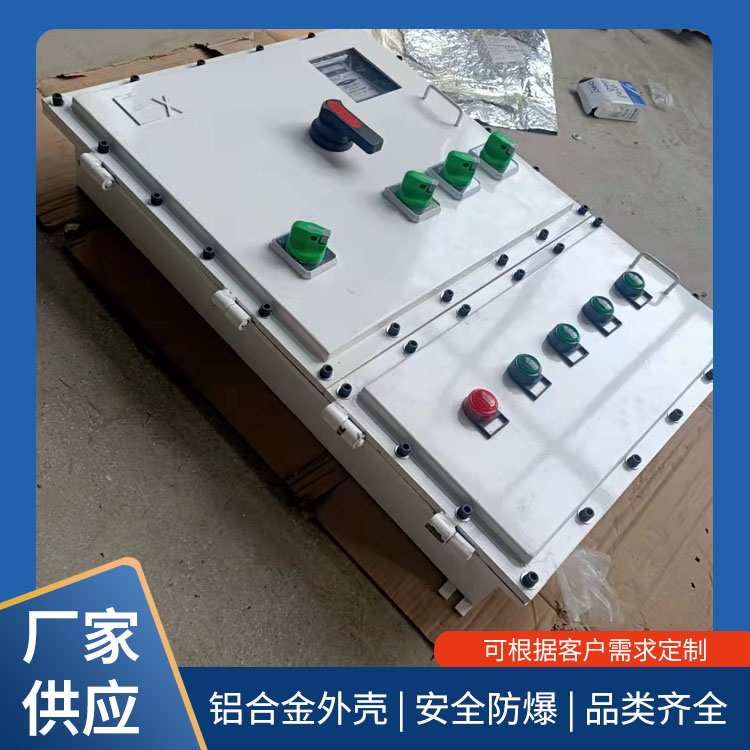








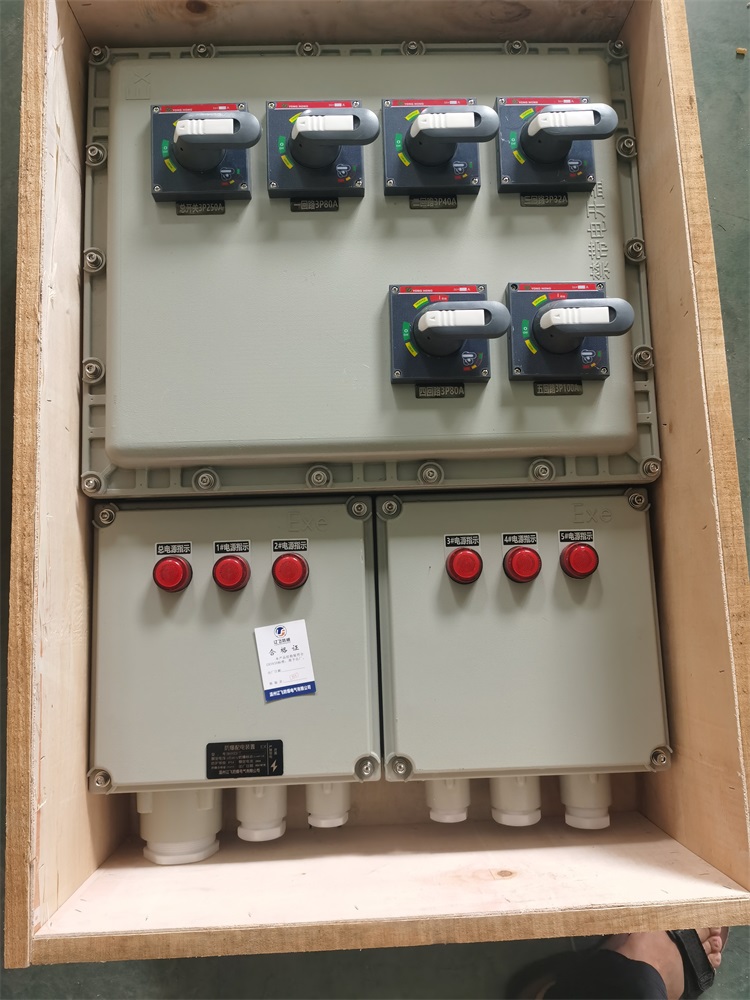
Explosion-proof switch boxes in environments with explosion hazards require the selection of electrical circuit installation locations, laying methods, conductor materials, and connection methods to be based on the level of environmental hazard.
Electrical wiring in hazardous environments for gas and steam explosion risks.
(1) Selection of explosion-proof switch box location
In areas with lower explosion hazards or further from the release source, it is advisable to install overhead electrical lines. For instance, when explosive gases or vapors are heavier than air, the electrical lines should be installed at a higher elevation, with cables either directly buried or placed in a sand-filled cable trench. When explosive gases or vapors are lighter than air, the electrical lines should be installed at a lower elevation, and cables should be laid in a cable trench.
Electrical wiring should be laid along the outer walls of buildings that pose an explosion hazard. When electrical wiring is laid along the bridges for conveying flammable gases or liquids, it should be as close as possible to the side of the pipeline with lower risk. When flammable gases or vapors are heavier than air, the electrical wiring should be above the pipeline; when they are lighter than air, the electrical wiring should be below the pipeline.
Electrical wiring should be kept away from areas prone to mechanical pre-damage, vibration, contamination, corrosion, and heat exposure; otherwise, protective measures should be implemented.
10kV and below overhead lines must not cross explosive hazard environments; when overhead lines are in proximity to explosive hazard environments, the distance between them must not be less than 1.5 times the height of the pole.

(2) Selection of explosion-proof switch box wiring method
In explosive hazardous environments, electrical wiring mainly consists of explosion-proof steel pipe wiring and cable wiring, with their laying methods and applicable scopes detailed on page 204 of the textbook. Insulated conductors shall not be exposed in explosive hazardous environments.
Fixed installations should use armored power cables. Fixed installations of lighting, communication, signal, and control cables can use both armored and plastic sheathed cables. Non-fixed installations should use non-flammable rubber sheathed cables. High-voltage cables in coal mine shafts should preferably use armored, non-dripping cables.
Cables for different uses should be laid separately. Pipe wiring should use galvanized steel pipes or pipes made of treated inner wall burrs and with both inner and outer wall anti-corrosion treatments, such as water pipes or gas pipes.
Between two steel pipes, between steel pipes and pipe accessories, and between steel pipes and electrical equipment, threaded connections should be used with at least 6 turns of thread engagement. Anti-loosening and anti-corrosion measures should be taken.
Difficulties in directly connecting steel pipes to electrical equipment should be addressed with flexible connection pipes, especially where pipelines pass through building expansion and settlement joints.

(3) Explosion-proof Switch Box Isolation and Enclosure
When laying electrical lines, trenches, protective conduits, cables, or steel pipes pass through partitions or floors between areas with different explosion hazard classifications, they must be tightly sealed with non-flammable materials.
The isolation seal box should be positioned as close as possible to the partition wall; there should be no pipe joints, junction boxes, or any other connecting components between the wall and the isolation seal box.
The explosion-proof grade of the insulated sealed box should correspond to the level of the explosive hazardous environment. The insulated sealed box should not be used for wire connections or branching. For areas where condensation water may occur, a drainage-type insulated sealed box should be chosen. Powder sealant should be used for insulated sealed boxes in steel pipe wiring.
The cable conduit openings should be sealed with sealing putty between them and the cables. In the cable trenches at the intersections of two zones, measures such as filling with sand, using fire-resistant materials, and installing fire partitions should be taken.
(4) Explosion-proof switch box wiring material selection
Due to the poor mechanical strength of aluminum conductors, which are prone to breakage, a transition connection is required, leading to an enlarged junction box, and the connection technology is difficult to guarantee. The safety performance of aluminum-core wires and cables is较差. If possible, copper wire should be used in explosive hazard environments.
In the explosive hazardous area classification 2 zone, when the conductors of the power distribution lines are connected and the cables are terminated by crimping, soldering, or brazing, the power lines should use aluminum core conductors or cables with a cross-sectional area of 4mm² or more. Lighting lines can use aluminum core conductors or cables with a cross-sectional area of 2.5mm² or more.
Within the area of explosion hazardous environment classified as Hazard Zone 1, copper-core conductors or cables should be used for power distribution lines.
In areas with severe vibration, use multi-strand copper-core flexible wire or multi-strand copper-core electrical cable. Aluminum-core power cables are not allowed underground in coal mines.
Cabling in explosive hazardous environments typically employs insulated wires or cables with jacketing, utilizing cross-linked polyethylene, polyethylene, polyvinyl chloride, or synthetic rubber insulation. In such environments, it is advisable to use wires or cables with heat-resistant, flame-retardant, and corrosion-resistant insulation, and oil-immersed paper-insulated cables should be avoided.
In explosive hazardous environments, the rated voltage of the wires and cables used for low-voltage power and lighting circuits must not be lower than the working voltage, and should not be less than 500V. The working neutral wire should have the same insulation capacity as the phase wire and should be enclosed in the same sheath.
When selecting electrical wiring, it should be noted that: general insulated conductors can be used in dry and dust-free environments; in damp, particularly damp, or dusty areas, protected insulated conductors (such as lead-sheathed conductors) or insulated conductors in conduits should be used; for high-temperature areas, heat-resistant conductors lined with porcelain, asbestos, or porcelain beads should be used; and lead-sheathed wires or corrosion-resistant conduit wires can be used in areas with corrosive gases or vapors.

(5) Explosion-proof switch box allows for current carrying capacity
To avoid potential hazardous temperatures, the allowable current carrying capacity in explosive hazardous environments should not exceed that in non-explosive hazardous environments. The selection of conductor cross-sectional area for insulated conductors in Zones I and II, as well as electrical cables, should ensure that the allowable current carrying capacity of the conductors is not less than 1.25 times the rated current of the fuse element and the setting current of the long-time overcurrent release of the circuit breaker. The allowable current carrying capacity for the branch lines leading to the low-voltage squirrel-cage induction motor should not be less than 1.25 times the motor's rated current.
(6) Explosion-proof switch box electrical circuit connections
Electrical wiring in Zones 1 and 2 is not allowed to have intermediate joints; however, if the connection of the electrical wiring is within the vicinity of a junction box or terminal box of a protective type suitable for the hazardous environment, it does not fall under this category. Zone 1 should use explosion-proof junction boxes, while Zone 2 can use increased safety junction boxes.
If aluminum-core cables or wires are used to connect with copper wires in Zone 2, a reliable copper-aluminum transition joint must be installed. The connection or termination of the wires should be made using crimping, fusion welding, or soldering, and simple mechanical binding or spiral wrapping connections are not permitted.