


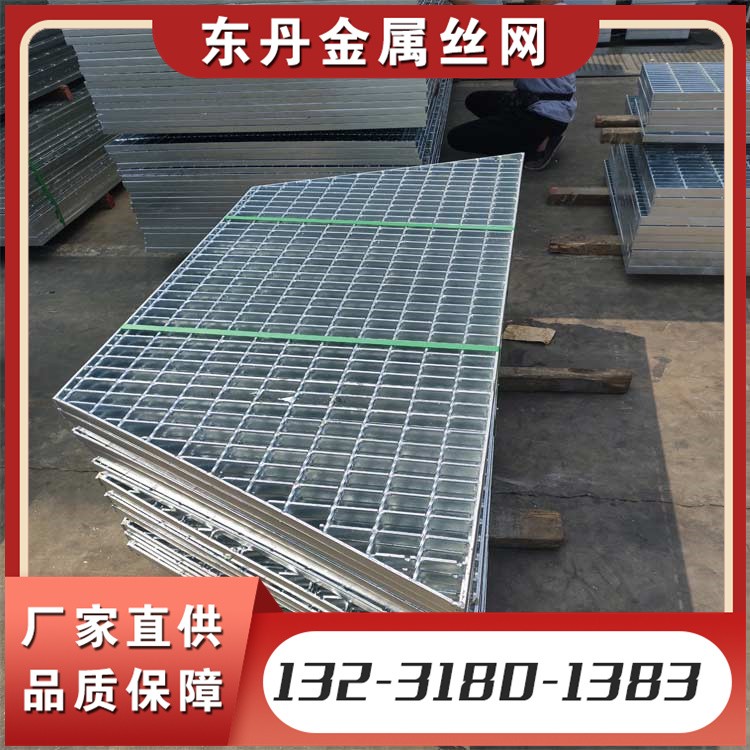













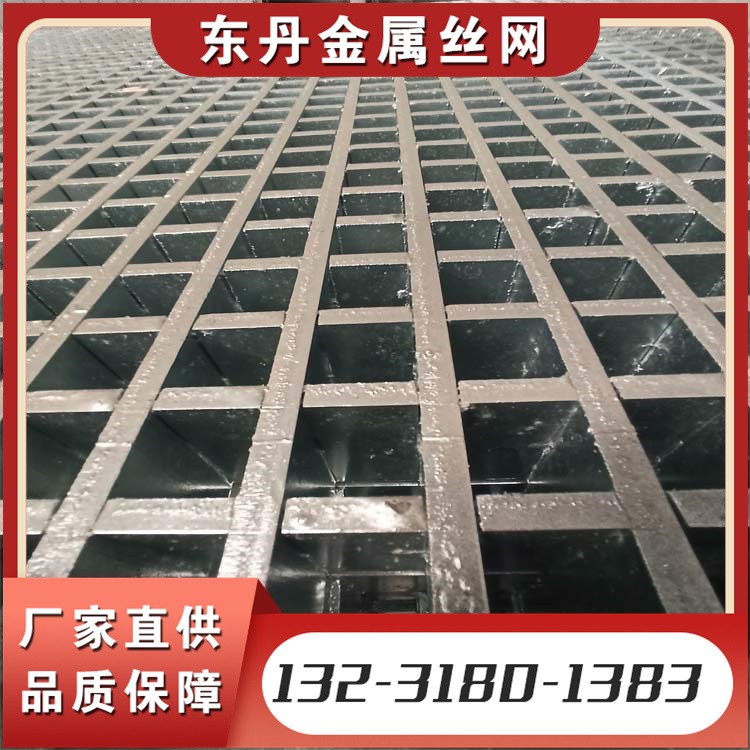
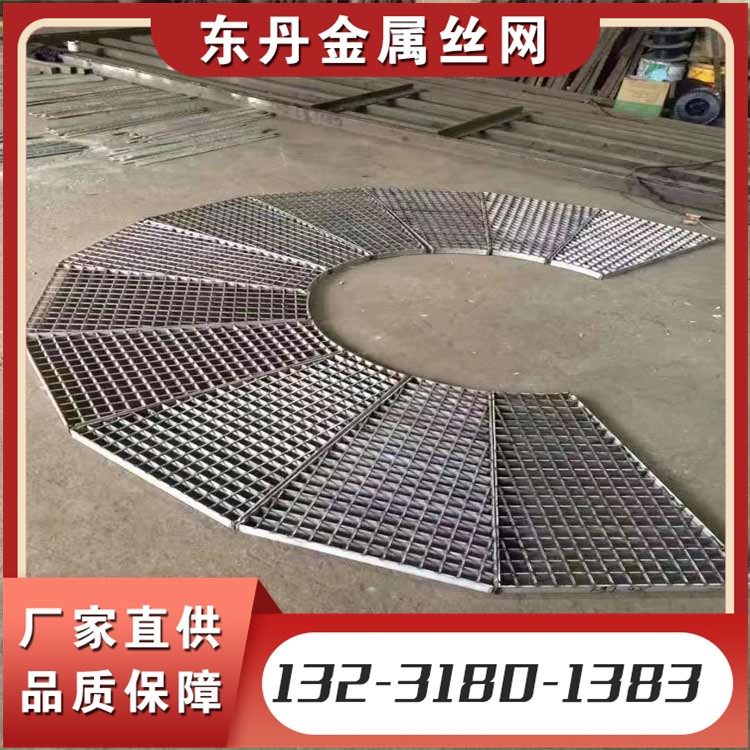
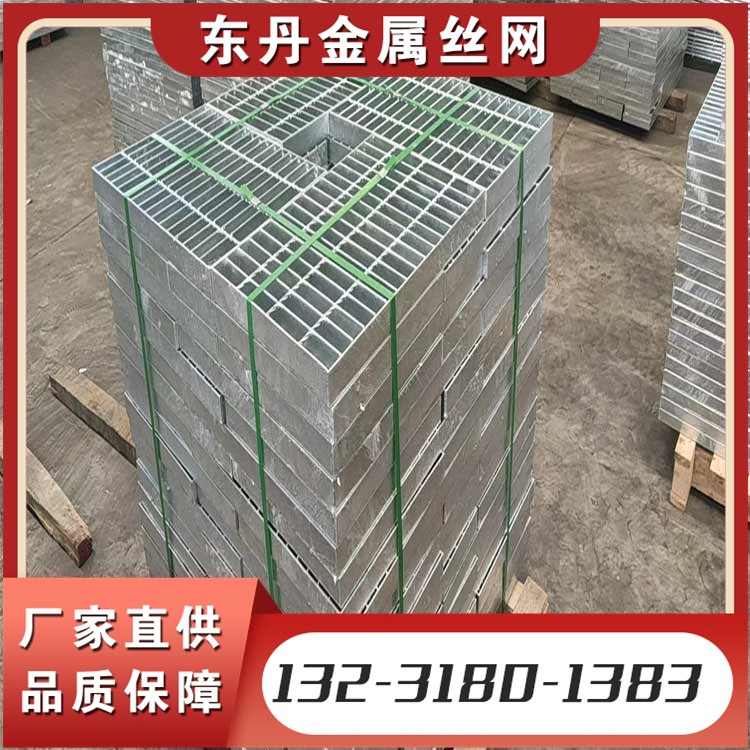

Hot-Dip Galvanized Steel Grating
The product is a finished item, which is deep-processed from an original plate made by welding load flat steel and cross bars in a certain spacing on a high-voltage resistance welding machine, followed by cutting, notching, punching, and edge wrapping as required by the customer.
Galvanized steel grating is categorized into the following types:
1. Hot-Dip Galvanized Grating, categorized by manufacturing process, includes Press-Welded Hot-Dip Galvanized Grating and Press-Locked Hot-Dip Galvanized Grating.
2. Hot-dip galvanized steel grating panels are categorized by surface shape into toothed hot-dip galvanized steel grating and flat type hot-dip galvanized steel grating.
3. Type I hot-dipped galvanized steel grating and composite hot-dipped galvanized steel grating.
Marking Method:
(1) Hot-Dipped Galvanized Grating扁钢Spacing: Distinguished by series: Series 1 is 30mm; Series 2 is 40mm; Series 3 is 60mm.
(2) Hot-Dipped Galvanized Steel Grating Bar Spacing: Series 1 is 100mm, Series 2 is 50mm. Other specifications available upon request.
(3) Hot-Dip Galvanized Steel Grating: Available in materials such as Q23 or stainless steel, with standard flat, anti-slip toothed, and I-section profiles. Common sizes include 20*5, 25*5, 25*3, 32*5, 32*5, 40*5, 40*3, 50*5, 65*5, 75*6, 100*8, and 100*10, etc.
(4) Hot-Dip Galvanized Steel Grating Crossbars: Made of round steel, twisted square steel, square steel, or hexagonal steel with material of Q23 or 304 stainless steel. Twisted square steel is produced by drawing through square dies from round wire rods and twisting, with common sizes including 5*5, 6*6, 8*8mm, etc.
Features: High strength, lightweight structure: The sturdy grid pressure-welded structure offers high load-bearing capacity, lightness, and ease of hoisting; aesthetically pleasing and durable.
Hot-Dip Galvanized Steel Grating Applications: Widely used in platforms, walkways, bridges, manholes covers, grates, ladders, fences, guardrails, and more in industries such as petrochemicals, power plants, water treatment plants, sewage treatment plants, municipal engineering, and environmental protection projects.
Stainless Steel Grating
Also known as stainless steel steel grating panels. There are usually two methods of production: a combination of stainless steel flat bars and round bars welded together; and an interlocking method using stainless steel flat bars. They possess excellent corrosion resistance, have a clean appearance, and offer a quite ideal decorative effect, though they are generally more expensive.
Stainless steel grating categories:
It can be categorized into flat, toothed, and I-shaped types, with over 200 specifications and varieties (the surface can be treated with different protective coatings depending on the application environment).
Material: Generally, stainless steel grades 304, 316, 316L are selected.
Manufacturing Method:
Available in two types: machine welding and handcrafted. Machine welding uses a high-pressure resistance welding machine, where the robotic arm automatically places the crossbar across evenly arranged flat steel bars, welding it securely into the flat steel using strong electrical welding power and hydraulic pressure, resulting in high-quality steel grating with strong weld points, excellent stability, and strength. Handcrafted steel gratings are first pierced with holes in the flat steel, then the crossbars are inserted and spot-welded into the holes. There is a gap between the crossbar and the flat steel, but each contact point is焊接, achieving equivalent melting connection between the flat steel and the twisted steel, making the welding more robust and slightly enhancing the strength, though the appearance may not be as aesthetically pleasing as the machine-welded version.
Surface Treatment:
After pickling and passivation, the surface appears as a matte gray-white.
b. Electrochemical polishing results in a brighter surface with higher luster.
c. The finished products are heat treated and polished, followed by electrochemical polishing, and then chrome plated to achieve a mirror-like finish.
Advantages:
Lightweight, high strength, large load-bearing capacity, material-saving and economical, ventilated and translucent, modern style, aesthetically pleasing, non-slip, easy to clean, simple installation, durable.
Usage:
Stainless steel grating is widely used in power plants, chemical factories, refineries, steel mills, machinery manufacturing plants, shipyards, paper mills, cement factories, food processing plants, and bridge projects, municipal engineering projects, and wastewater treatment facilities where corrosion resistance is critical. The selection of stainless steel grating is similar to that of carbon steel grating. Due to its special properties, stainless steel grating is extensively applied in various factories both domestically and internationally.

















