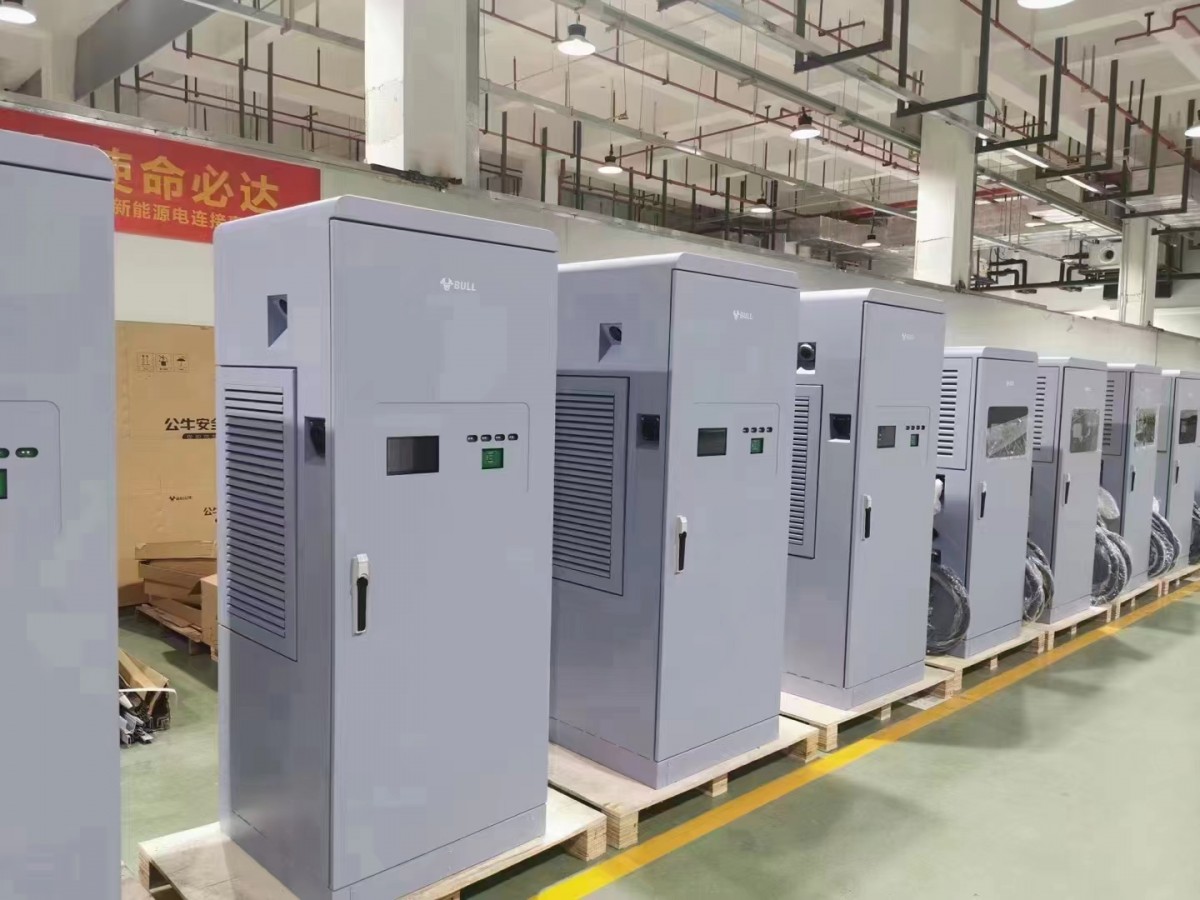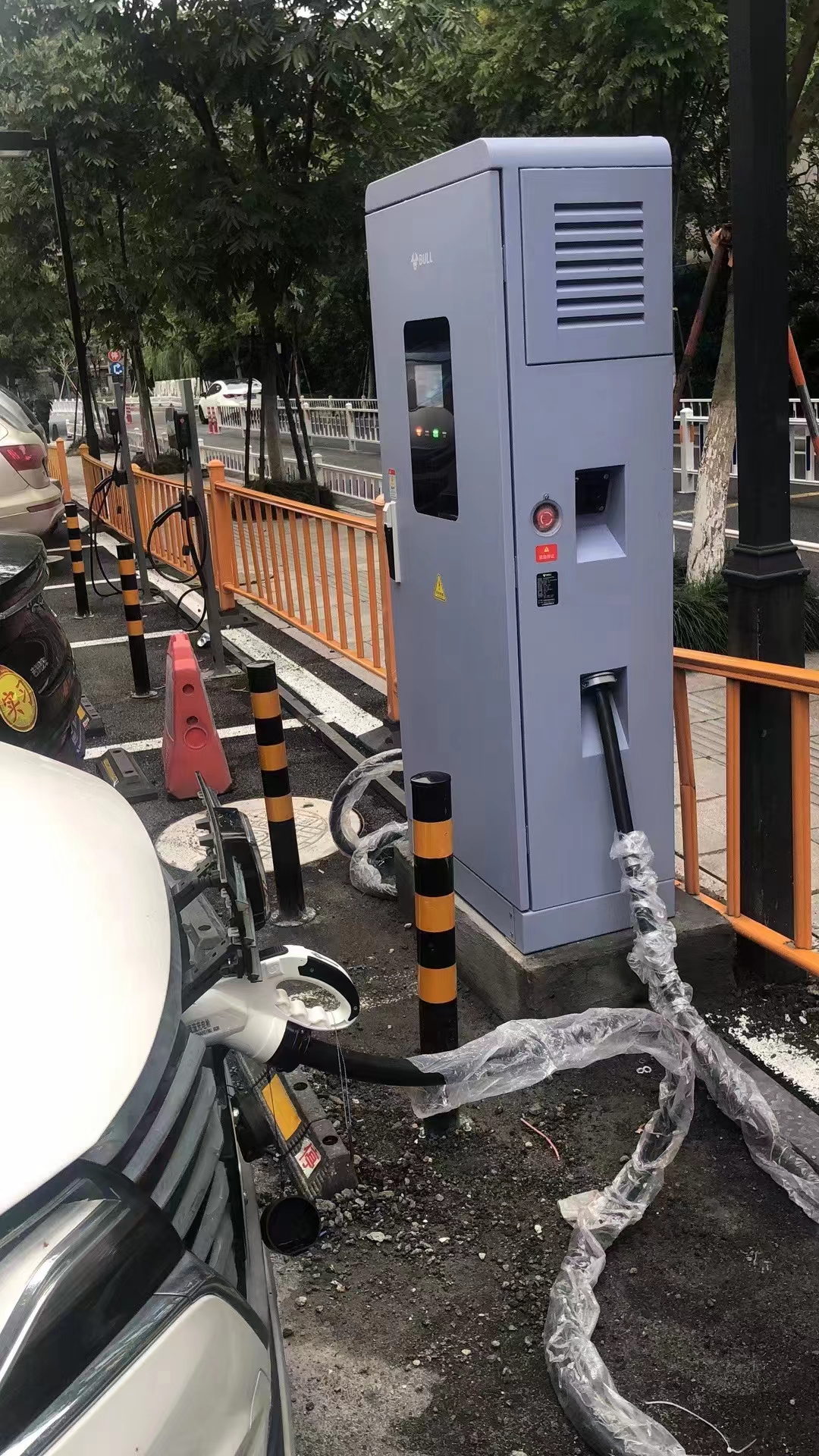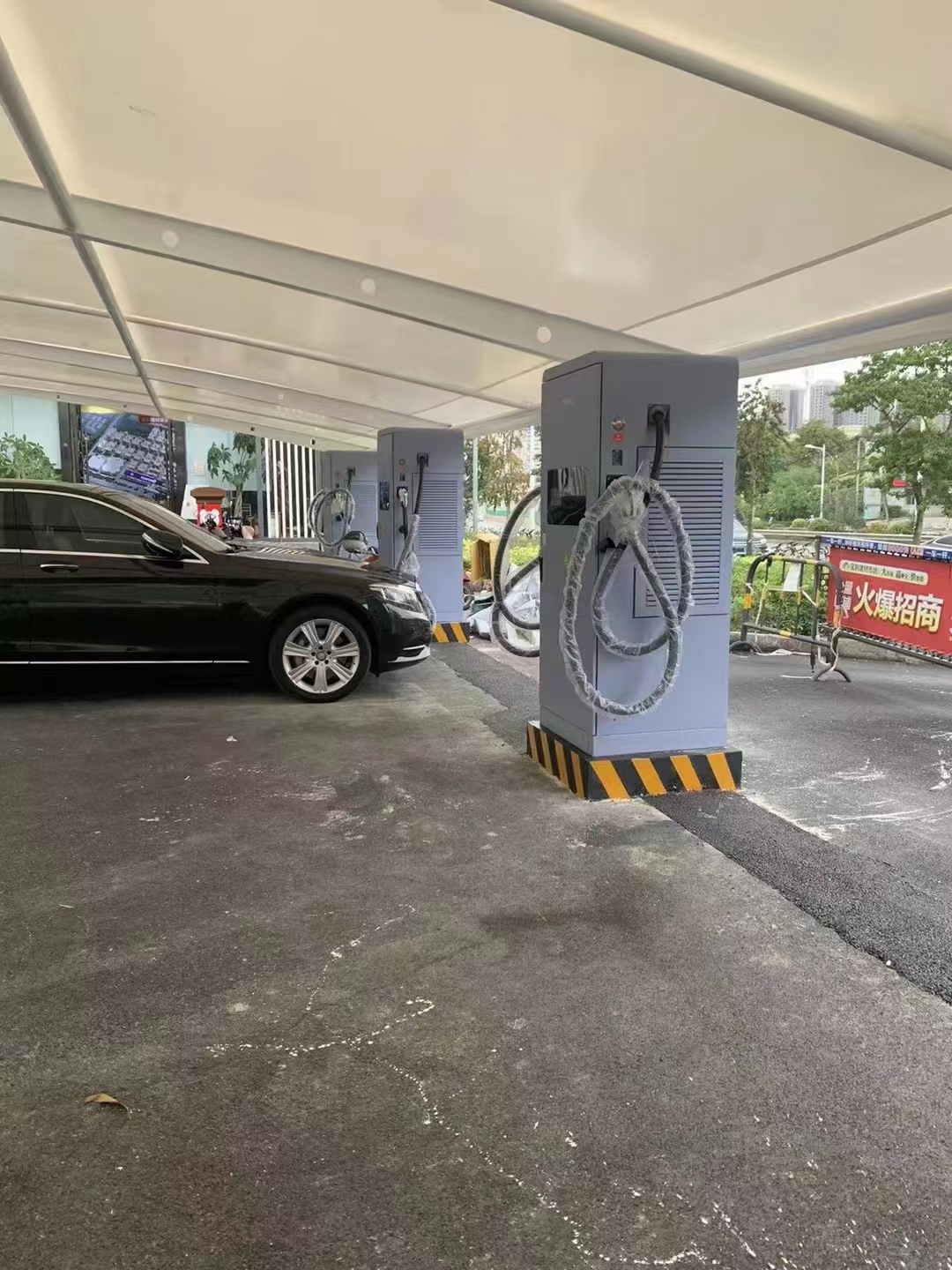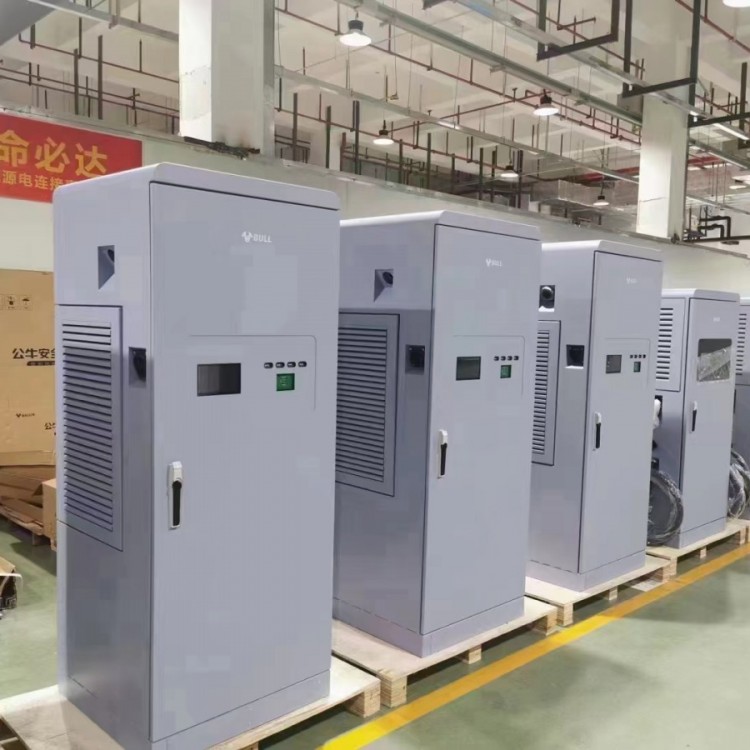

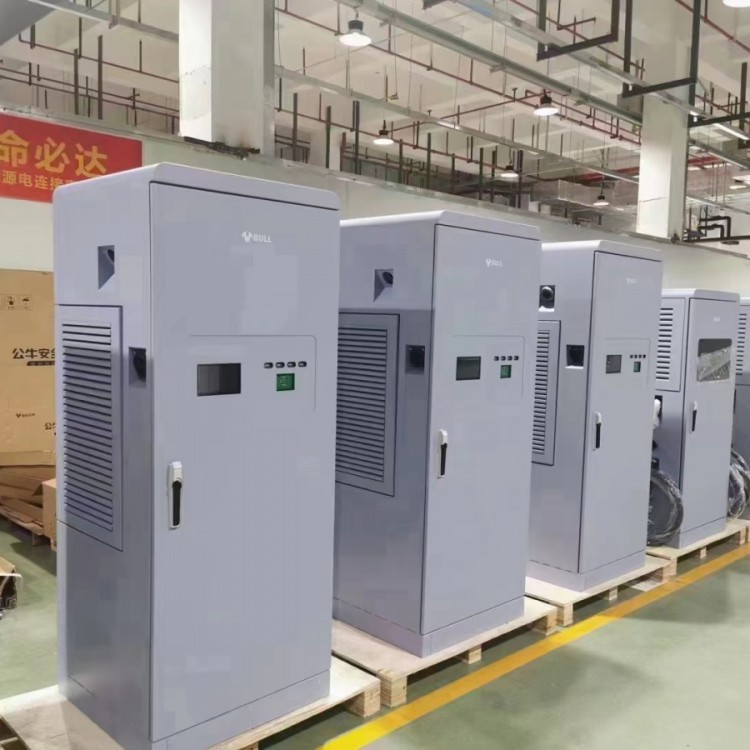
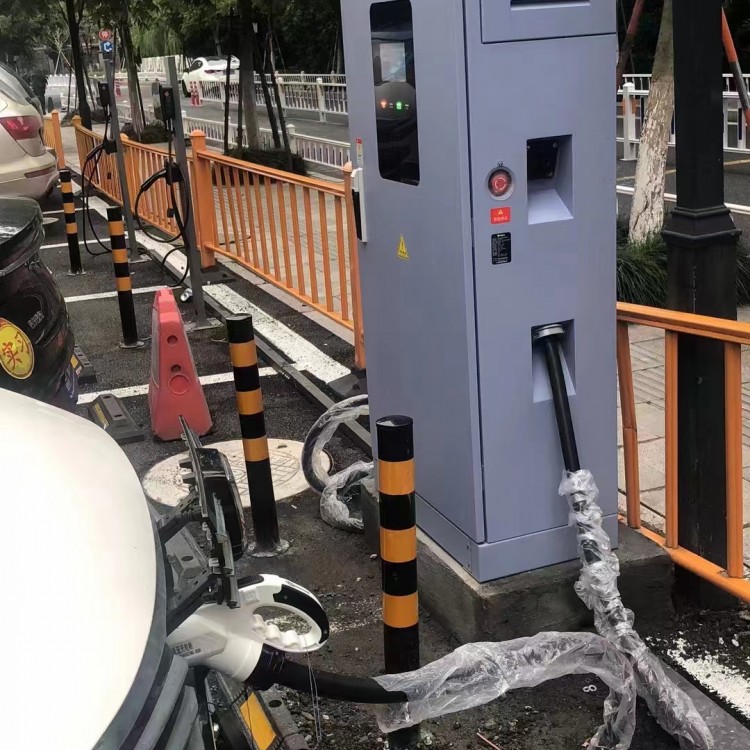
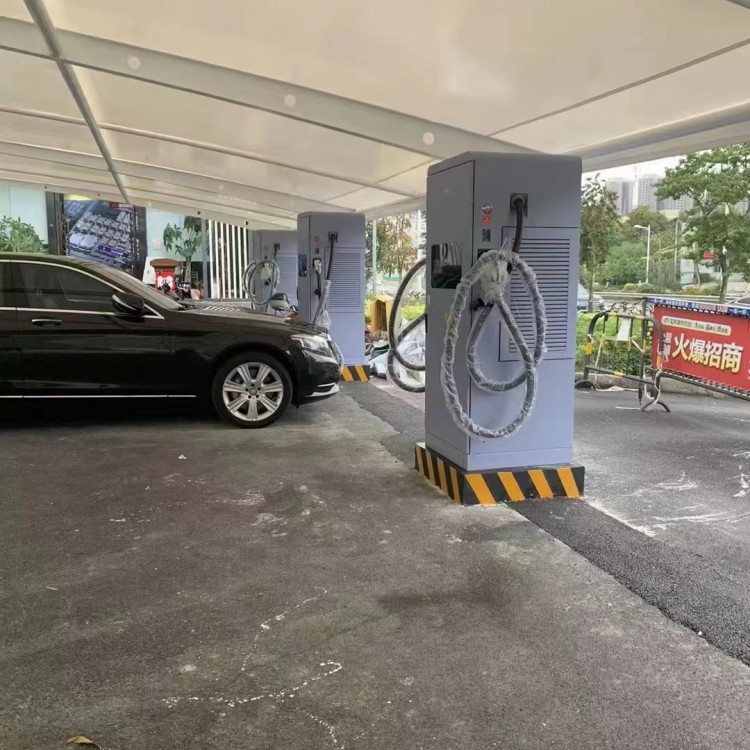







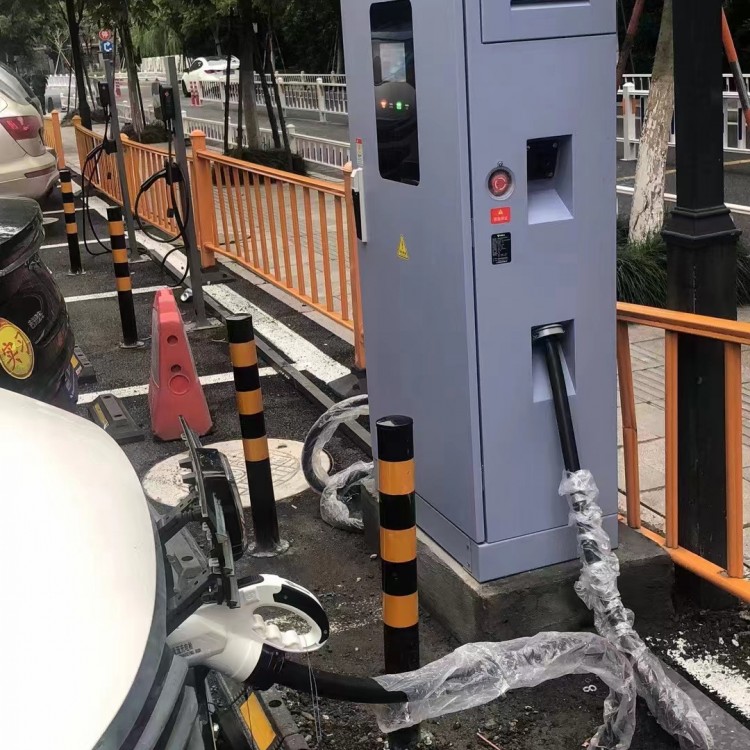
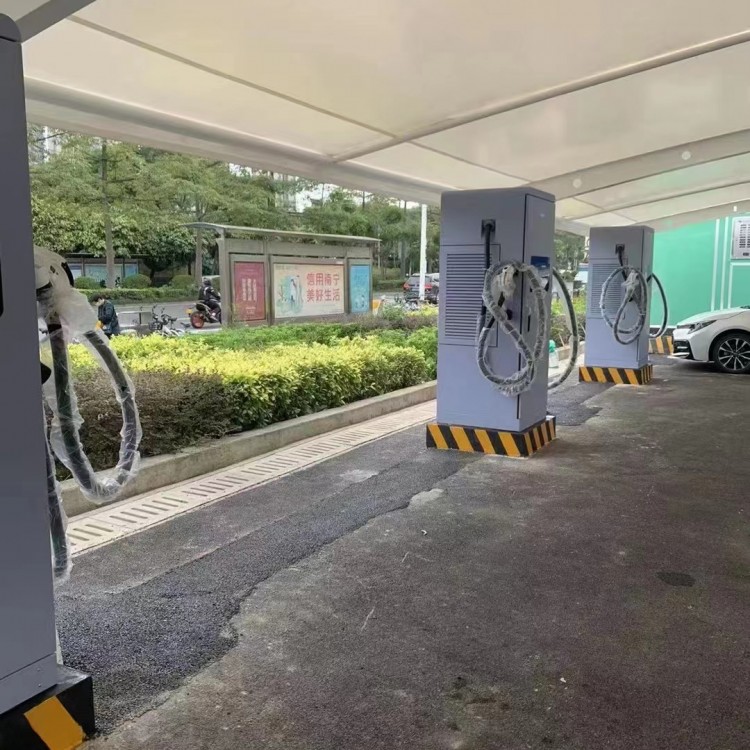


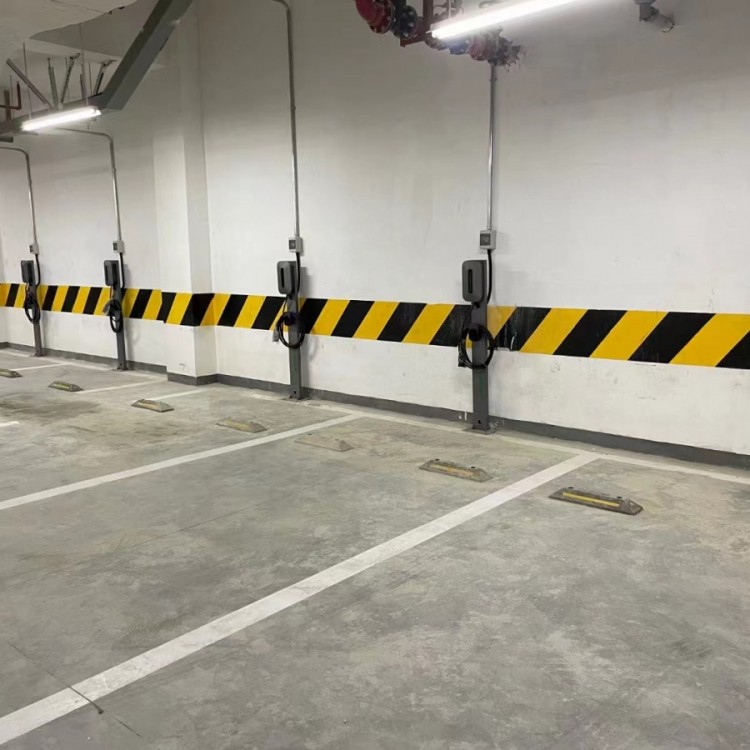
Bull Large DC Fast Charging Station - Four Outlets, Suitable for Scenic Areas and Industrial Parks, Charging Pile Operation and Site EstablishmentThe charging station functions similarly to a fuel pump at gas stations, and can be mounted on the ground or walls. It is installed in public buildings (such as office buildings, malls, public parking lots, etc.) and residential community parking lots or charging stations. It can charge various models of electric vehicles based on different voltage levels. The input end of the charging station is directly connected to the AC power grid, and the output end is equipped with charging plugs for charging electric vehicles.
Electric charging stations function similarly to gas pumps at gas stations, and can be mounted on the ground or walls. They are installed in public buildings (such as office buildings, malls, public parking lots, etc.) and residential community parking lots or charging stations. They can charge various models of electric vehicles at different voltage levels. The input end of the charging station is directly connected to the AC power grid, and the output end is equipped with charging plugs for charging electric vehicles.
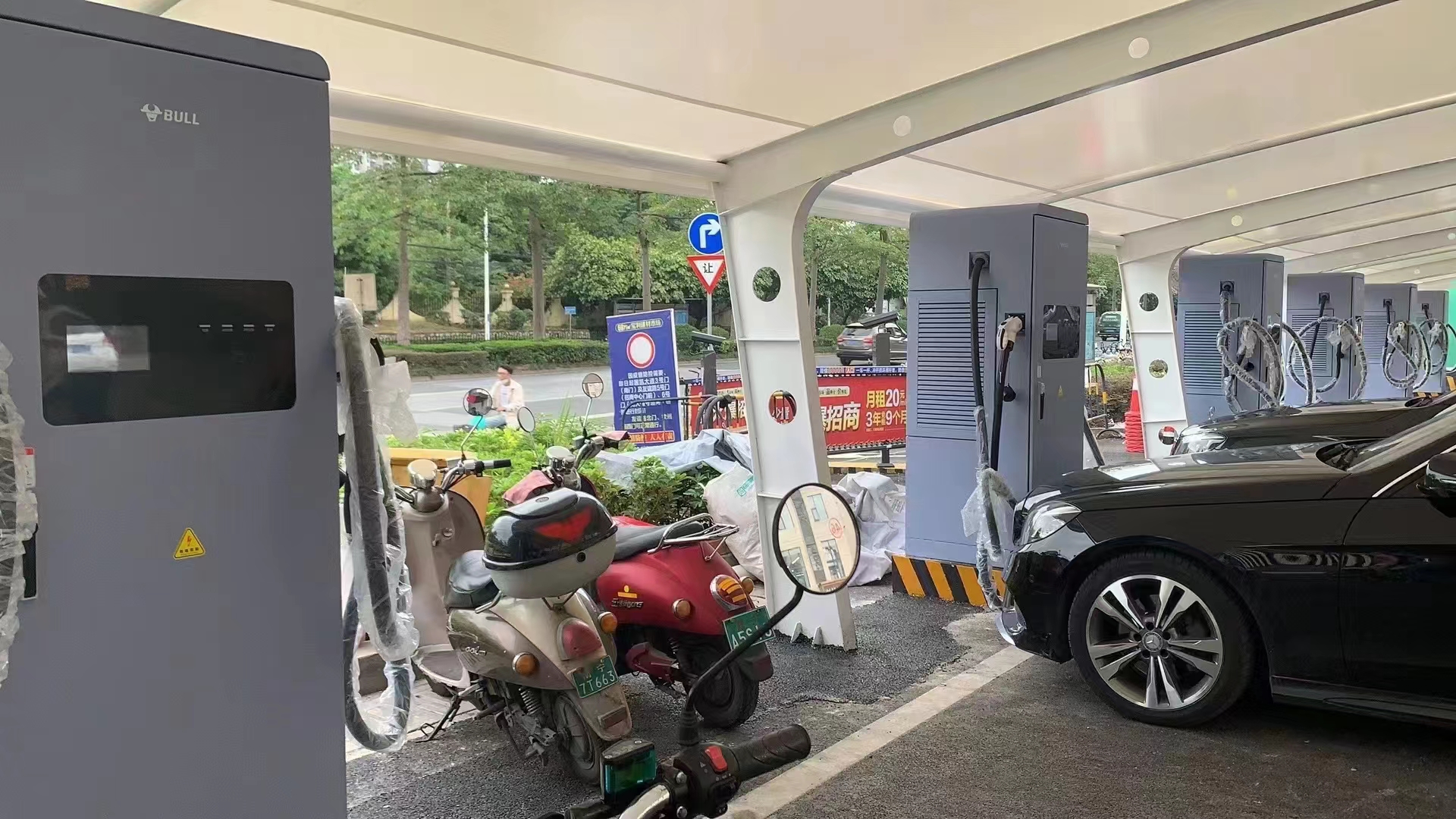
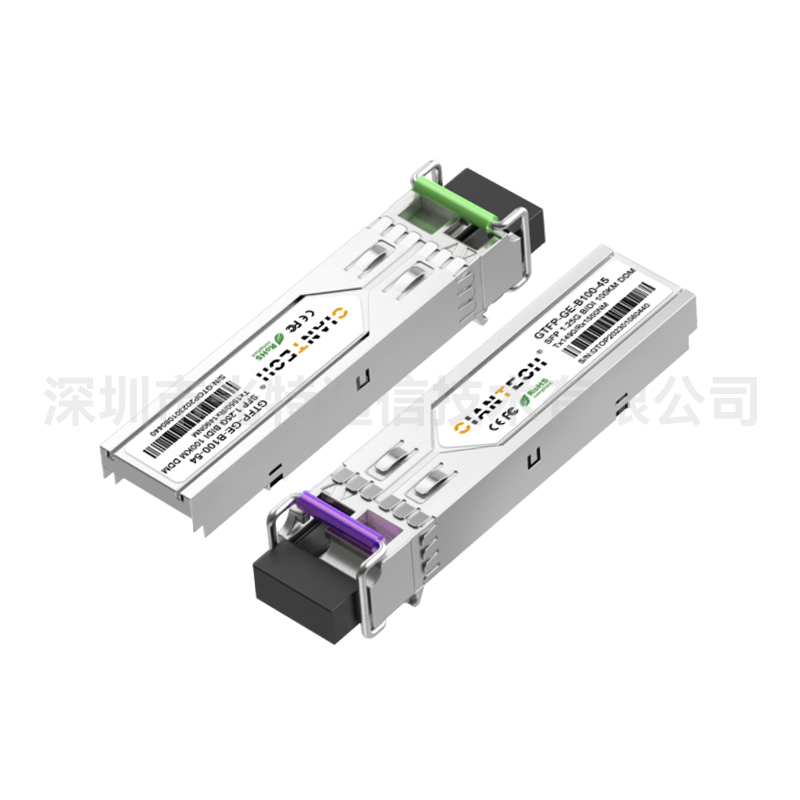
Bull Large DC Fast Charging 1-to-4 Station Universal Charging Pile for Scenic Area and Industrial Park Operation and Site BuildingCharging Station Construction Requirements: As electric vehicle charging stations (posts) on the distribution side of the power grid, their structural characteristics determine that the automated communication system features include a large number of points to be measured, dispersion, wide coverage, and short communication distances. Moreover, with the development of the city, the network topology requires a flexible and scalable structure. Therefore, when selecting the communication method for electric vehicle charging stations (posts), the following issues should be considered: 1. Communication reliability – the communication system must withstand harsh environments and strong electromagnetic or noise interference over a long period, while maintaining uninterrupted communication; 2. Construction costs – under the premise of reliability, consider the overall construction costs and long-term usage and maintenance expenses; 3. Two-way communication – not only to upload information but also to issue control commands; 4. Data transmission speed for multiple services – as the volume of terminal services continues to grow, the communication between the master station and sub-stations, and sub-stations and terminals requires higher data transmission speeds for multiple services; 5. Flexibility and scalability of communication – due to the characteristics of charging stations (posts) having numerous control points, wide coverage, and dispersion, standardized communication protocols should be adopted. With the development of network technology trends and the continuous growth of power operation business, it is necessary to consider IP-based service hosting, while also ensuring ease of installation, construction, debugging, operation, and maintenance.