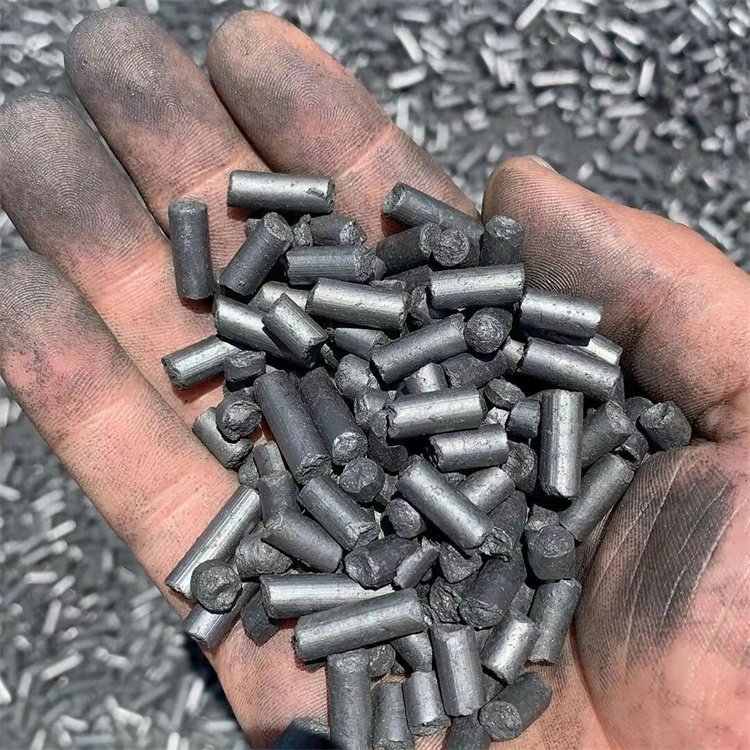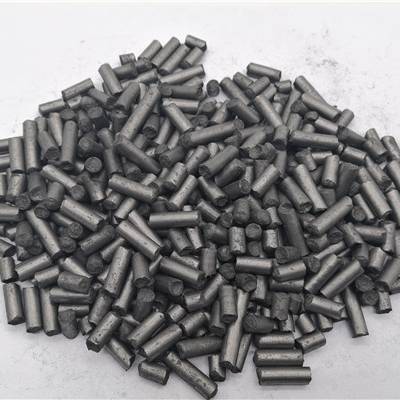













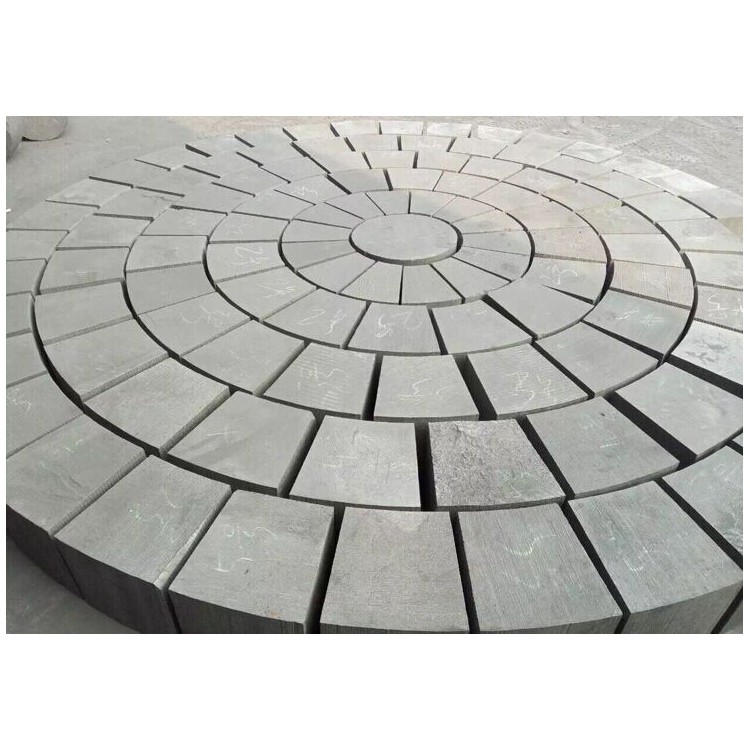
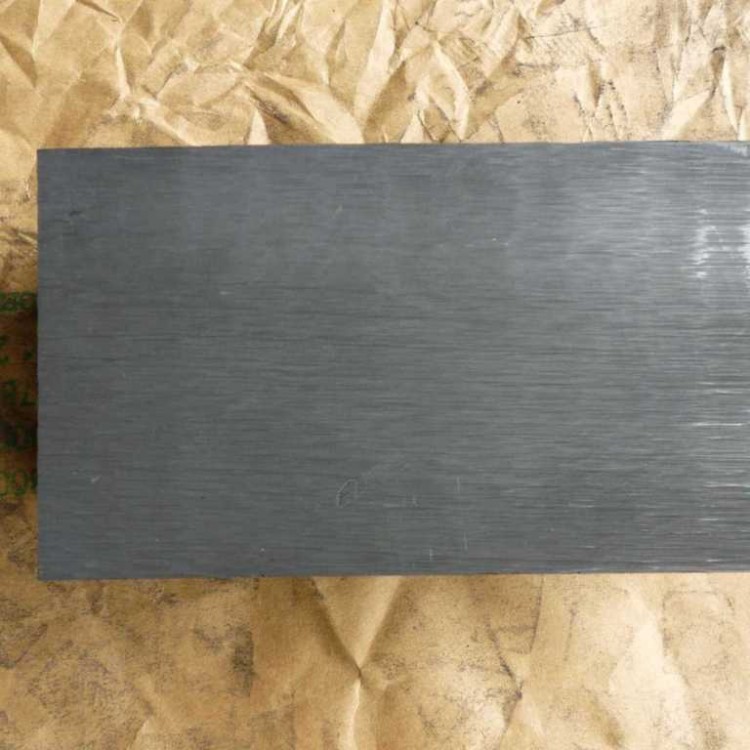
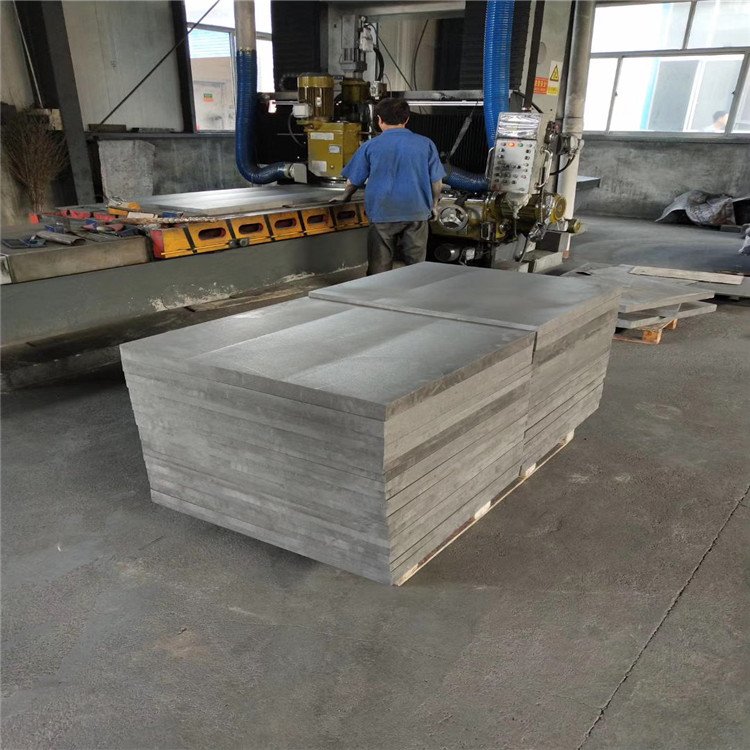
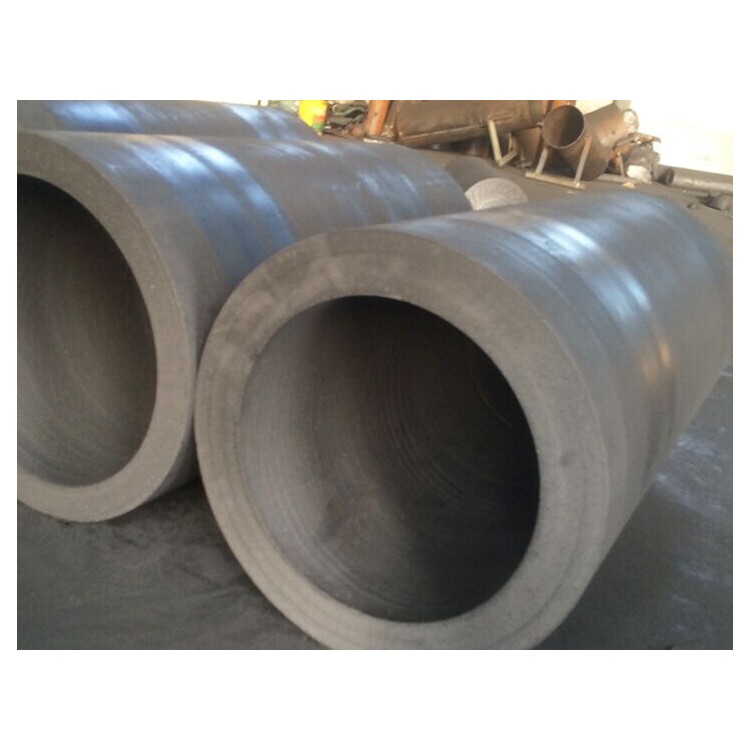
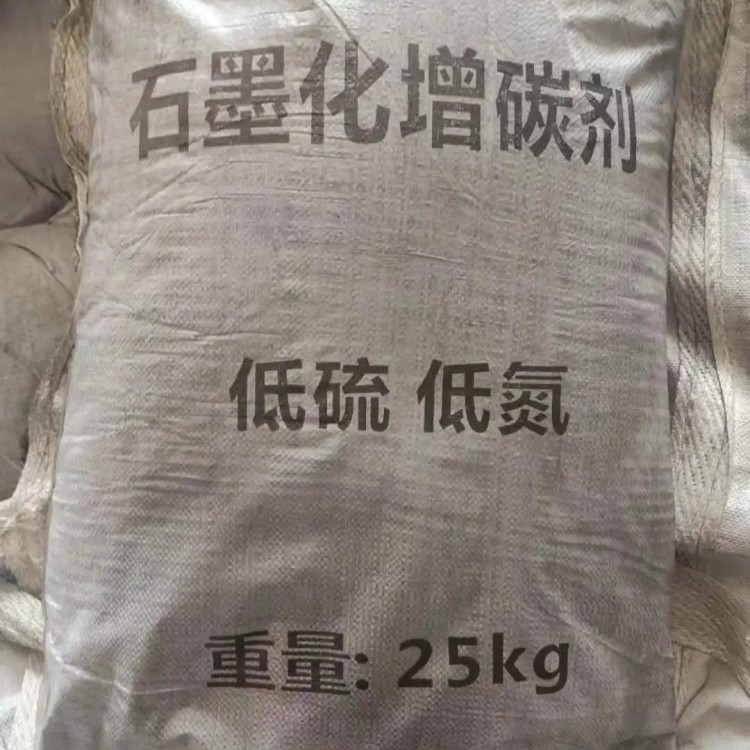
Graphite Carbon Additive for Casting, Rod-shaped Carbon Additive with High Carbon Content and Low Sulfur Absorption
Graphite Carbon Additive Introduction
Carbon additive produced can significantly increase the usage of scrap steel in casting production, reducing the need for pig iron or eliminating its use. The carbon additive is characterized by its efficient absorption in molten iron, without slagging, which can greatly lower the cost of casting production.
1. Application: Used for carbon addition in special steel smelting and for carbon addition in gray iron casting.
2. Product Features: High fixed carbon content, low sulfur content, stable carbon enrichment effect, and high carbon absorption rate.
3. Application Range: Used for carbon addition in melting steel and cast iron in various electric furnaces.
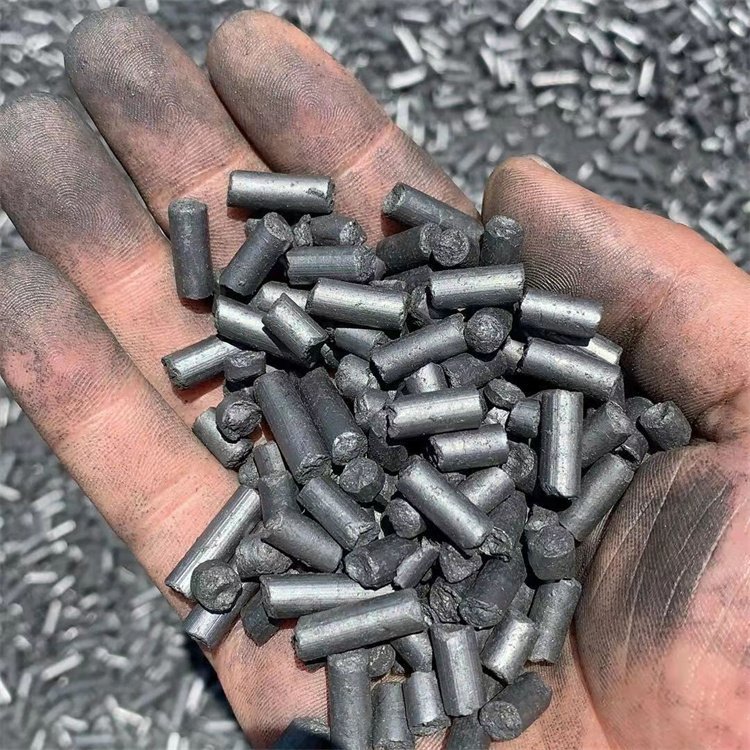
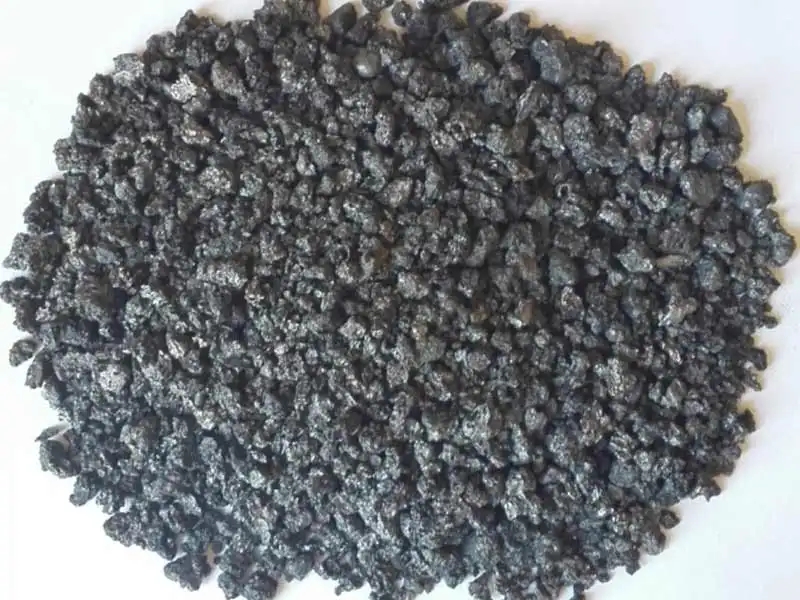
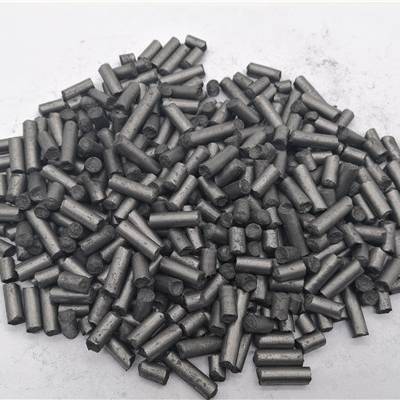
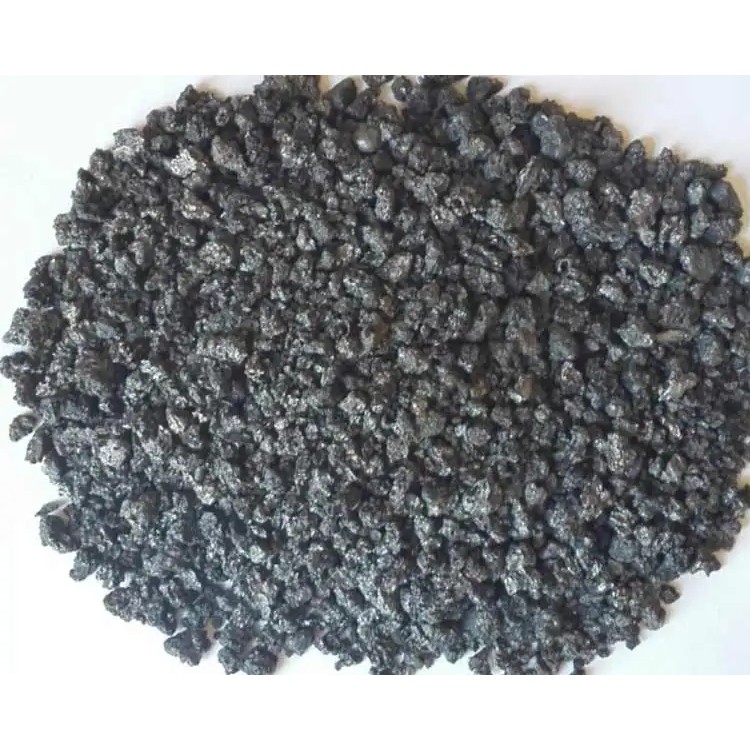
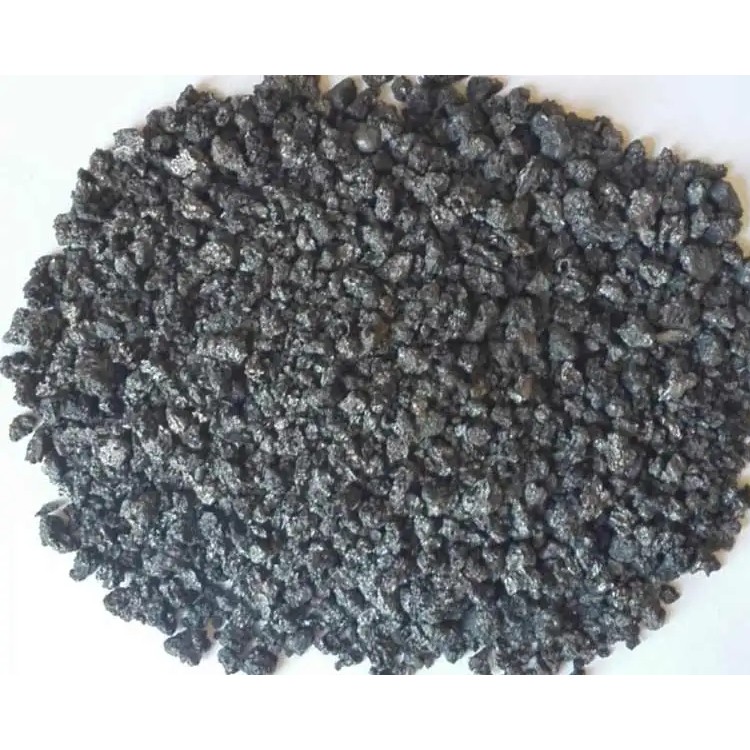
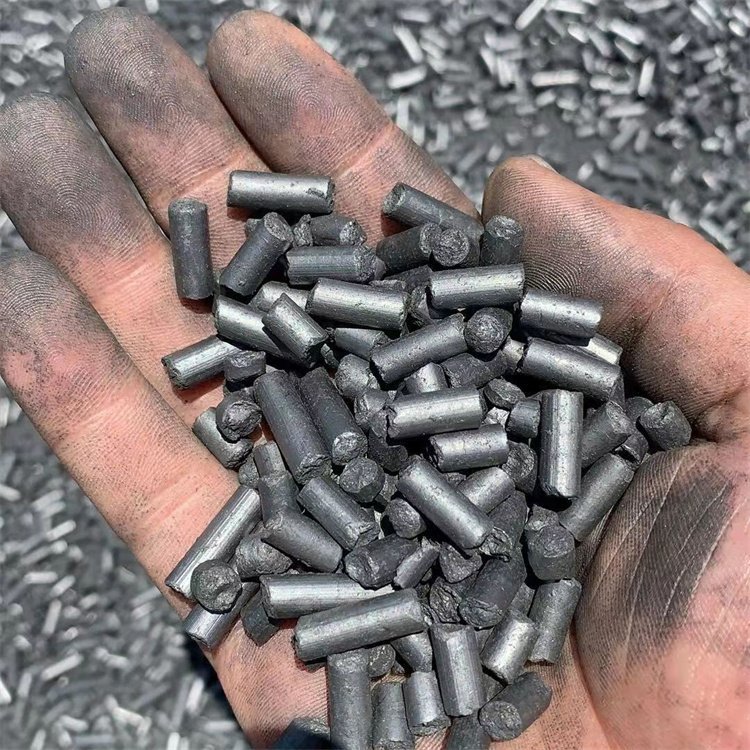
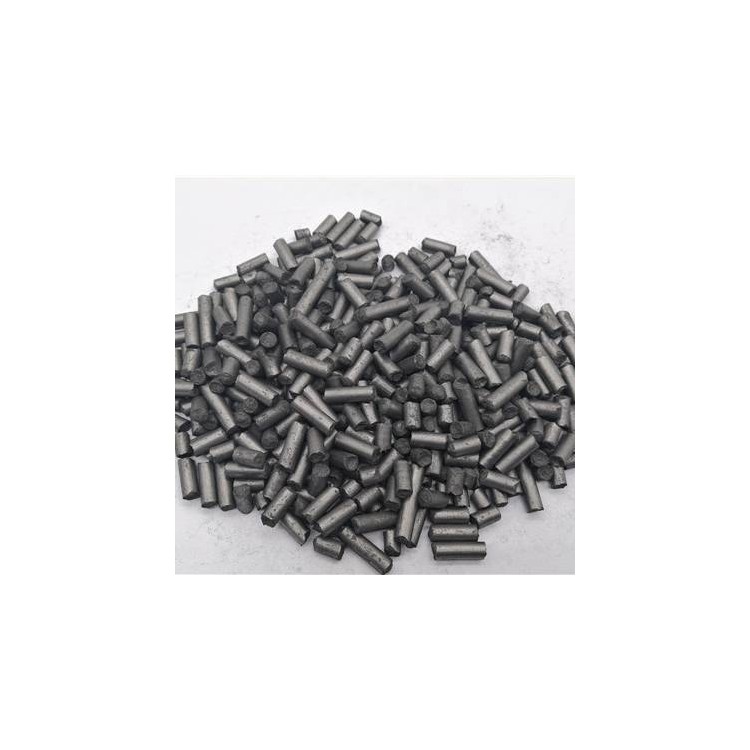
4. Particle Size: Common sizes: 0.3-3mm, 1-4mm, 1-3mm, 3-5mm, 3-8mm, 5-10mm, or as per customer's special requirements.
5. Usage Instructions:
1). For electric furnaces over 5 tons, with a single and stable raw material, we recommend the dispersion method. According to the carbon content requirements, add the carbon additive and metal furnace charge in proportion to the batching together in the lower part of the electric furnace. Do not slag when the carbon additive melts; otherwise, it may be wrapped in the slag, affecting carbon absorption. 2). For medium-frequency induction furnaces around 3 tons, with a single and stable raw material, we suggest the concentrated addition method. When there is some remaining molten iron or before melting, add the required carbon additive all at once on the surface of the iron, followed by the addition of the metal furnace charge. Press the carbon additive completely into the iron to ensure full contact between the carbon additive and the iron. 3). For small medium-frequency electric furnaces, with raw materials containing pig iron or other high-carbon materials, we recommend fine-tuning with the carbon additive. After the steel/iron melt, adjust the carbon content, and add it to the surface of the steel/iron melt. Dissolve and absorb the product through the eddy current stirring or manual stirring of the steel/iron melt during the electric furnace melting process.
6. Compared to traditional pig iron:
1) This product is non-metallic, with a melting point of around 1200-1300 degrees, leaving no residue during use and boasts a high utilization rate. 2) The product is easy to use in production, requiring significantly less quantity than pig iron, thereby saving production costs for the enterprise. 3) The phosphorus and sulfur content of this product is much lower than that of pig iron, ensuring stable performance.
1. Water-resistant ton bags packaging, ton bags packaging (without inner bags) 2. Paper bag packaging, 20kg or 25kg paper bags, with additional ton bags or pallets 3. 20kg, 25kg bags, 30kg waterproof woven bags, with additional ton bags or pallets
2. Paper bag packaging, 20kg or 25kg paper bags, plus ton bags or pallets
3.20kg, 25kg bags, 30kg waterproof woven bags, plus ton bags or pallets
Graphite carbon additive is a new product developed through years of practical efforts and experience总结 by our technical team, featuring high graphitization, low sulfur, low ash, low nitrogen, high carbon content, and high and rapid absorption rates. It is widely used in foundry, casting, and other industries for iron casting products.
Product Features: High fixed carbon content, low sulfur, and stable carbon enrichment effect. Widely used in the precision casting industry, particularly for the production of spheroidal graphite iron and gray iron, with stable quality. It features rapid absorption and high absorption rate, and has unique孕育 effects, which can significantly reduce production costs for enterprises (by reducing the amount of carbon enriching agent, energy consumption,孕育 agent, descaler, lining wear, defect rate, furnace cycle, slag inclusion risk, and white mouth). In terms of microstructure observation: 1. Without the use of pearlite stabilizers, it can greatly increase the percentage of ferrite in spheroidal graphite iron, on average increasing by 10% to 15% compared to using ordinary petroleum coke. 2. After use, the percentage of V and VI-shaped graphite is on average increased by 10% to 15% compared to using carbon enriching agents of the coke type. 3. Compared to the improvement in spheroidal shape, the number of spheroids can increase by up to 400%, significantly reducing the amount of expensive孕育 agent needed for post-processing micro-adjustments, and substantially lowering costs.
Graphite Carbon Additive Advantages:
High absorption rate, up to 85% to 90%, with the potential to reach 95%.
Section Two:Low sulfur content, less than 0.04%, 0.016%.
Section 3:Low nitrogen content, virtually free of nitrogen
IV.Low nitrogen content, virtually no nitrogen
Four, high fixed carbon content, main products fixed carbon content at 95%, up to 98%.
FiveExceptional cost-performance ratio, with the same index parameters as similar carbon additives but at different prices. 1. Benefit Impact: Graphite carbon additive reduces costs and improves product quality. 2. Raw materials can increase the use of scrap steel, reduce or eliminate pig iron usage, effectively avoiding the hereditary effects of pig iron on castings. 3. Low sulfur content, stable and reliable, effectively saving on the adverse effects of sulfur on alloys during spheroidizing and孕育 processes, and saving on alloy costs. 4. Due to its low melting point and quick absorption, it does not slag back, effectively protecting and extending the furnace life, and reducing lining consumption. 5. Pure chemical composition: high carbon, low sulfur, low nitrogen, with minimal harmful impurities. 6. Physical form: clean appearance, free from impurities, with a porous structure, fast absorption rate, and high absorption efficiency. 7. Microscopic form: high crystal quality, effectively improving the casting iron grade and performance. 8. Stable product properties: stable carbon addition effect, good absorption performance, significant temperature rise effect, and no slag back.
Application Range: Used for carbon addition in the melting of steel and cast iron in various electric furnaces. Particularly suitable for the spheroidal graphite iron industry, which has strict quality requirements and sulfur control, offering a price advantage over other types of carbon additives. For electric furnaces ranging from half a ton to 10 tons, the absorption rate can reach over 90% at a furnace temperature of around 1500 degrees. Particle Size: Rod-shaped graphite carbon additive, commonly available in particle sizes of 1-10mm, or supplied according to customer special requirements.
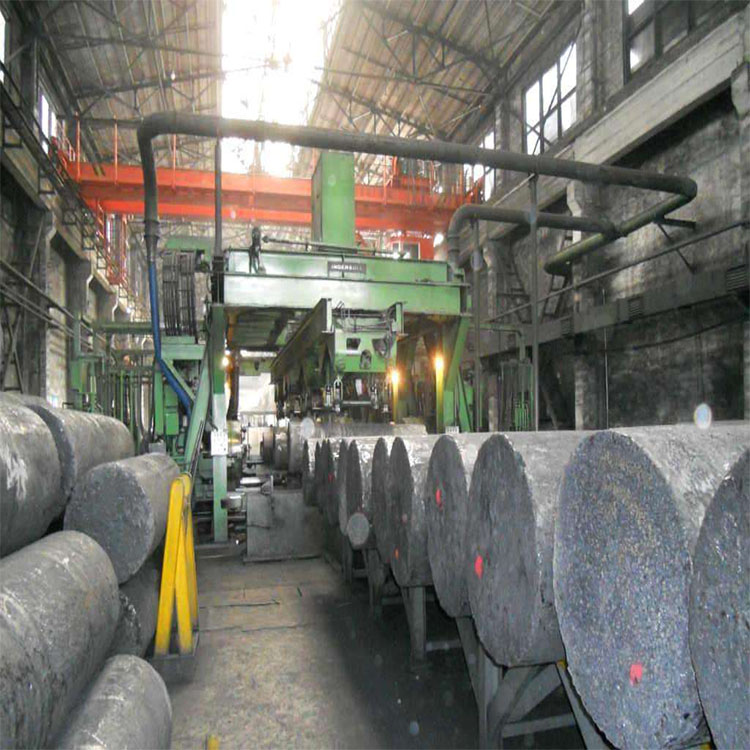
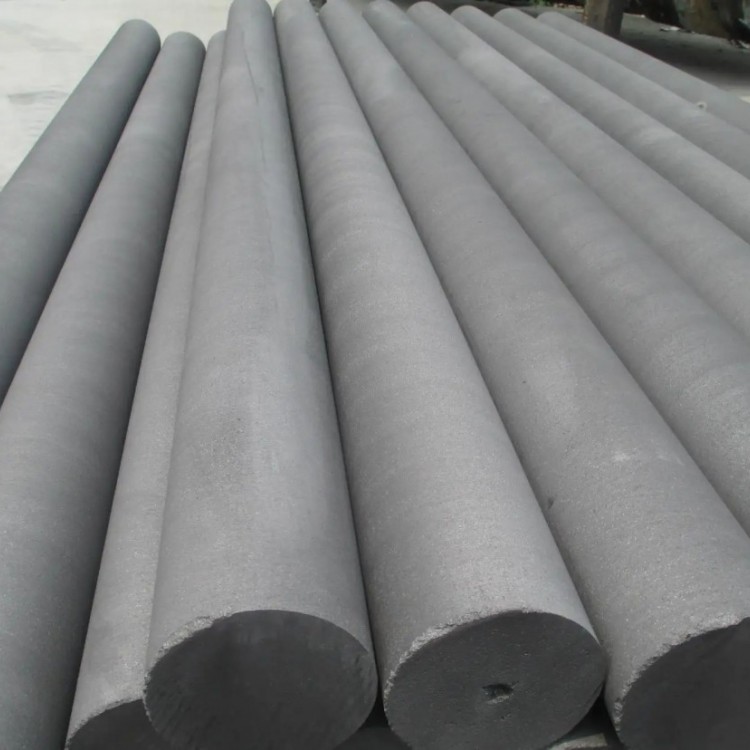
Recommended Usage: After placing one-third of the furnace charge at the bottom of the electric furnace, place the calculated amount of this product on top of the furnace charge. Then, place the remaining furnace charge on top as required. If the furnace charge above is larger, some crushed furnace charge should be pressed on the carbon additive to prevent floating and affect absorption rate. The order of adding materials is: a small amount of iron shavings, carbon additive, scrap steel, and returned material. Generally, the carbon additive absorption is over 90%, reaching up to 95%. Once the temperature reaches 1560°C, slagging and furnace tapping can be done. Do not empty the molten iron in the furnace completely; leave some molten iron for later addition of carbon additive, followed by iron shavings, scrap steel, etc. Adding the carbon additive directly to the bottom of the furnace can cause excessive burnout of the carbon additive; it is better to leave some molten iron at the bottom or place some iron nitrate to enhance absorption! It is not recommended to use the injection method as it reduces the absorption rate of this product. Additionally, do not slag during the melting of the carbon additive, as it may become wrapped in the slag and affect carbon absorption. The carbon additive used in this graphite is made of artificial graphite. Many materials can be used as cast iron carbon additives.,Quality is artificial graphite. After various raw materials are well mixed, they are molded into shape, then at 2500~3000℃Processed in a non-oxidizing atmosphere to achieve graphitization. After high-temperature treatment, the ash, sulfur, nitrogen, and gas content are all significantly reduced.
Compared to traditional pig iron: 1) No residue during use, with high utilization rate; 2) Easy to produce and use, saving production costs for enterprises; 3) Phosphorus and sulfur content significantly lower than that in pig iron, with stable performance; 4) Graphitized carbon additive can significantly reduce casting production costs. Graphitized carbon additive usage method (for reference only, with fixed carbon >96%, absorption rate 90% calculation): 1) Furnace charge requirements: oil-free and rust-free, surface of scrap steel should not show excessive oxidation. 2) Generally, prepare 4 kg of carbon additive for every 100 kg of scrap steel added. 3) Control the出炉 temperature at 1550℃Expected spheroidizing cooling of 100℃Handbag temperature reduction 50℃(4) During furnace production, 10-20 kg of iron shavings are added to the bottom of the electric furnace. From the second furnace onwards, 20-40 kg of the remaining iron liquid from the previous furnace is used. (5) After adding iron shavings, place the specified amount of carbon additive in a plastic bag on top of the iron shavings. From the second furnace onwards, add the carbon additive in the plastic bag directly into the remaining iron liquid, 20-40 kg. (6) Add 50 kg of scrap steel with carbon particles (less than 50x50 area) to tightly cover the entire furnace. (7) Start melting, add the remaining scrap steel → add the cast iron → add the returned furnace iron (note: the surface slag on the returned furnace iron should not be excessive to prevent the carbon additive from sticking to the slag, affecting absorption). (8) After the iron liquid is fully melted, cover it with a covering agent, and the temperature reaches 1400℃Repeatedly2-3 slag cleanings.