








1、 Principle
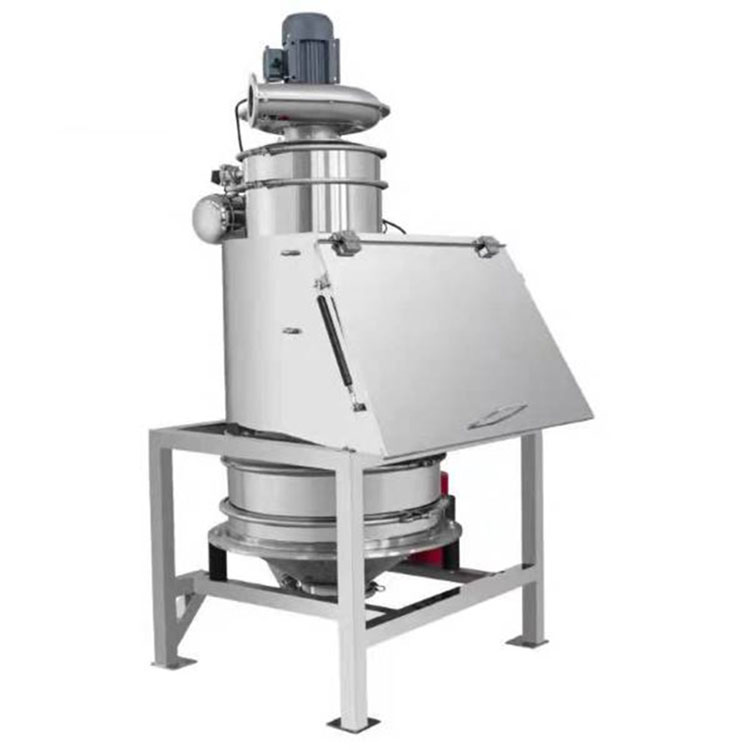
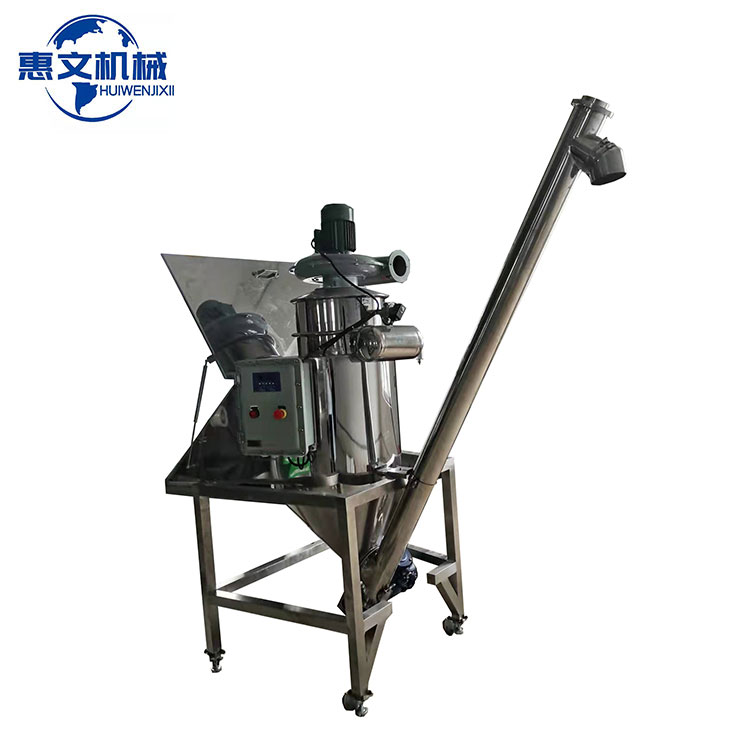
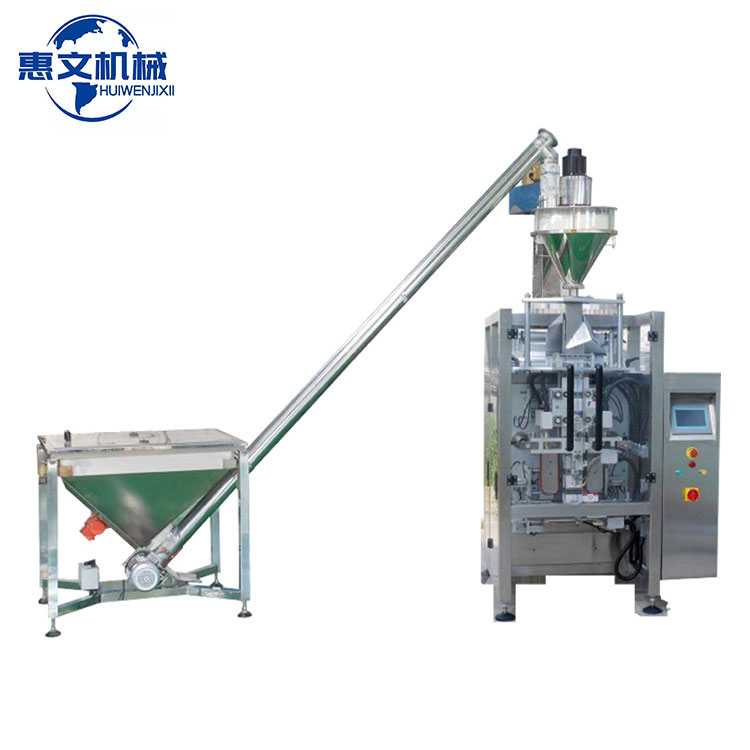
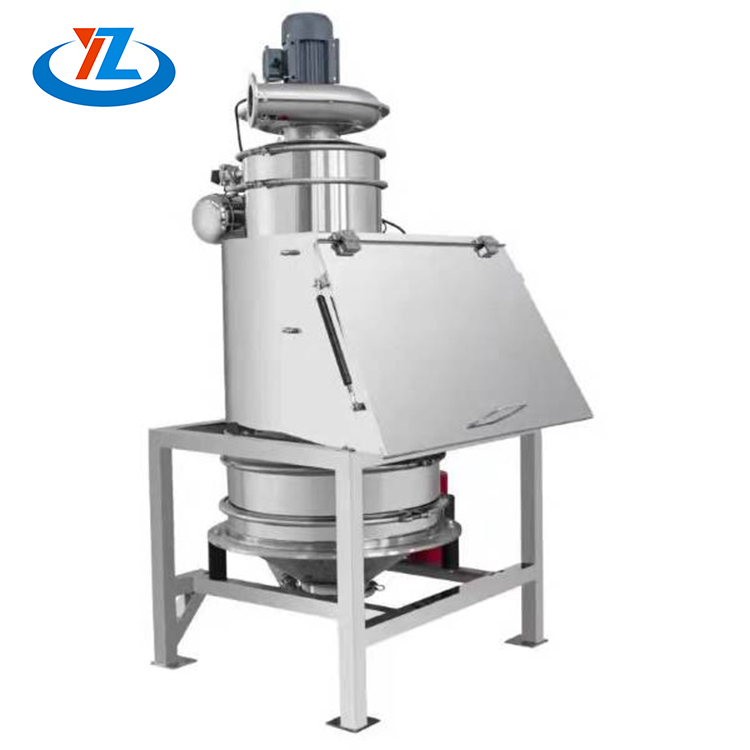
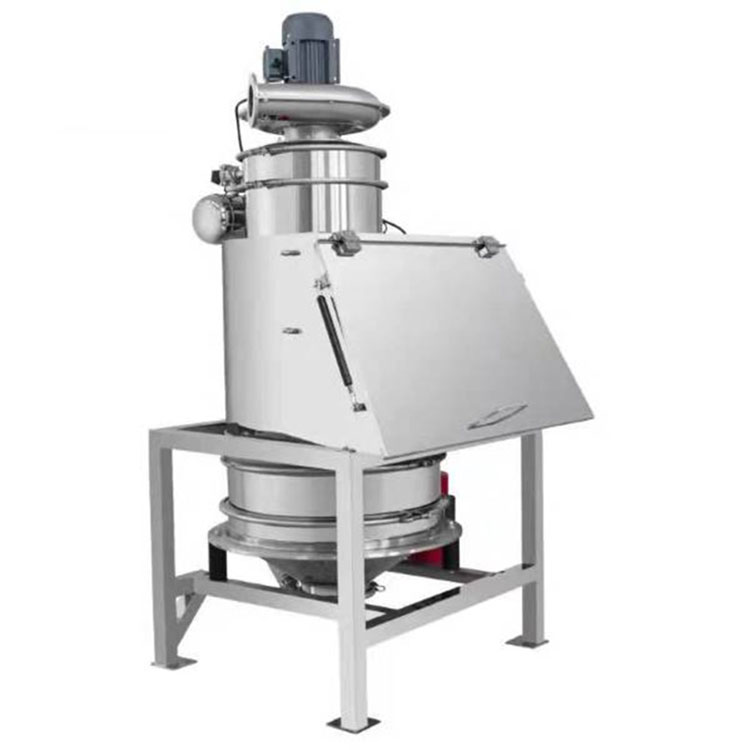
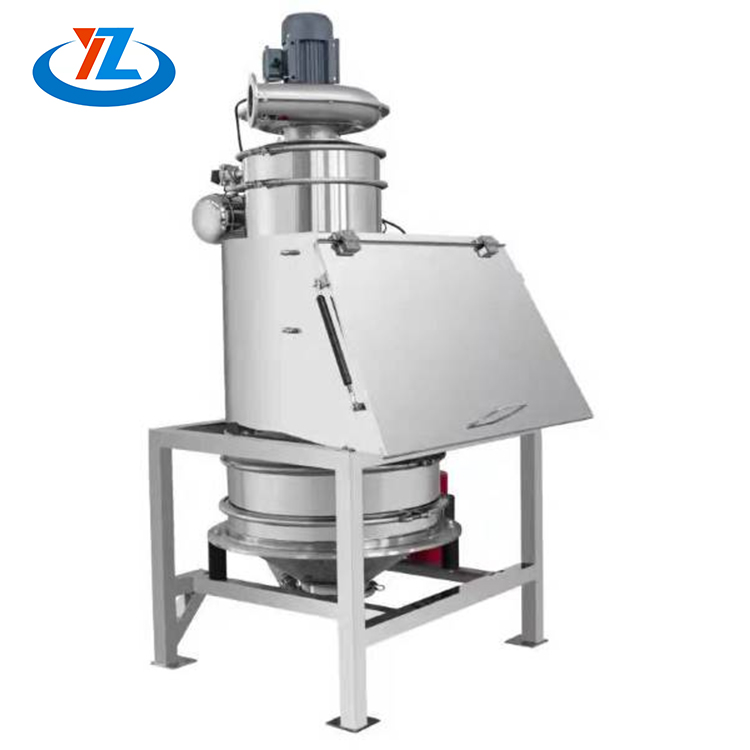
The feeding station is widely used in industries such as chemical, food, and battery for powder packaging bag unpacking, impurity removal, and uniform feeding. It can be installed above the silo to directly discharge the screened material into the silo, or used for uniform feeding of various pneumatic conveying equipment. After unpacking and impurity removal, the material is conveyed to the silo by the pneumatic conveying equipment. During the process of unpacking and pouring materials, due to the continuous operation of the dust removal fan, the surrounding area of the feeding platform will be in a negative pressure state, and the dust generated during the pouring process will not overflow, ensuring the cleanliness of the production environment and protecting the operators from dust pollution. The feeding station consists of four parts: feeding platform, vibrating screen, dust collector, and control cabinet.

2、 Installation and debugging
1. Place the feeding station at the production site and fix it with anchor bolts (provided by the customer), or it can be left unsecured.
2. Connect the compressed air to the blowback bag, and adjust the pressure of the compressed air in the bag to 0.4~0.6Mpa by adjusting the knob on the filter pressure reducing valve. The compressed air is mainly used for pulse blowback cleaning of the filter in the dust collector.
3. Connect the power supply to the control cabinet, close the main switch, the control panel lights up, set the cycle time to 16, and the pulse blowback time to 05.
4. Touch the on/off button on the control panel to start both the dust removal fan and the vibrating fan on the vibrating screen. At this time, observe whether the rotation direction of the dust removal fan is correct. When the rotation direction is correct, there should be a large amount of air discharged from the exhaust outlet of the dust removal fan; If the exhaust volume of the dust removal fan is not large, it indicates that the rotation direction of the dust removal fan is incorrect, and the machine should be stopped and the wiring of the dust removal fan motor should be readjusted.
5. Backblow valve 1 and blowback valve 2 will alternately pulse back blow the four filters in the dust collector. 3、 Troubleshooting
There are several reasons for dust spillage during material pouring, including:
① The rotation direction of the dust removal fan is incorrect. Simply adjust the wiring phase sequence of the motor.
② If the filter is used for a long time and has excessive resistance, it should be replaced in a timely manner.
③ The compressed air pressure is less than 0.4Mpa, and the blowback force is insufficient. The compressed air pressure should be adjusted to 0.4-0.6Mpa in a timely manner.
④ No blowback, there is a problem with the pulse valve or control system, which should be carefully inspected.
2. There are several reasons why the powder accumulates on the sieve and does not move:
① Failure to clean the debris on the sieve in a timely manner resulted in blockage of the sieve, preventing the powder from passing through. It is recommended to clean the debris on the sieve in a timely manner.
② Too much powder was poured into the feeding station, which was not promptly conveyed away by the pneumatic conveying equipment and was compacted in the vibrating screen; Reduce the amount of powder poured into the feeding station.