









· Improved O-SEPA Sifter
· 【Material Granularity】≤0.1mm 【Production Capacity】45-900t/h
Application Fields
Cement powder grinding, new materials, dry mortar, ceramics, rubber, oil extraction, aerospace, etc.
Applicable Materials
Cement, calcium powder, silicon micro powder, titanium dioxide, silica powder, iron ore, limestone, quartz stone, construction waste, iron ore, gold ore, etc.
Product Overview
Highlight Advantages
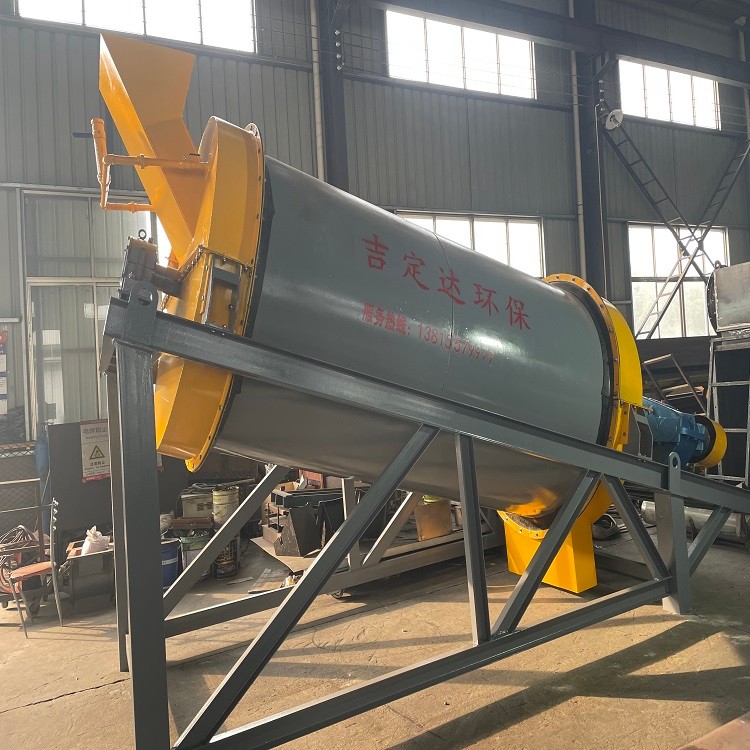
The Improved O-SEPA Vortex Separator is the fourth-generation high-efficiency separator utilizing the horizontal vortex principle for grading. It is a powder grading equipment that our company has improved and refined based on the introduction of foreign technology and the specific production practices in our country. It is widely used in the cement industry and grading of powdered materials or equivalent materials in other industries, featuring high yield, low consumption, large processing capacity, and simple operation and maintenance.
◆The improved O-SEPA sifter utilizes an optimized swirl field, spiral casing design, and more rational air guide vane parameter selection, resulting in a uniform, stable, and powerful sifting swirl field, low flow resistance, low noise, and high sifting efficiency. It can effectively reduce the power consumption of the dust collection fan.
The improved O-SEPA sifter utilizes a patented rotor blade design, extending the sifting area to within the rotor blade rows. The airflow through the blade channels is not accelerated and has minimal wake loss, resulting in low air resistance and low power consumption. Many customer feedbacks indicate that using J纳德's series of improved O-SEPA sifters can save energy by 30% to 40%.
The improved O-SEPA classifier features a patented eddy current disintegrator in its rotor. The airflow inside the rotor rises relative to the rotor without rotation, saving driving power and reducing wear by utilizing the decreased momentum torque after the airflow enters the rotor.
Working Principle
The intake of the dust collector is connected to the outlet bend pipe of the classifier. Due to the suction effect of the dust collector fan, air is drawn into the classifier vortex shell through the first and second air inlets of the classifier. Under the guidance of the guide vanes, the rotation of the impeller, and the action of the fixed buffer plate, a stable horizontal vortex classifier area is formed between the guide vanes and the impeller. The powdered material after grinding is fed into the classifier through the feed port, evenly scattered around by the rotating spreader disk. Due to the blocking effect of the挡料圈, the material is scattered in a dispersed state between the guide vanes and the impeller. Dust particles moving in the classifier vortex are simultaneously subjected to the force of gravity, wind, and rotational centrifugal force. Fine and light particles are吸入 into the impeller interior with the airflow, collected by the outlet and become finished products; coarse and heavy particles fall and are eventually collected at the coarse powder outlet of the lower cone, returned to the mill for further grinding, thus forming a closed-loop system. Changing the impeller speed can effectively adjust the fineness of the finished product.
Technical Specifications