






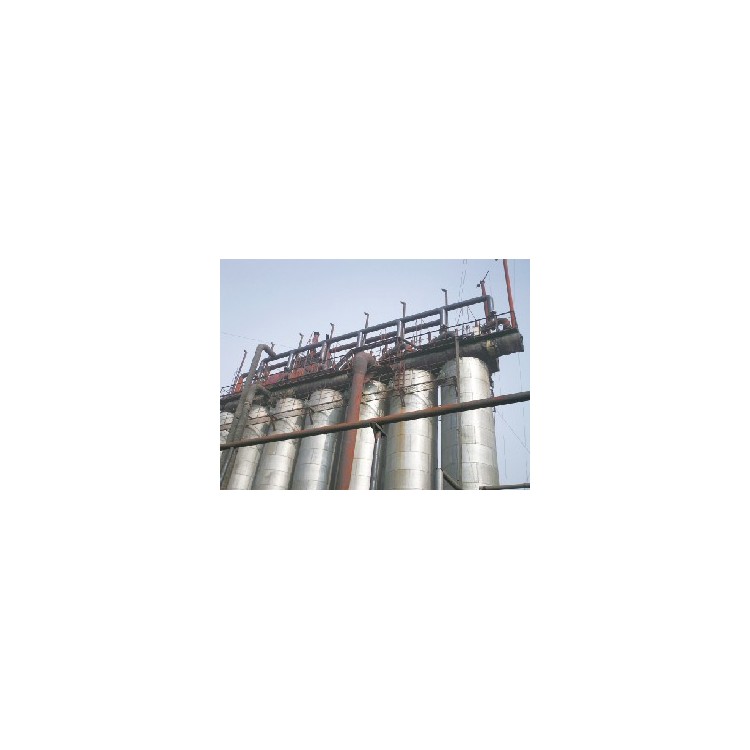
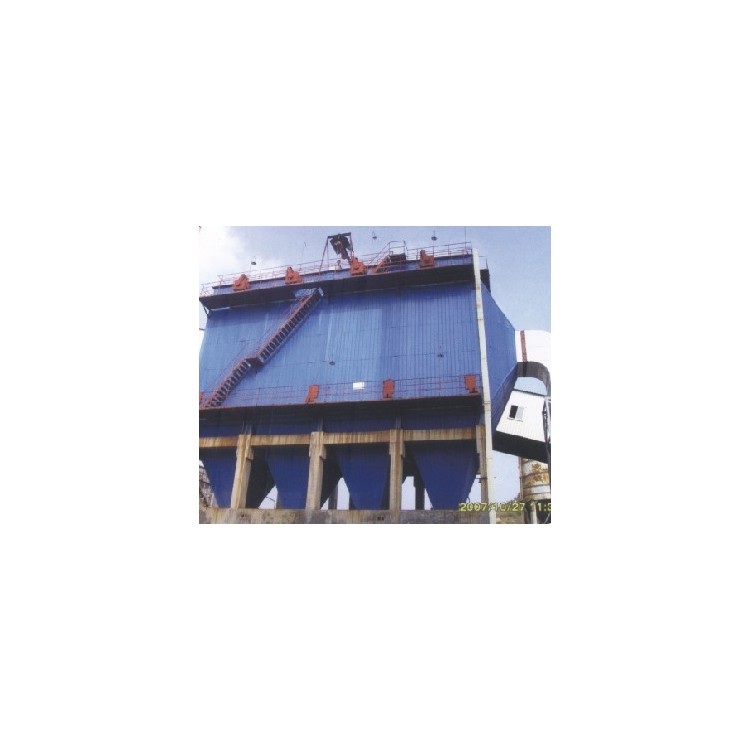


Dust collectors can be categorized into several types based on their working principles:
1. Dry mechanical dust collectors, primarily referring to dust removal equipment designed using the inertial and gravitational forces of dust, such as sedimentation chambers, inertial dust collectors, and cyclone dust collectors, among other high-concentration dust removal systems. Sand and stone dust collectors are mainly used for separating or concentrating high-concentration coarse particle diameter dust.
2. Wet dust collectors are dust removal devices that rely on hydraulic wettability to separate and collect dust particles, such as spray towers, scrubbers, impact dust collectors, and Venturi tubes, and are commonly used in handling high-concentration, high-volume dust-laden gas during production processes. They offer higher separation efficiency for coarser, hydrophilic dust particles compared to dry mechanical dust collectors.
3. A granule layer dust collector is a device that uses a layered filter material of particles of different sizes to filter out dust from the gas. It is primarily used at dust emission points in the production processes of construction materials and metallurgy, often dealing with high-concentration, coarse-grained, and high-temperature dust-laden flue gases.
4. Bag dust collectors, which are dust removal devices using woven fabrics or filling layers as the filtering medium, offer a wide range of applications, forms, dust removal air volume scales, and efficiency. Dust collectors are primarily used in locations for capturing fine dust, such as in exhaust dust removal systems and in intake air systems. In recent years, with the continuous development of new filter materials, the technology of fiber filtration has also accelerated, leading to the emergence of new products and an expanding range of applications.
5. Electrostatic Precipitator - This precipitator introduces the dusty gas flow into an electrostatic field, where, under the influence of a high-voltage electric field, the gas becomes ionized, producing electrons and positive ions. These move towards the positive and negative poles, respectively. As the dust particles pass through the working electric field, they become negatively charged and move at a certain speed towards the settling electrodes with the opposite charge, where they settle down, thereby detaching from the gas flow and being collected within the electrostatic precipitator. This type of precipitator boasts high dust removal efficiency, low resistance, and ease of maintenance and management. It is as effective as bag filters in capturing fine dust particles.