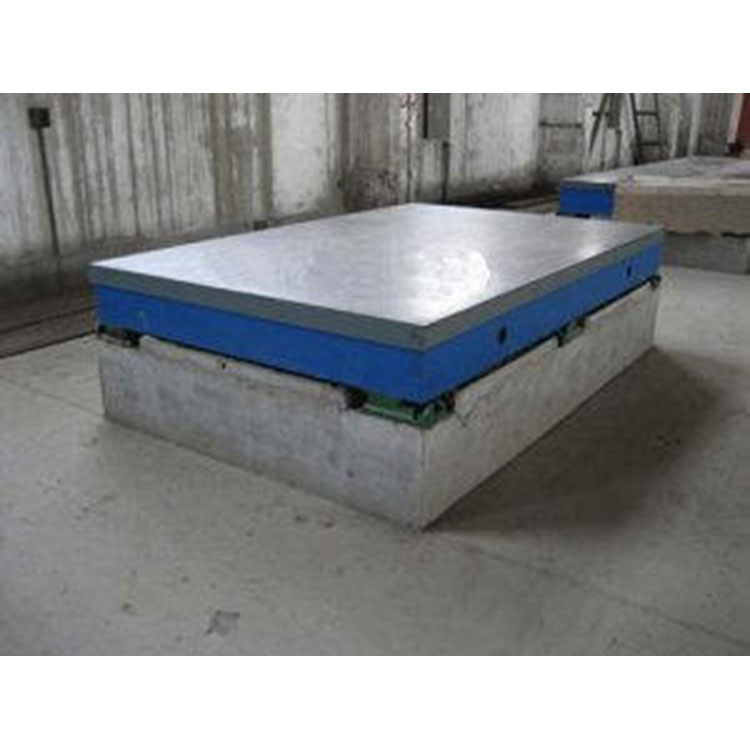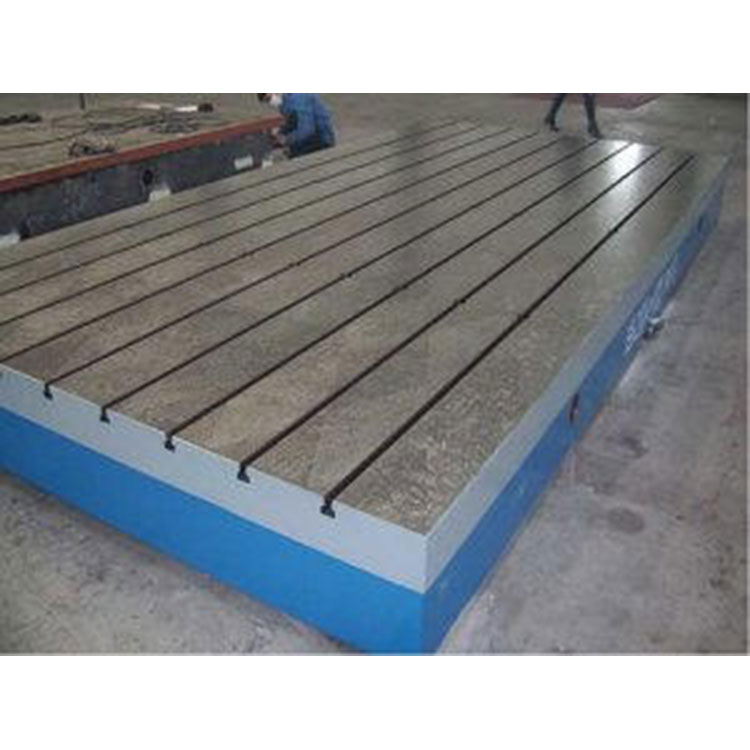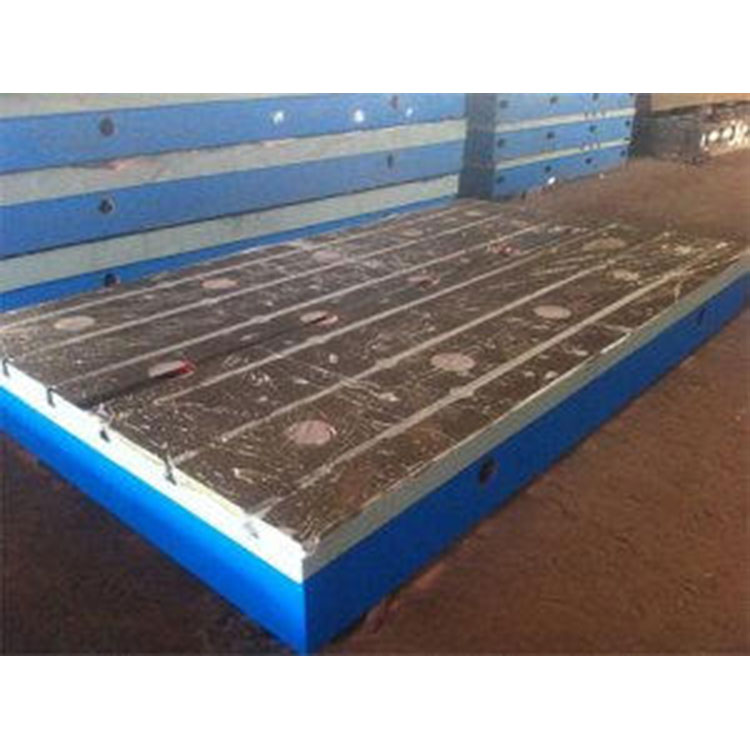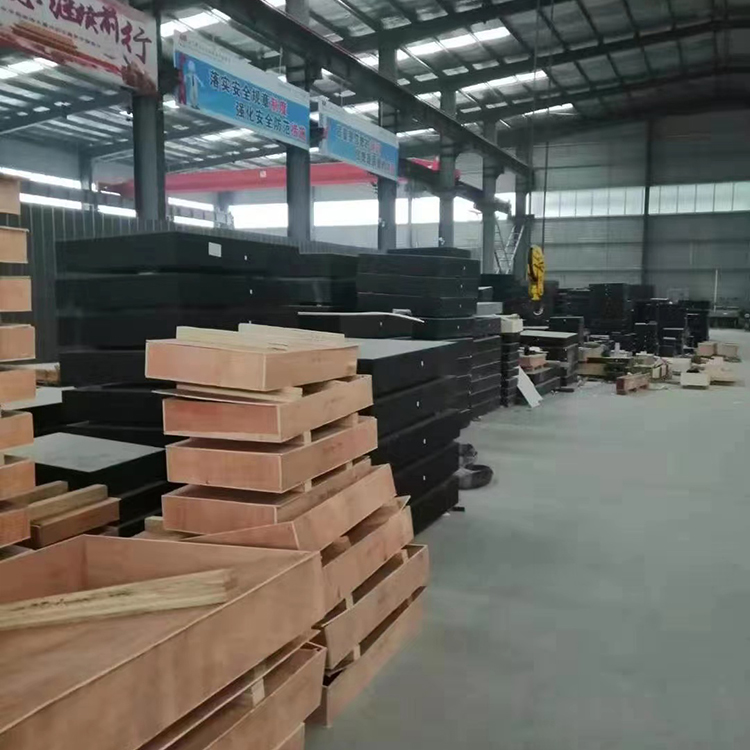

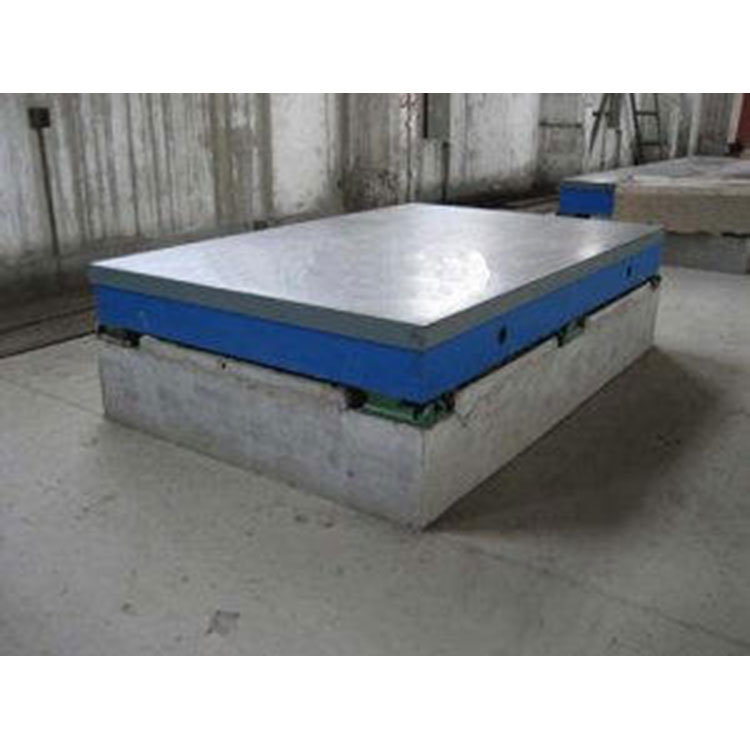


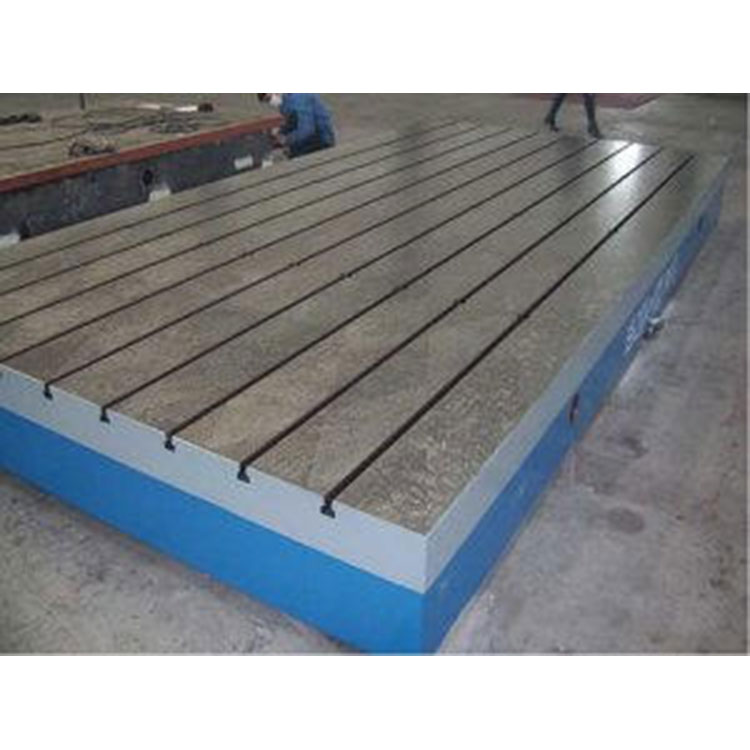
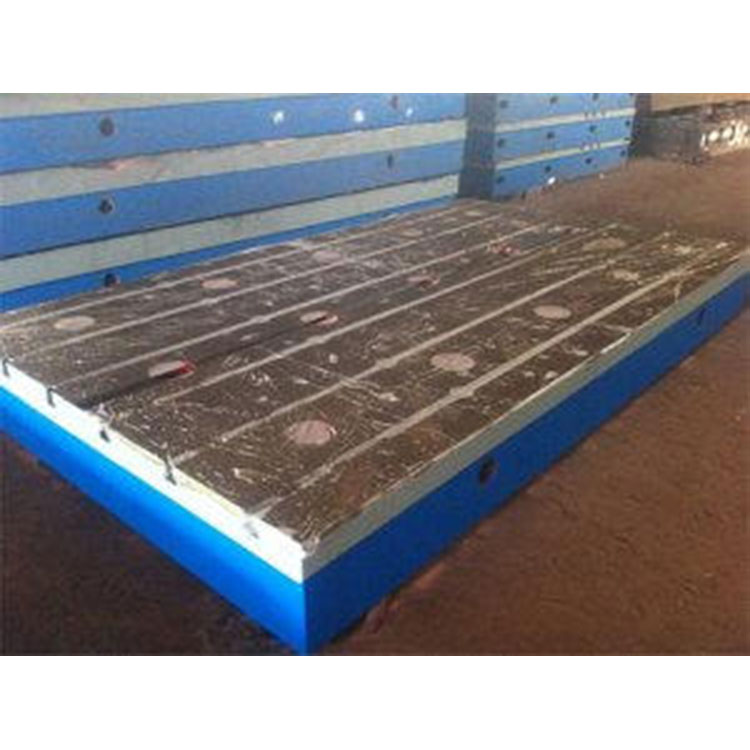











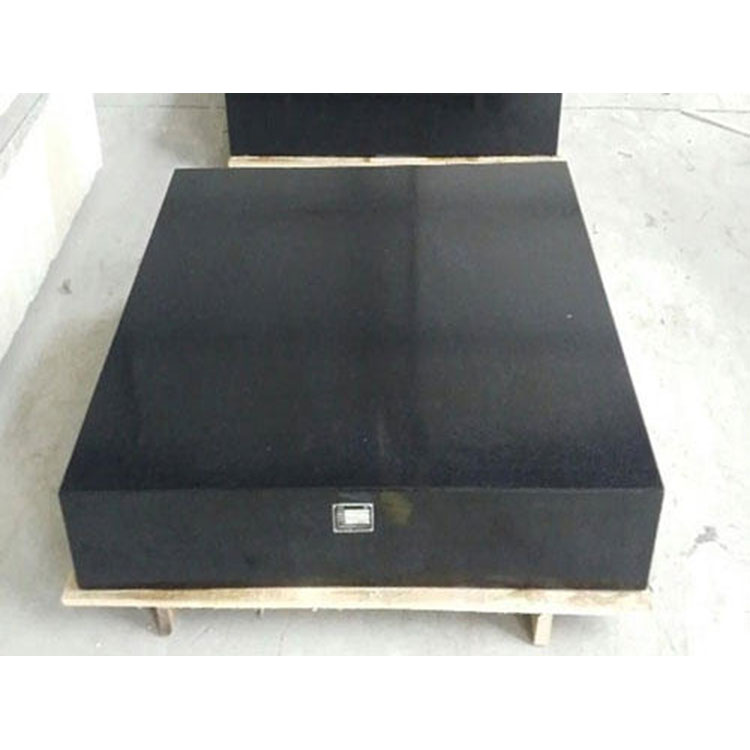
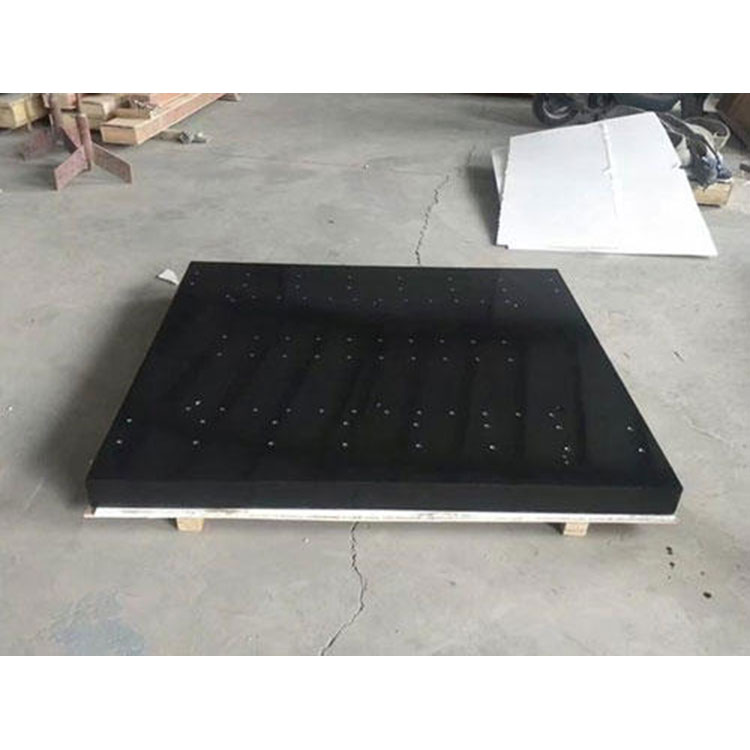
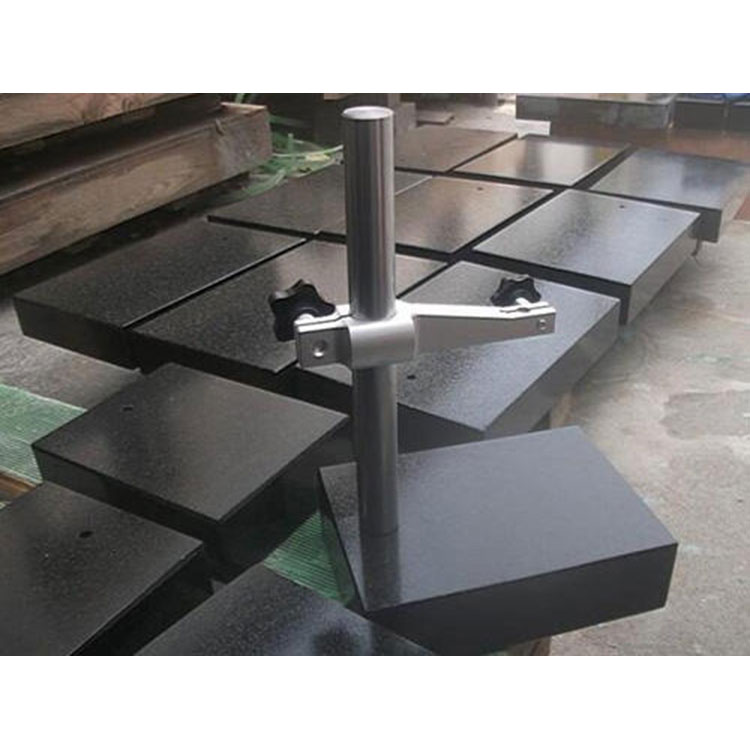
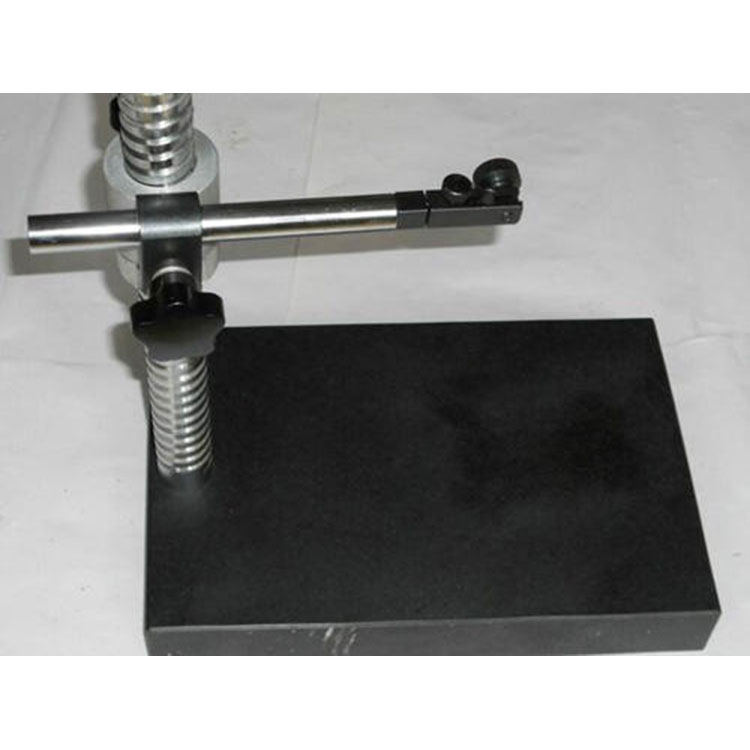
Single Wall Regular Order Brief Introduction:
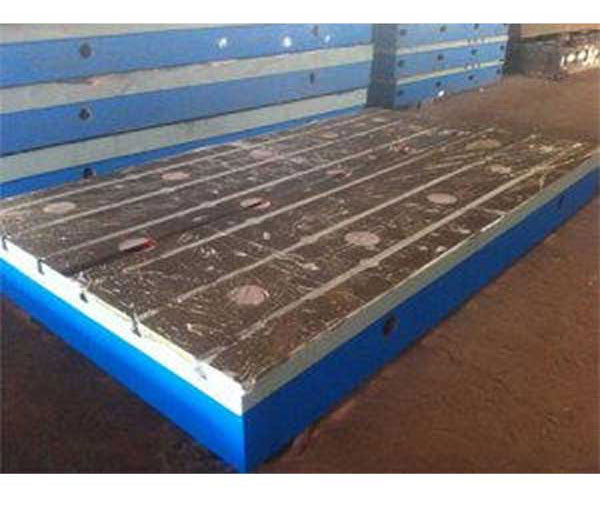
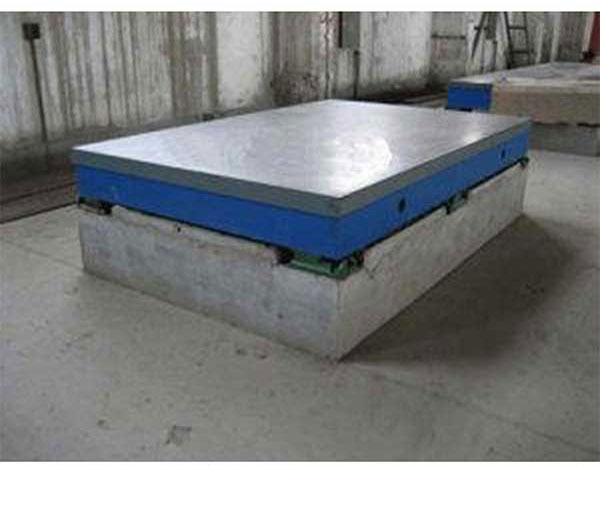
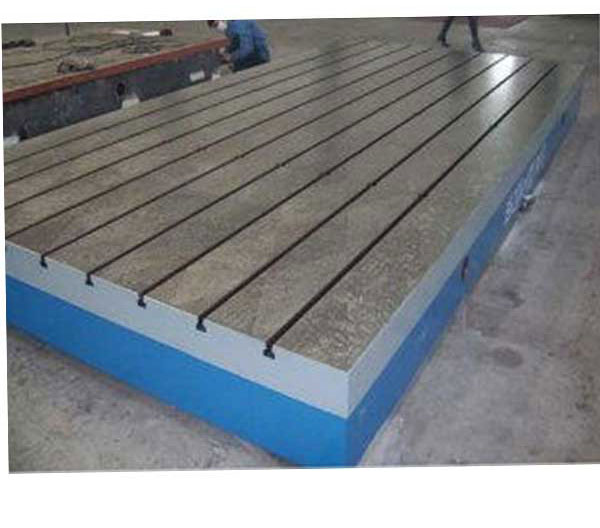
The single-sided plain trays are manufactured according to the JB/T7974-1999 standard, generally in ribbed plate and box-shaped designs, with various shapes for the working surface and made of HT200-300 material. The single-sided plain trays are made from fine-grained gray cast iron or alloy cast iron. The working surface of the single-sided plain flat trays is processed using scraping and lapping techniques, allowing for the machining of V-shaped, T-shaped, U-shaped grooves, dovetail grooves, round holes, and long holes. Once installed, the flat trays are adjusted to a level surface, ensuring even distribution of load across all support points.
Single wrapped general order purpose:
Single-enclosure standard workbench is primarily used for securing workpieces, serving as the fundamental flat surface for machinery adjustment, assembly, and repair by fitters.
Single-walled ordinary order material:
High-strength cast iron HT200-300 features a working surface hardness of HB170-240. It undergoes two artificial treatments (artificial annealing at 600-700 degrees and vibration aging) to ensure stable accuracy and excellent wear resistance.
Single Wrap Standard Order Specifications:
100*100 - 3,000*6,000, (Special sizes available upon customer's drawings.)
Single围General Order Precision:
Executed according to the standard metrological verification procedures, divided into four grades: 0, 1, 2, and 3.
Single Surround Standard Order Inspection
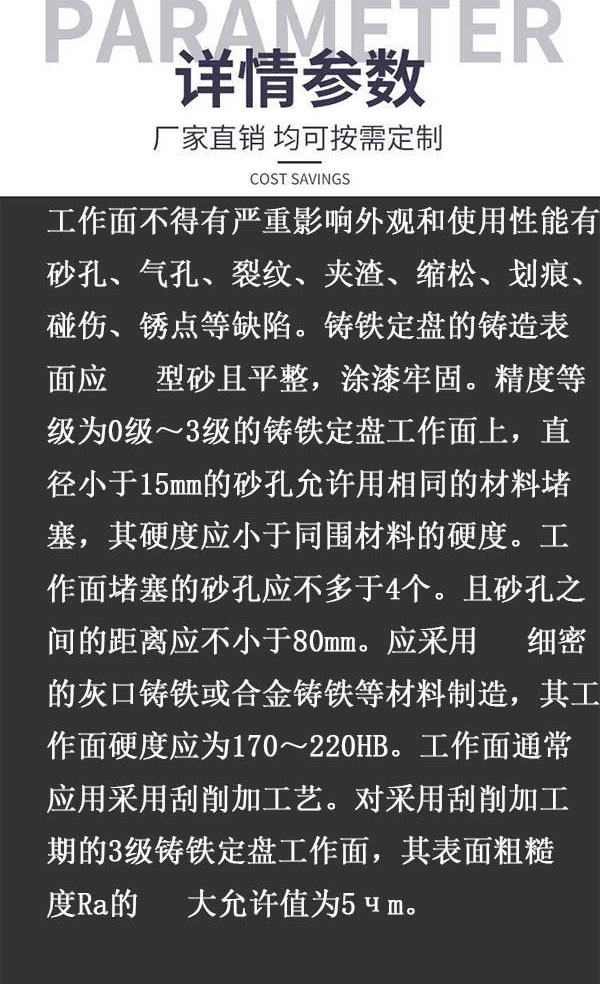
The working surface must not have defects such as sand holes, blow holes, cracks, inclusions, shrinkage, scratches, dents, rust spots, etc., which significantly affect appearance and performance. The casting surface of the cast iron platform should be mold sand and smooth, with paint that is firmly applied. For cast iron platforms with accuracy grades 0 to 3, sand holes with diameters less than 15mm are permitted to be blocked with the same material, with a hardness lower than that of the surrounding material. The number of sand holes plugged on the working surface should not exceed 4, and the distance between the sand holes should be no less than 80mm. The material used should be fine gray cast iron or alloy cast iron, etc., with a working surface hardness of 170 to 220HB. The working surface is typically treated using the scraping process. For the 3rd grade cast iron platform working surface that undergoes scraping processing, the maximum allowable surface roughness Ra is 5μm.