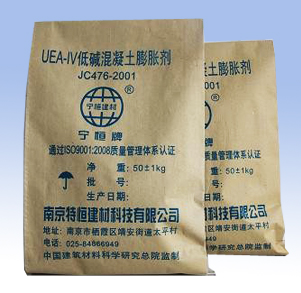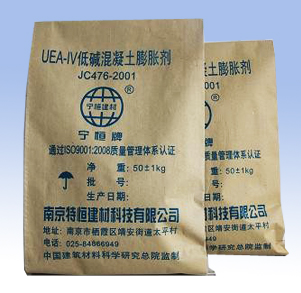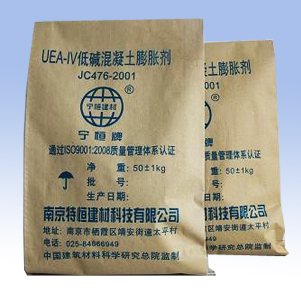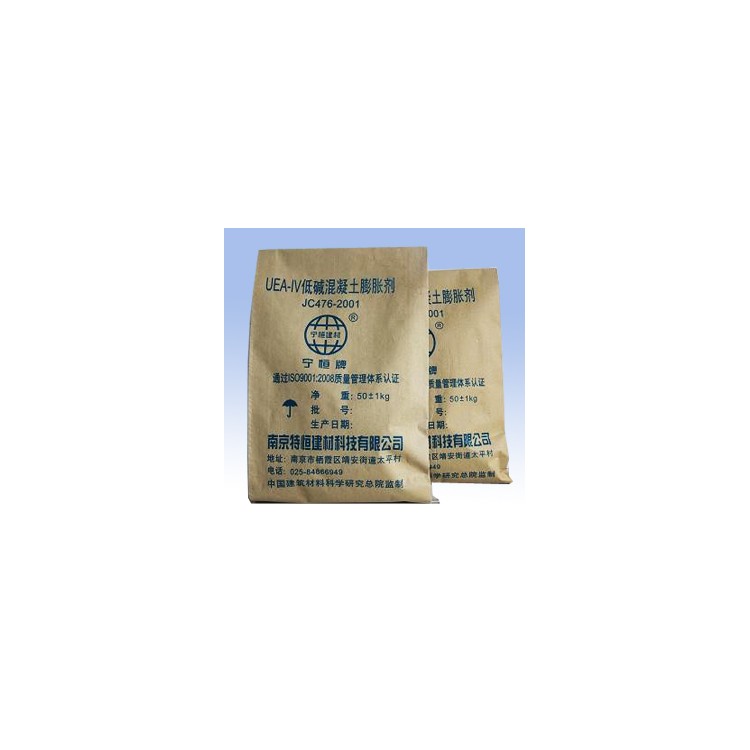

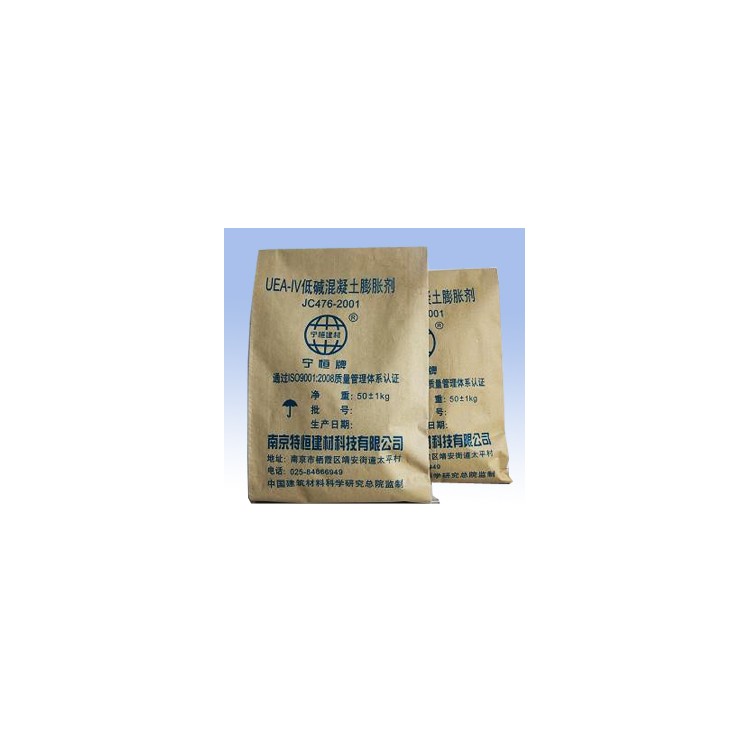
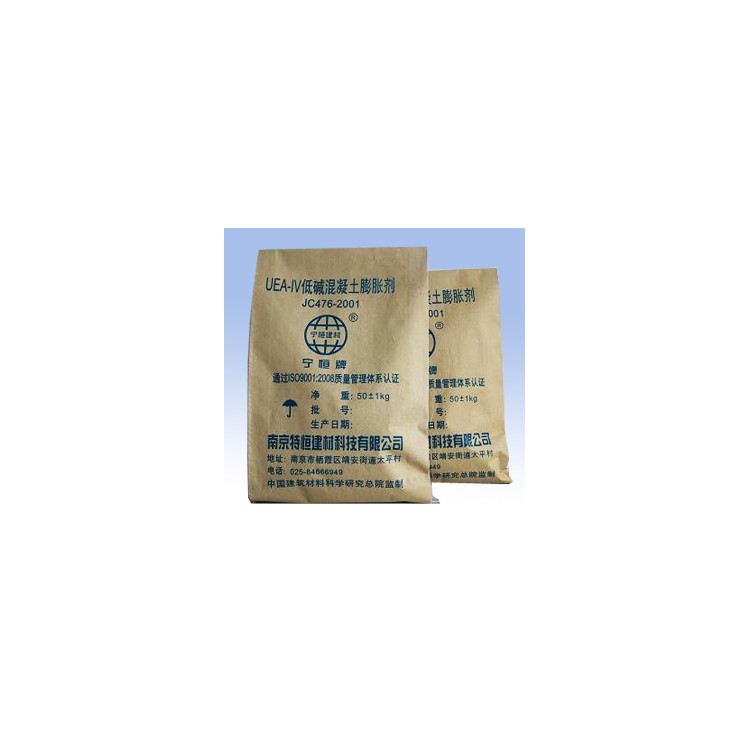
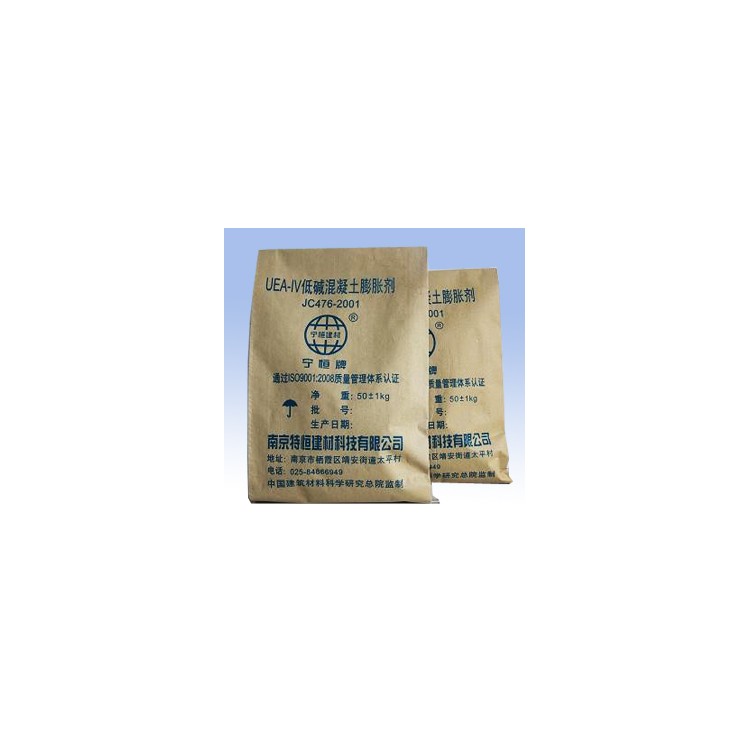


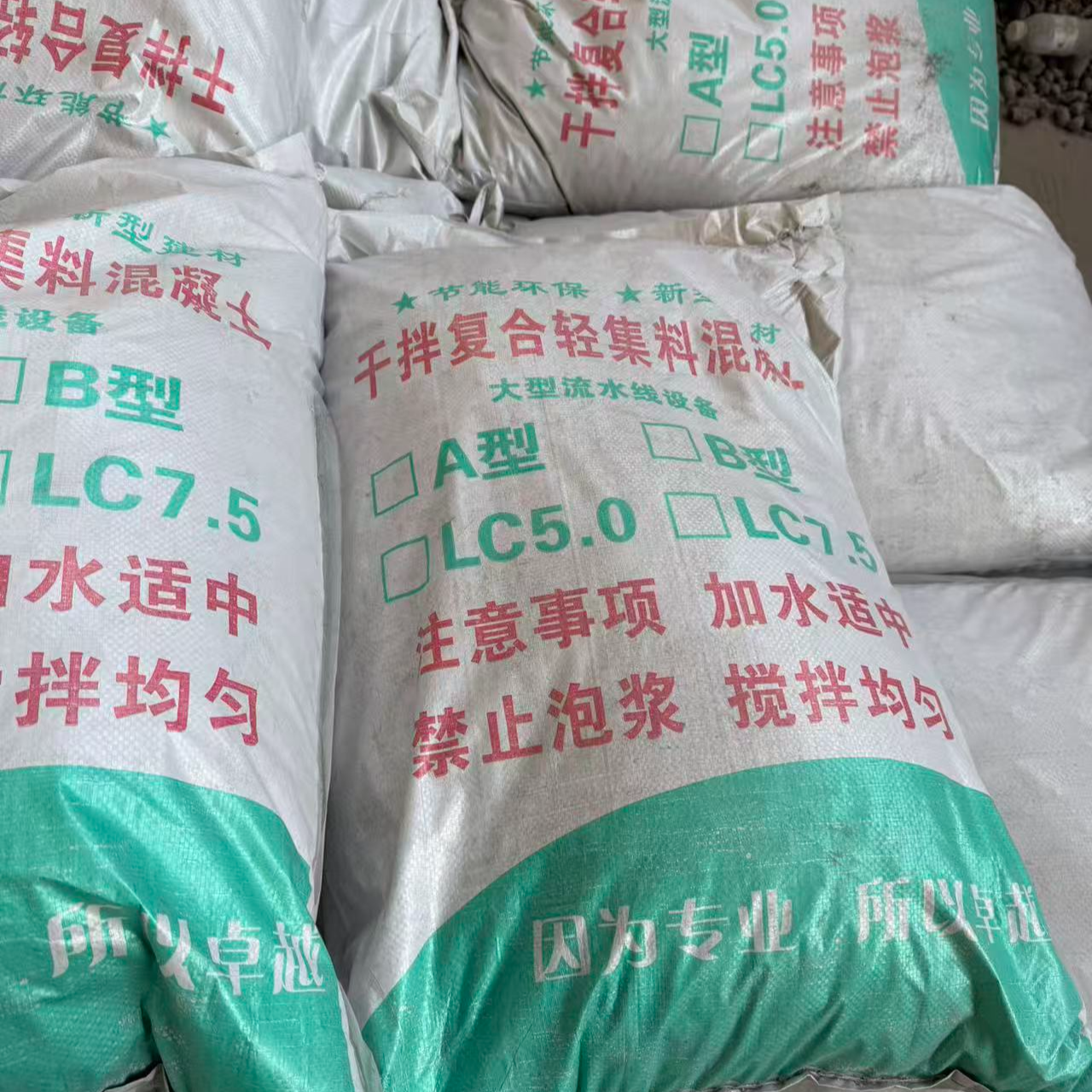







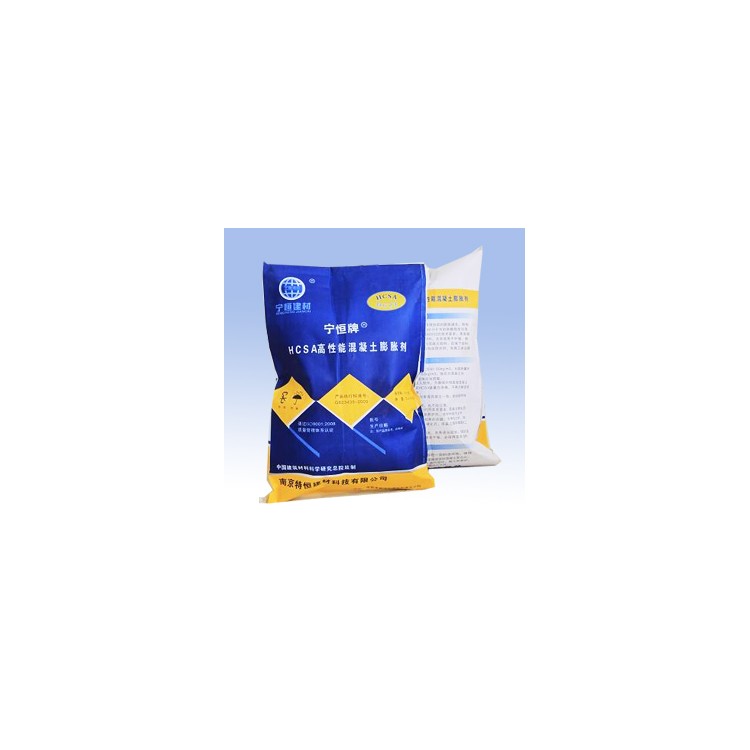
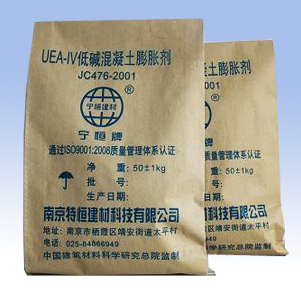
UEA-iV Low-Alkali Concrete Expansive Agent (abbreviated as UEA-IV) is a sulfate-aluminate type concrete expansive agent developed by Nanjing Teheng Building Materials Technology Co., Ltd. under the guidance of experts from the China National Building Materials Research Institute. It is specifically designed to enhance the crack resistance and impermeability of concrete, improving the durability of construction projects. The agent is produced using high-quality low-alkali raw materials, including specially processed expansive clinker from a rotary kiln, sulfate-aluminate clinker, and high-quality hard gypsum of the Nanjing type, all ground into powder using micro-computerized batching. Our company strictly controls product quality in accordance with the ISO 9001 quality system, ensuring that all performance indicators meet the requirements of GB23439-2009 standard.
Chemical composition and alkalinity content:

Primary Technical Specifications:
UEA-IV Low-Alkali Concrete Expansive Additive has a fineness of ≤12% retained on a 0.08mm square pore sieve, with a specific gravity of 2.90 and a pale gray powder appearance. It features low alkali content, low dosage, high expansive efficiency, and minimal slump loss. It effectively reduces the hazards caused by alkali-aggregate reaction, lowers hydration heat, minimizes concrete temperature difference shrinkage, inhibits cracking in concrete structures, and improves the durability of concrete. The addition of UEA-IV results in a 28-day strength comparable to that of ordinary concrete, with a sustained increase in strength over time. The limited strength is 10-15% higher than the free strength, has a water permeability rating greater than S30, and a freeze-thaw resistance rating greater than D150. It has no effect on reinforcement corrosion and does not pollute water quality. Suitable for the majority of cement types, it can be used in combination with other admixtures.
UEA-IV admixture compensates for shrinkage through its mechanism of expansion. When mixed into concrete, it undergoes hydration reactions to produce a significant amount of expansive crystalline hydrates—calcium sulfate trihydrate (C3A·3CaSO4·32H2O), causing the concrete to expand moderately. Under the constraints of steel bars and adjacent elements, it establishes a pre-compression stress of 0.2 to 0.7 MPa within the structure, effectively compensating for shrinkage. This improves the pore structure and 7L gradation of the concrete, making the internal structure denser and enhancing its impermeability. Therefore, UEA-IV is a concrete expansion admixture with dual functions of crack resistance and impermeability.
Application Range:
1. Underground Structures: Including basement of high-rise buildings, subway systems, underground parking lots, warehouses, tunnels, culverts, mines, civil defense projects, underground pedestrian walkways, and large-scale underground foundations.
2. Construct various water pools, water towers, storage tanks, oil tanks, grain silos, and cave storage facilities.
3. Rigid waterproof roof, mortar waterproofing layer, and mortar damp-proofing layer.
4. Large-volume structural concrete, extended spacing of expansion joints for extra-large floor slabs, or seamless construction
5. Large-scale frame structure with seamless floor design and construction.
6. Airport runways, highway pavements, bridge concrete surfaces.
7. Offshore and civil structures, ports, docks, reservoirs, and sluices.
8. High-performance concrete, concrete-filled steel tube, abrasion-resistant concrete, and dam backfill slot filling concrete.
Usage Instructions and Precautions:
UEA-IV mixed with cement. Can be used to produce compensating shrinkage concrete, expansive filling concrete, etc. It can replace or partially replace cement when preparing C35 strength concrete or higher.
2. Considering the compatibility of UEA-IV with cement, admixtures, and water-reducing agents, the mix design of compensation shrinkage concrete containing UEA-IV should be tested according to GB50119 "Technical Code for Application of Concrete Admixtures." The dosage of UEA-IV, in addition to meeting the design strength grade and impermeability grade, should have a water limit expansion rate in concrete of at least 0.01 5% greater than 14 days.
3. To ensure the quality of shrinkage-compensating concrete, it is essential to feed materials according to the mix ratio of shrinkage-compensating concrete. Particularly, the dosage of UEA-IV should be accurate and not under-dosed or mixed incorrectly; otherwise, it will be difficult to achieve the effects of crack resistance and water-tightness.
4. Mixing time for concrete mixed with UEA-IV is extended by 60 seconds compared to standard concrete to ensure uniformity.
5. During construction, the vibration of the shrinkage-compensating concrete must be dense, without any gaps, and should not be excessive.
6. After casting, the compensating shrinkage concrete should not be exposed to direct sunlight and should be promptly covered with straw mats. Once the compensating shrinkage concrete has hardened, it must be cared for by a designated person. The walls should be wrapped with straw bags to retain moisture or sprayed with curing agents. The curing period should not be less than 14 days to ensure that the early moist condition of the compensating shrinkage concrete is crucial for its expansion effectiveness. During winter construction, after the compensating shrinkage concrete has slightly hardened, it must be covered with plastic film and two layers of straw mats or thermal insulation blankets to maintain temperature and humidity.
7. The removal of formwork for walls should ideally be done five days after the compensation shrinkage concrete pouring, and this period should be extended in winter. After demolding, the exposed surface of the compensation shrinkage concrete, especially the outer wall exposed to direct sunlight, will dry quickly. It is necessary to cover and maintain it with wet straw mats or film.
8. After demolding, if honeycomb-like holes appear in the concrete due to shrinkage, remove the loose areas and then repair them with mortar mixed with UEA-IV or pea gravel concrete.
9. The spacing of post-cast expansion joints using UEA-IV is extended to 60 meters, allowing the elimination of expansion joints in seamless design and construction.
10. When the construction temperature is below 5°C, insulation measures should be taken.
11. The product is packed in a composite bag, and it has a shelf life of 6 months when stored in an unopened, dry, and ventilated environment.
After-Sales Service:
When customers use our UEA-lV, we can send technical staff to the site for service. Based on the cement, fly ash, admixture, sand, and aggregates used on the construction site, we provide a reference mix ratio for UEA-IV shrinkage-compensating concrete and construction technical guidance.