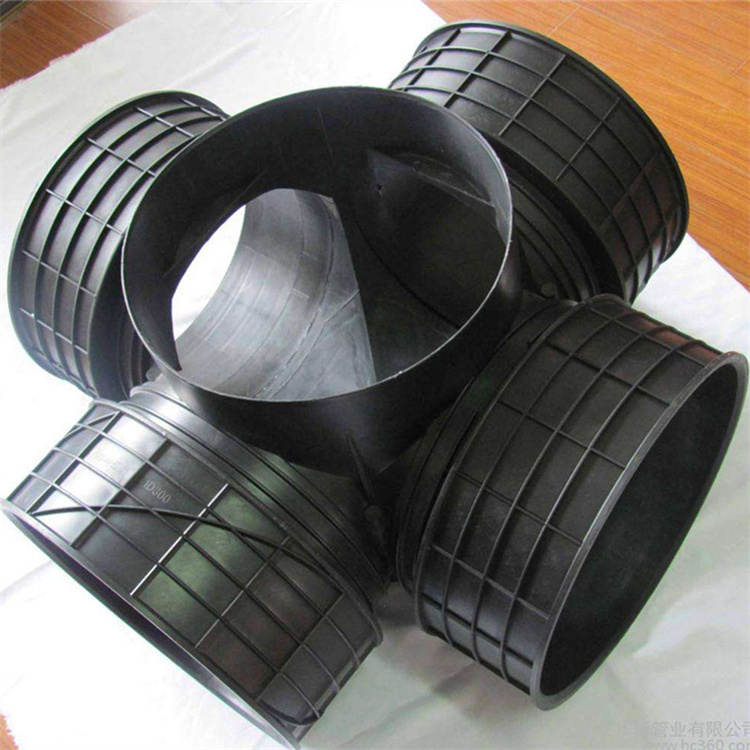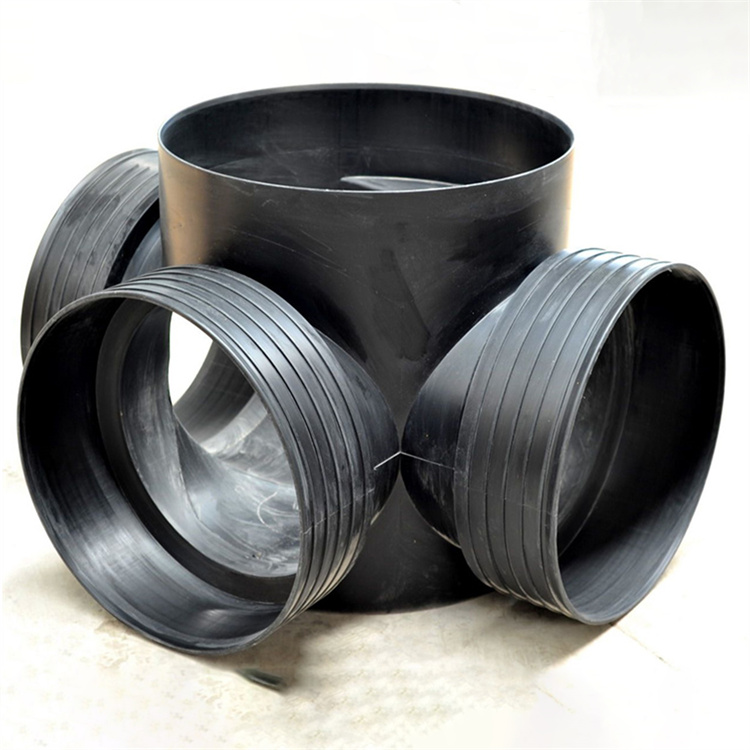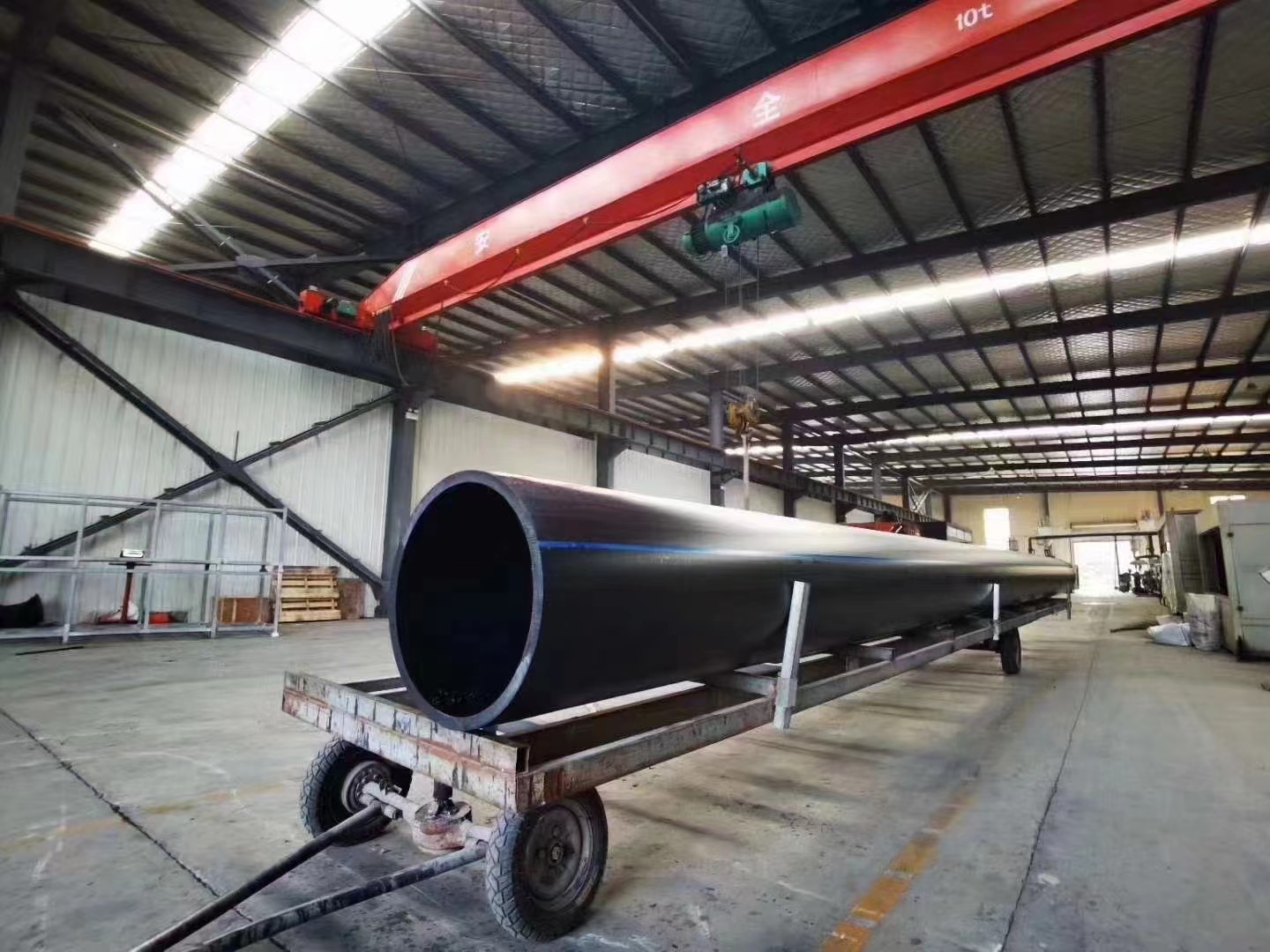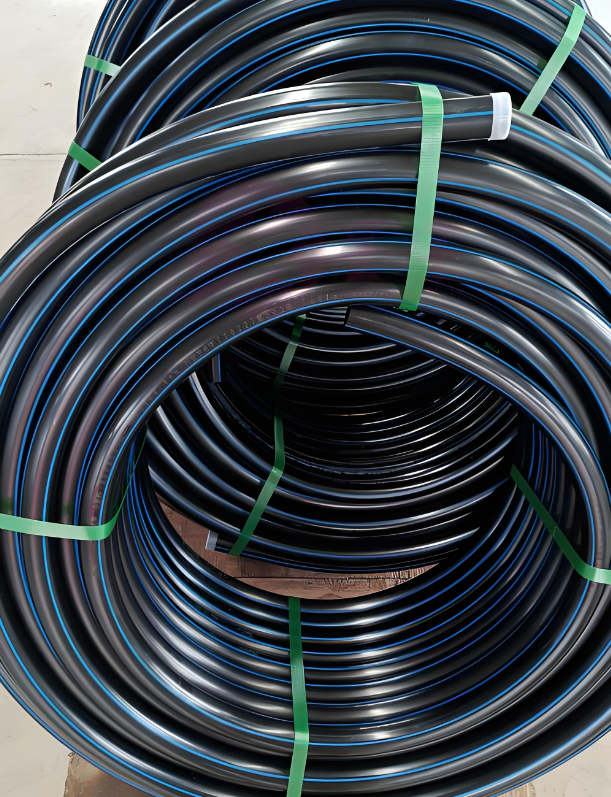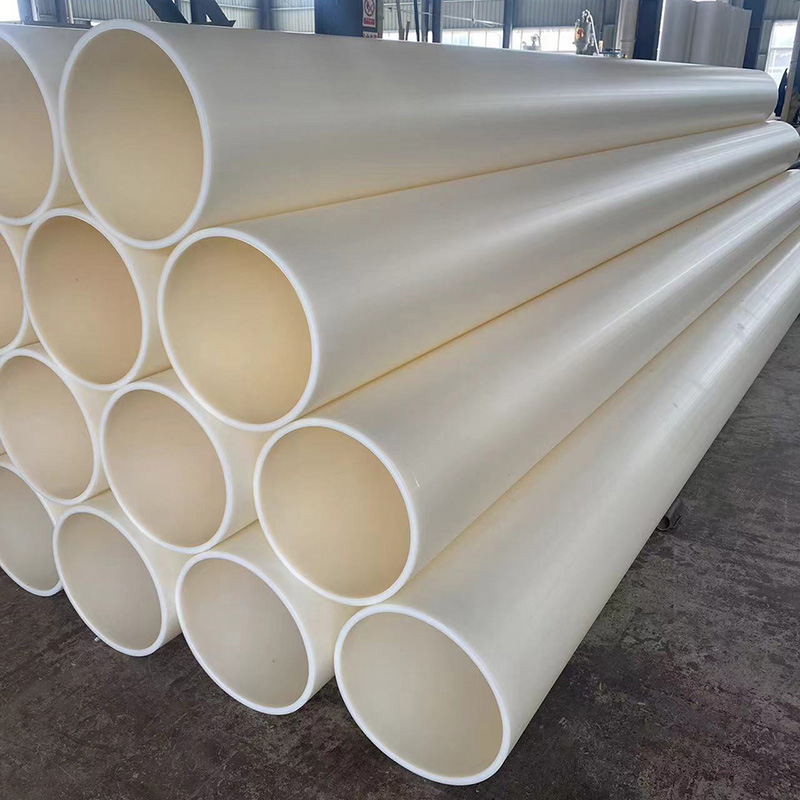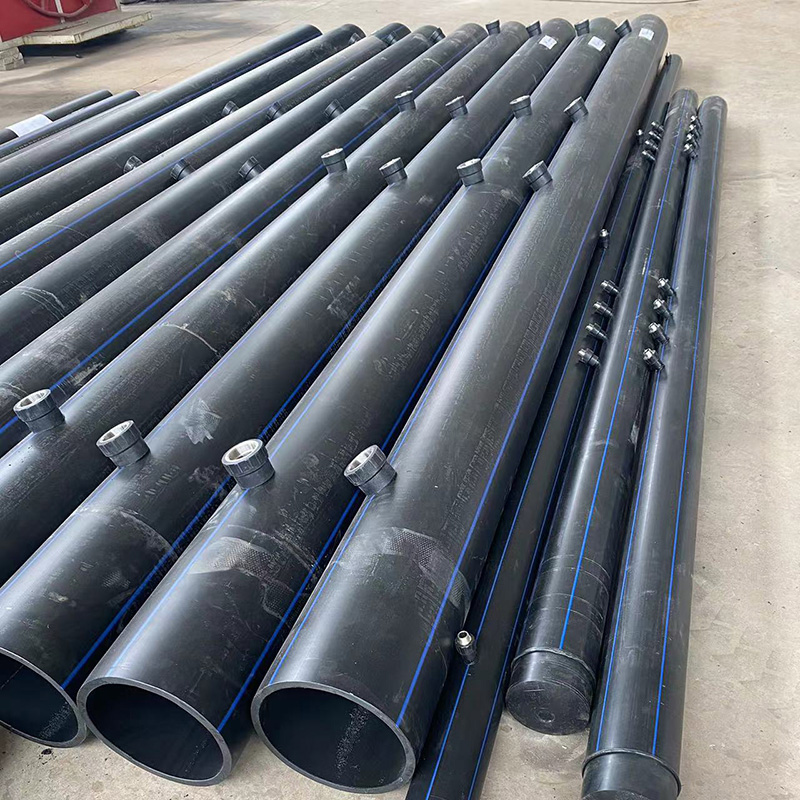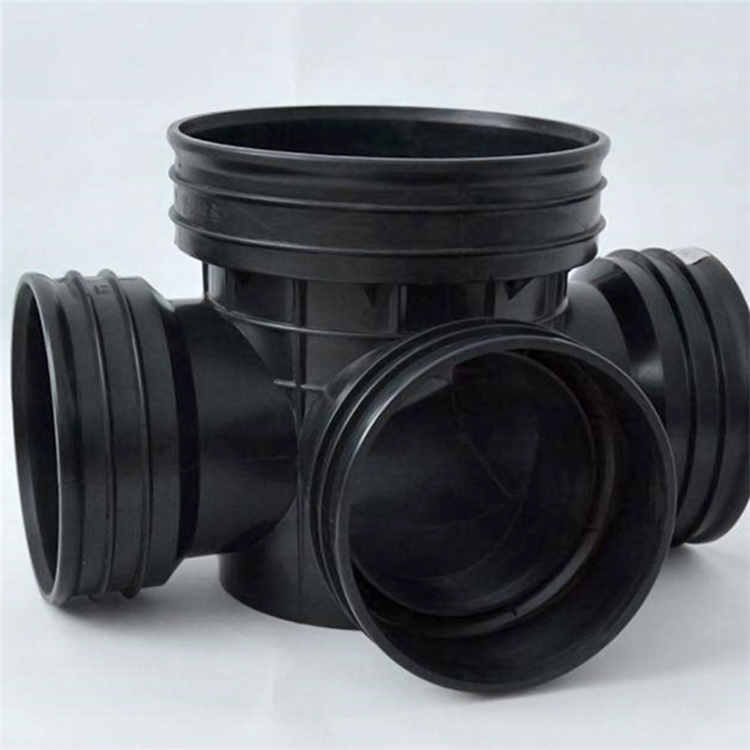












Plastic manholes, also known as plastic "inspection wells," are installed at intervals along the intersections, bends, changes in pipe diameter or slope, drop-off points, or straight pipe sections of plastic drainage pipelines. They facilitate regular inspection, cleaning, and unblocking of the drainage system.
The base sections of plastic inspection manholes are mostly made using one-time injection molding, and changes in pipe diameter and angle are achieved through fittings like eccentric joints, variable angle joints, and rubber seals. A complete set of accessories including covers, shafts, and related parts have been developed for the plastic inspection manholes. Road surface loads are distributed through the covers and bases around the manhole, preventing damage to the manhole from road surface loads. The base has a floating function vertically, allowing it to actively adapt to variations in road elevation. It can be cut to the appropriate length based on the burial depth on site, offering flexibility and convenience. The connection between the shaft, the incoming (and outgoing) water pipes, and the base is made using flexible push-fit connections with rubber seals or heat shrink sleeves, accommodating minor angle changes and making installation quick and easy. The good sealing performance and resistance to leakage ensure it does not cause secondary pollution to groundwater and is relatively energy-efficient as building materials.
Plastic inspection chambers are categorized by their use into stormwater and wastewater chambers. They are applied in different fields, including building community drainage and engineering drainage.