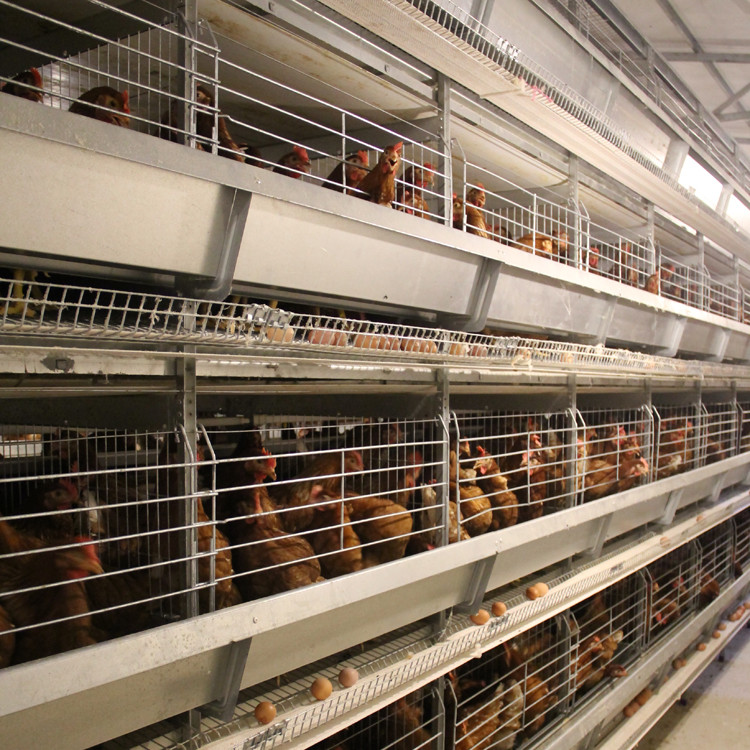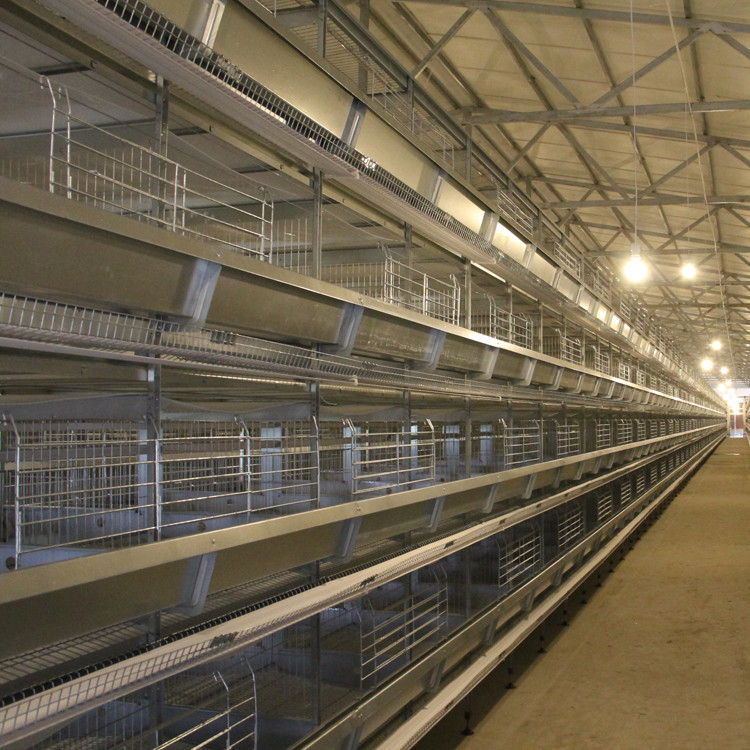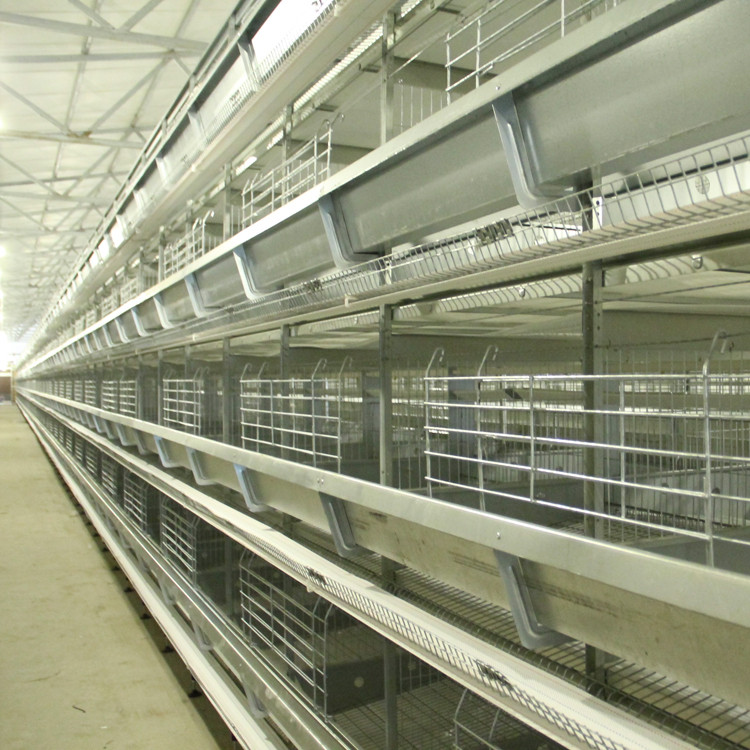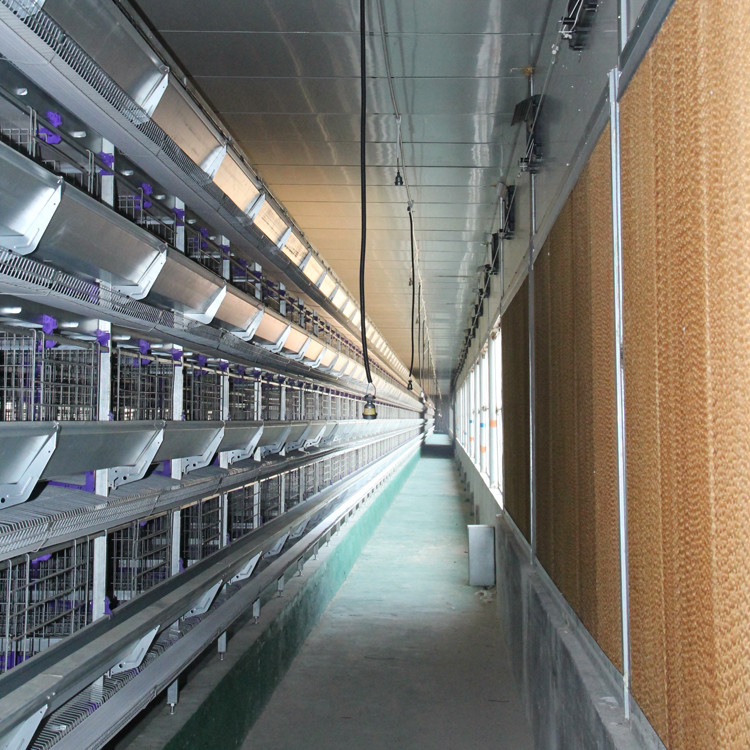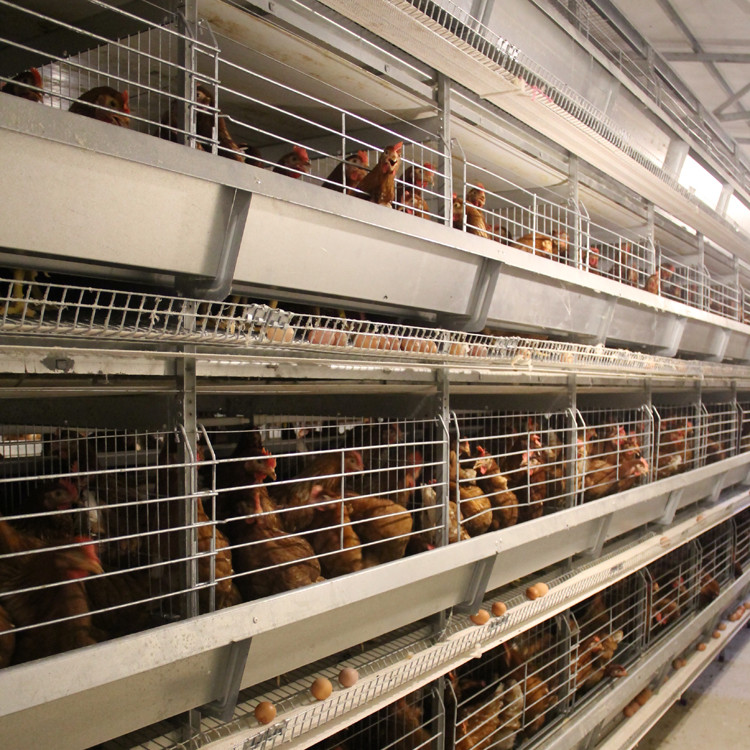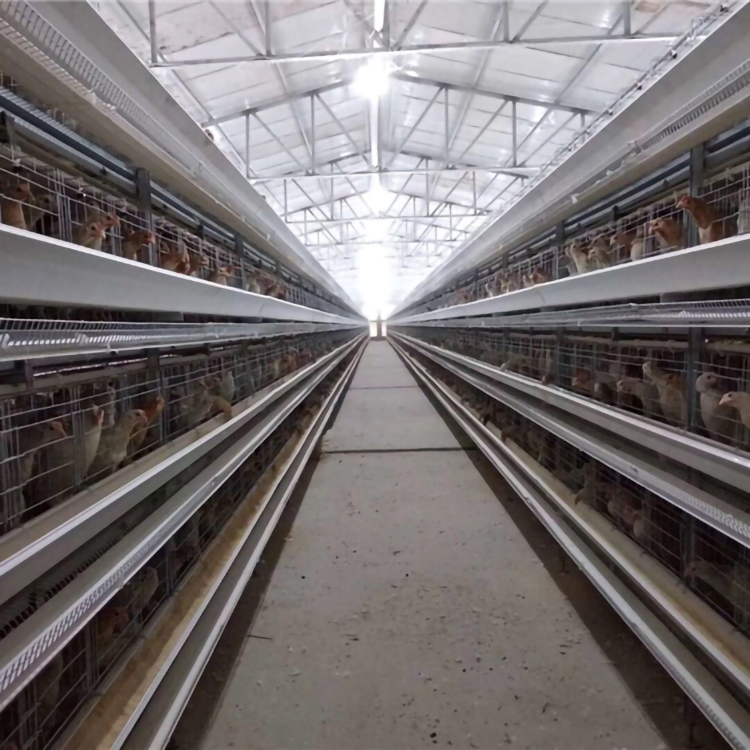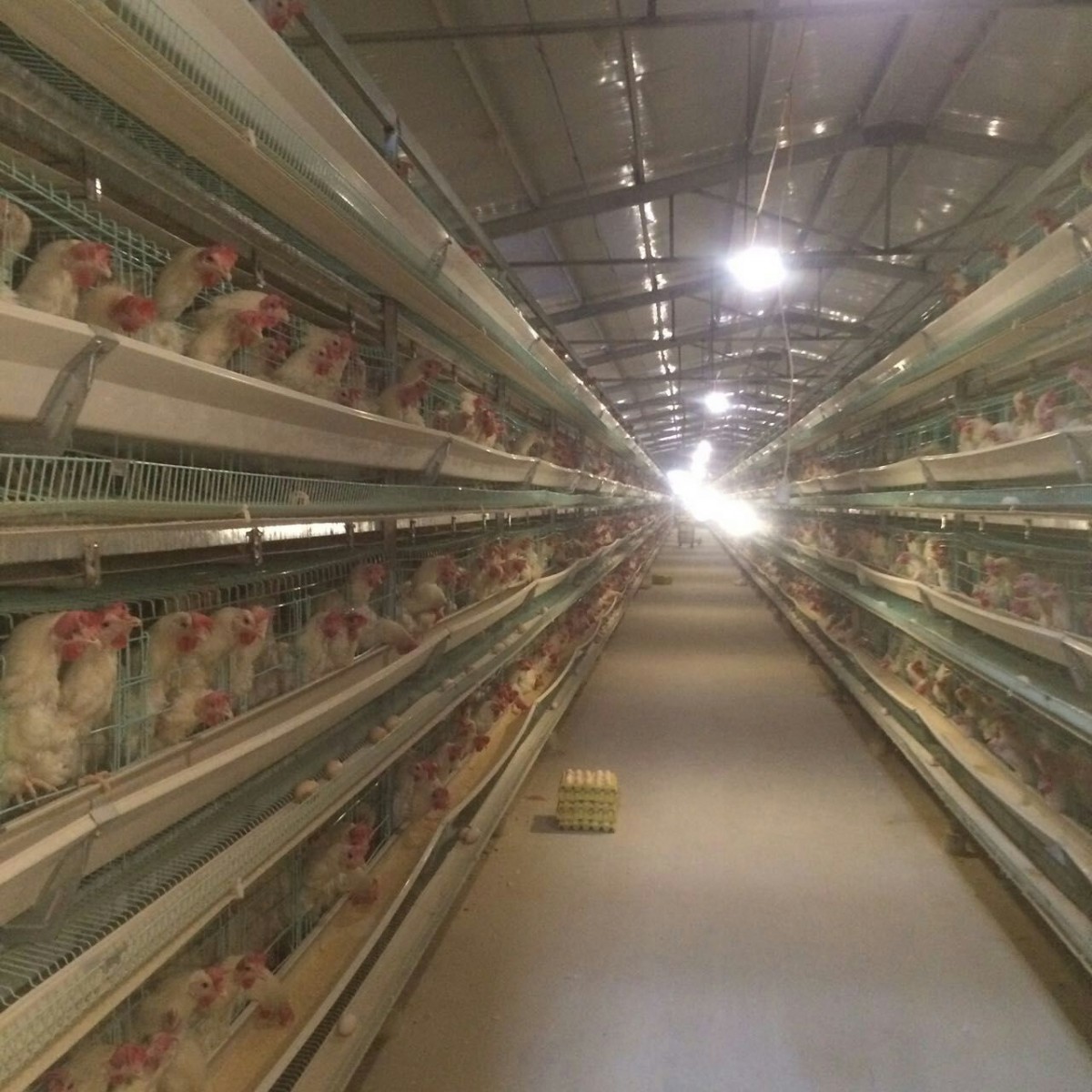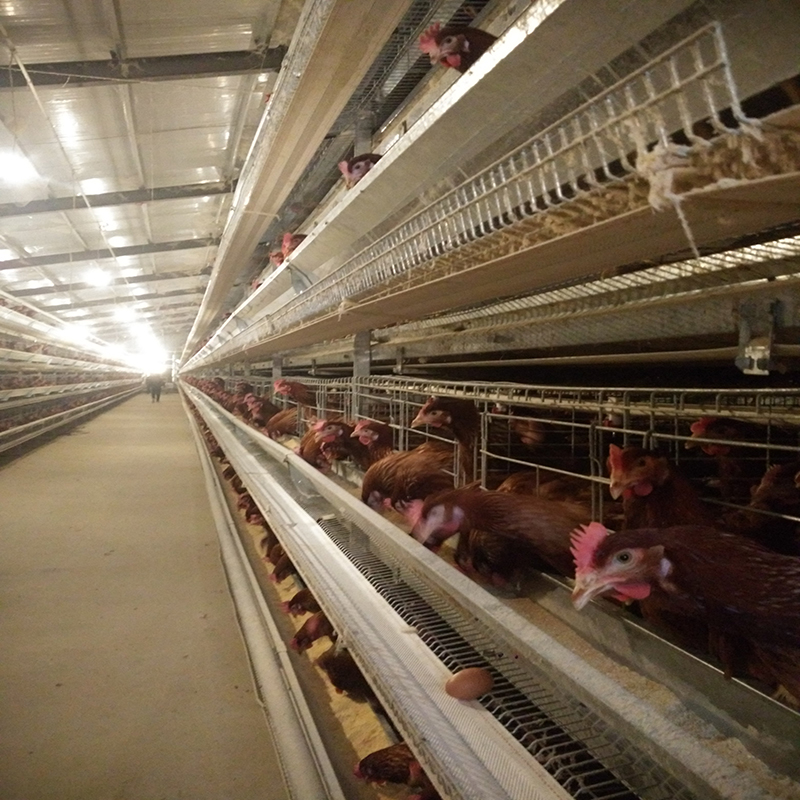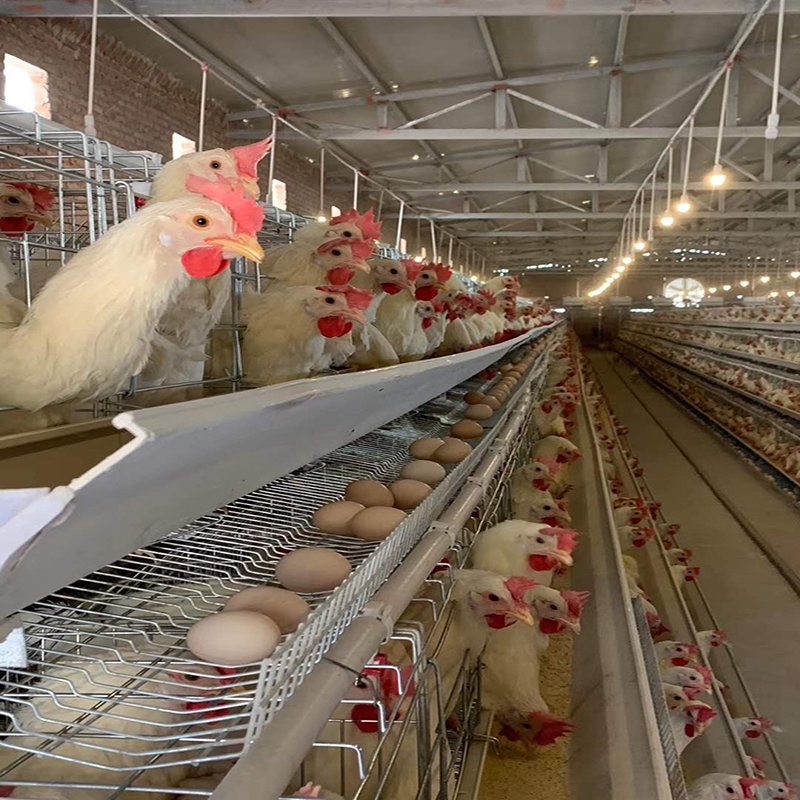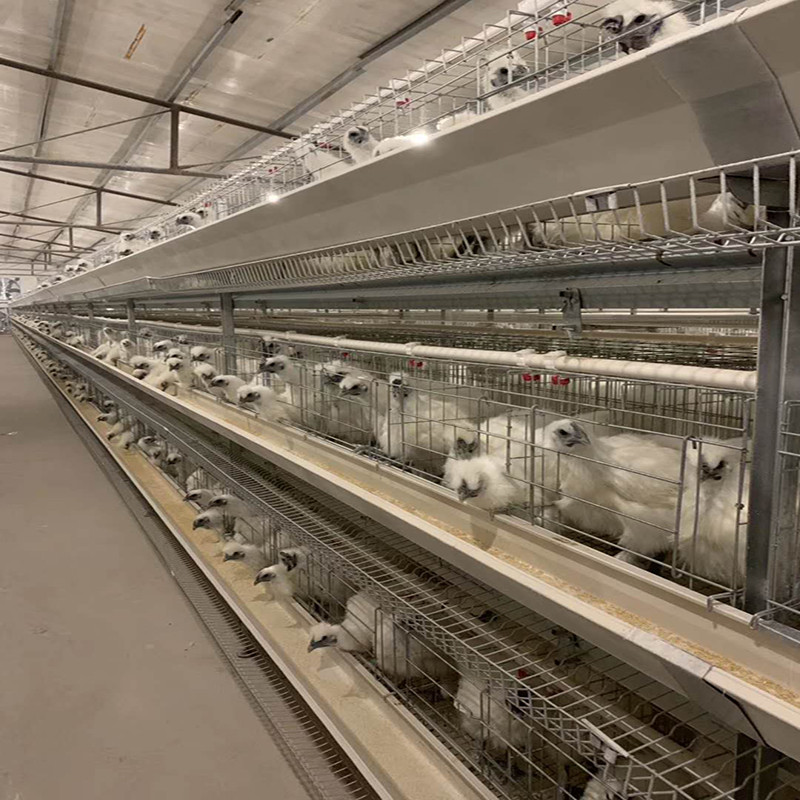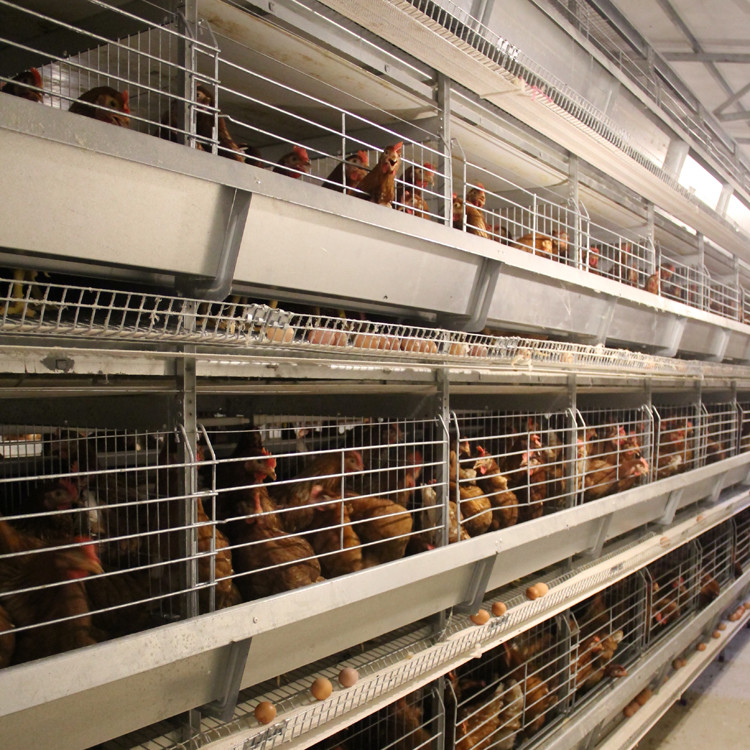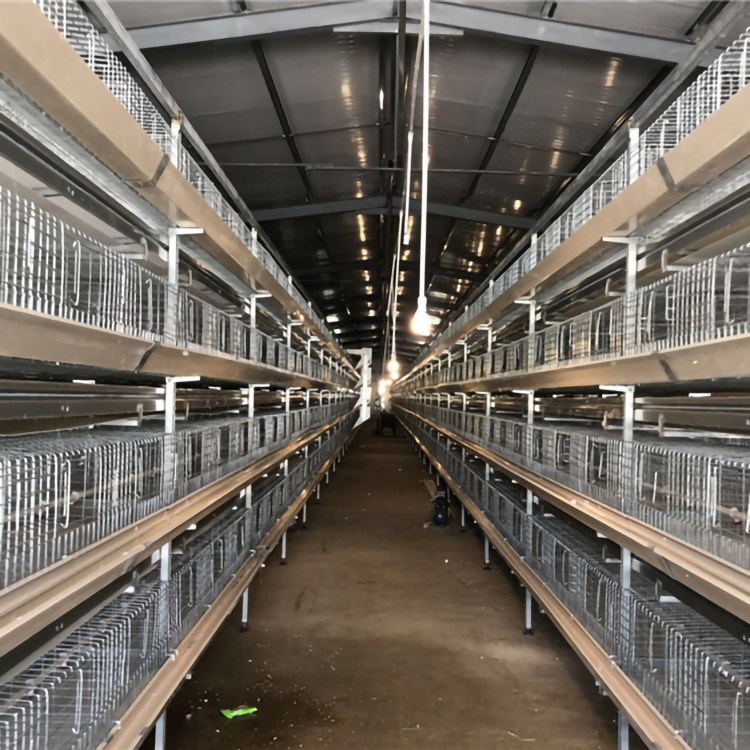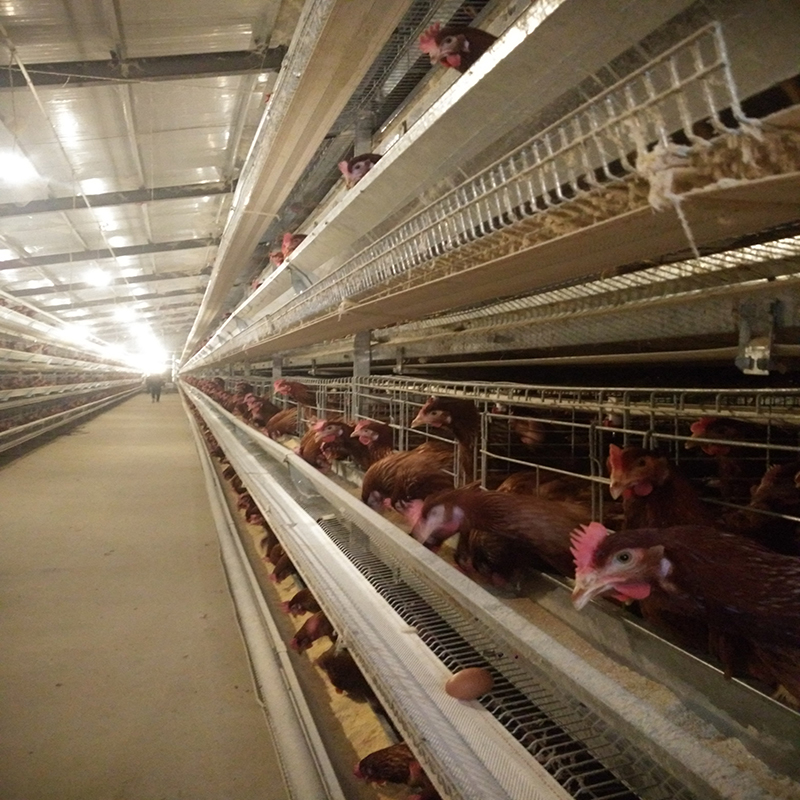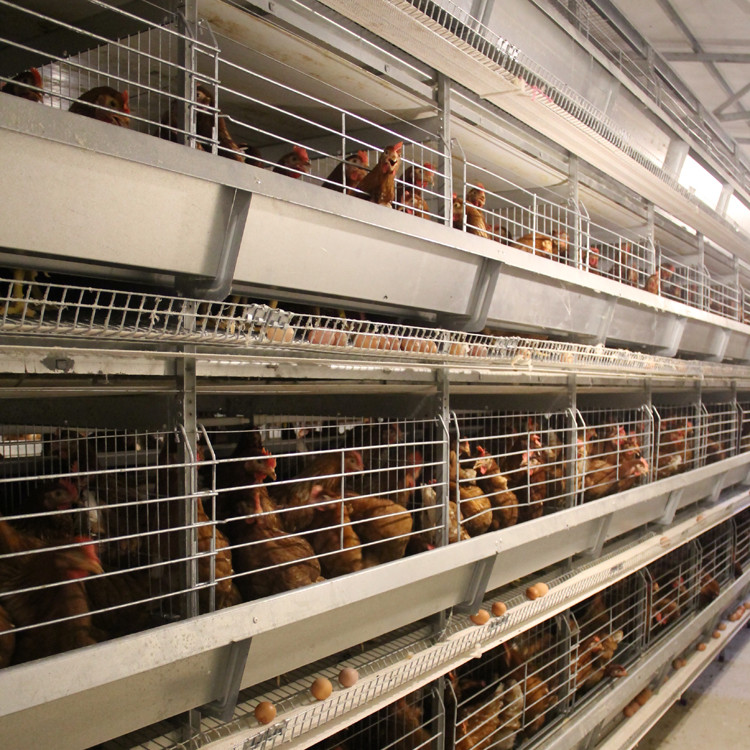

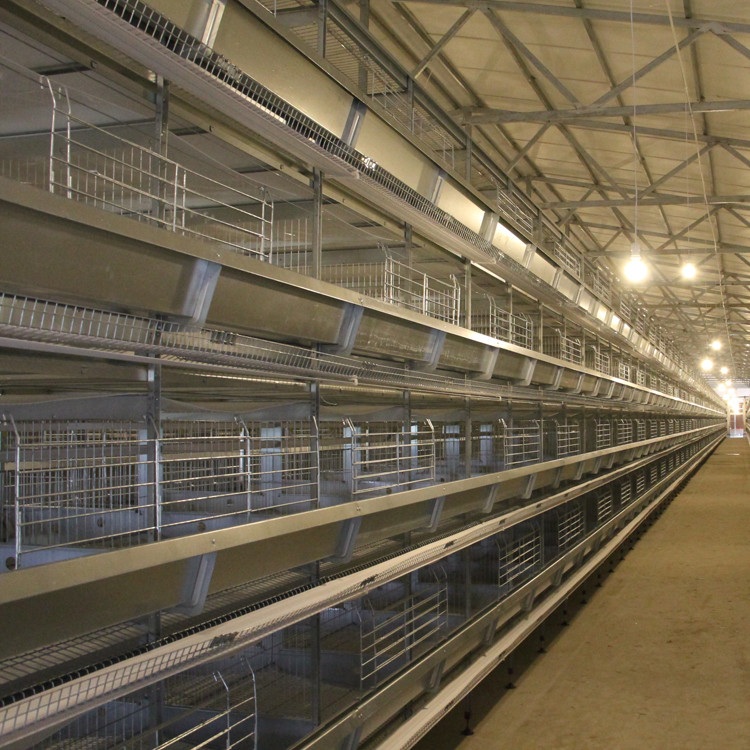


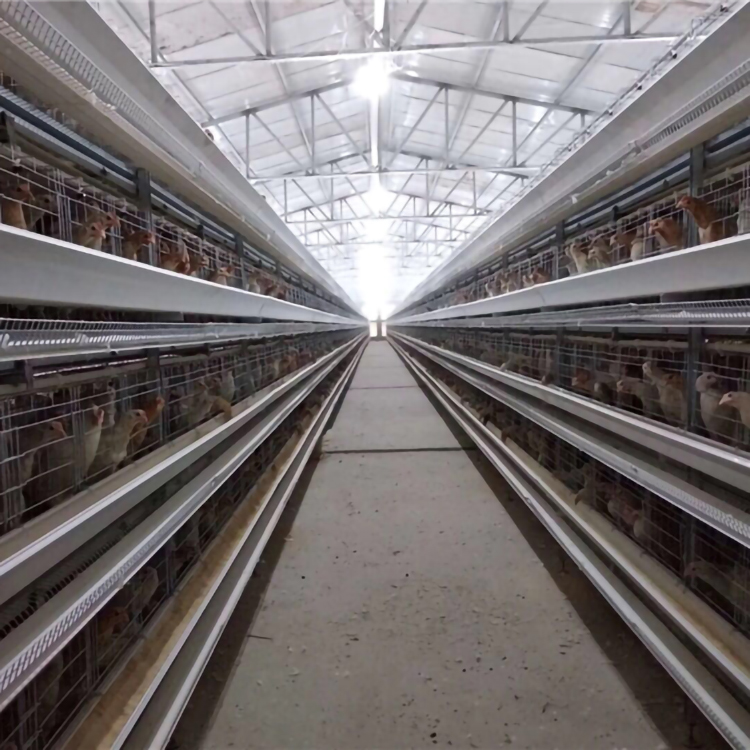
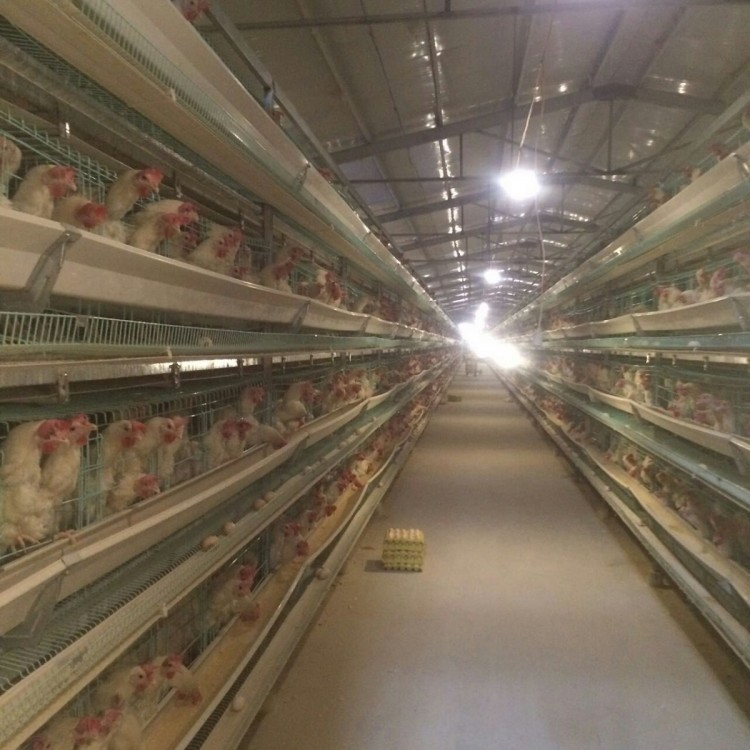
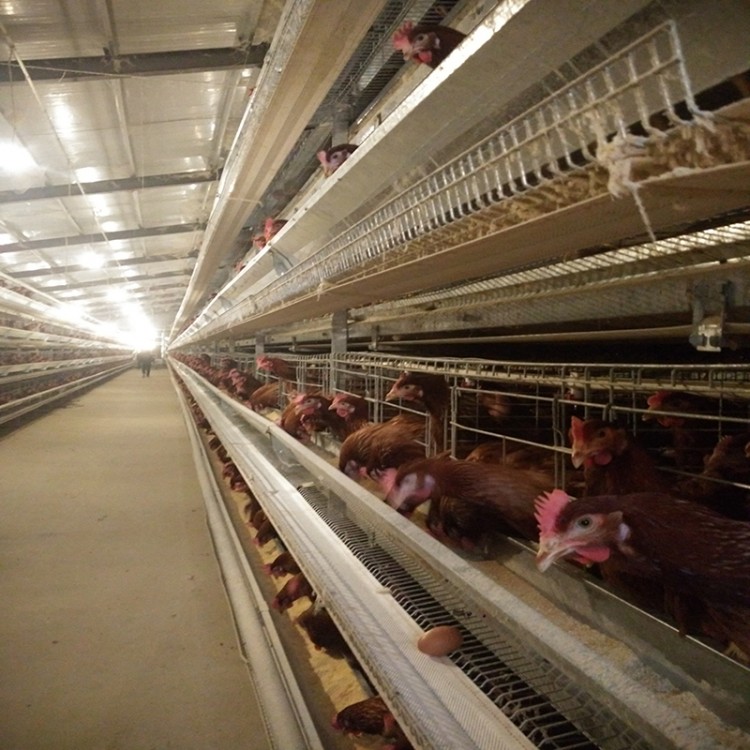
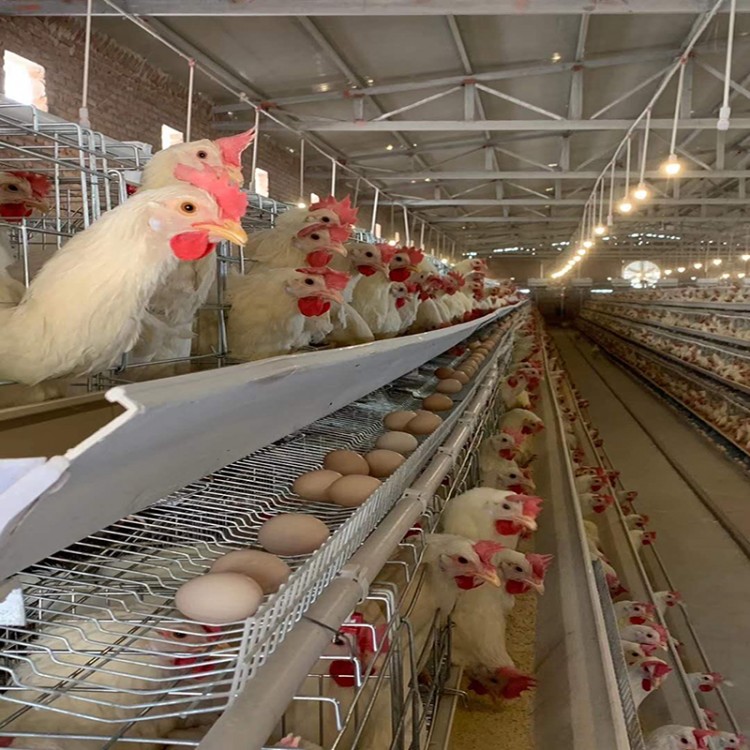
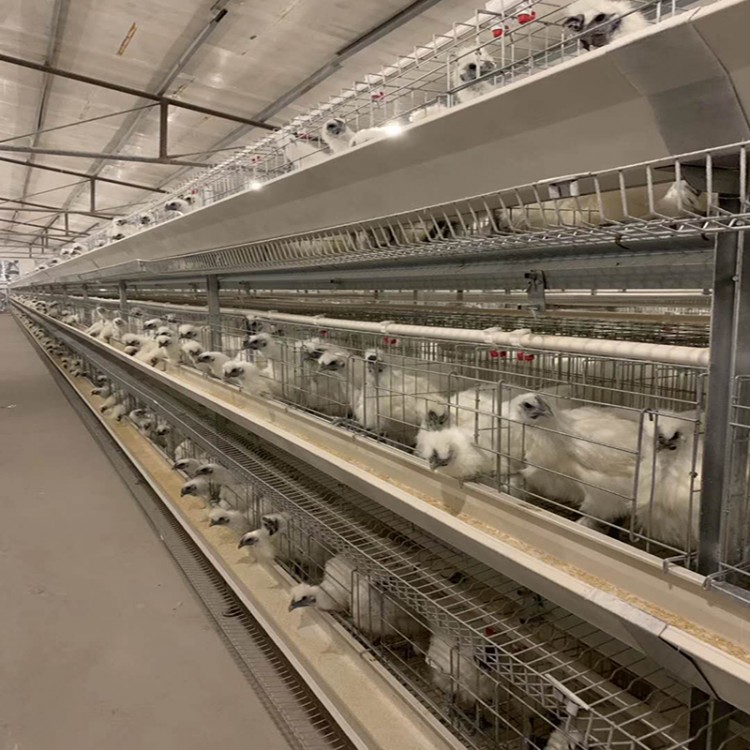






Battery cages are a widely adopted form of chicken farming both domestically and internationally. The reason lies in the design of the battery cages, which provide a comfortable environment for the chickens, allowing them to perform better during the rearing process. The primary advantages of battery cage design are evident in the front mesh and cage door, the density of the cage, and the angle of the rolling eggs, all of which further reflect the benefits to the chickens.
The front mesh design of chicken cages typically consists of vertical metal wires and a few horizontal wires. The gap between the vertical wires ranges from 4.5 to 6.5 cm, and the cage door is usually made of 2 to 3 metal wires, connected to the front mesh, opening inward or outward.
Egg-laying chicken cagesThe interior and exterior of the equipment must be clean, ensuring that sliding surfaces, screws, racks, gearboxes, oil holes, and other areas are free of oil stains. All parts must not leak oil or air. The chips, debris, and dirt around the equipment should be thoroughly cleaned. Tools, accessories, and workpieces (products) should be neatly arranged, and pipelines and wiring should be organized. Maintain good lubrication by oiling or changing oil on time, ensuring a continuous supply of oil without dry friction, normal oil pressure, a bright oil gauge, a clear oil path, and oil quality that meets requirements. Keep oil cups and oil mats clean. Adhere to safety operating procedures, do not overburden the equipment, ensure that all safety protection devices are complete and reliable, and promptly eliminate unsafe factors.
Egg-laying chicken cageThe daily maintenance and care are fundamental to equipment maintenance, and must be institutionalized and standardized. Regular maintenance activities for equipment should establish work quotas and material consumption quotas, and be evaluated accordingly. Regular maintenance should be incorporated into the workshop's contractual responsibility system. Regular equipment inspections are a planned preventive measure, involving not only human senses but also specific inspection tools and instruments. This is executed according to the regular inspection schedule and is also known as regular spot checks. Precision checks should also be conducted on mechanical equipment to determine the actual accuracy of the equipment.
Egg-laying chicken cagesThe maintenance should be conducted according to the maintenance procedures. Equipment maintenance procedures outline the requirements and regulations for the daily maintenance of equipment. Adhering to the equipment maintenance procedures can extend the lifespan of the equipment and ensure a safe, comfortable working environment. The main content should include:
1. Equipment must meet operational requirements such as neatness, cleanliness, durability, lubrication, corrosion resistance, and safety. This includes operational procedures, tools and materials used, standards achieved, and precautions to take.
2. Daily inspection and maintenance procedures, as well as locations, methods, and standards for regular inspections.
3. Content and methods for inspecting and evaluating the extent to which operation workers maintain equipment