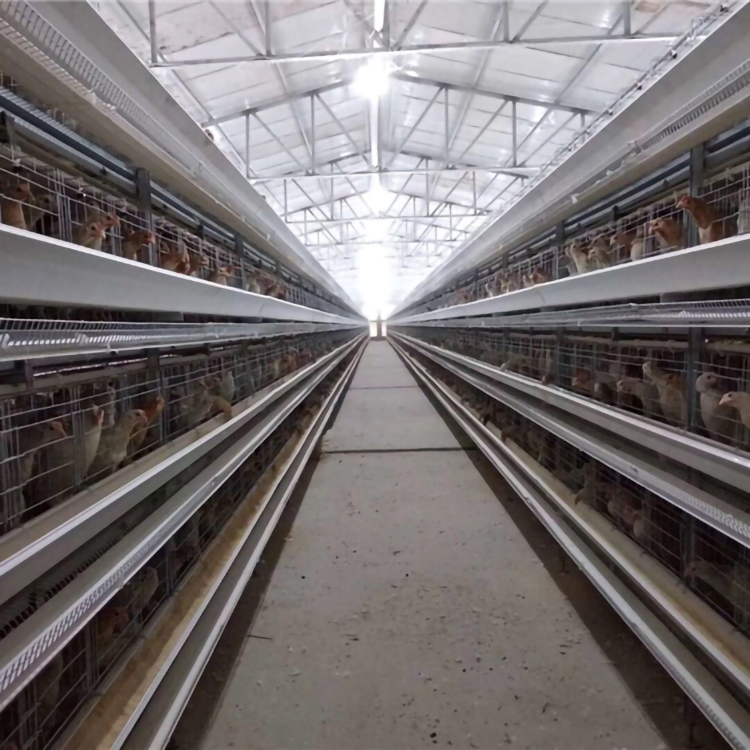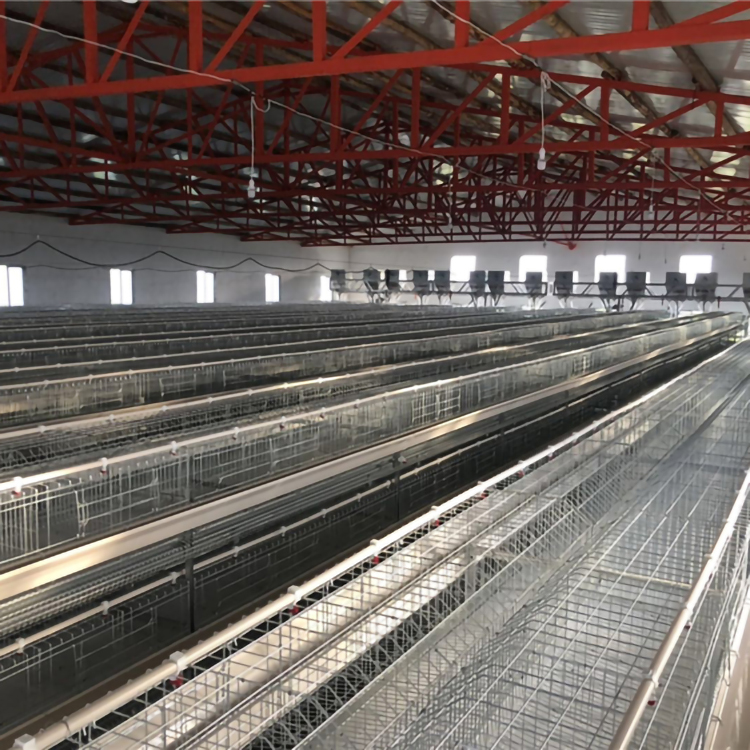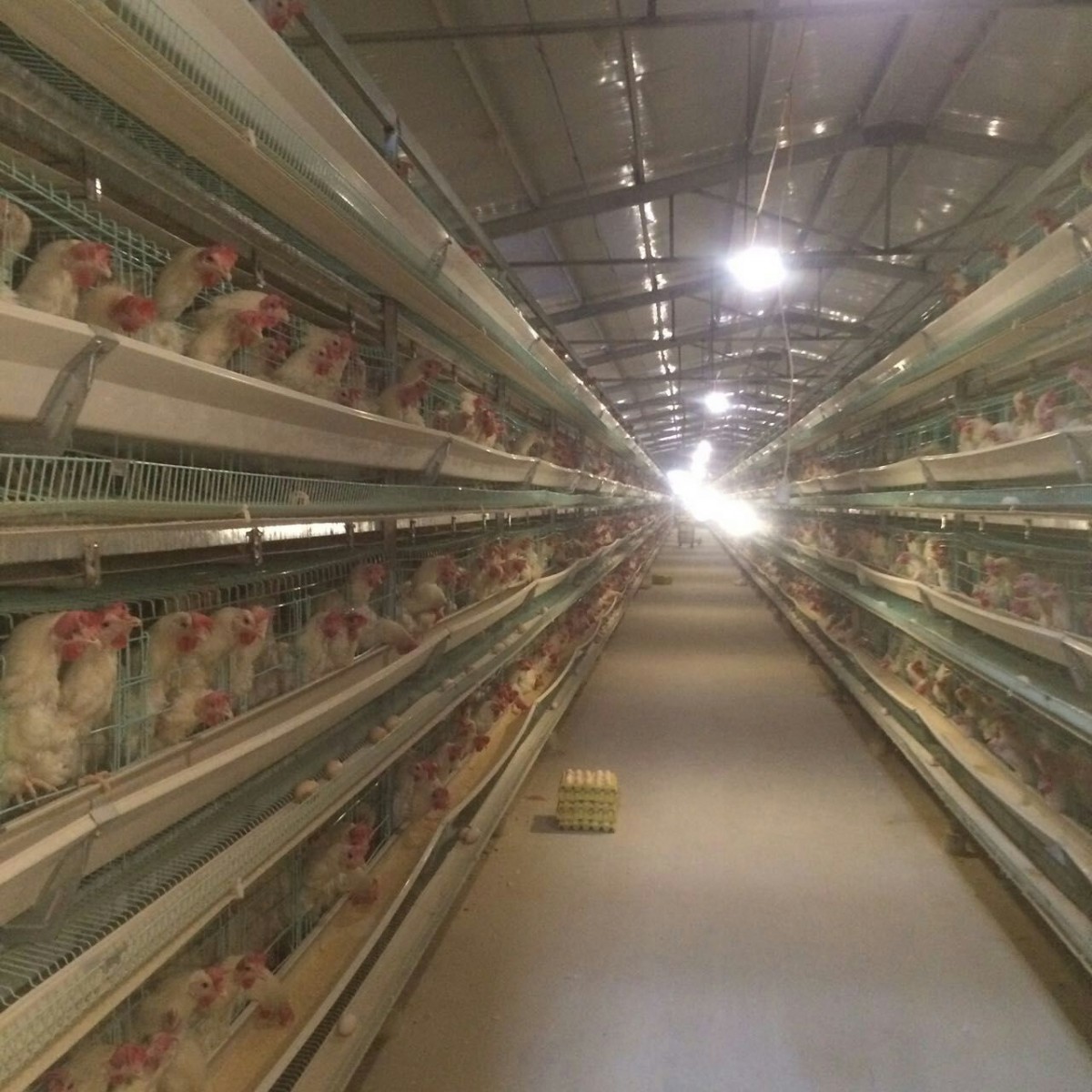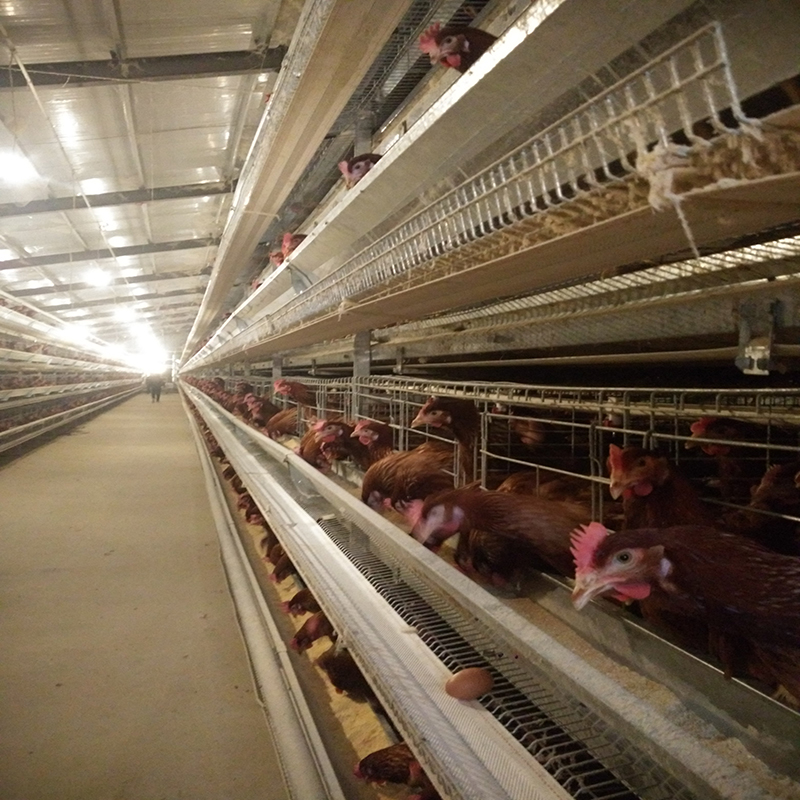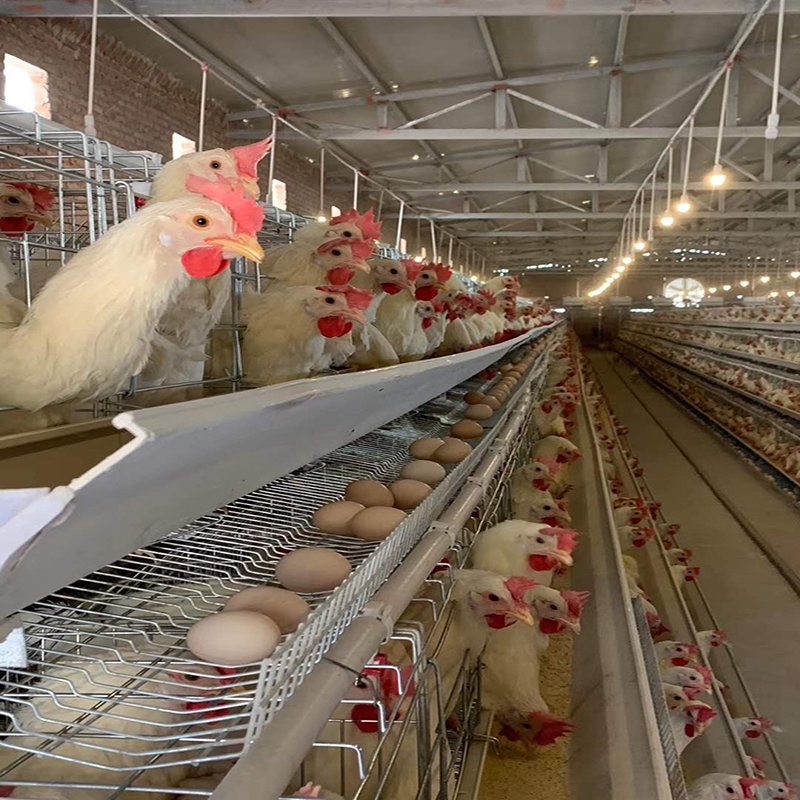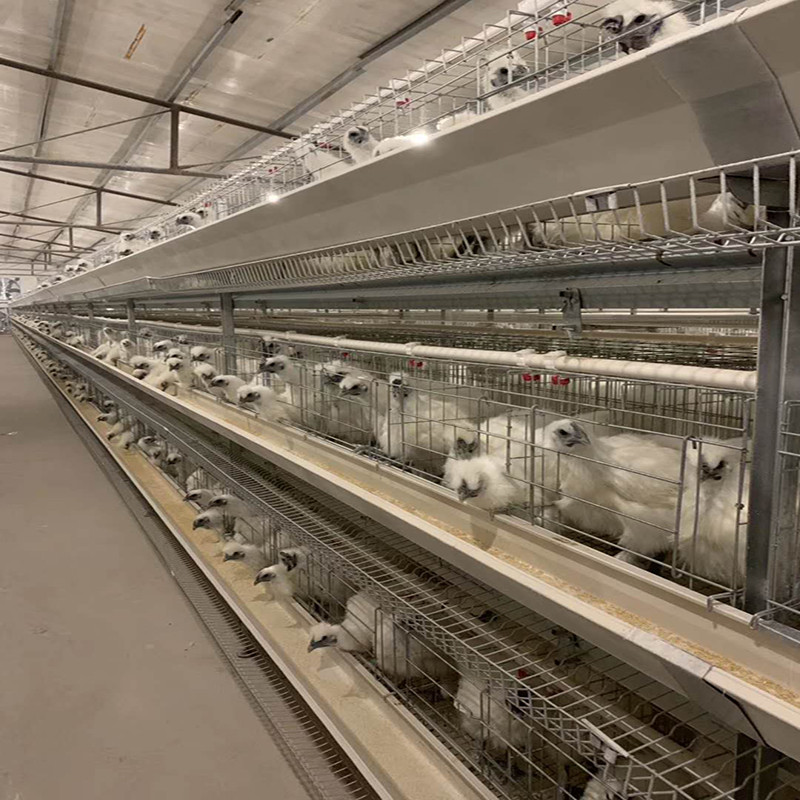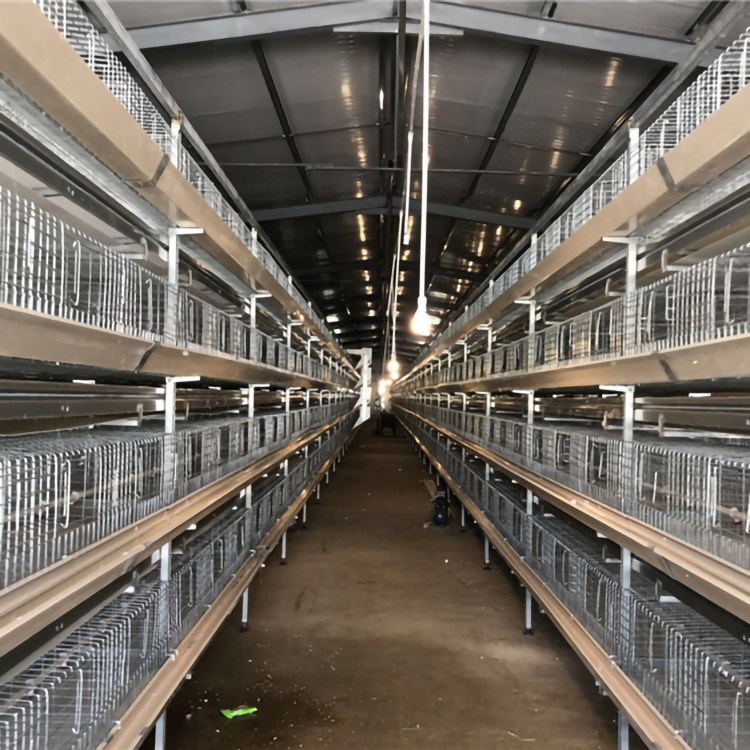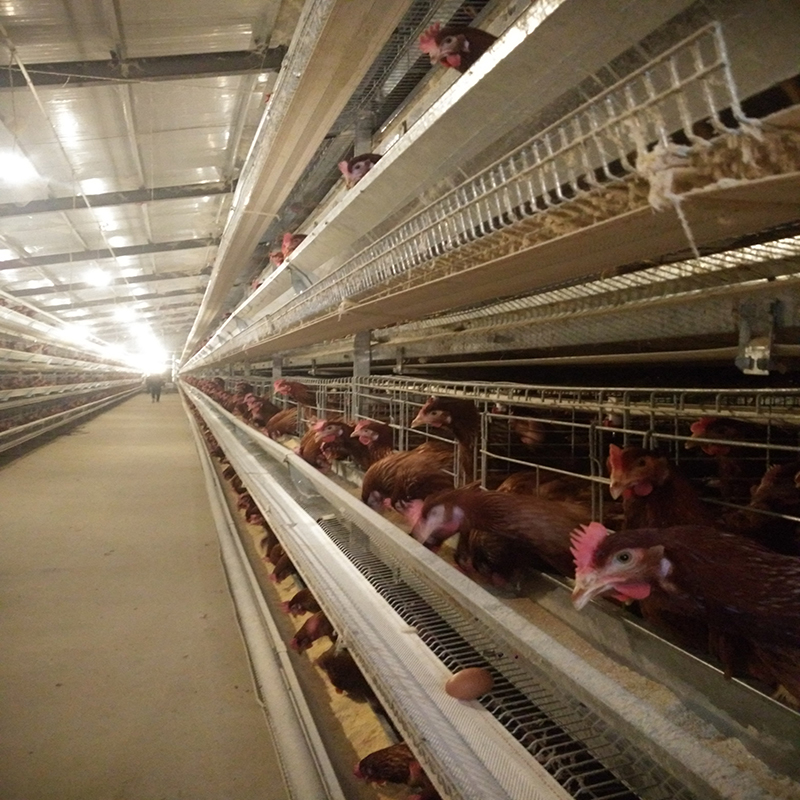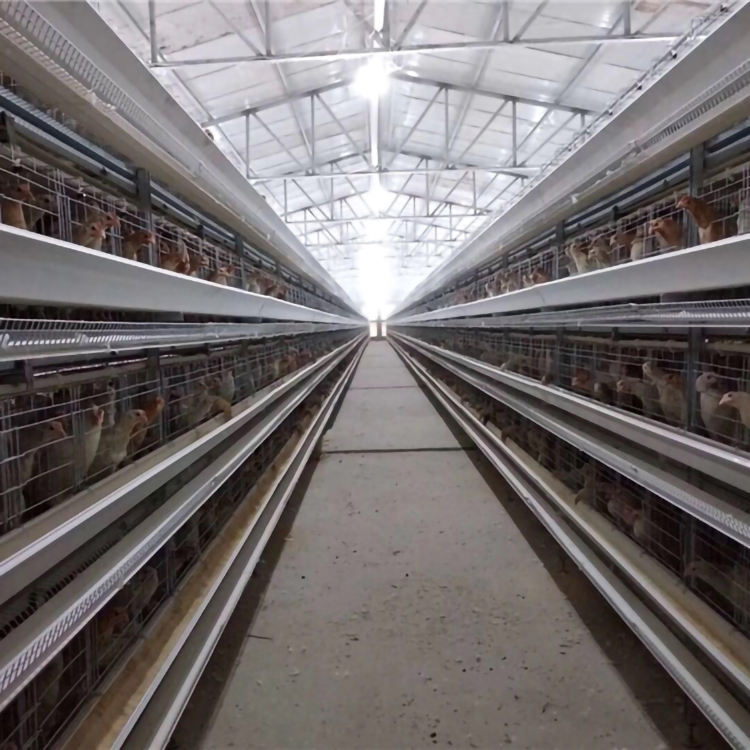

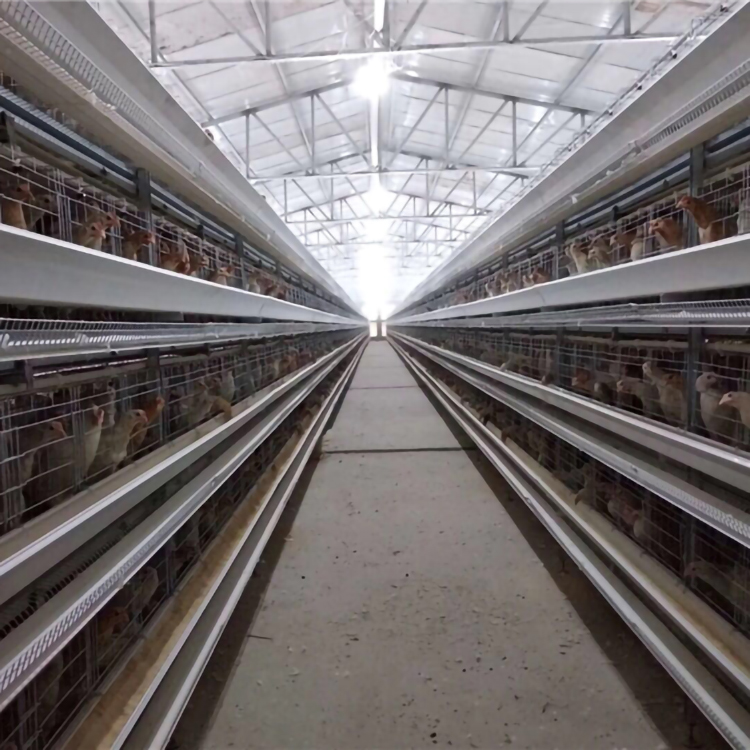
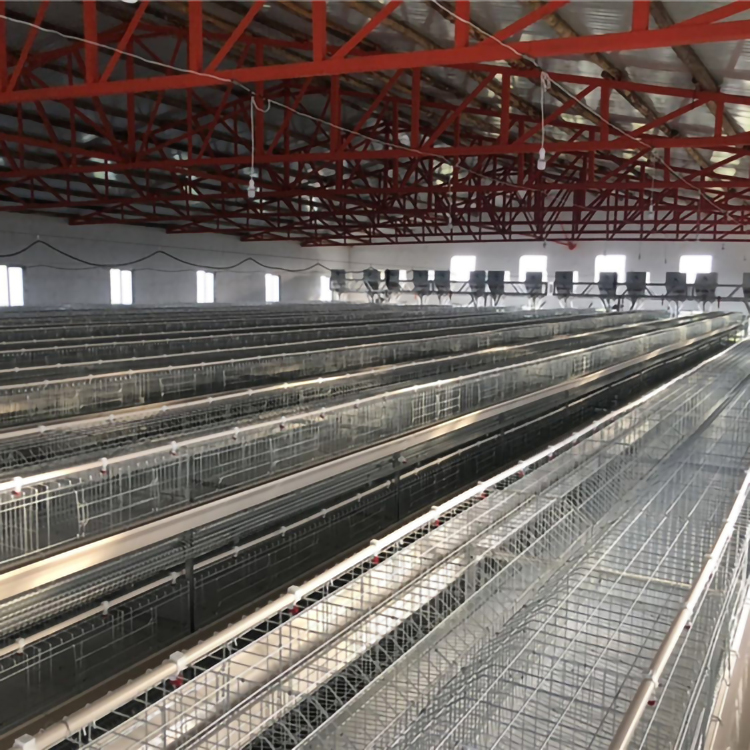


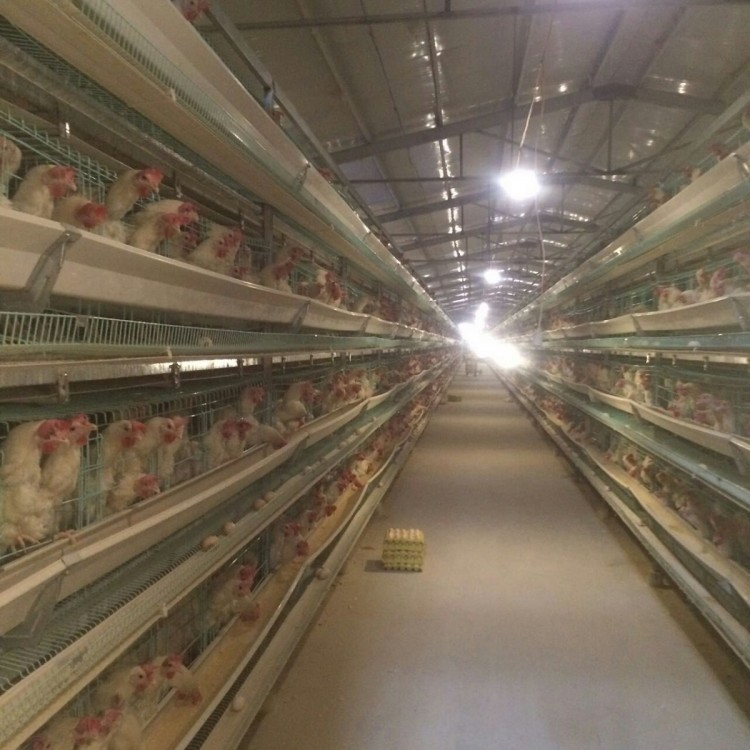
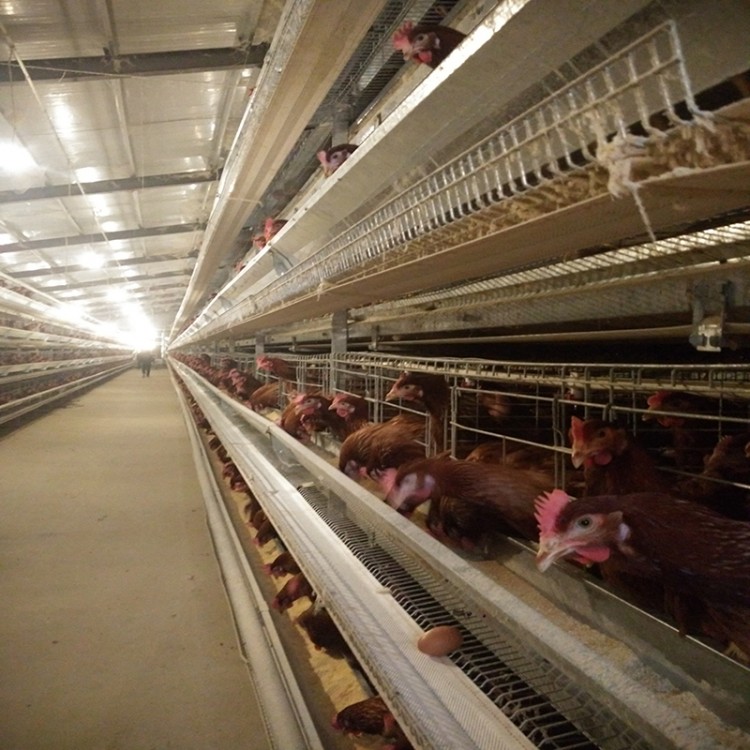
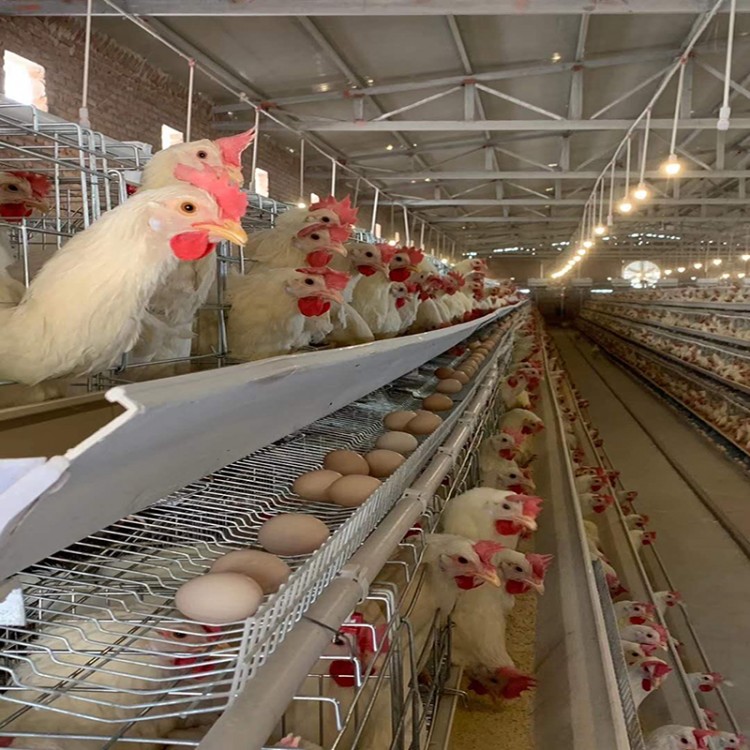
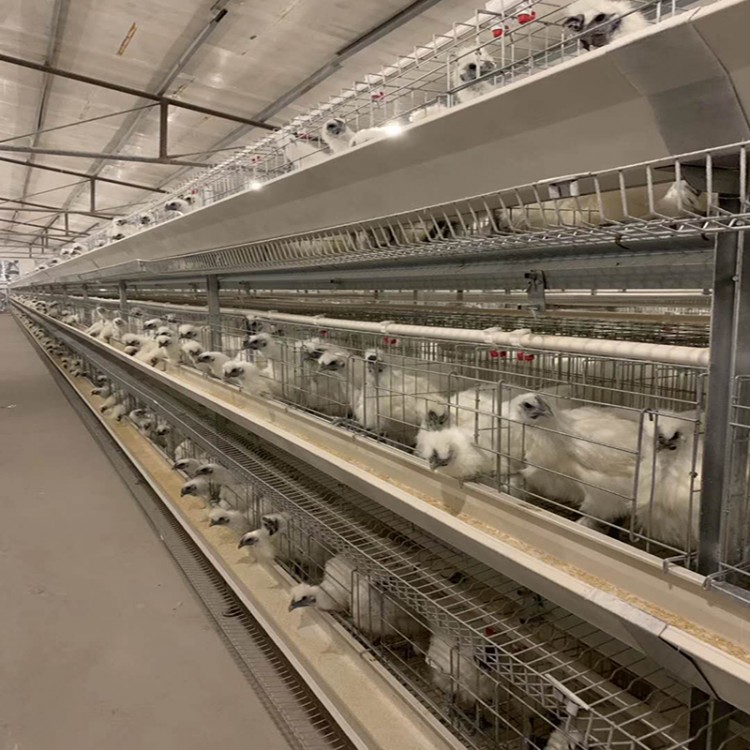






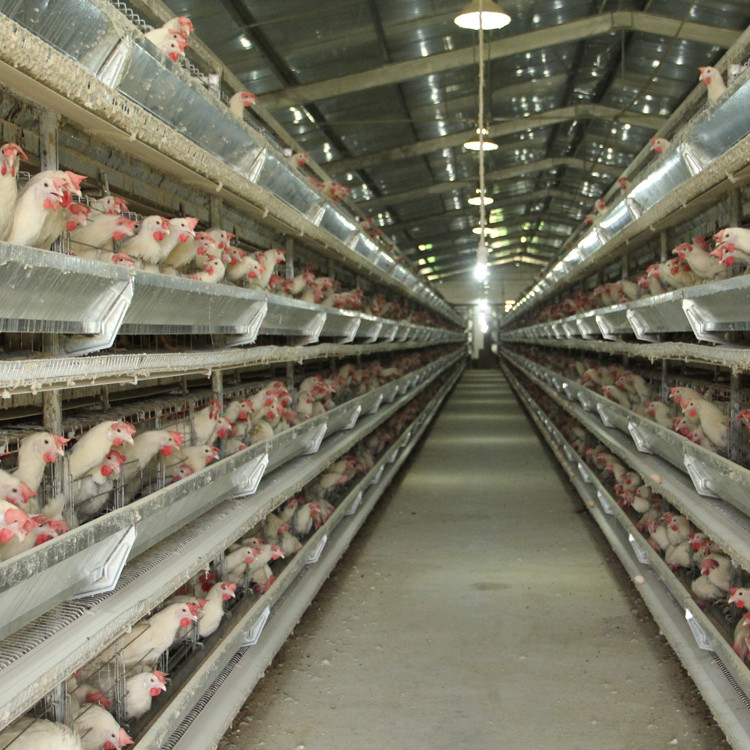
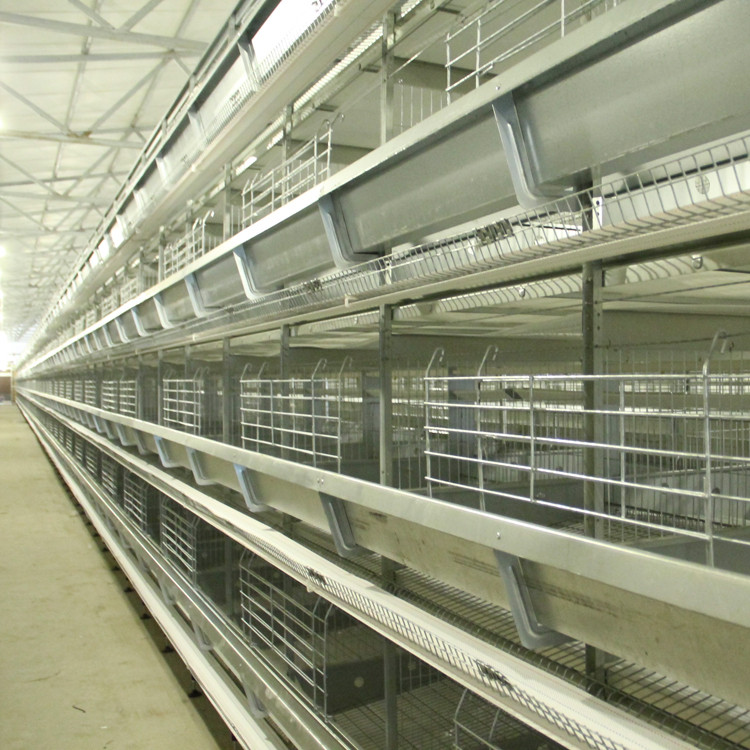
Cage-raised egg chicken farming typically starts at 18 to 20 weeks of age and continues until the 72nd week, marking the end of a production year. Therefore, in addition to a good chicken house environment, structurally sound cages are also necessary to maximize the egg-laying hens' production efficiency.
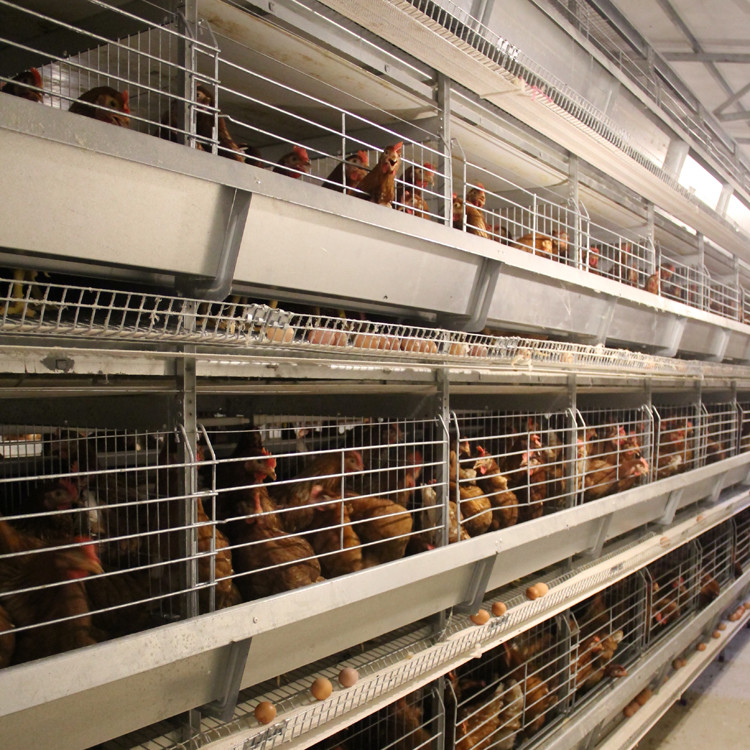
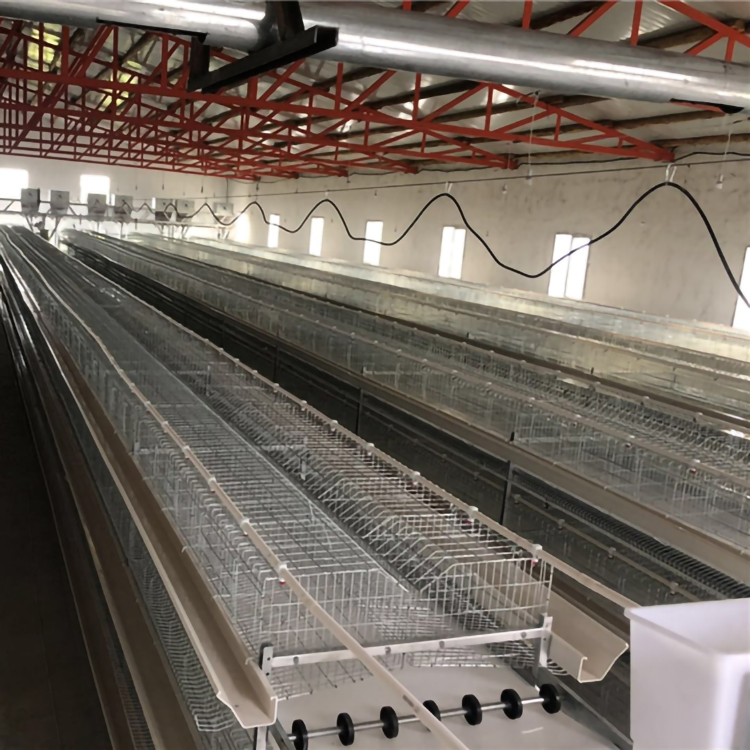
Egg-laying chicken cageThe size and dimensions must accommodate a certain activity area, feeding position, and height. Additionally, to ensure the eggs laid can roll out of the cage promptly, the bottom of the cage should have a slight slope. According to these requirements, the arrangement of the laying hen cages must consist of many small individual cages. Each individual cage is designed to house 2, 3, or 4-5 hens.
Egg-laying chicken cageIndividual cage dimensions typically range from 445-450mm in height at the front and 400mm at the back, with a slope of 9-10 degrees at the bottom. The cage depth is 310-350mm, and the egg collection槽 extends 120-160mm beyond the cage. The cage width is determined by the feeding position; each chicken has a feeding space of 100-110mm. For 2 chickens, the cage width is 250mm, for 3 chickens, 300mm, and for 4-5 chickens, 420-450mm.
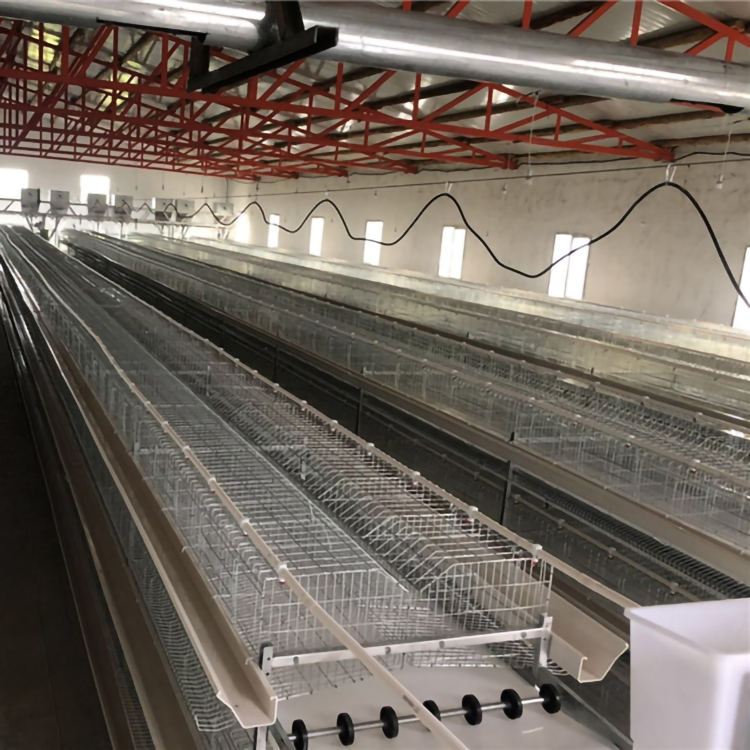
Manufacturing and installation of single-cell cages come in two forms: integrated and assembled. The integrated type involves combining several individual cages into a single unit, which is convenient to install but material-intensive, difficult to transport after assembly, and prone to deformation. The assembled type uses an integrated frame; after the frame is set up, the individual cage grids are hung in place. Its advantage lies in neat installation, ease of replacement, and maintenance. In actual production, the assembled type is more common.
Egg-laying chicken cagesEach panel of the single cage is generally made by spot-welding cold drawn steel wire, but the functions of these panels vary, so there are different requirements for the thickness of the wire material and the size of the mesh openings.
The side net and rear net primarily serve as separators for the cage, and can be made from metal wire with a diameter of 2 to 2.5 mm, arranged in horizontal grids. The longitudinal wires are thicker and placed on the outside, with a spacing of 100 to 200 mm; the transverse wires are finer and positioned on the inside, with a spacing of 30 mm. This arrangement prevents chickens from pecking at each other through the cage dividers.
The bottom net must not only bear a certain weight but also prevent manure from falling through without damaging the eggs. It should also have adequate elasticity to prevent egg breakage upon laying and provide comfort for the chickens during movement. Therefore, it is made using diameter 2.5 to 3.0 mm metal wire, arranged in a vertical grid. The warp uses thicker wire on the surface with a spacing of 22 to 25 mm; the weft uses finer wire at the bottom with a spacing of 50 to 60 mm. This design ensuresEggsSmoothly rolls out along the meridian slope.
Egg-laying chicken cageThe cage door width is determined by the width of the individual cage, typically made of 3mm diameter metal wire to form vertical bars, spaced 50-60mm apart. The cage door is 400mm high, with the bottom edge 50-55mm from the bottom mesh to allow for egg rolling space; or a protective egg board can be added 50mm from the bottom edge, sloping into the cage to prevent eggs in the collection tray from being pecked by chickens and to prevent chicken droppings from falling into the feed and water troughs.