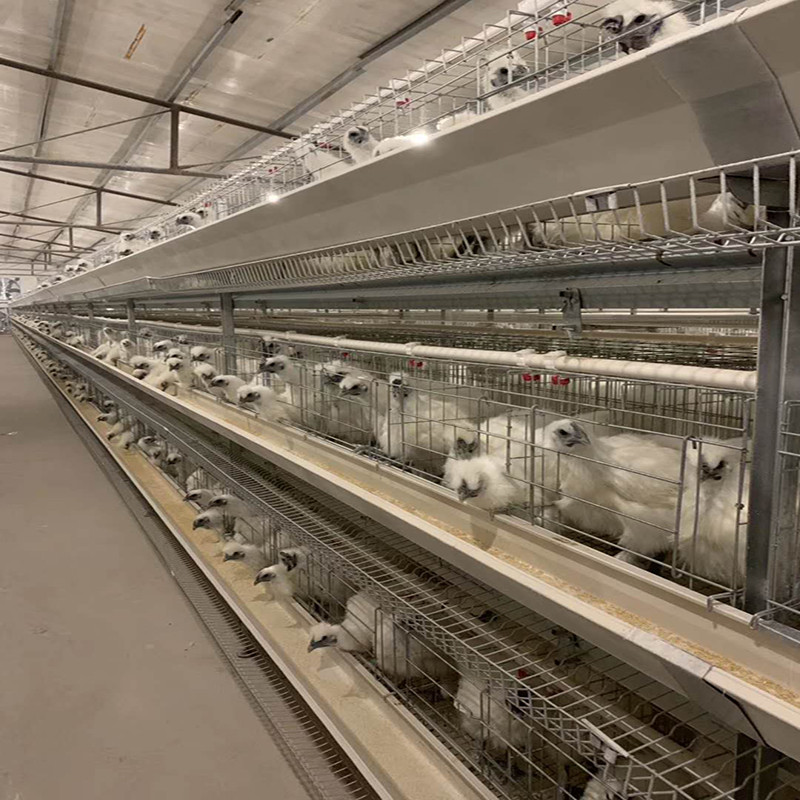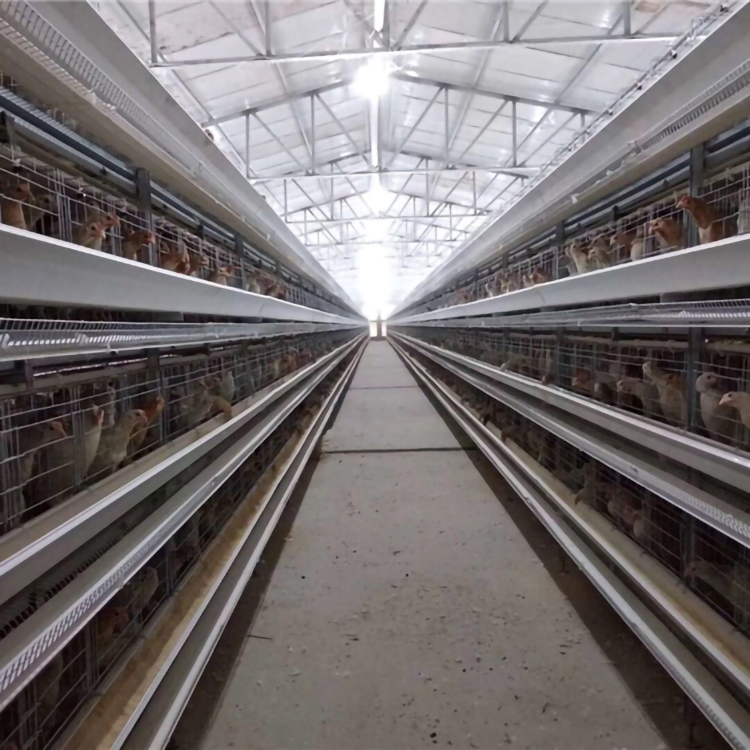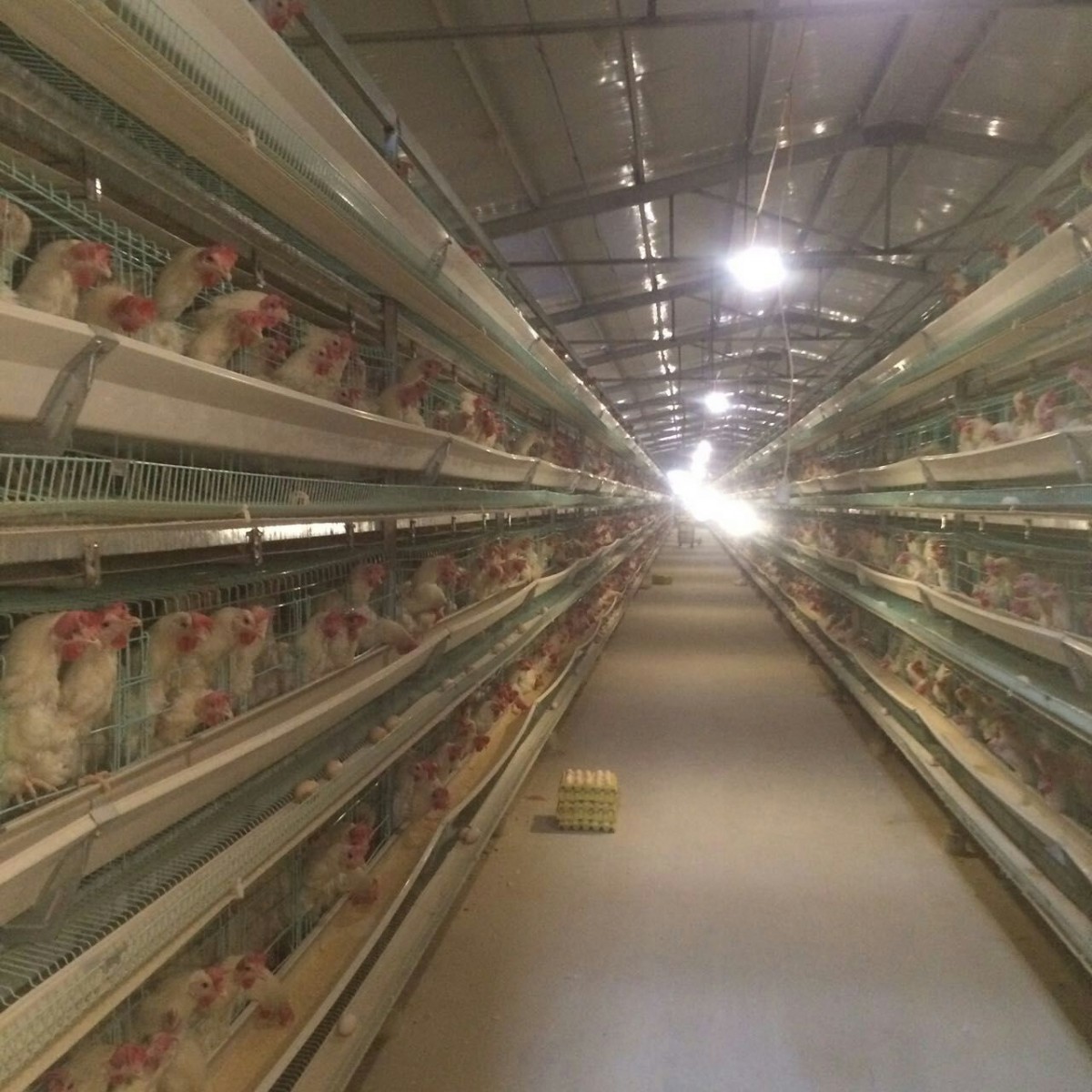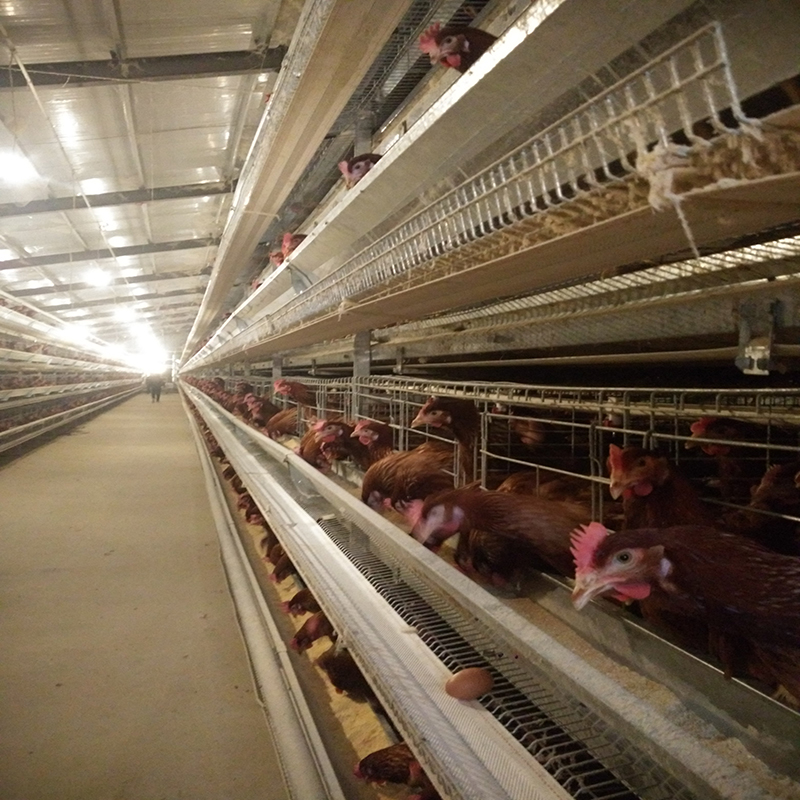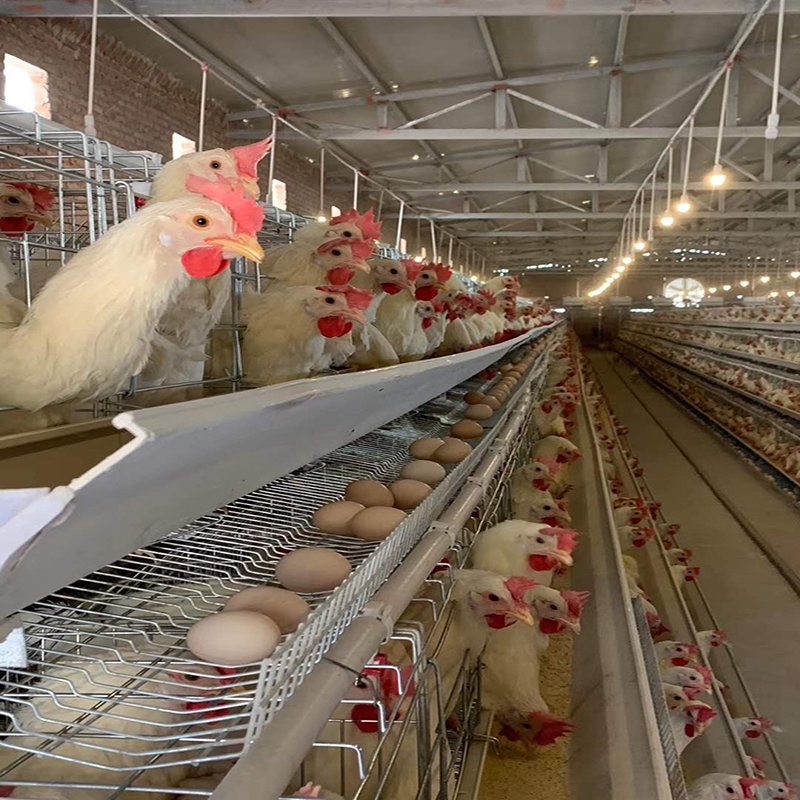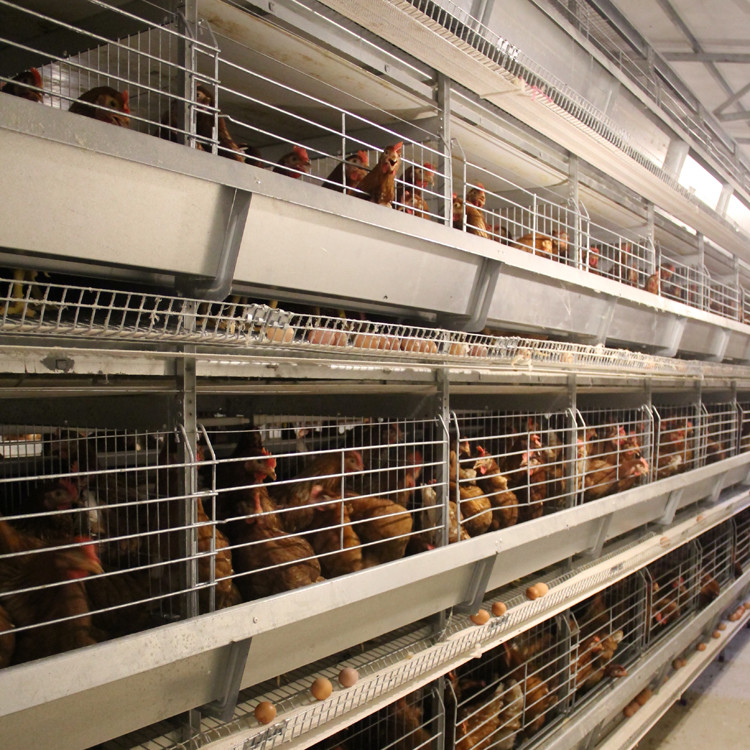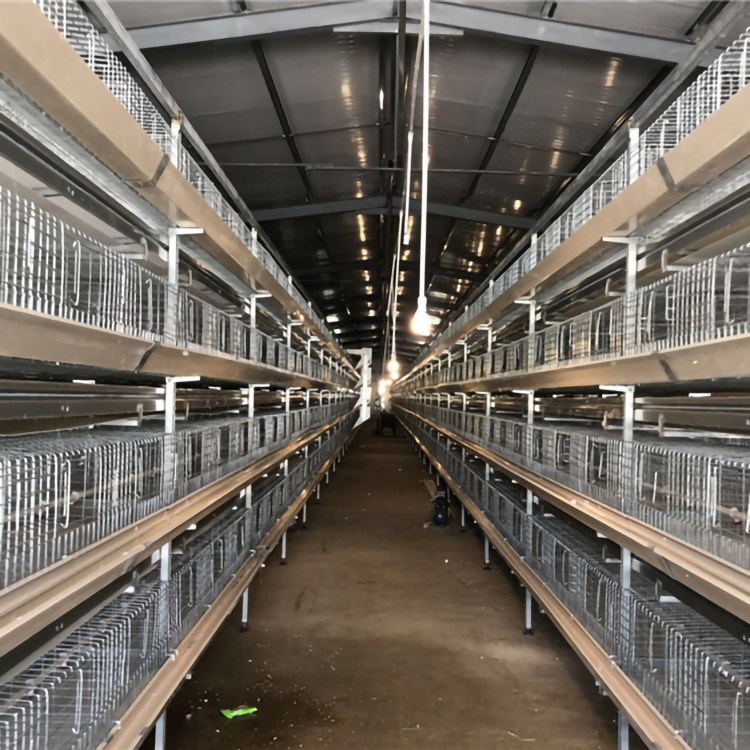

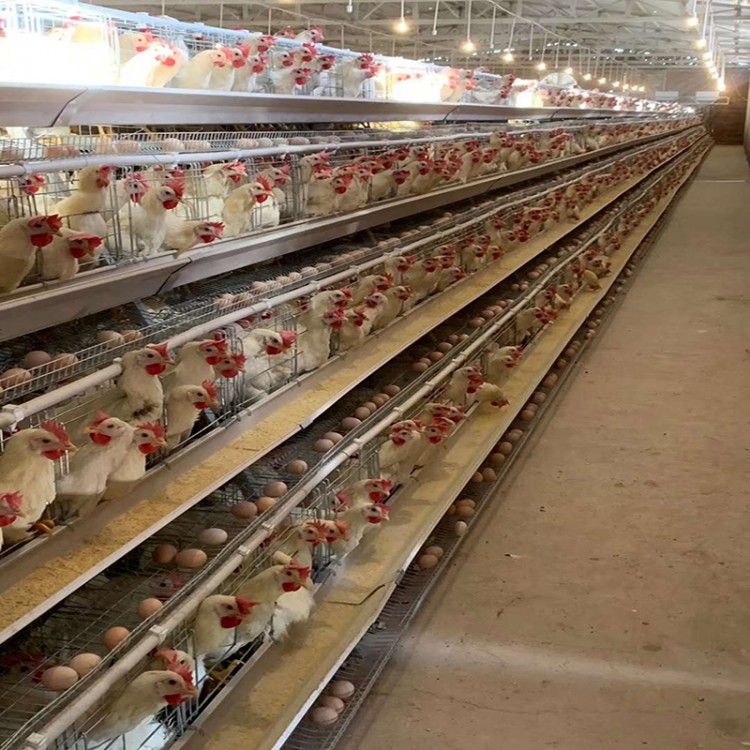


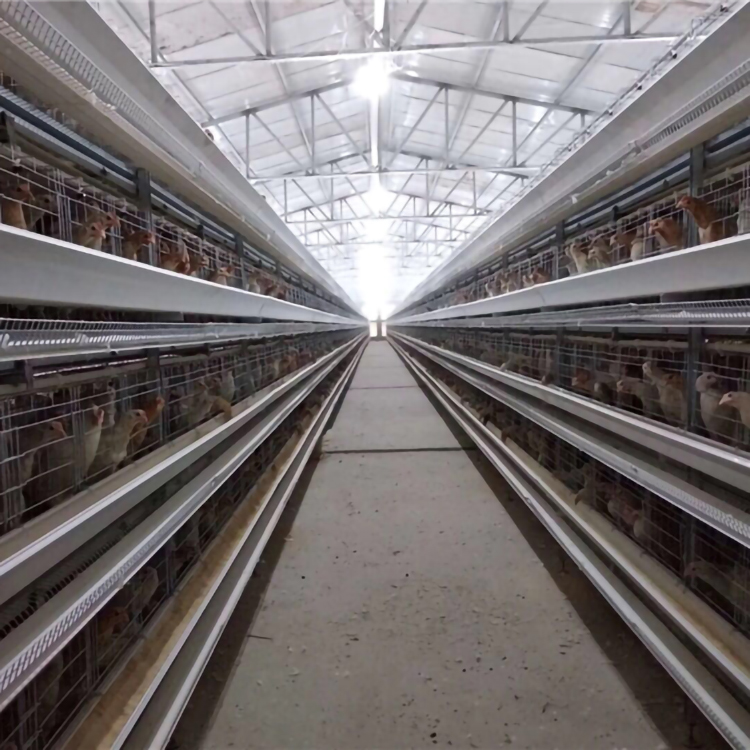
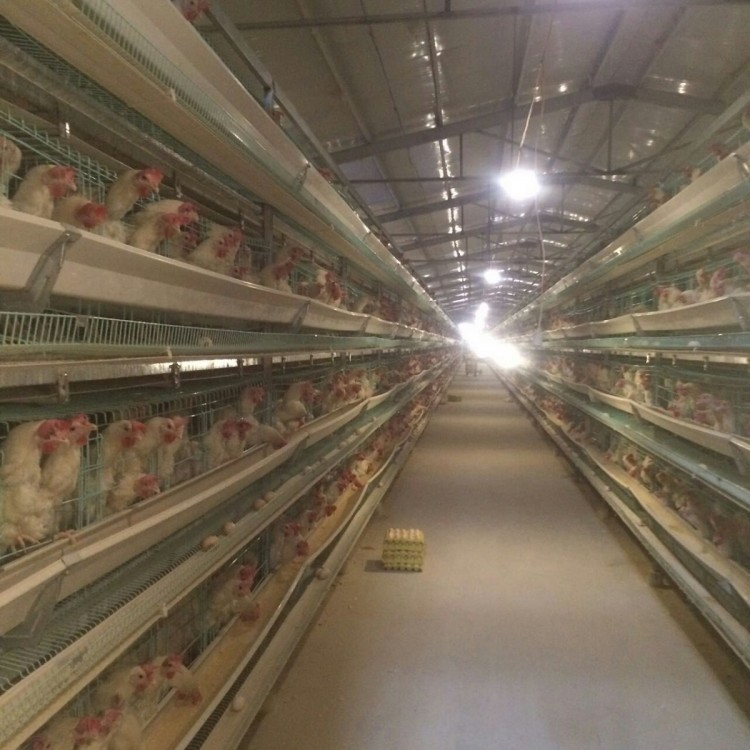
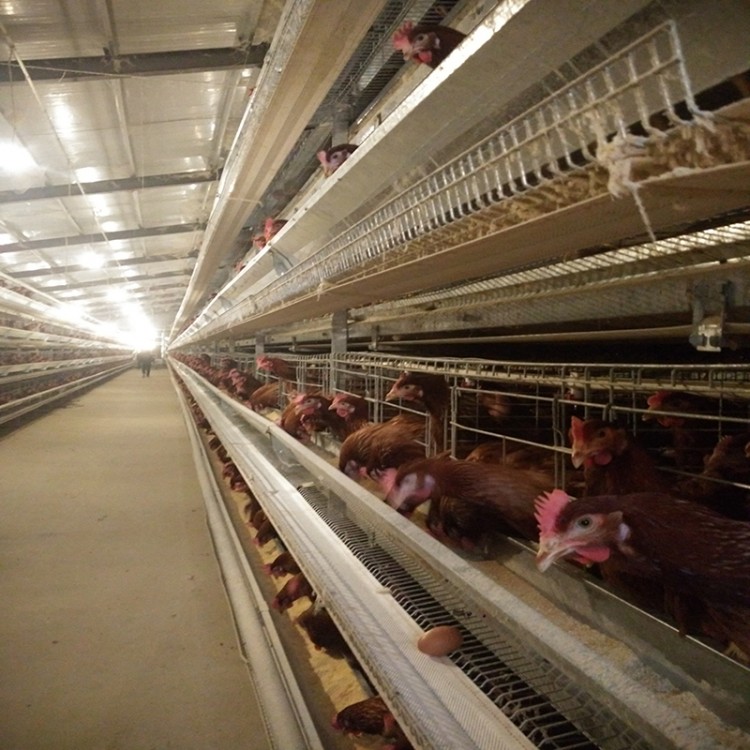
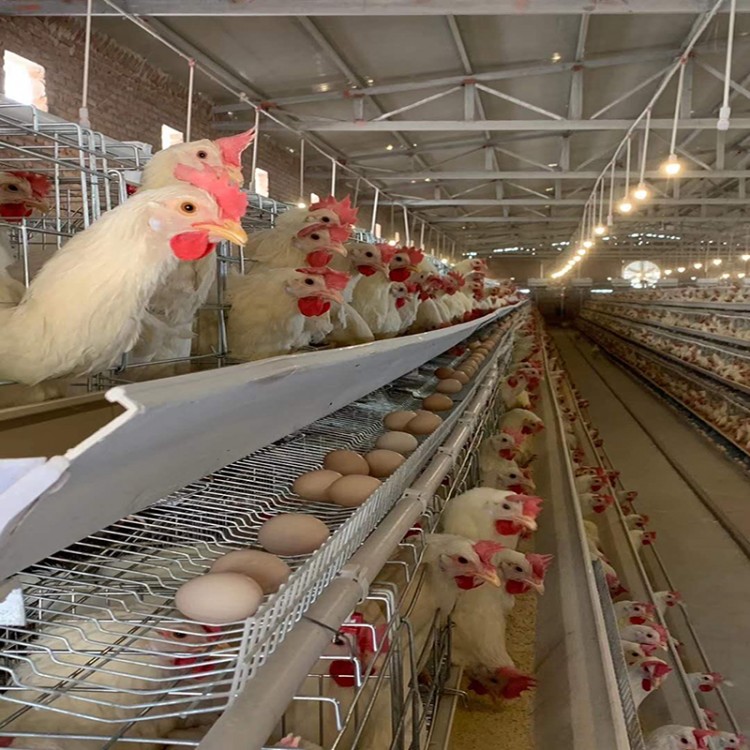






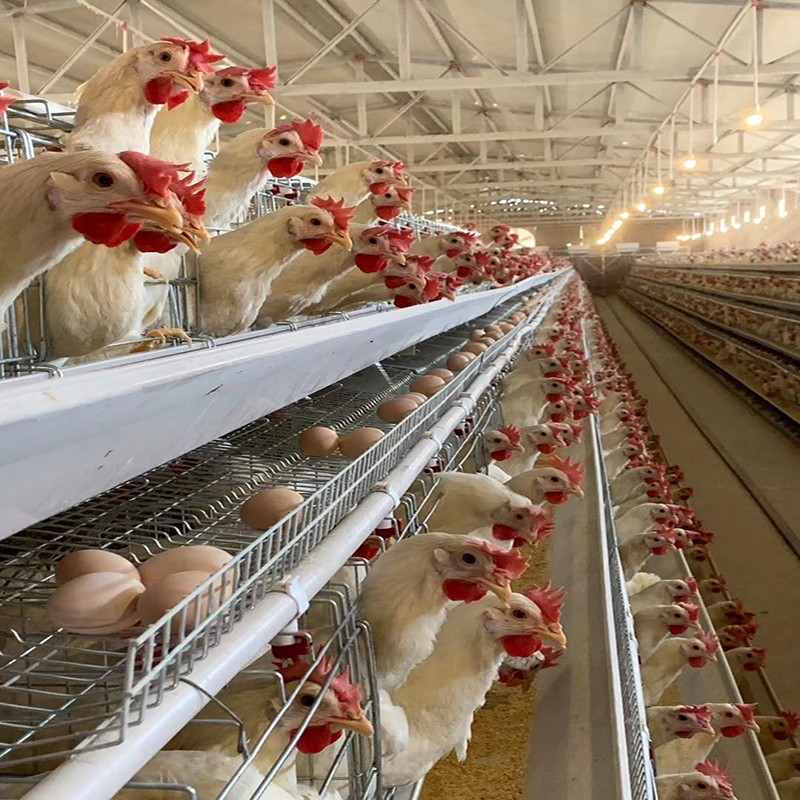
General laying hen cages can be categorized into full阶梯 cages, half阶梯 cages, layered cages, mixed阶梯 cages, and flat cages based on their shape or assembly form.
Full-tier layer chicken cages, with the upper and lower cage bodies not overlapping vertically, allowing each layer's feces to fall into the feces channel below. The feces are then cleaned out of the chicken house by a ground scraper cleaner installed in the feces channel.
Semi-step chicken cages feature a partial overlap between upper and lower levels, with the overlap amount reaching 1/2 to 1/3 of the cage depth. The top mesh of the lower cage is designed at an angle for easy installation of the manure board, allowing accumulated feces on the upper level to fall into the feces channel below due to gravity after drying in the wind. Most breeding and laying chicken cages produced in China adopt this design. The semi-step chicken cages occupy less space and have a higher density of housing compared to full-step cages.
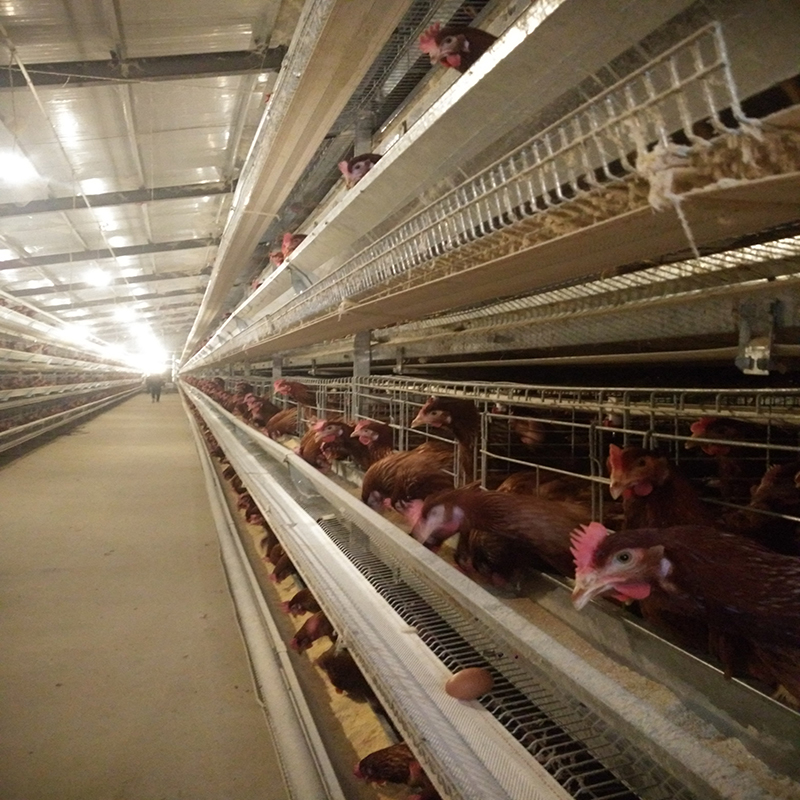
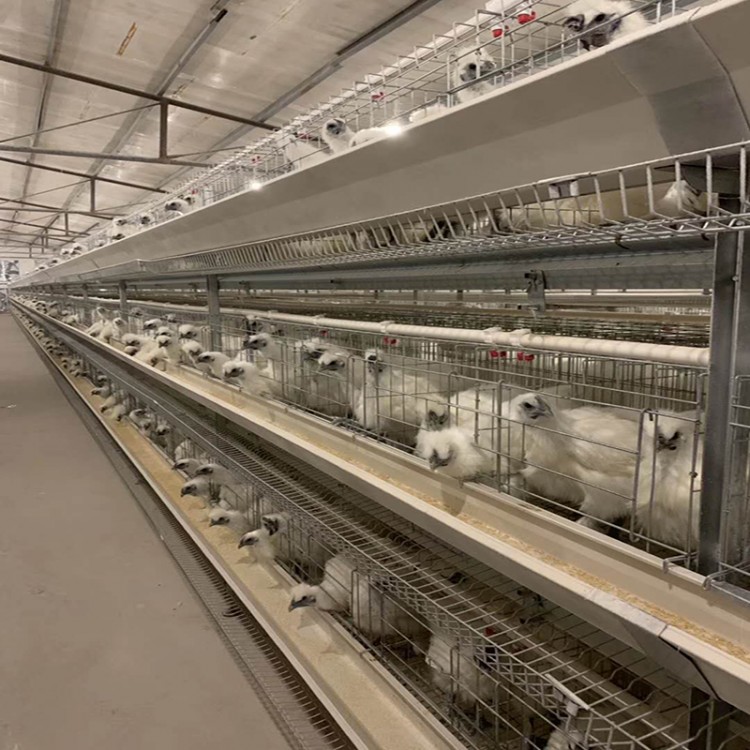
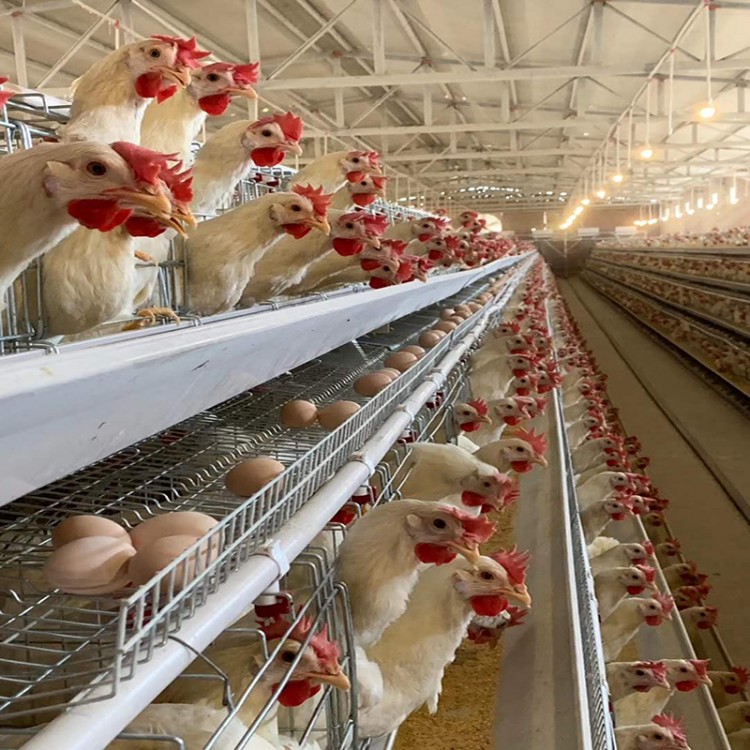
Layered poultry cages, with each layer of cages overlapping vertically. Below the bottom net of each layer is a horizontal manure collection device, which can be cleaned using a scraper manure removal machine or a conveyor belt manure removal machine to transport the manure to one end of each row of cages, and then transferred outside the shed by a horizontal spiral scraper. Small-scale layered cages can be manually cleaned. Feeding, watering, manure removal, and egg collection are easily mechanized. The advantages of layered cage husbandry are high density of shed accommodation, typically 16-18 birds per cubic meter for three layers and 18-20 birds per cubic meter for four layers, resulting in lower construction investment per bird and high labor productivity. The disadvantages include poor ventilation between layers vertically, significant differences in environmental conditions on each layer of the cages, and high requirements for shed environmental control.
Stacked mixed layer chicken cages, with the upper and lower cages staggered and the middle and lower cages fully overlapped. The lower cages have manure boards above the top wire, allowing for manual pushing of manure inward for drop-off or use of a mechanical scraper to clear.
Flat-deck layer cages, with only one layer of cages, two rows of cages are installed back to back, sharing one feeding trough, one water trough, and one egg conveyor belt. Chicken manure falls directly to the ground. The drinking and cleaning equipment is the same as that for step cages. Flat-deck cages do not require corridors, so their density is higher than that of full-step cages. However, feeding, drinking, cleaning, and egg collection must all be mechanized, so the equipment used must be reliable, with a high dependence on electricity. In the event of a power outage, the consequences are unimaginable.