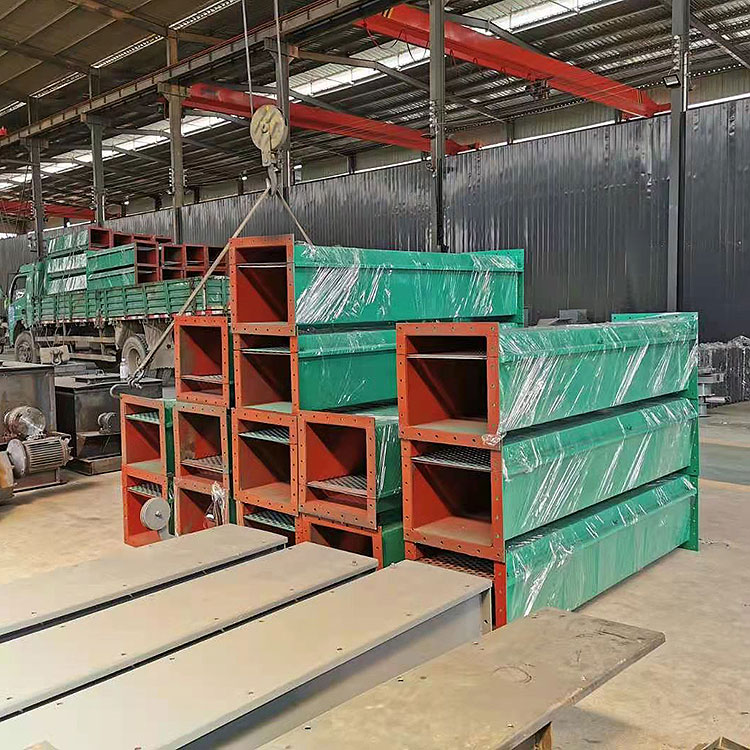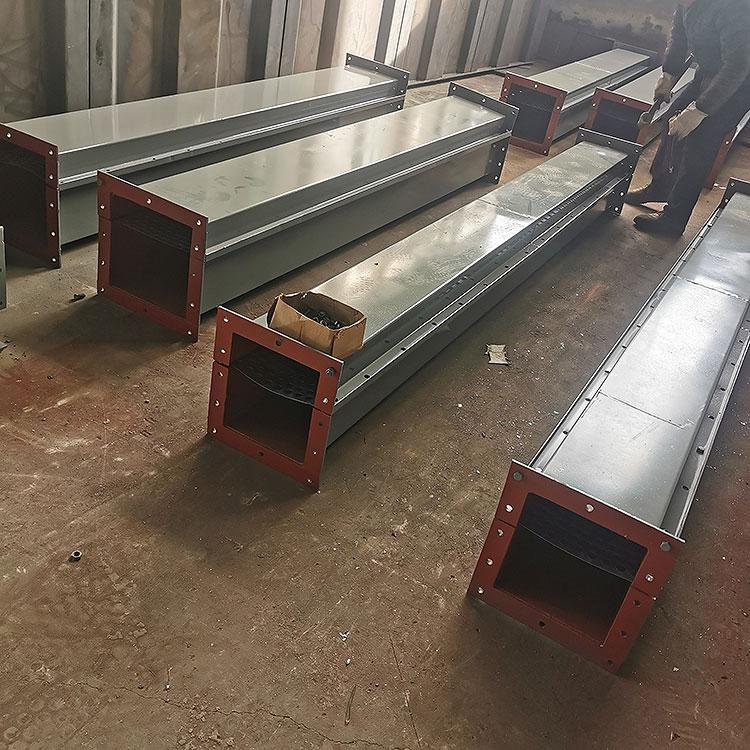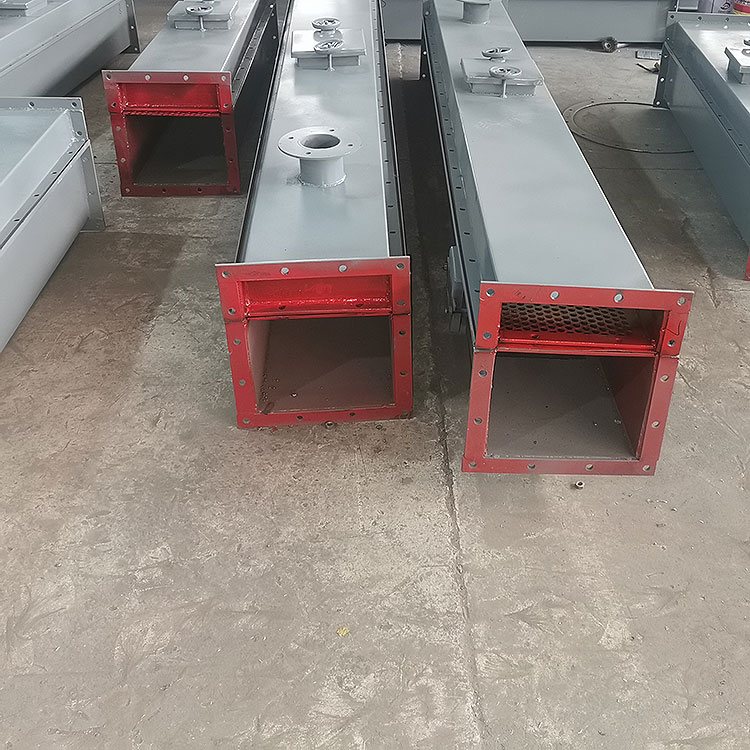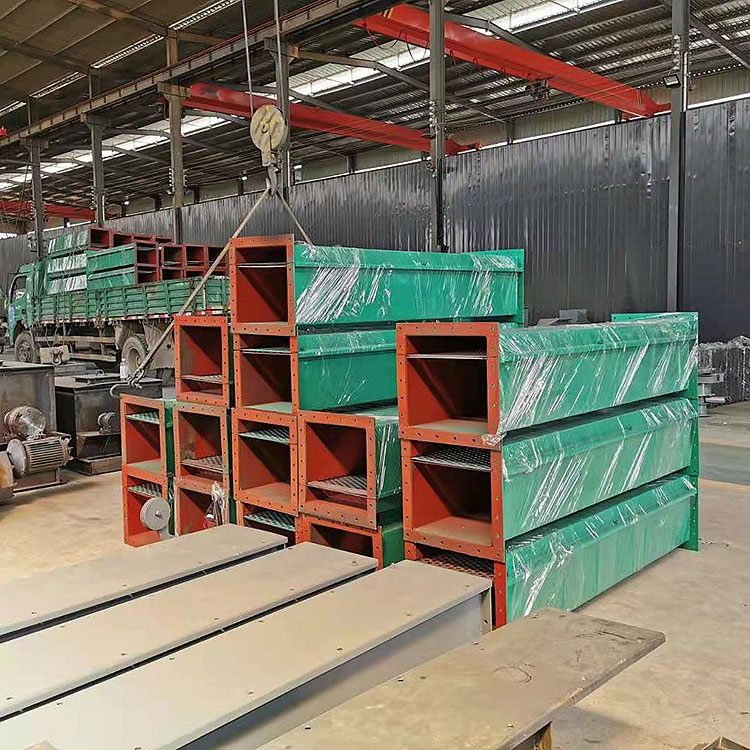









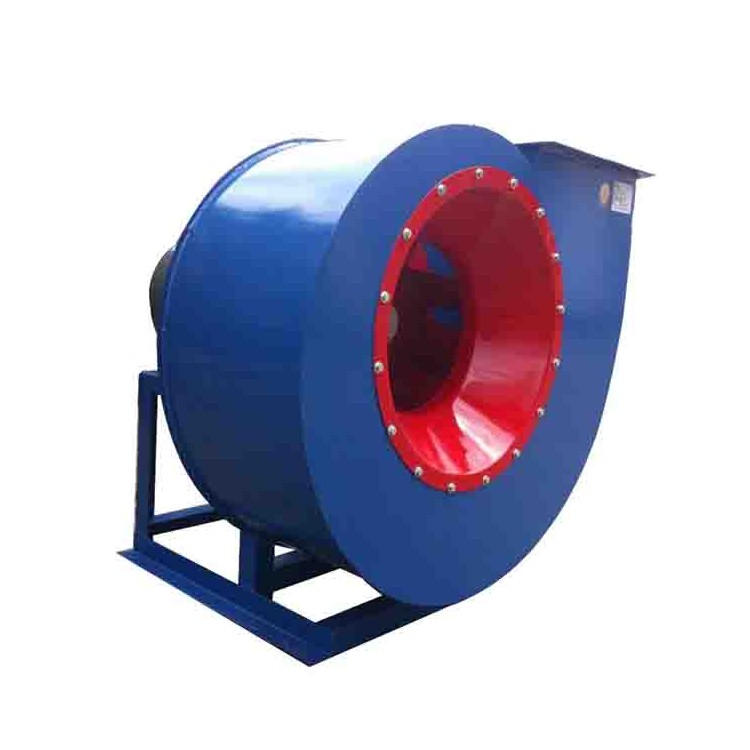
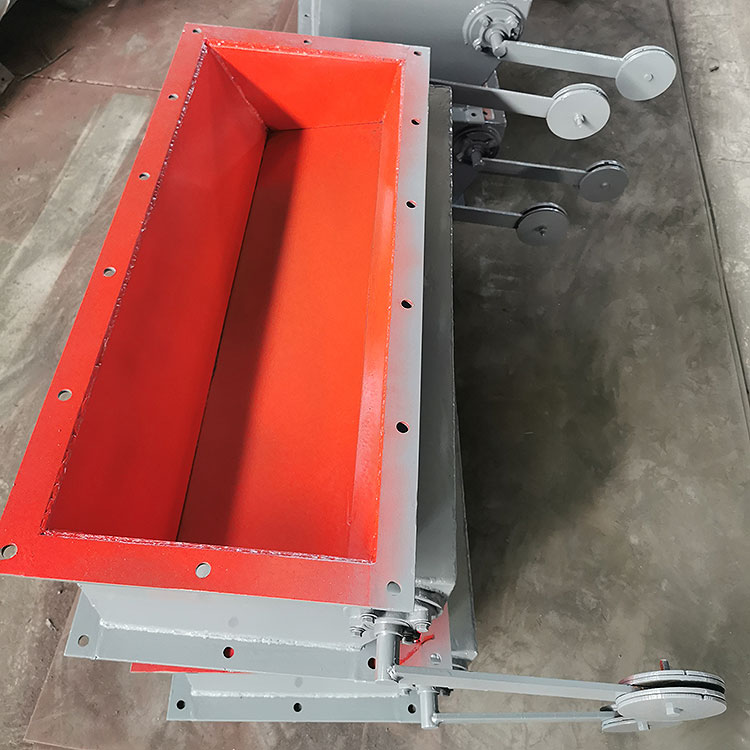


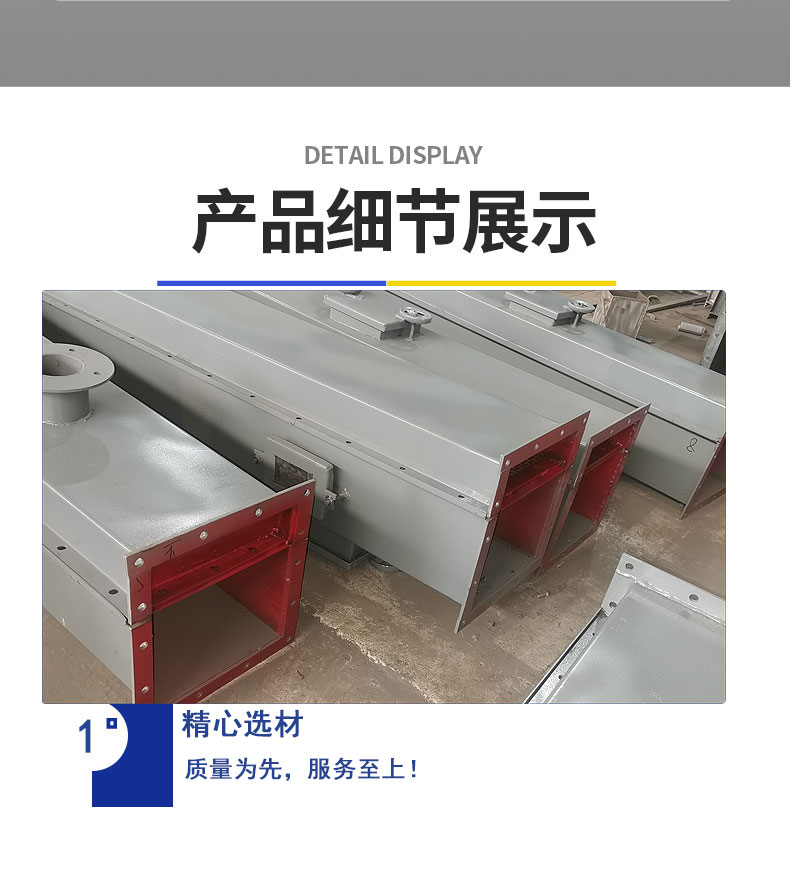
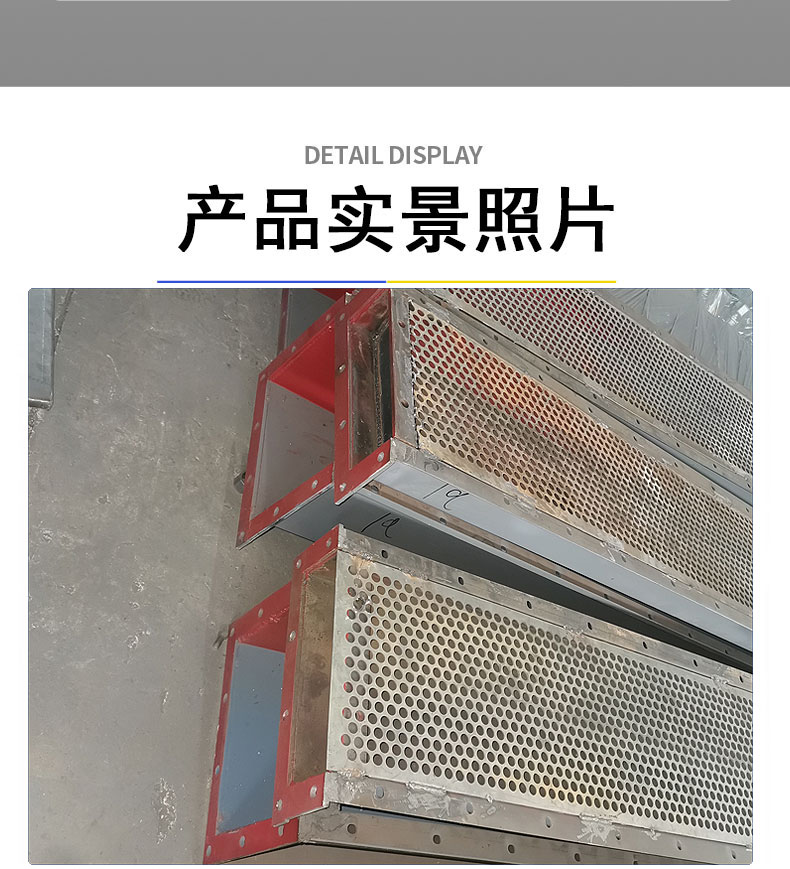
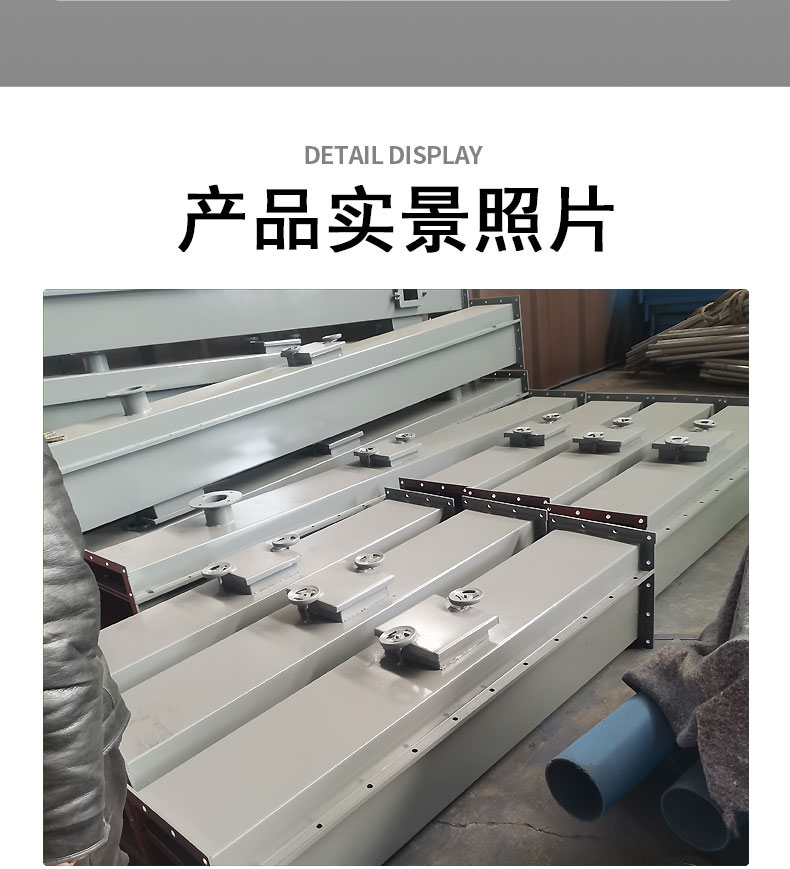
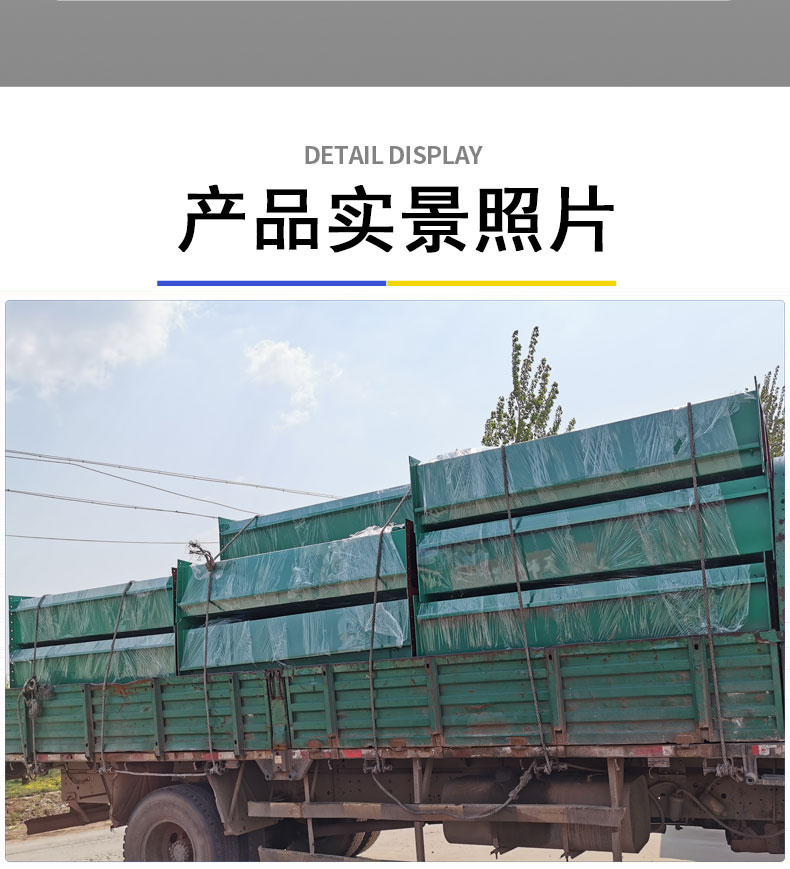
The air conveying chute is suitable for fluidizable powdery materials such as cement and fly ash. It is powered by a high-pressure centrifugal blower (models 9-19:9-26), causing the material in the enclosed conveying chute to maintain a fluid state while slowly flowing down the inclined end. The main part of the equipment has no transmission parts and employs a new type of coated wheel breathable layer, making sealing and operation management convenient. The equipment is lightweight, has low power consumption, high conveying force, and is easy to change the conveying direction!
Operating Principle
An air conveying chute is a device that uses air flow to transport granular materials along pipelines. It comes in three types: suction, pressure, and mixed. Its working principle is to utilize the kinetic energy of the air flow to keep the granular materials in a suspended state and transport them along the pipeline with the air flow.
①Suction-feeding. Once the exhaust fan is activated, the entire system achieves a certain vacuum. Under the action of pressure difference, air flow carries the material into the suction nozzle and delivers it along the conveying pipe to the separator at the unloading point. After separating from the air flow, the material is discharged from the bottom of the separator. The air flow is purified by a dust collector before being discharged into the atmosphere through a silencer. The advantages include simple feeding and the ability to simultaneously suck material from several locations. However, the conveying distance is short, and the production rate is low. High sealing requirements are necessary.
② Forced Conveyance. The blower compresses air into the conveying pipe, where the material is fed in from the feeder. The mixture of air and material is then conveyed to the discharge point through the pipeline. After separation by the separator, the material is discharged, and the air is purified by the dust collector before being released into the atmosphere. Characteristics are opposite to suction conveyance, allowing the material to be conveyed to multiple locations simultaneously, with a longer conveying distance and higher production rate, but a more complex structure.
③ Hybrid. A combination of the two aforementioned forms.
Warning: This device is not suitable for materials with large particle size, high moisture content, and poor fluidization!