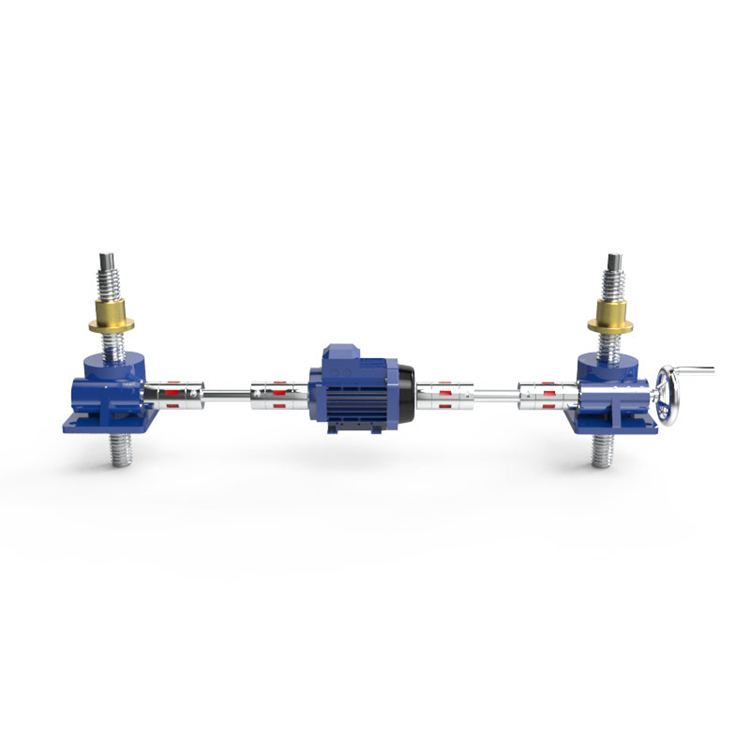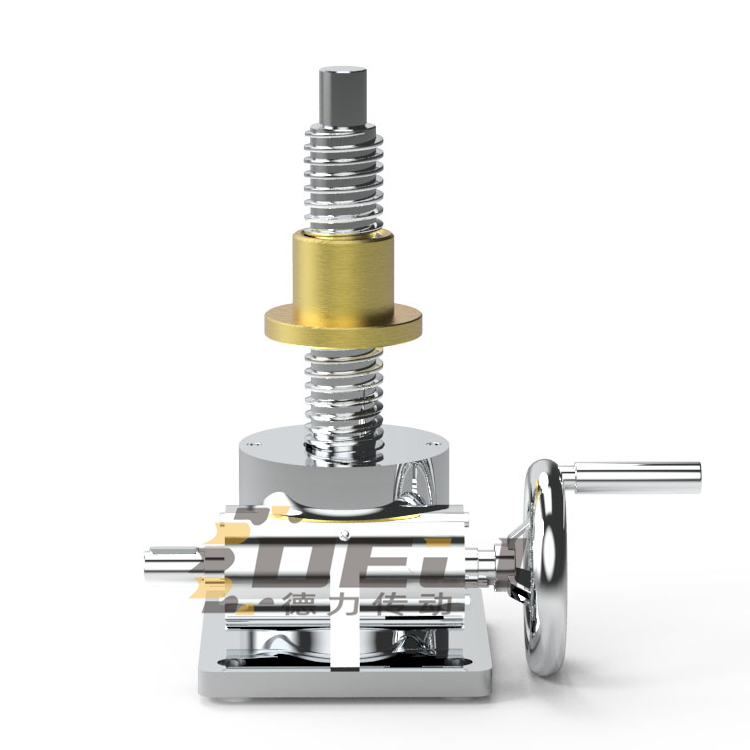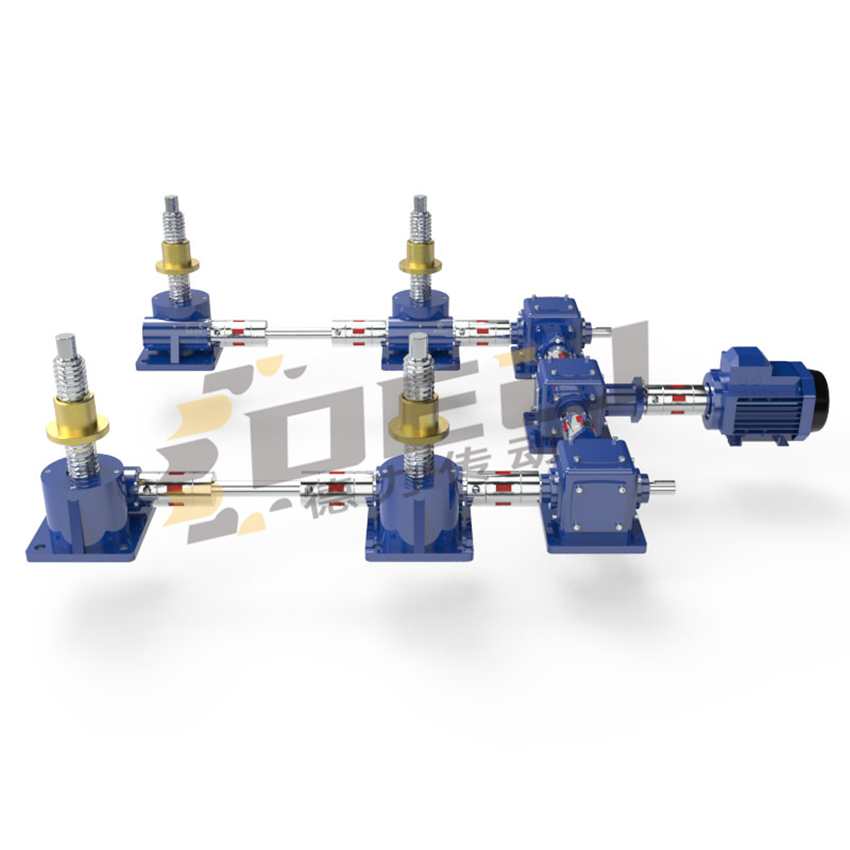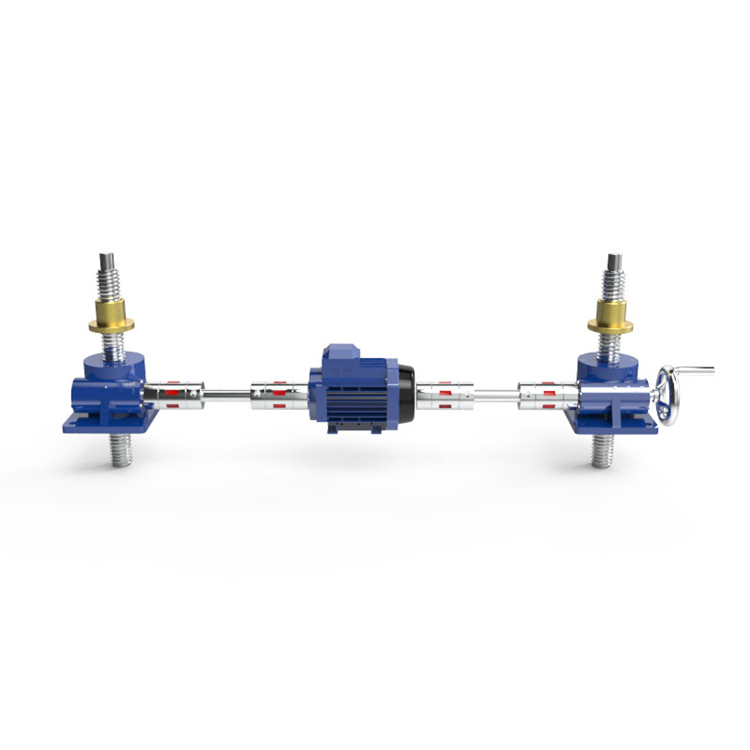

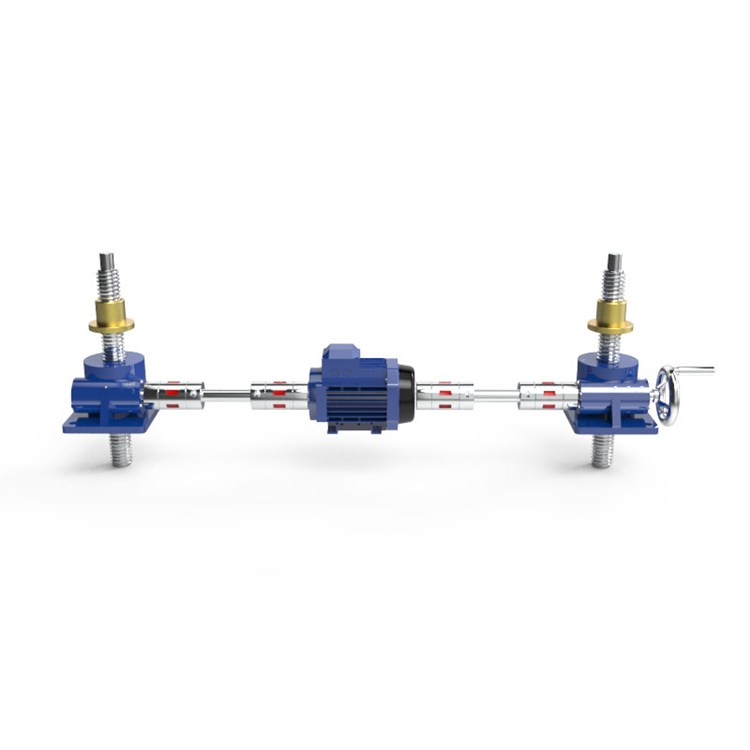

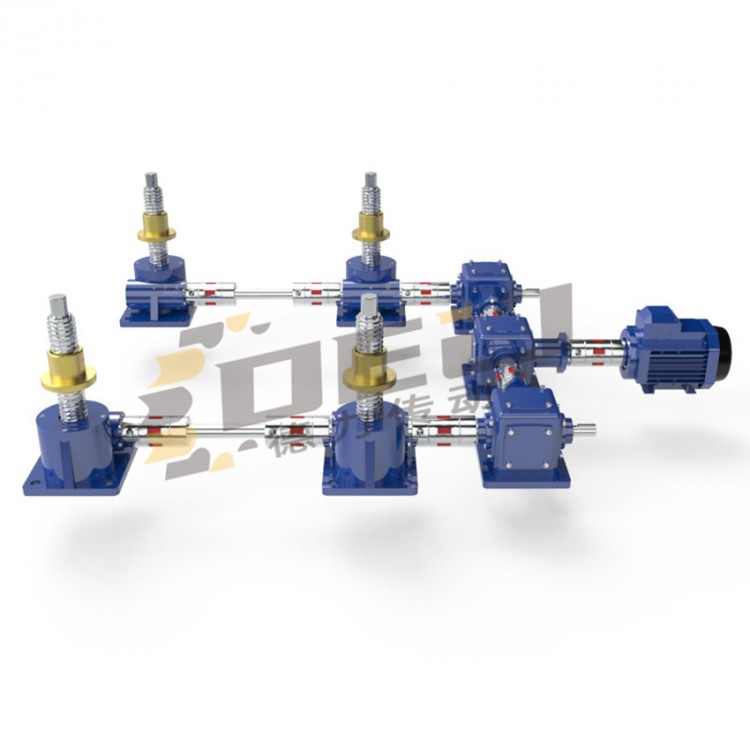







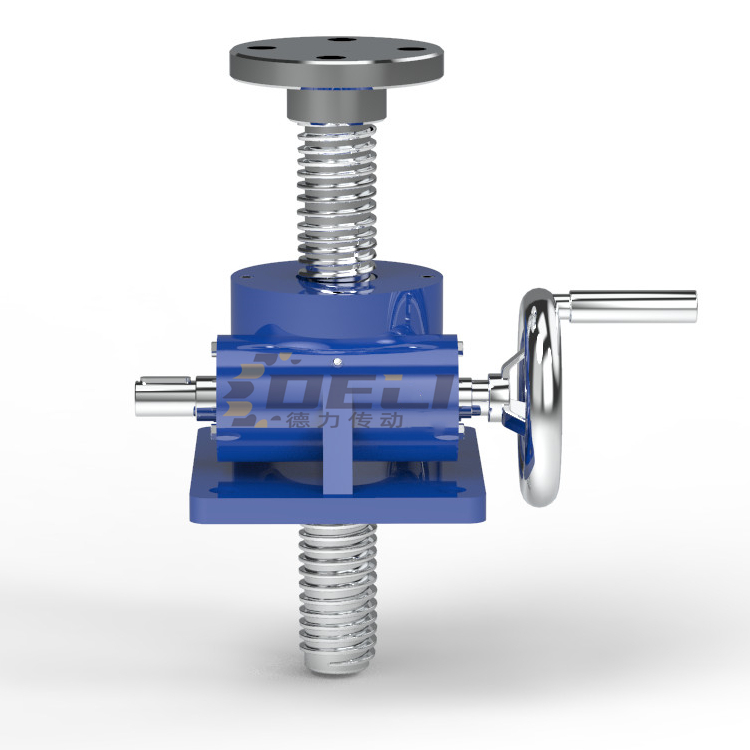
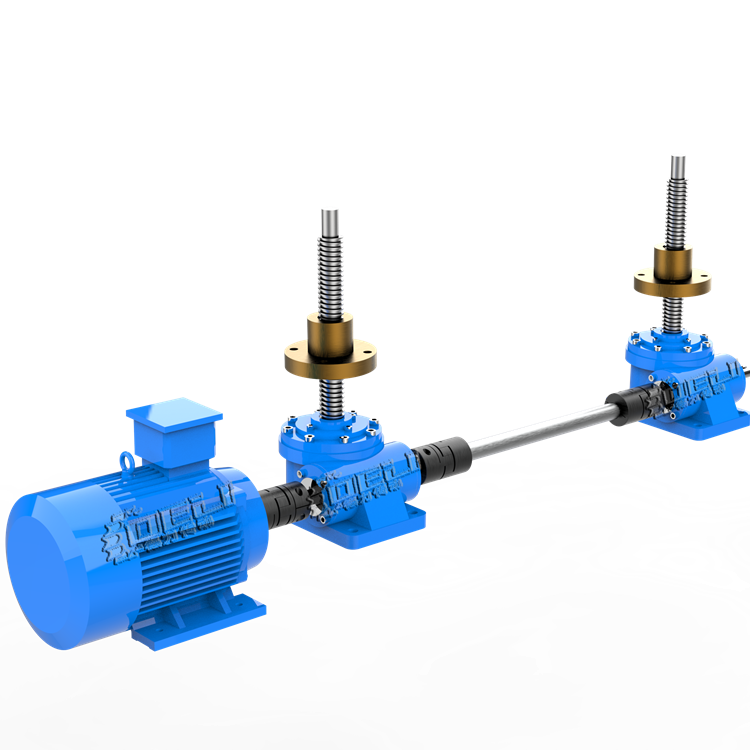
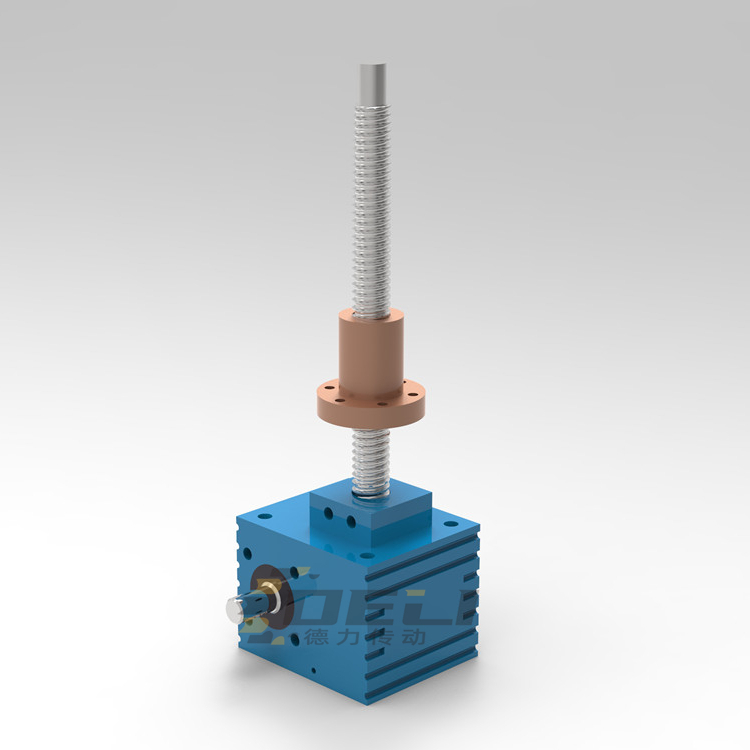
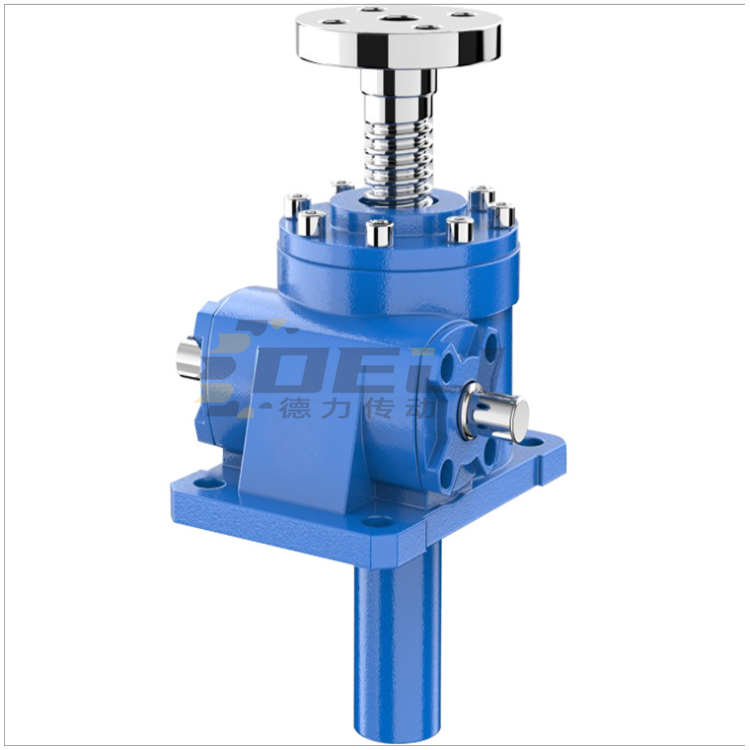
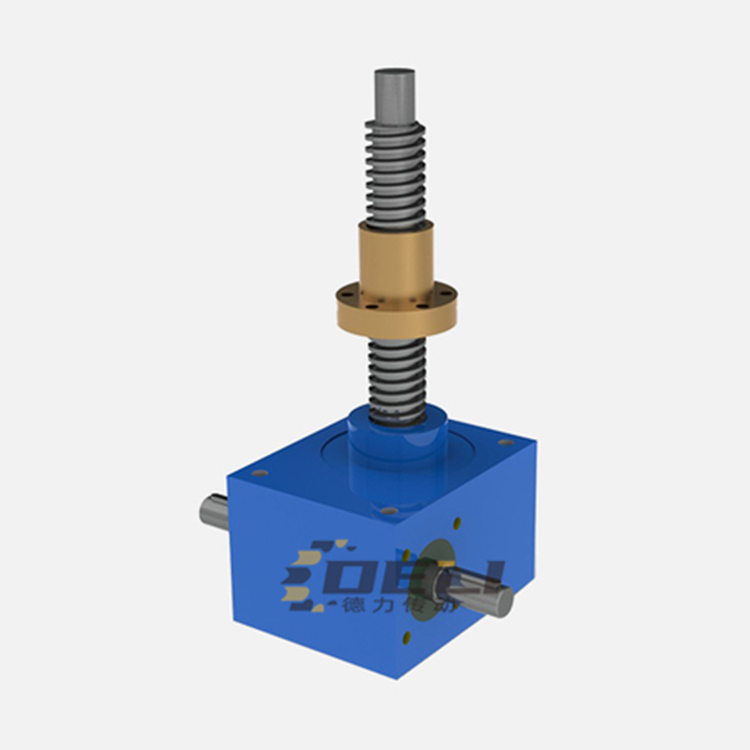
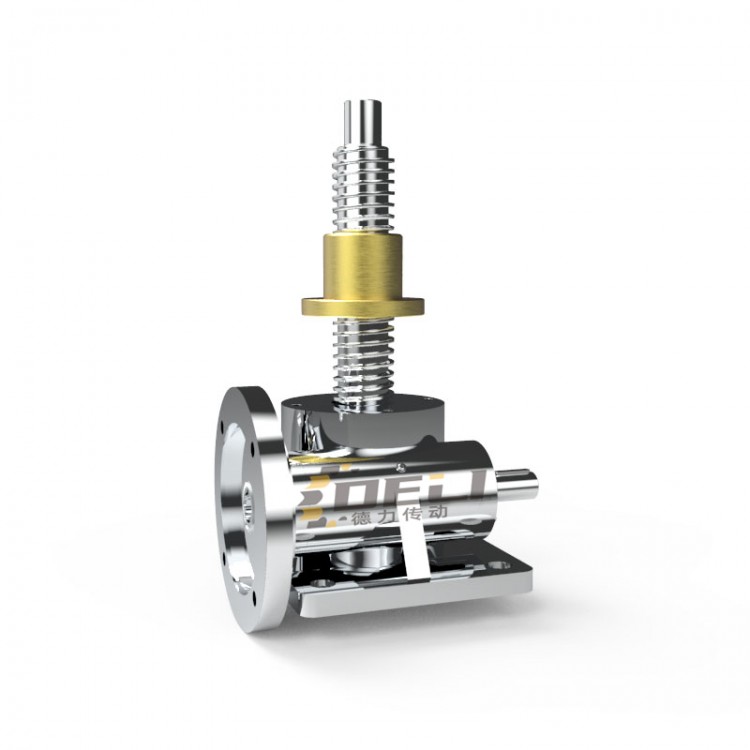

The screw jack, also known as a spiral drive mechanism, is primarily used to convert rotational motion into linear motion or vice versa. There are types that mainly transmit motion, such as the feed screw of machine tool tables, and others that adjust the relative positions of parts, such as spiral drive mechanisms. The screw jack consists of a worm gear reducer and a screw, with the减速 part being the worm drive, which uses the worm to drive the worm gear for deceleration. The worm gear acts as the nut for the lifting screw, matching it perfectly.
Features of screw jack:
1The principle involves ball bearings placed between the screw thread and nut.
2As the screw or nut rotates, the ball bearings roll along the thread groove, generating rolling friction between the screw and nut during relative motion. To prevent the ball bearings from rolling out of the groove, return guide devices are installed at both ends of the nut's helical slots.
3They form a circulating loop with the threaded raceway, allowing the ball to circulate within the nut raceway.
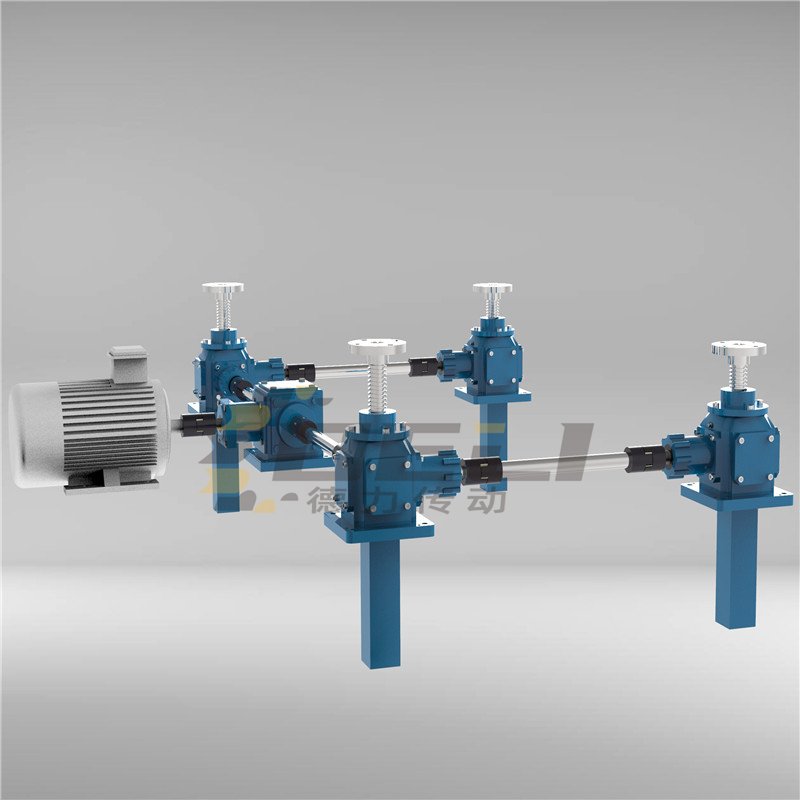
Ball screw is the ideal product for converting rotary motion into linear motion, or vice versa.Ball screws are commonly used transmission components in tool and precision machinery, primarily converting rotational motion into linear motion or torque into repetitive axial force. They feature high precision and reversibility and are widely applied in various industrial equipment and precision instruments due to their minimal friction resistance. A ball screw consists of a screw shaft, nut, steel balls, preload plates, reverser, and dustproof cover. Its function is to convert rotational motion into linear motion, which is an extension and development of ECM screw technology. The significance of this development lies in transforming the bearing from a sliding action to a rolling action.
Screw Gear
The worm and worm gear mechanism is commonly used to transmit motion and power between two intersecting shafts.Worm gears and worm gear mechanisms are commonly used in applications where two shafts are crossed, the transmission ratio is high, the transmission power is not substantial, or intermittent operation is required.
Lifting and Lowering
Lifting and lowering, referring to ascending and descending, moving forward and backward, promotion and demotion.
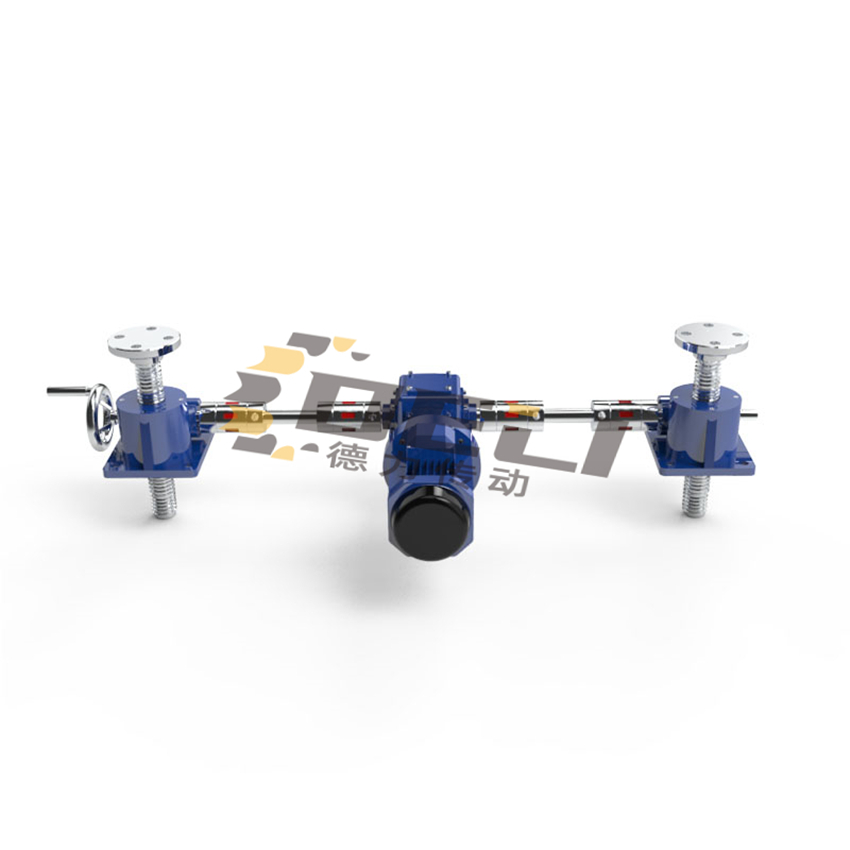
Composed of a worm gear reducer and a lifting screw, the减速component is a worm gear drive, which uses the worm to drive the worm gear to achieve reduction. The center of the worm gear is an internal threaded structure, akin to the nut of the lifting screw, and is compatible with the lifting screw.
The lifting speed of the reducer is equal to the input speed of the worm divided by the reduction ratio of the worm and worm gear, then multiplied by the pitch of the lifting screw. Due to its structural nature, it is generally lubricated with grease. Some series use oil lubrication, which offers the advantages of longer lifespan and more stable operation compared to grease lubrication.