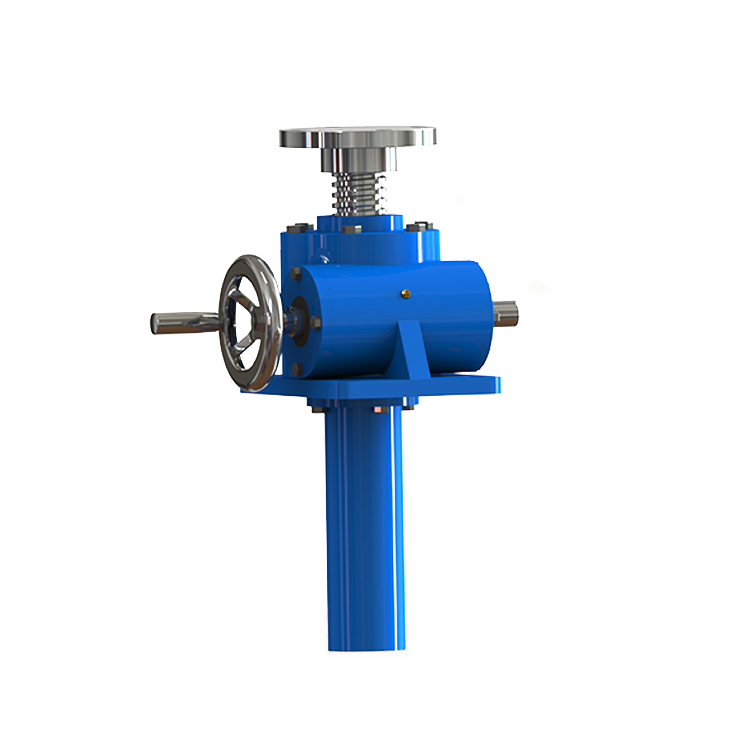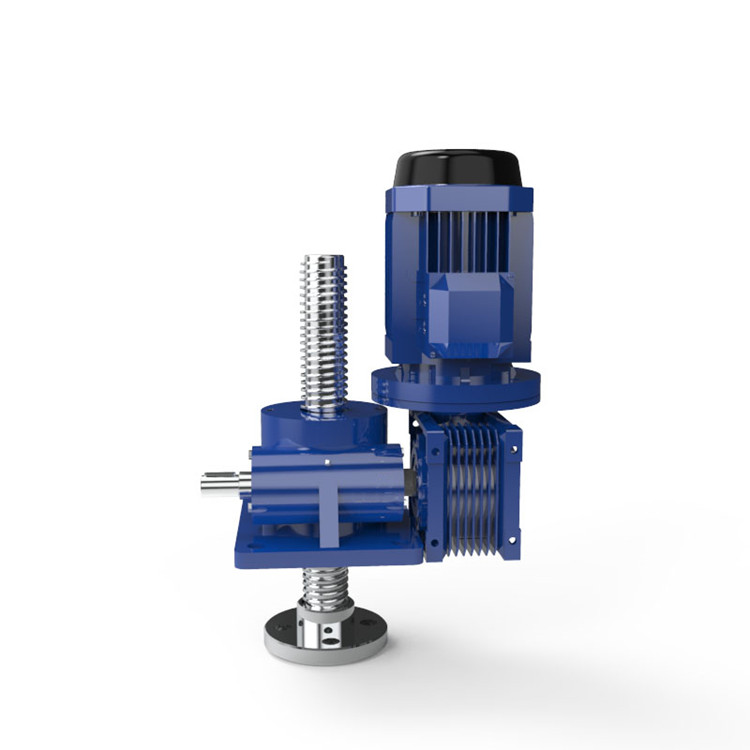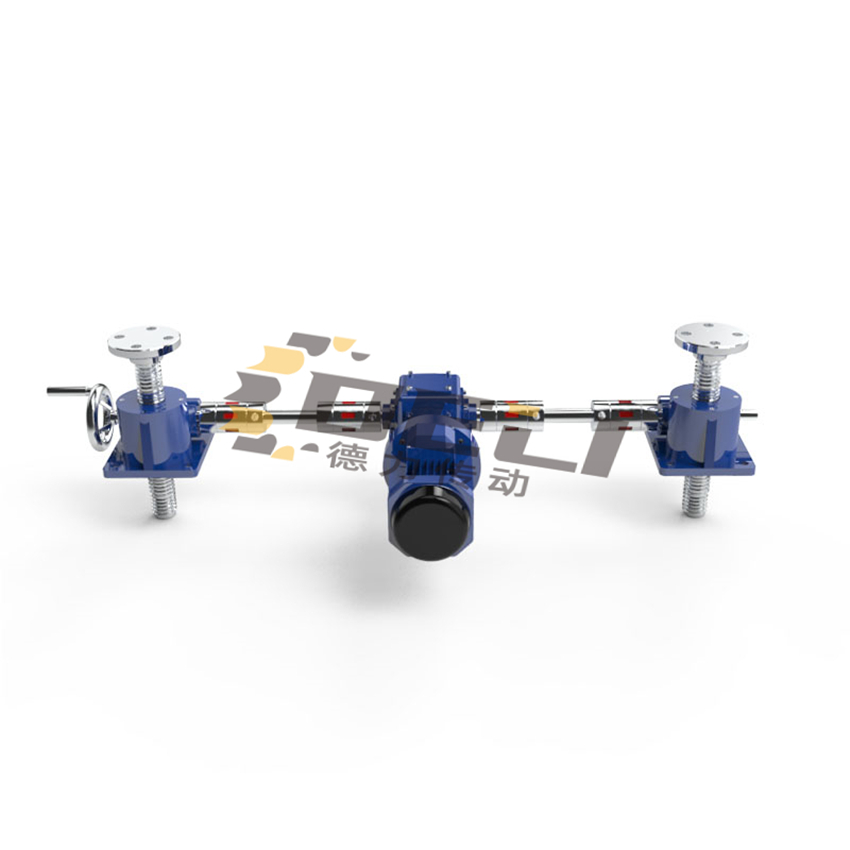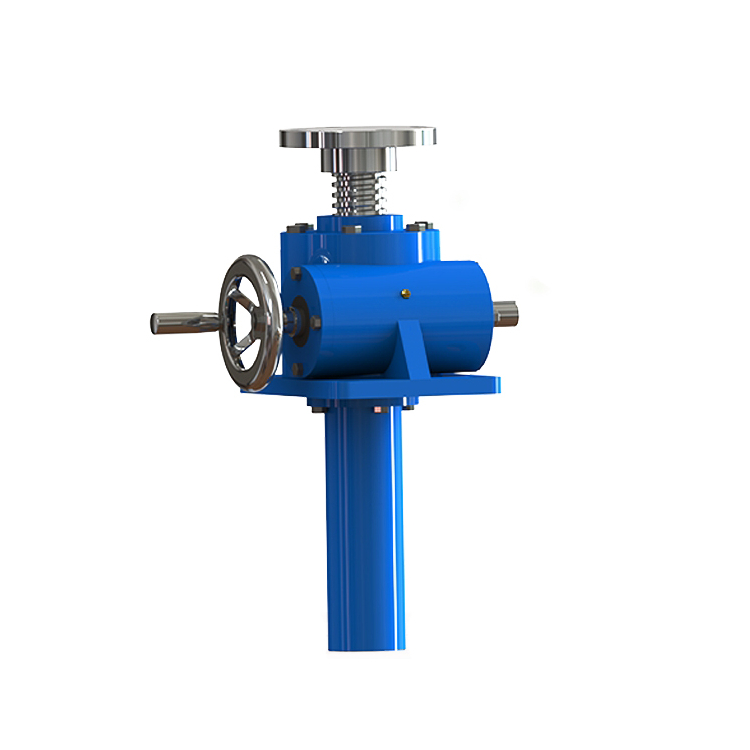

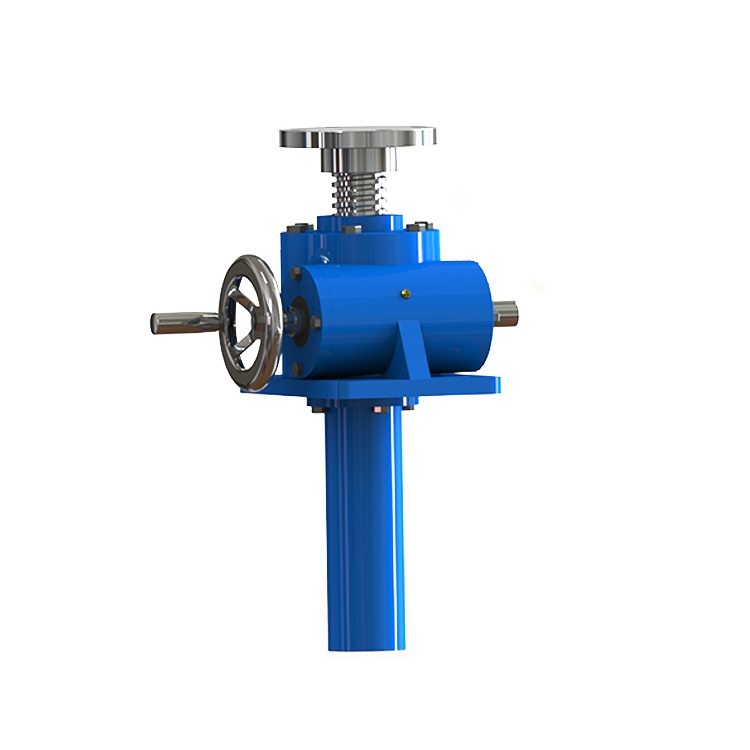
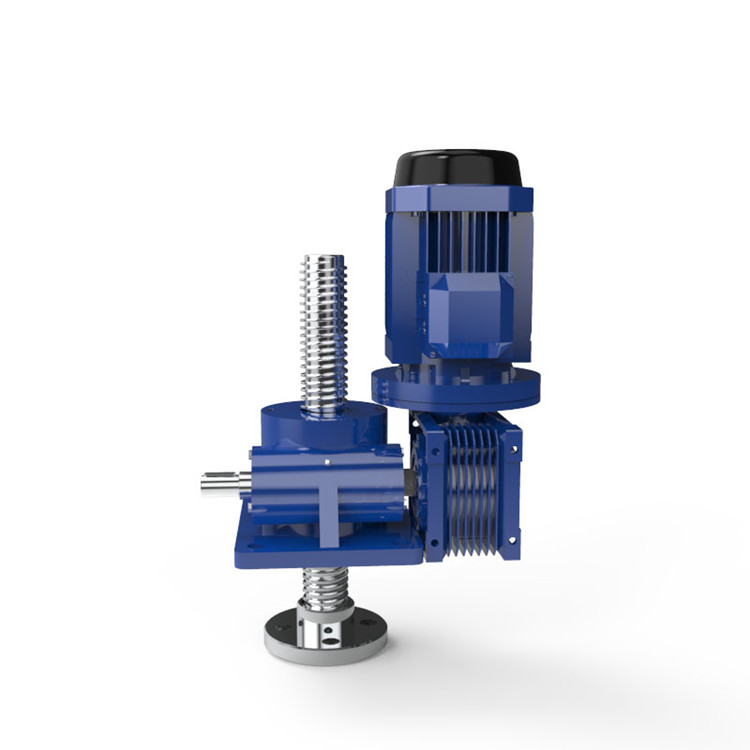







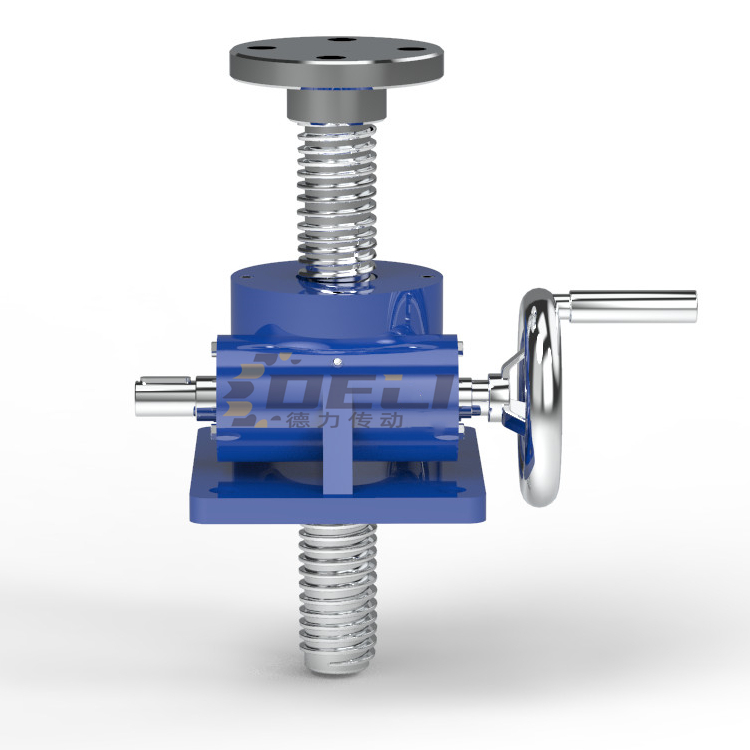
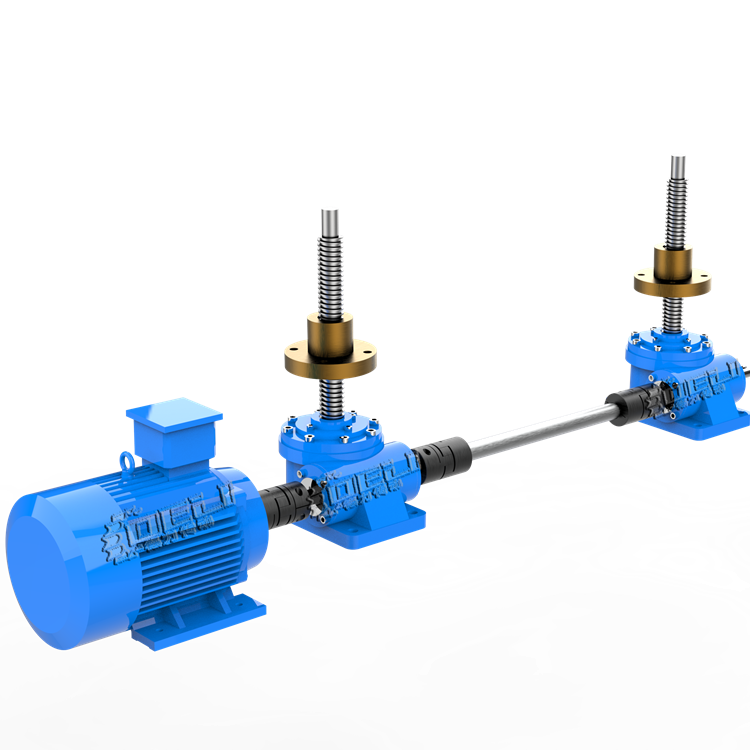
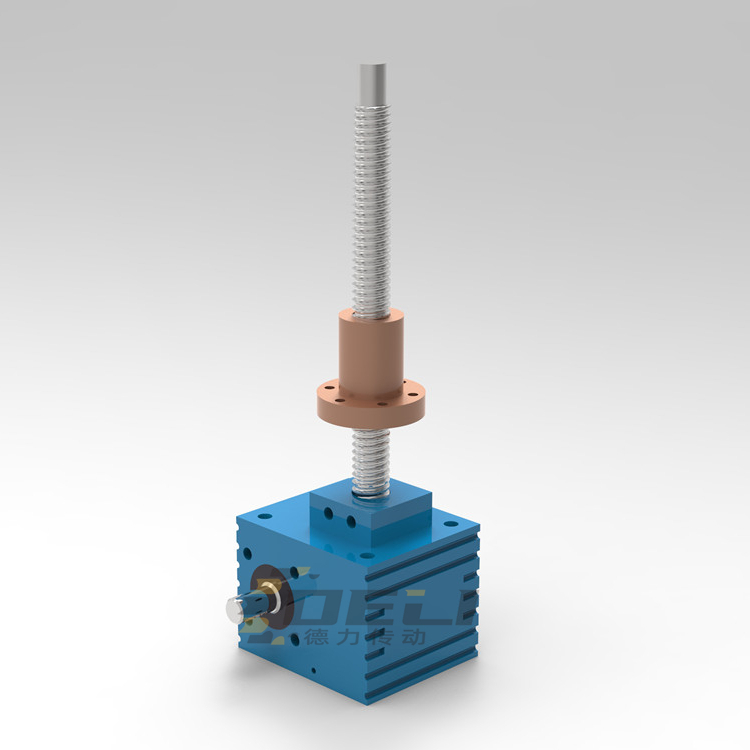
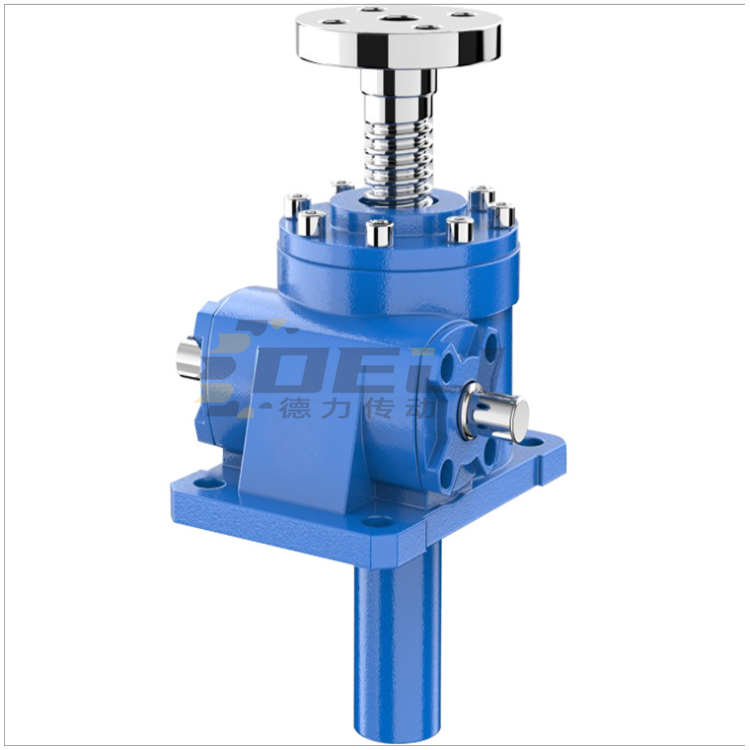
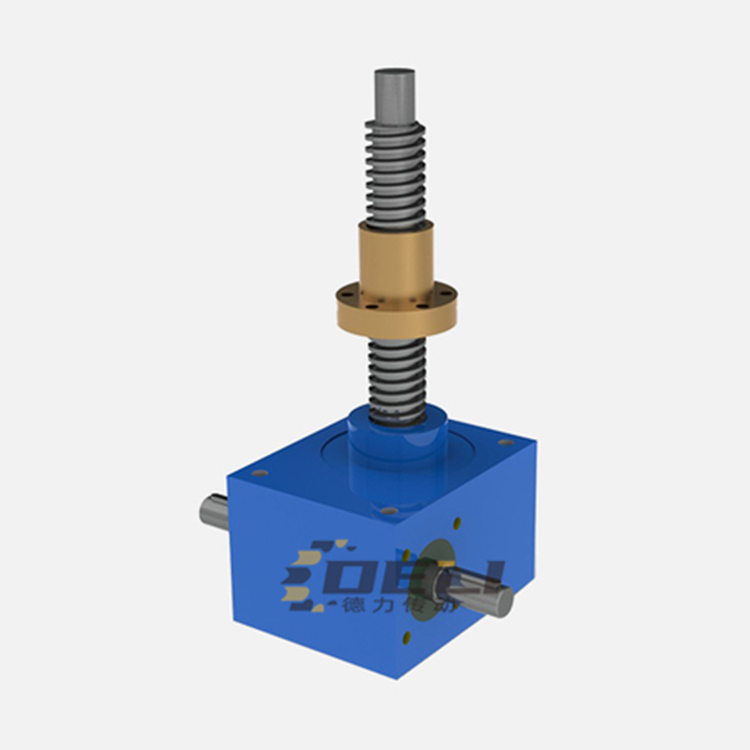
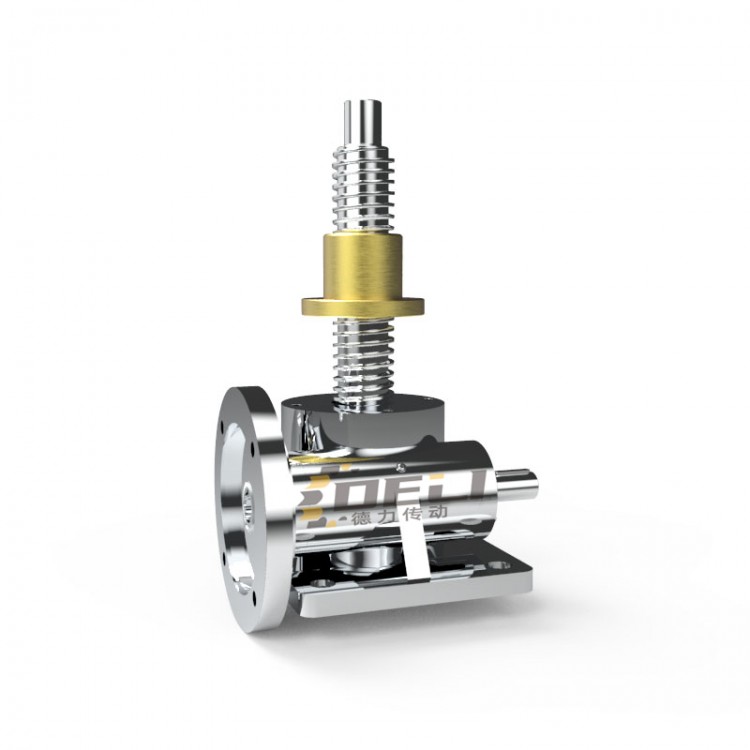
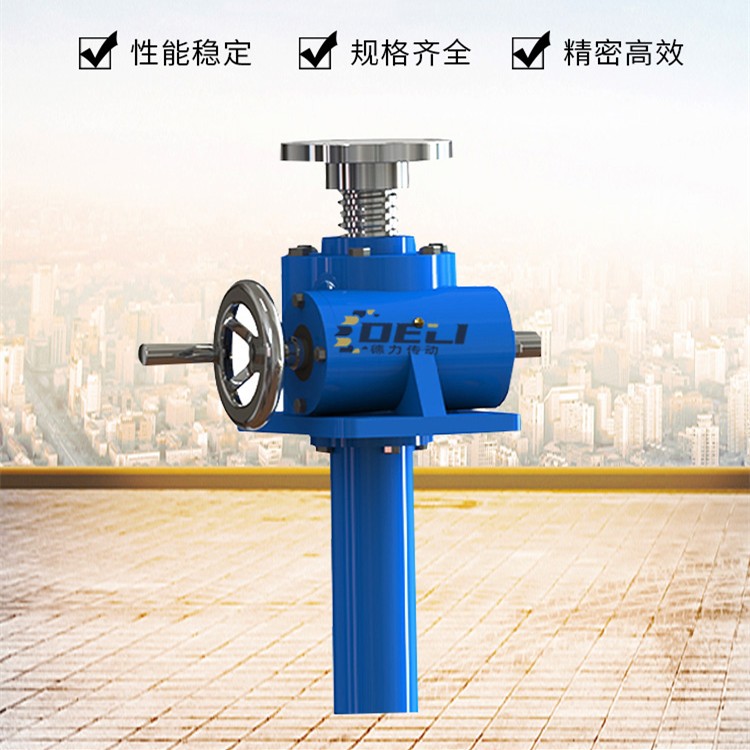
Screw jack, also known as a helical drive mechanism, is primarily used to convert rotational motion into linear motion or vice versa. It is designed to transfer energy predominantly.(Spiral presses, jacks, etc.)There are also those that primarily transmit motion, such as the feed screw of machine tool worktables.)And spiral drive mechanisms for adjusting the relative positions of parts.
The screw jack comes in two types: sliding friction and rolling friction mechanisms. The sliding screw and nut mechanism has a simple structure, is easy to process, and has a low manufacturing cost, featuring an automatic locking function. However, it has a large friction torque and low transmission efficiency.(30%~40%)The ball screw nut mechanism, despite its complex structure and high manufacturing cost and lack of self-locking capability, offers the advantages of low friction torque and high transmission efficiency.(92%~98%)High precision, good system stiffness, reversible motion, and long service life, making it widely used in mechatronic systems.
Screw jack mechanism1Principle of operation: screw thread4With nuts1Ball bearings are placed between the threaded grooves.2As the lead screw or nut turns2As the thread groove rolls, rolling friction occurs between the screw and nut during relative movement. To prevent the ball from rolling out of the groove, return guiding devices are installed at both ends of the nut's spiral groove.3They form a circulating loop with the threaded raceways, allowing the balls to circulate within the nut raceways.
The transmission types of screw jack are based on the combination of relative motion between the screw and nut. There are four basic types of basic transmission for screw jacks.(1)Nut fixation, screw rotation and movement; this type of transmission is simpler in structure and achieves higher transmission accuracy due to the nut itself serving as a support, eliminating additional axial movement that could be caused by screw shaft bearings. However, the axial size should not be too long, as it would reduce rigidity. Therefore, it is only suitable for applications with shorter travel distances.(2)Ball screw rotation, nut movement. This type of transmission requires limiting the nut's rotation, hence the need for a guiding device. It features a compact structure and good ball screw rigidity. Suitable for applications with large working travel.
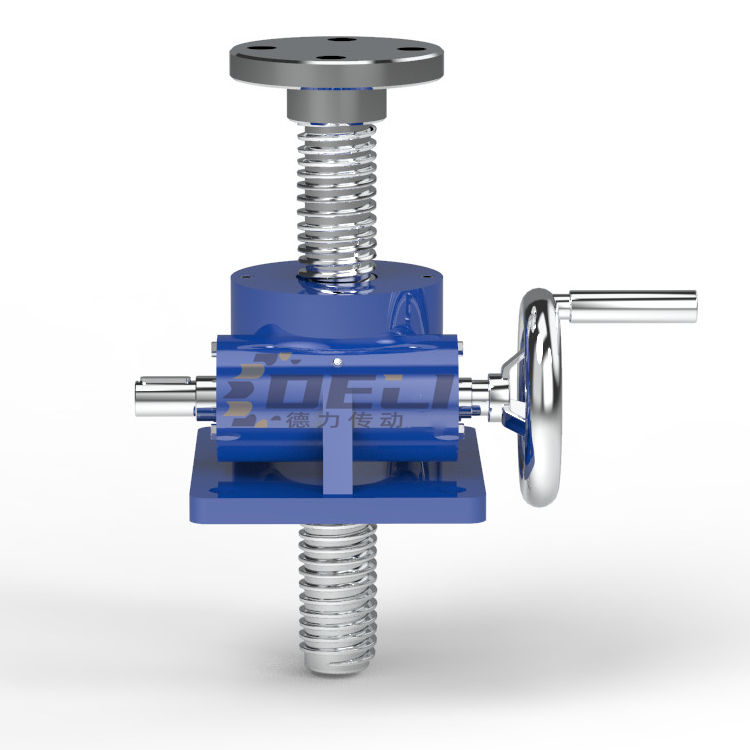
A worm gear screw jack is a compact transmission mechanism with a high transmission ratio and the ability to self-lock under certain conditions. It is easy to install and well-designed, thus gaining more widespread application. By adding a helical gear reducer at the input end of a worm gear reducer, this multi-stage reducer achieves extremely low output speeds, offering higher power than a single-stage worm jack, with reduced vibration, noise, and energy consumption.

Ball screw lifting mechanism brakes are generally divided into normally closed and normally open types according to their working state.
1. Normally Closed: The brake is in the engaged braking state when the mechanism is in a non-operational state; during operation, the control mechanism first automatically releases the brake. The lifting and telescoping mechanisms of tower cranes both use the normally closed type.
2. Normally Open: The brake is in a released state by default. It is activated through a mechanical or hydraulic mechanism when braking is required. The swing mechanism of tower cranes and construction hoists, as well as the speed reducer for construction hoists, utilizes a normally open design.