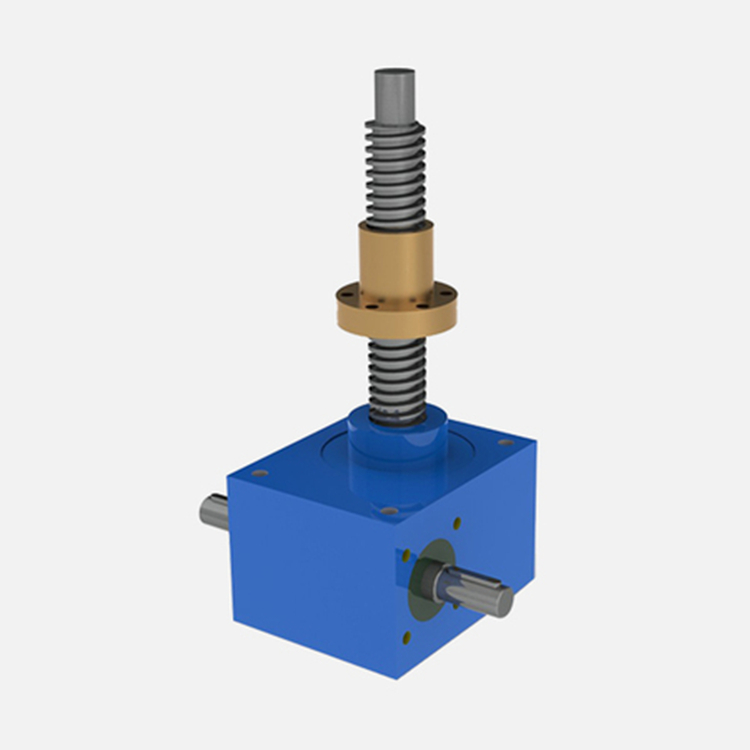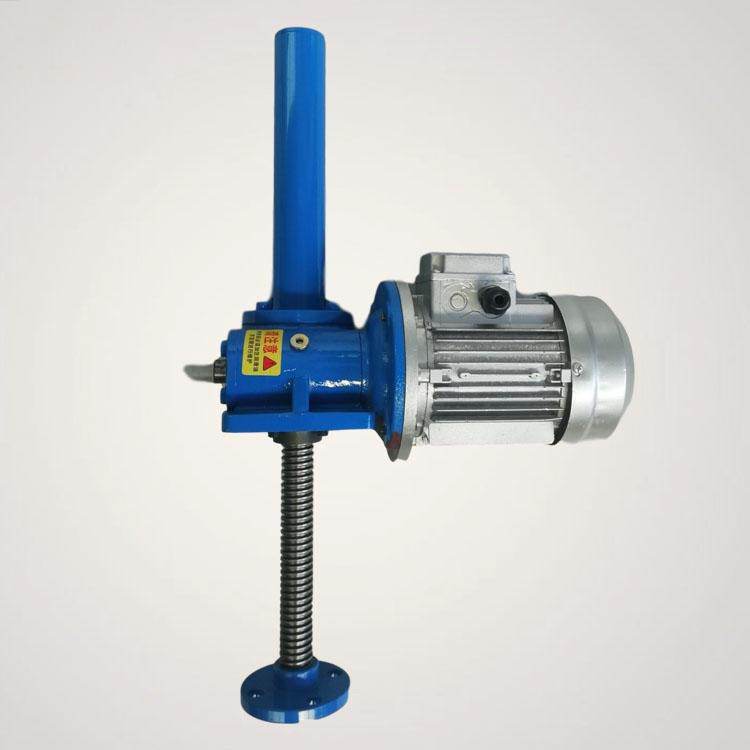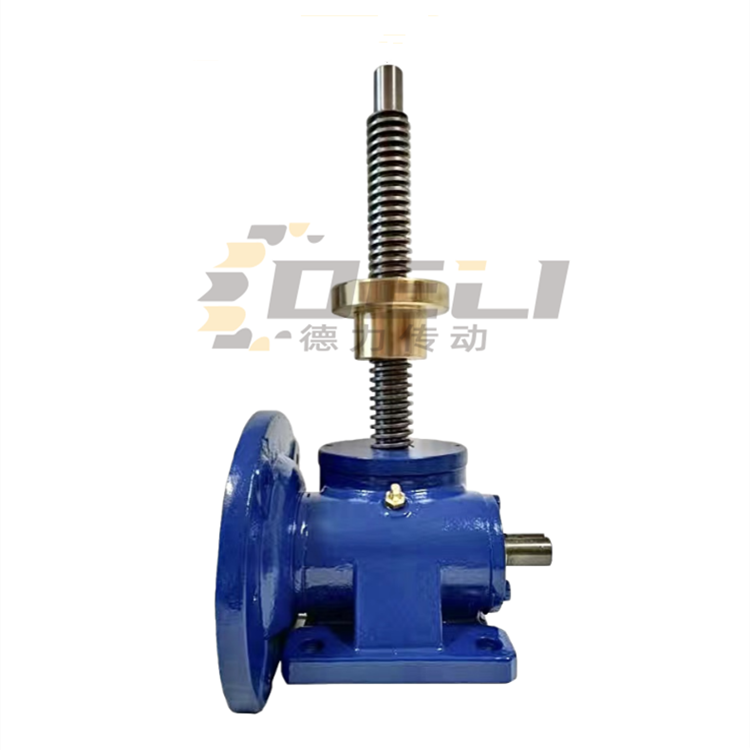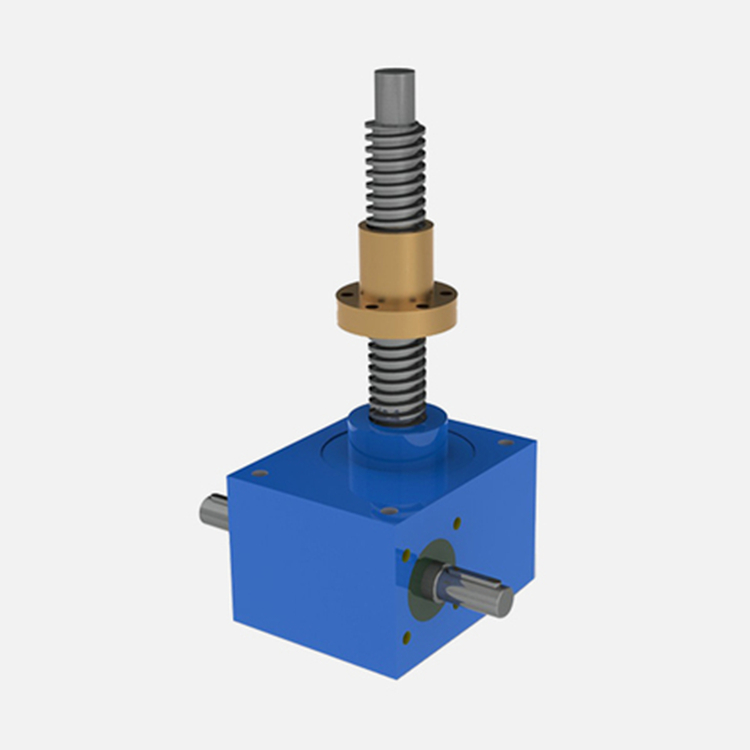

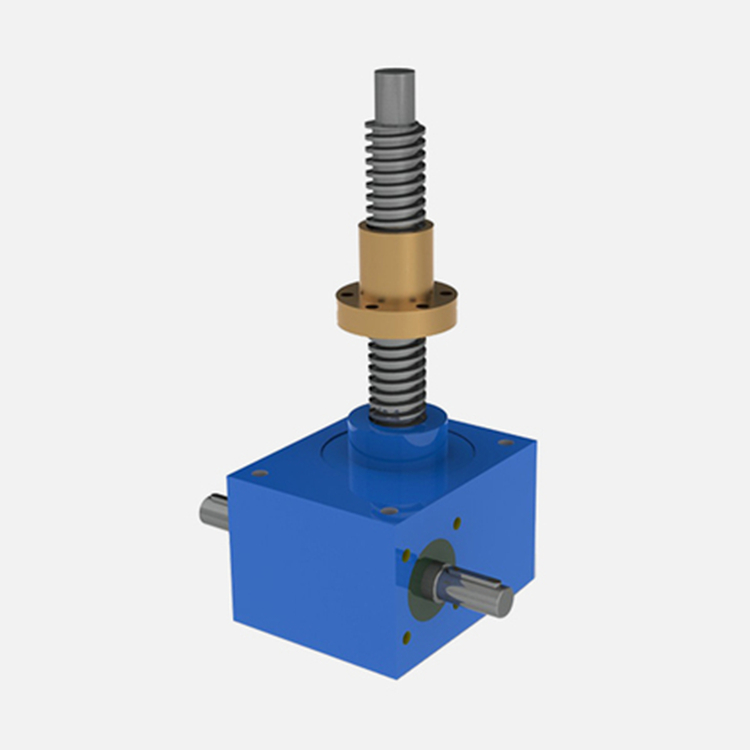
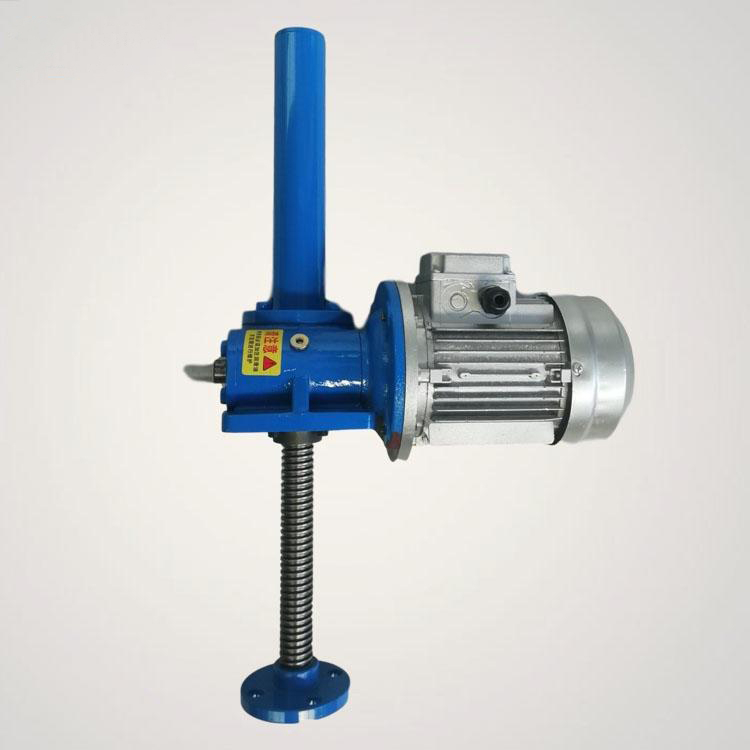
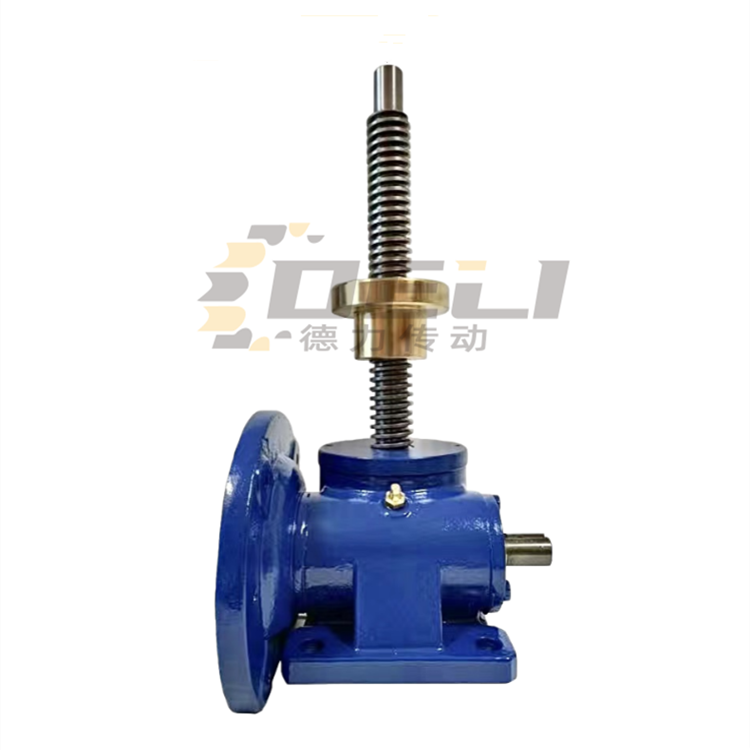







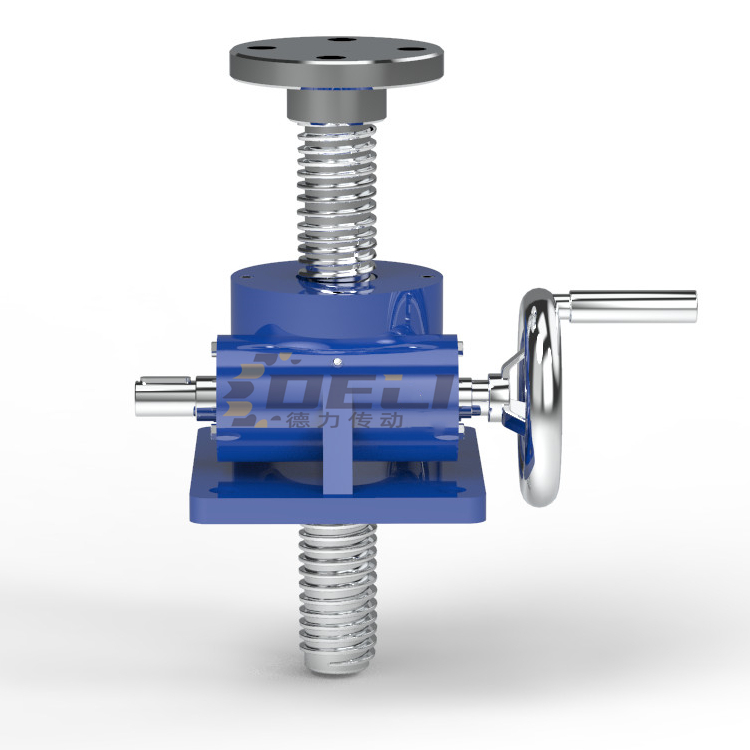
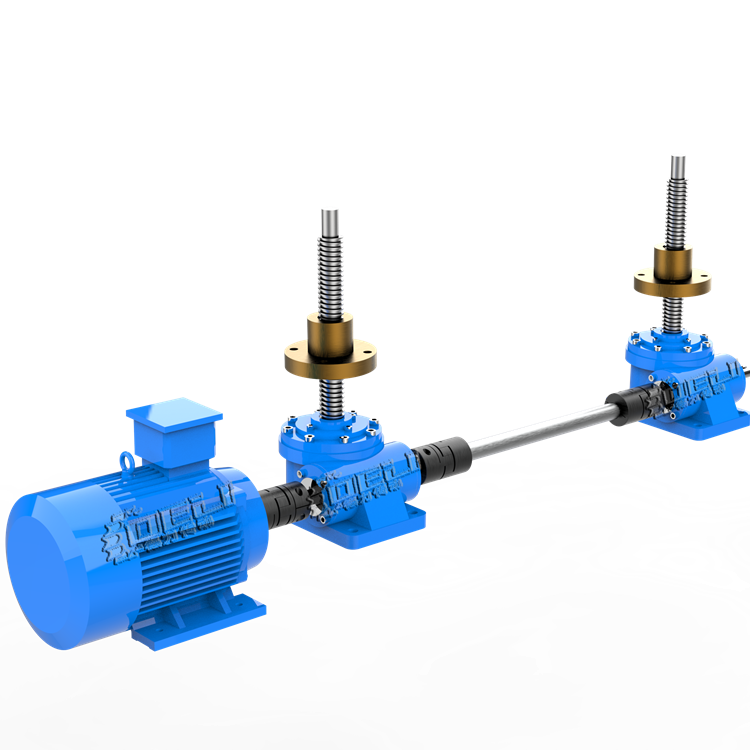
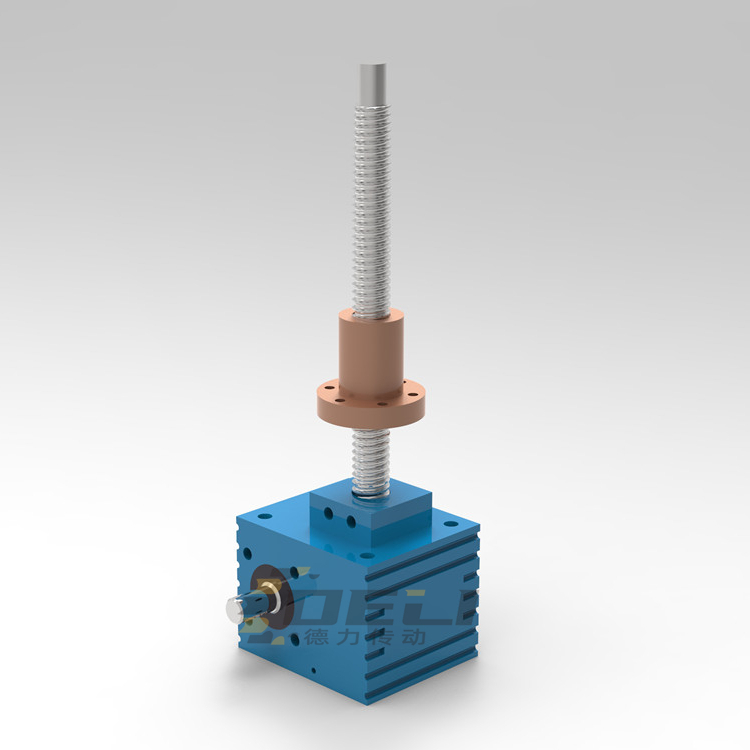
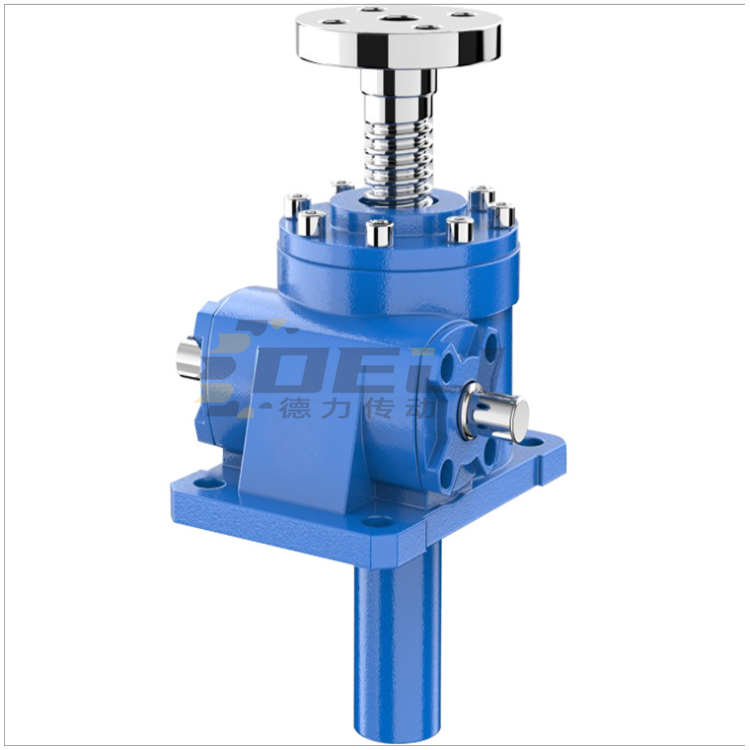
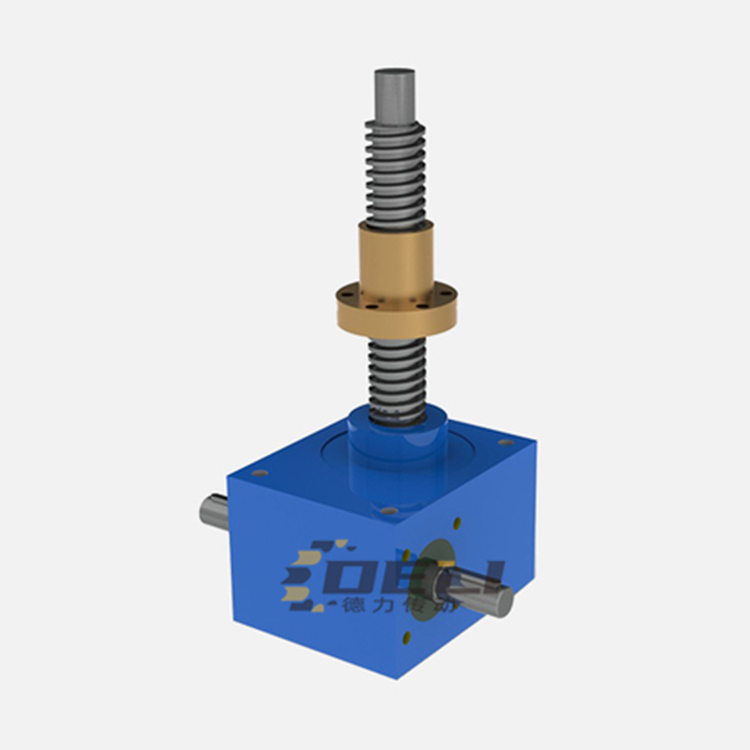
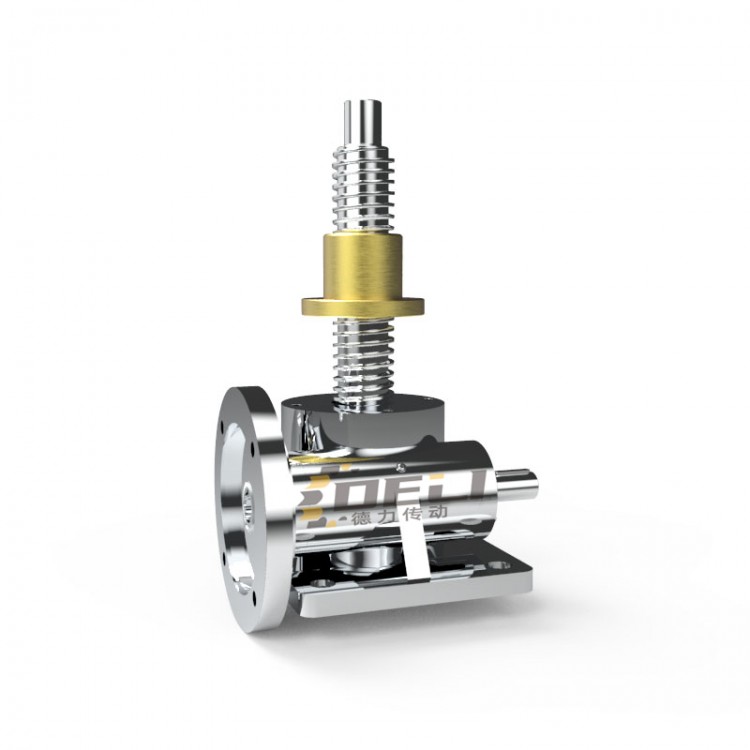
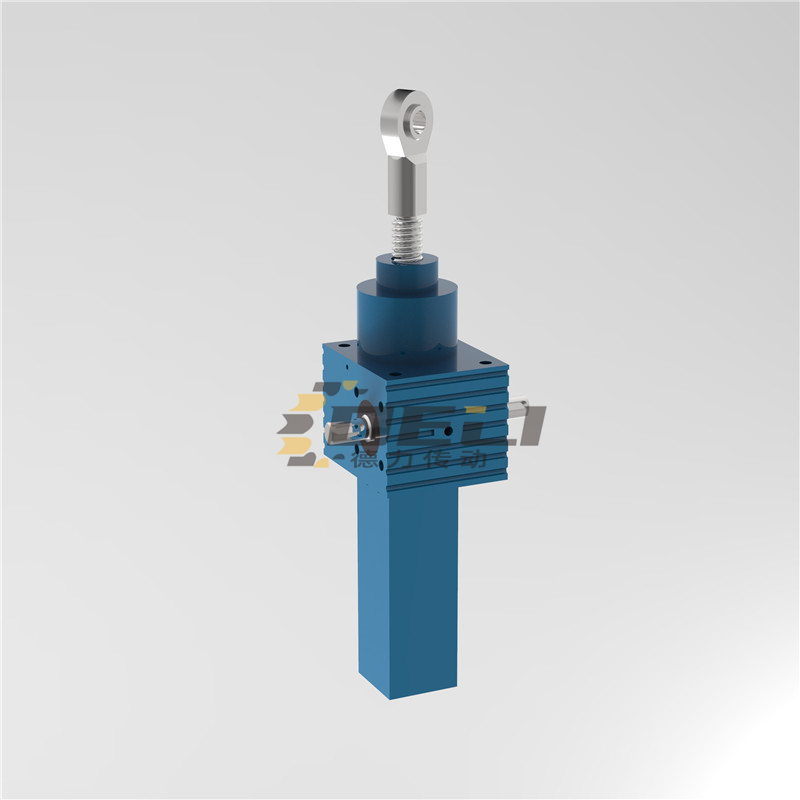
Screw jack, also known as a helical drive mechanism.It is primarily used to convert rotational motion into linear motion or vice versa. There are types that mainly transmit energy, such as screw presses and jacks; others that primarily transmit motion, like the feed screws of machine tool tables; and still others that adjust the relative positions of parts, such as spiral drive mechanisms. Screw jacks come in sliding friction and rolling friction configurations.
SJ Screw Jack Hoist
The SJ Worm Gear Screw Jack is a lifting component.Compared to other series of screw jack lifters, this model boasts many advantages such as a compact structure, small size, easy installation, diverse input forms, high reliability, and long lifespan. It features lifting and lowering functions, as well as reverse operation with shaft components. It can be used individually or in combination with multiple units. The product can be powered by an electric motor or other drive devices, or operated manually, and is widely applied in industries such as metallurgy, machinery, hydrology, and chemical engineering.
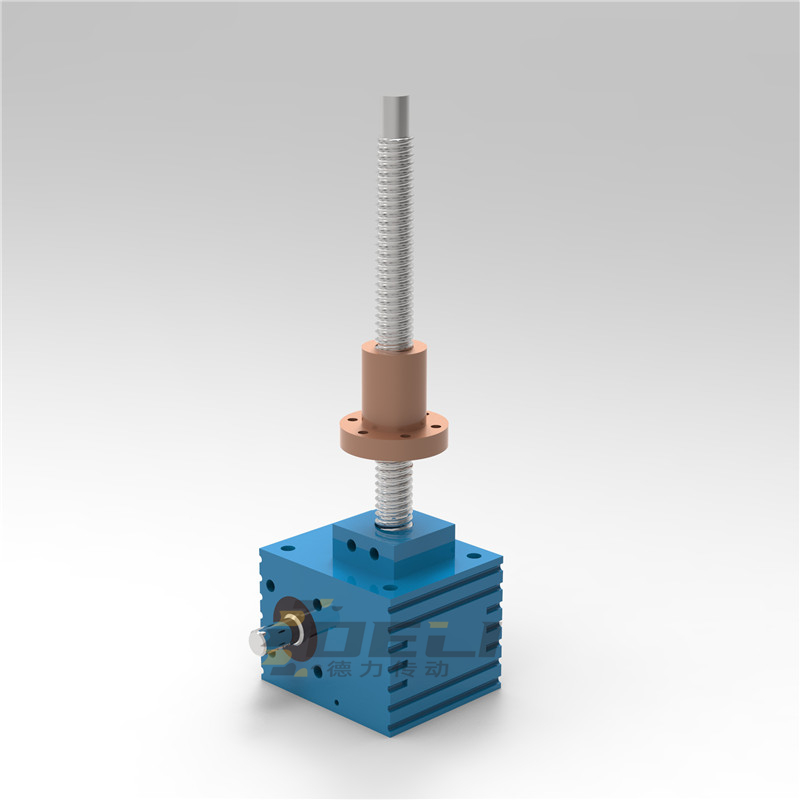
Screw JackA significant portion is due to its internal structure.—— Worm gear structure. This structure was previously used in reducers to slow down the speed while increasing torque, meaning that a small amount of force can transmit a large torque. Later, people found that it is also a great choice for elevators, used for lifting or hoisting movements.Screw JackIt was thus born.
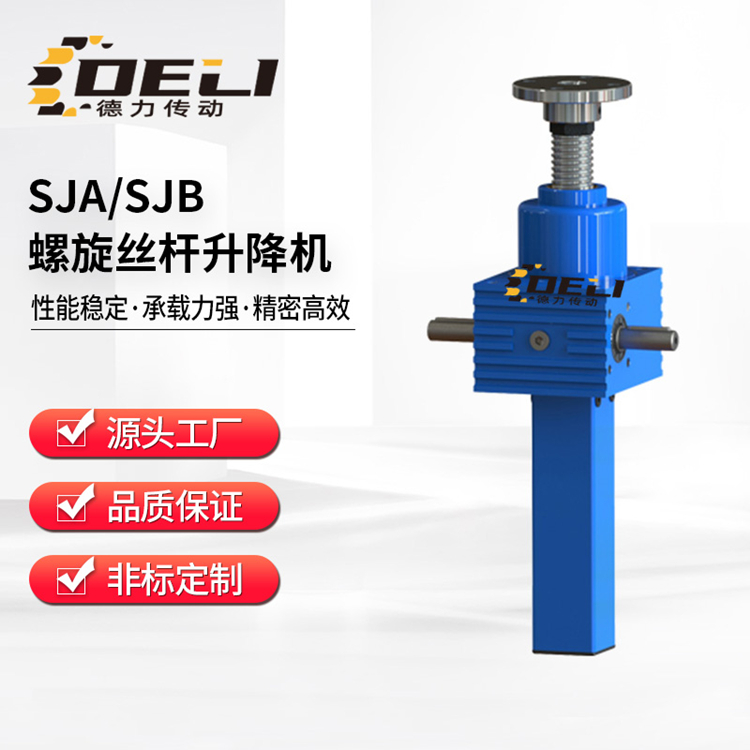
Features of screw jack:
1The working principle involves ball bearings placed between the screw thread raceways of the screw and nut.
2As the screw or nut turns, the ball bearings roll along the threaded groove, generating rolling friction between the screw and nut during relative motion. To prevent the ball bearings from rolling out of the groove, return guide devices are installed at both ends of the nut's helical slots.
3They form a circulating loop with the threaded raceway, allowing the ball to circulate within the nut's raceway.
The transmission type is based on the combination of the relative motion between the screw and nut. There are two basic types of fundamental transmission for screw jacks.
(1)Nut fixing, screw rotation and movement; this type of transmission, where the nut itself acts as a support, eliminates the additional axial movement that may occur in screw shaft bearings. The structure is relatively simple and achieves high transmission accuracy. However, the axial dimension should not be too long, as it may reduce rigidity. Therefore, it is only suitable for applications with shorter travel distances.
(2)Ball screw rotation, nut movement; this transmission requires limiting the nut's rotation, hence the need for a guiding device. Its features include a compact structure, good ball screw rigidity, and is suitable for applications with large working travel.