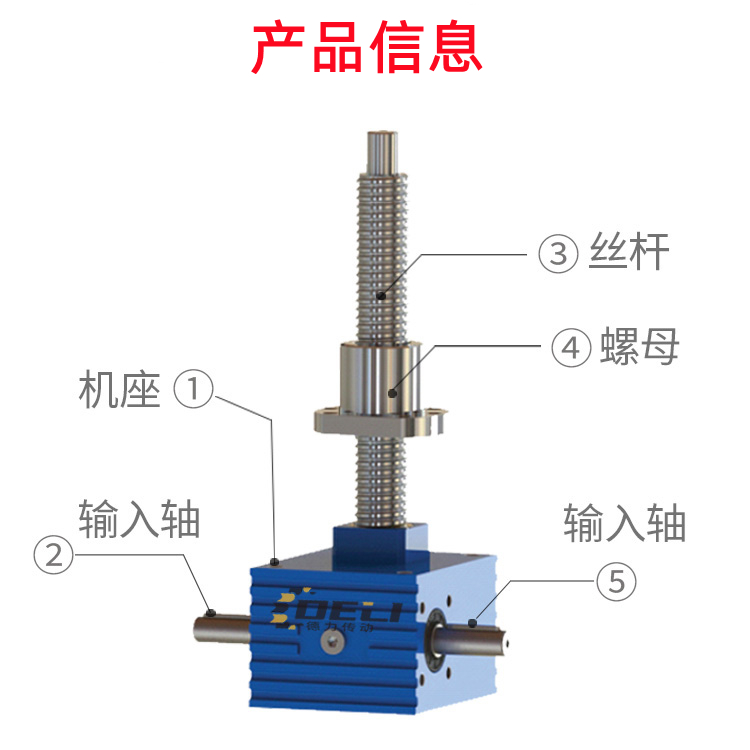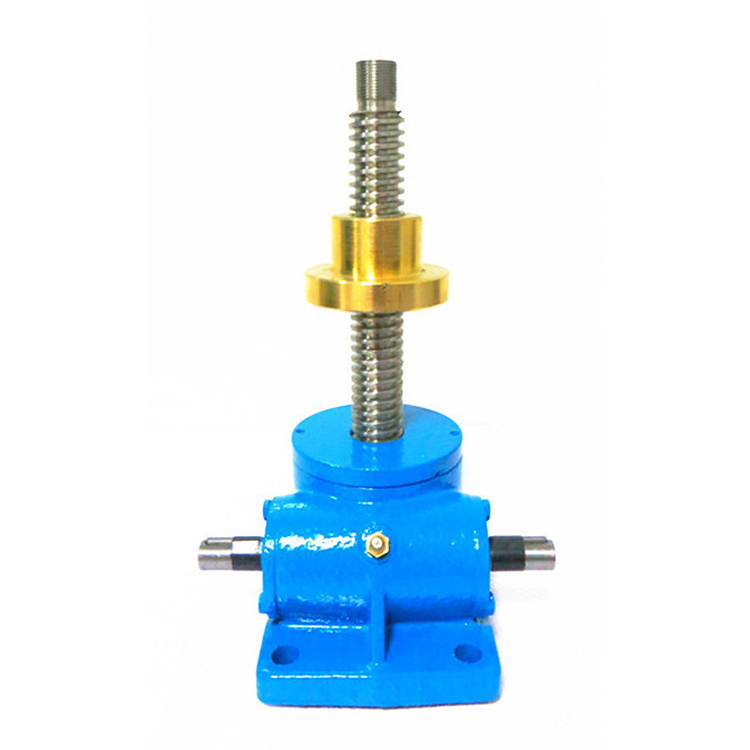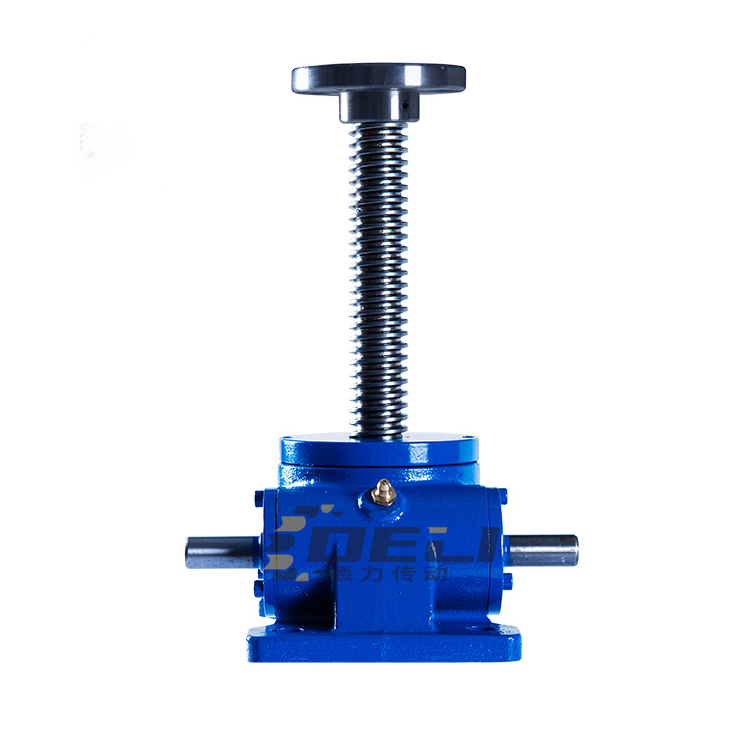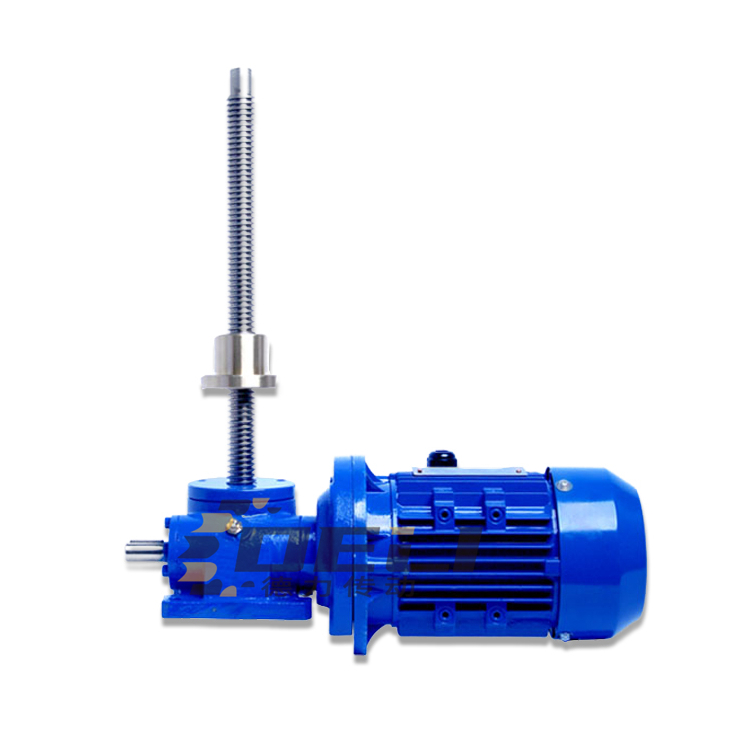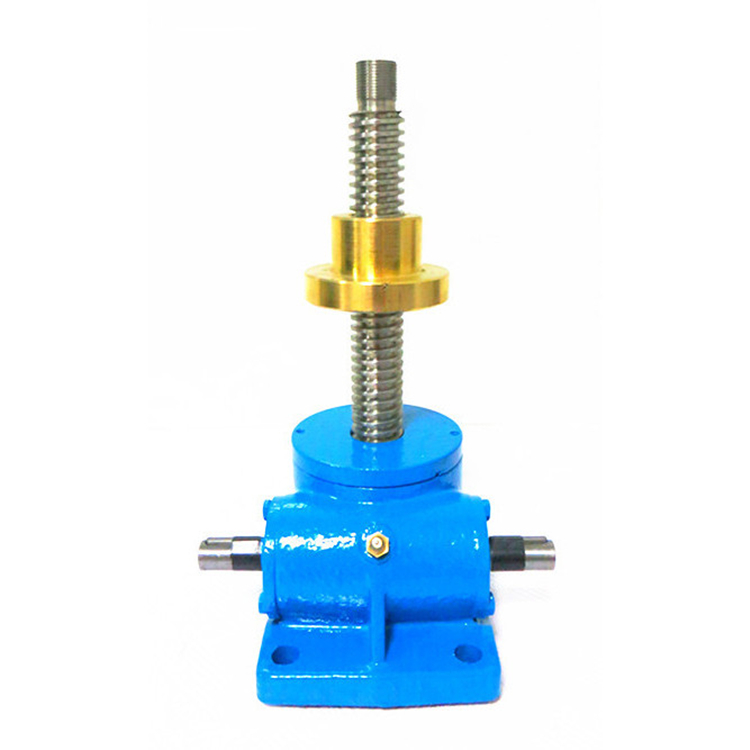


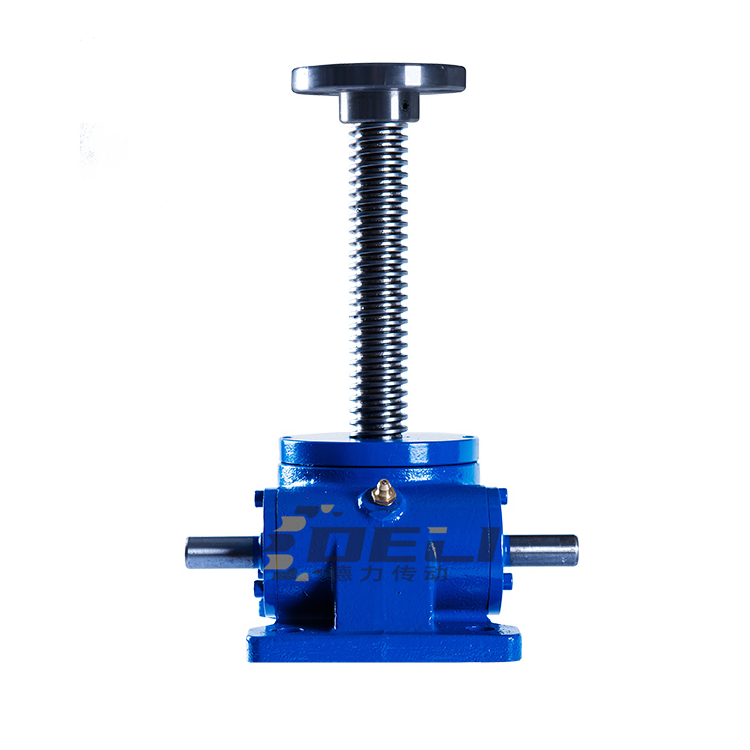
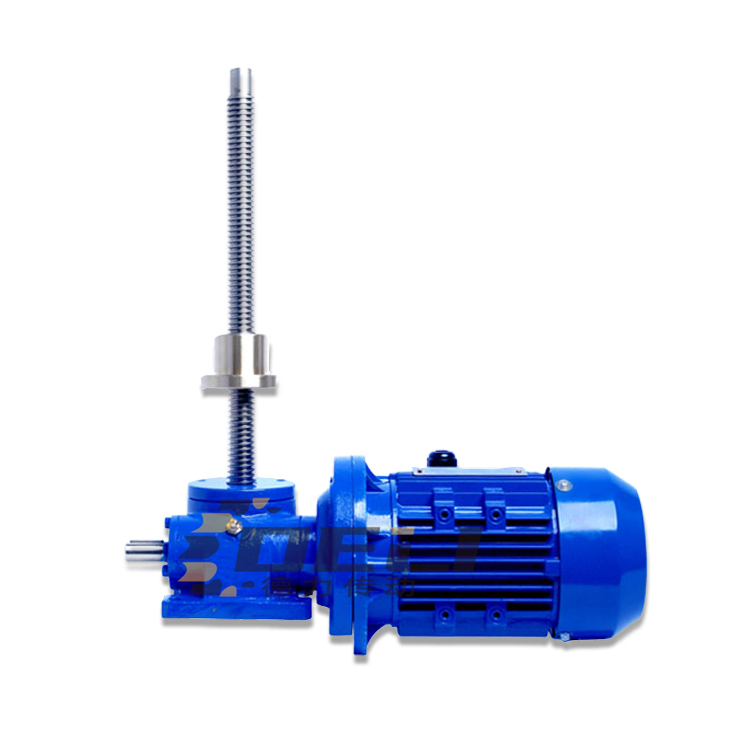







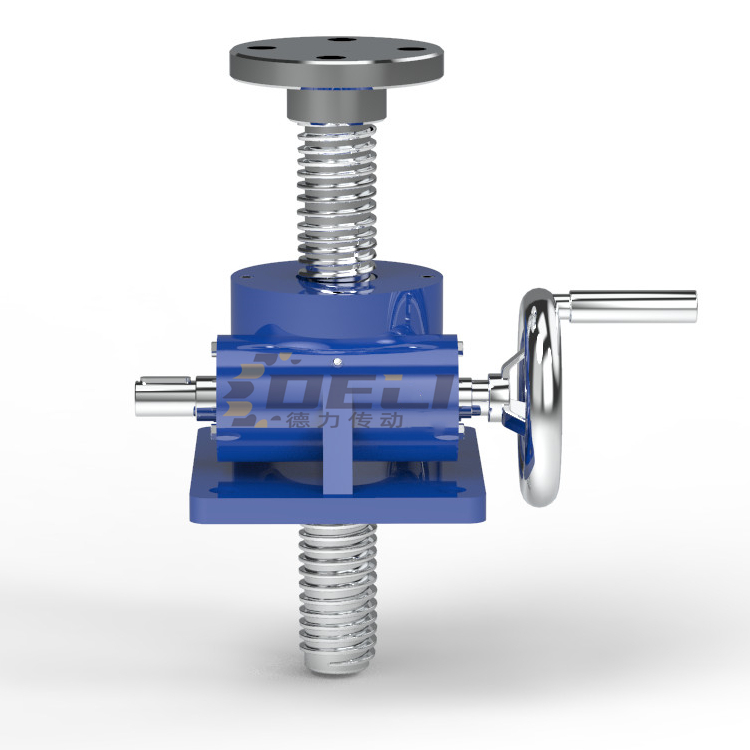
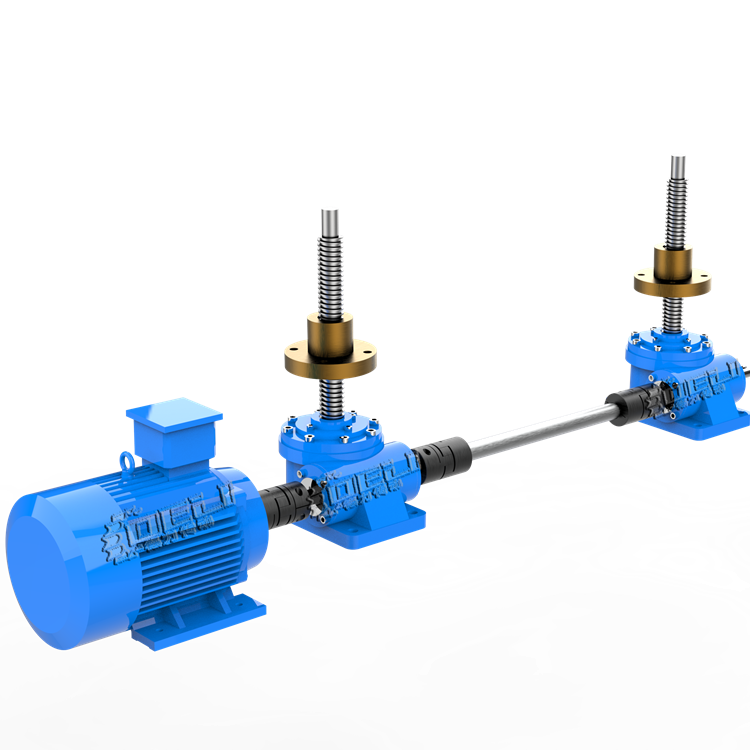
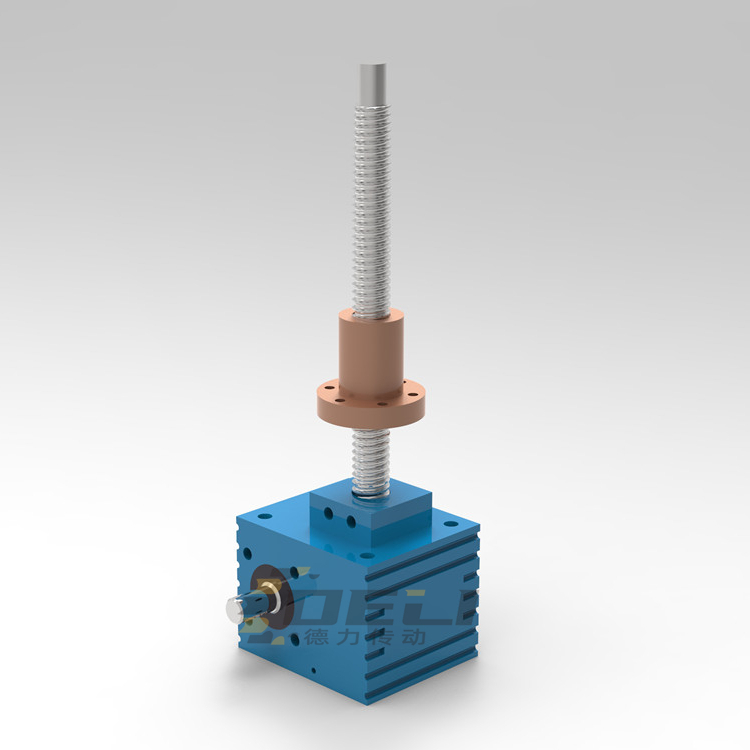
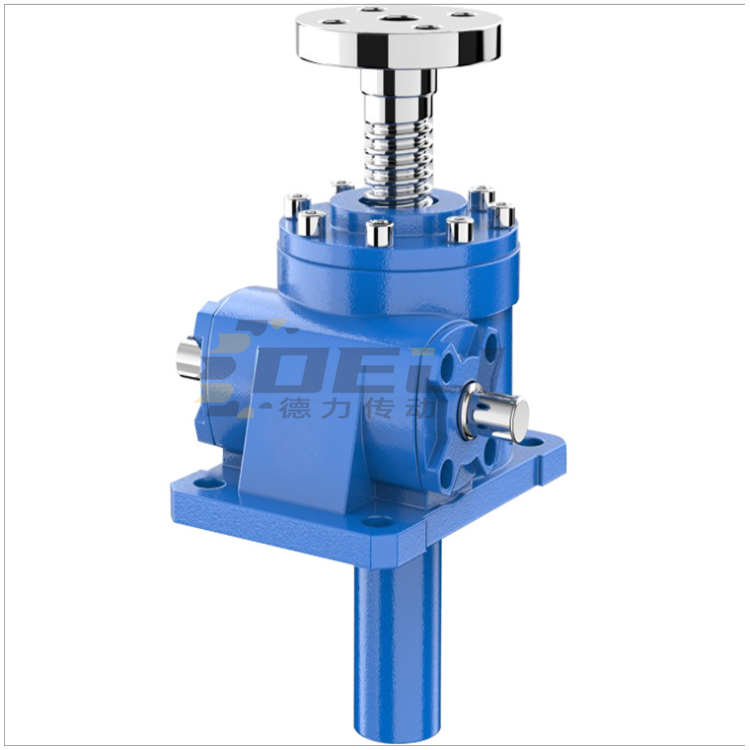
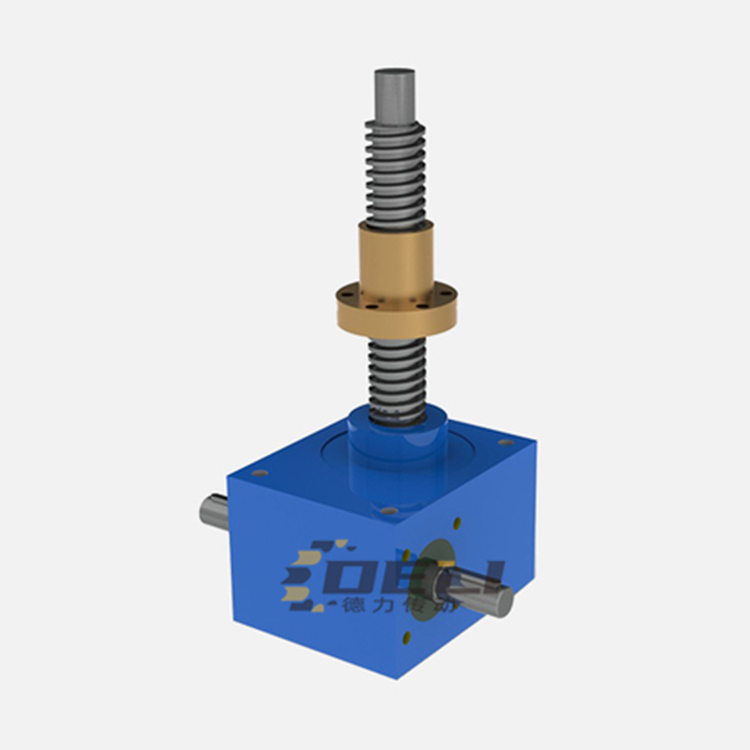
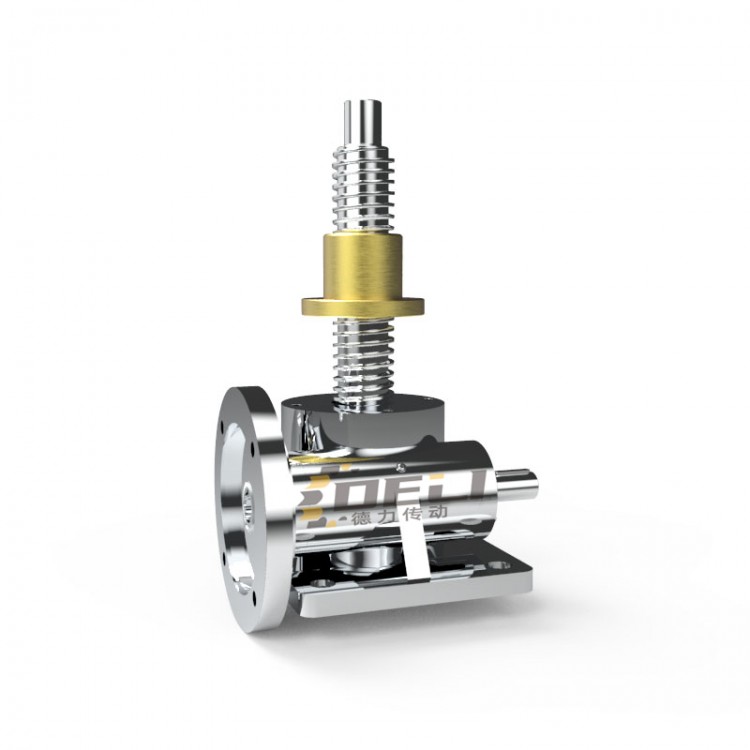
Ball screw lifting jackThe lifespan of the series products is primarily determined by the ball screw's lifespan and other components such as worm gears and worms; we mainly verify the ball screw's lifespan, while worm gears and worms will experience wear but generally have a longer lifespan. This elevator is widely used in high-precision environments and for high-end automated equipment.
The working principle of the ball screw lifting mechanism brake is: one set of friction pairs is connected to the fixed frame; the other set is connected to the rotating shaft of the mechanism. When the friction pairs come into contact and are tightened, braking action is produced; when the friction pairs separate, the braking action is released, allowing the mechanism to move.
Ball screw lifting mechanism brakes can generally be divided into normally closed and normally open types according to their working status.
1. Normally Closed: The brake is in a closed braking state when the mechanism is in a non-operational state; during operation, the control mechanism first automatically releases the brake. The lifting and telescoping mechanisms of tower cranes are both normally closed.
2. Normally Open: The brake is in a released state at all times. Braking is achieved through a mechanical or hydraulic mechanism when needed. Tower cranes, construction hoists, and winch reducers utilize a normally open configuration for their rotating mechanisms.
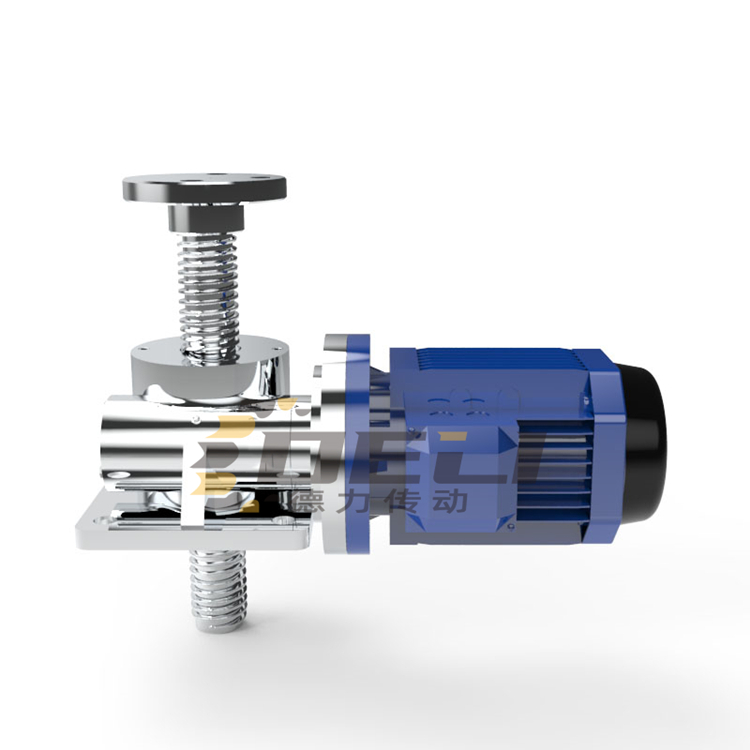
Based on different structures, ball screw lifters can be divided into the following three types:
1. Belt Brakes: The braking steel belt generates braking torque by radially encircling the braking wheel.
2. Block Brakes: Two symmetrical brake pads that generate a braking torque by radially gripping the brake wheel.
3. Disc and cone brake systems: Metal discs with friction linings, both disc and cone types, are tightly pressed against each other axially to generate braking torque.
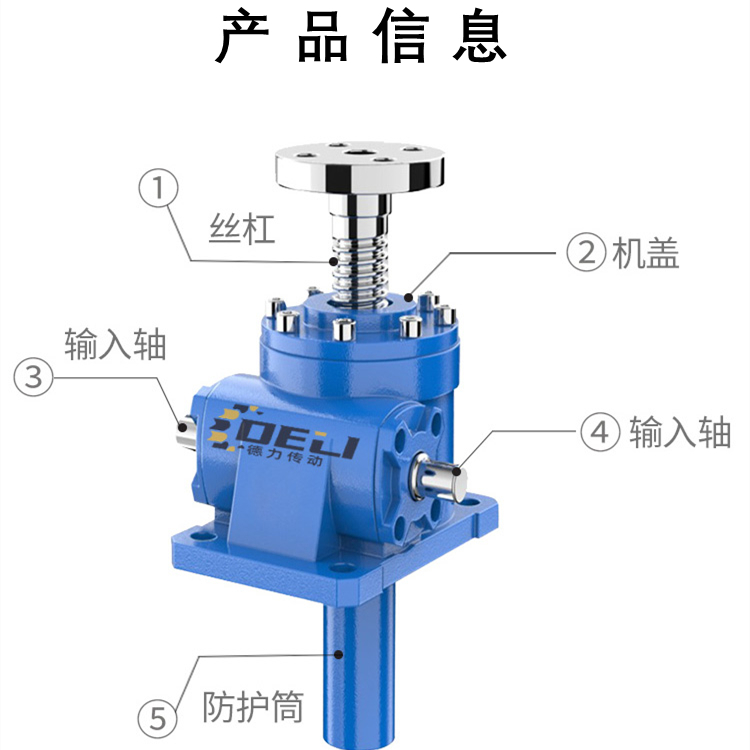
The application scope of ball screw lifters:
Upgrades, displacements, clamping, flipping, and other actuating devices in the production assembly line
2. Equipment installation and clamping, lifting, and flipping devices for metallurgical equipment
3. Lifting equipment for the vehicle manufacturing industry, flexible fixtures, and welding lifting tables
4. Monocrystalline and polycrystalline silicon ingot casting furnace lifting mechanisms, and solar power generation tracking systems
5. Aerospace, astronomical telescopes, and remote-operated devices
6. Stage Lift Mechanism
7. Shipbuilding, hydraulic, food & storage, foundry industries, woodworking machinery, and food processing machinery execution mechanisms
8. Elevating devices on lathe and gantry machine tools are suitable for high-speed, high-frequency, and high-performance applications. The main components are precision ball screw units and high-precision worm gear units.
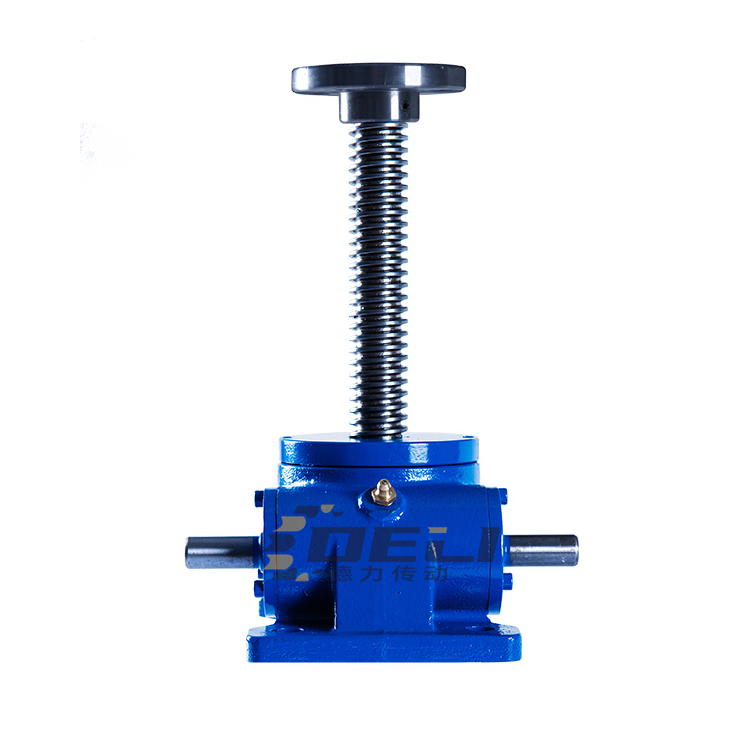
The working principle of the ball screw lifting mechanism brake is as follows: one set of friction pairs in the brake connects to the fixed machine frame; the other set connects to the rotating shaft of the mechanism. When the friction pairs come into contact and are tightened, braking action is generated; when the friction pairs separate, the braking action is released, allowing the mechanism to move.
Ball screw lifting mechanism brakes are generally divided into normally closed and normally open types according to their working status.
1. Normally Closed: The brake is in the closed braking position when the mechanism is not in operation; upon operation, the control mechanism automatically releases the brake first. The lifting and jib mechanisms of tower cranes are both normally closed.
2. Normally Open: The brake is in a released state by default, and braking is achieved through a mechanical or hydraulic mechanism when needed. Tower cranes, construction hoists, and winch decelerators use a normally open configuration for their rotating mechanisms.