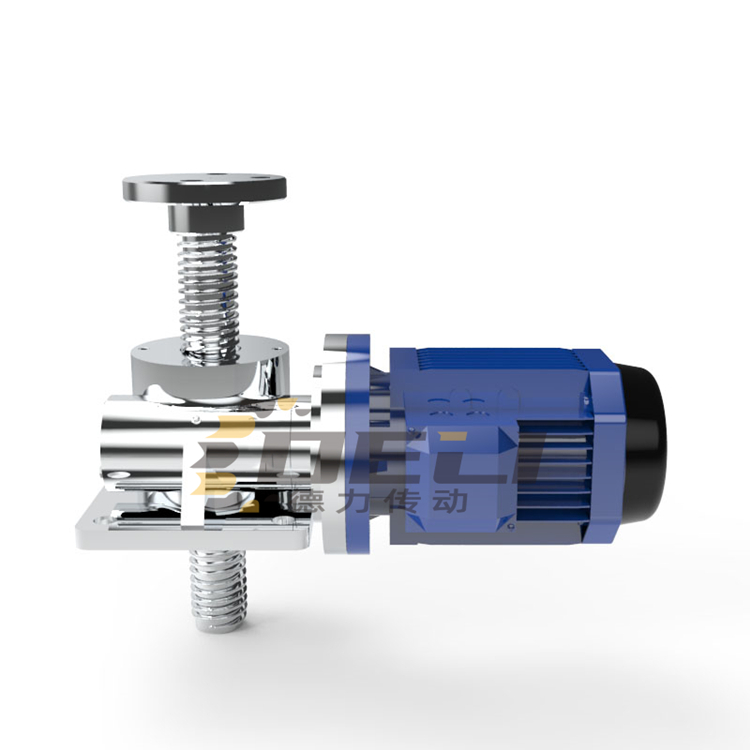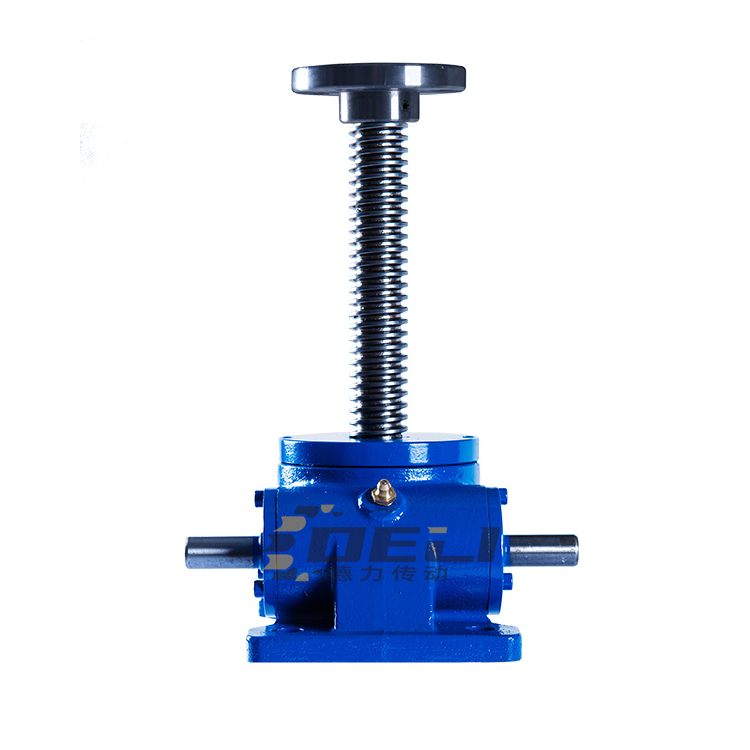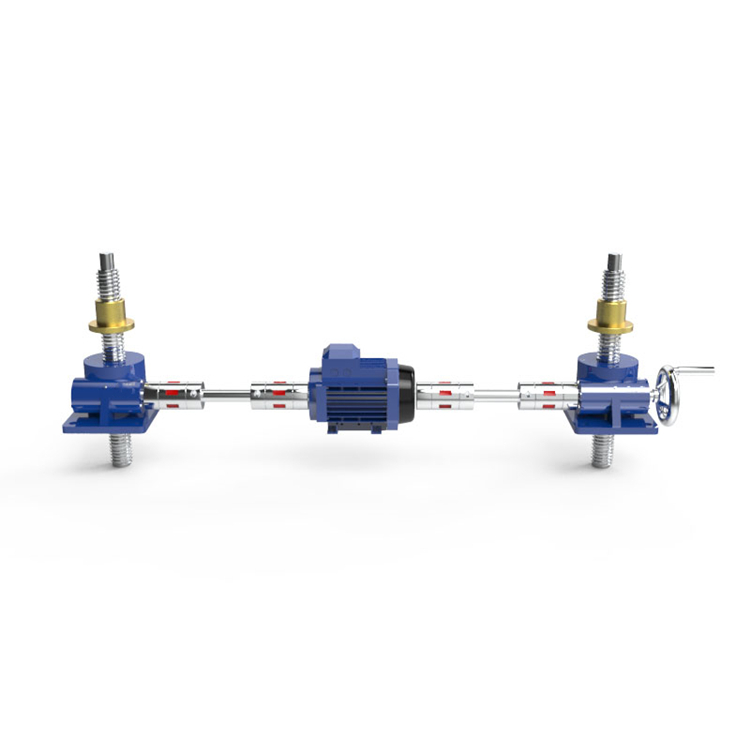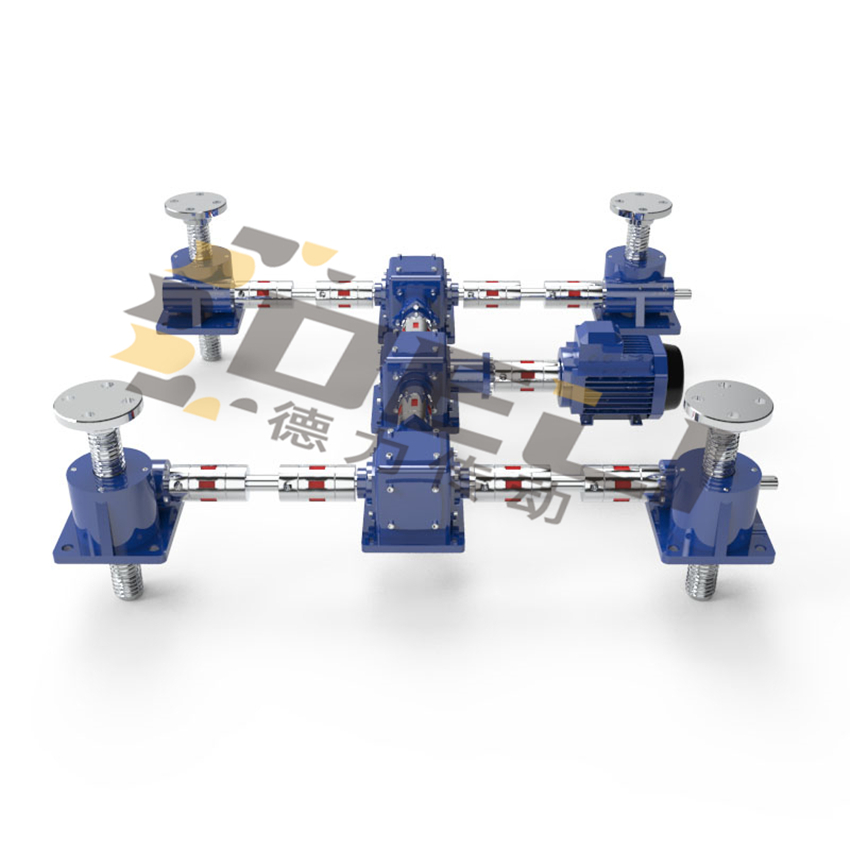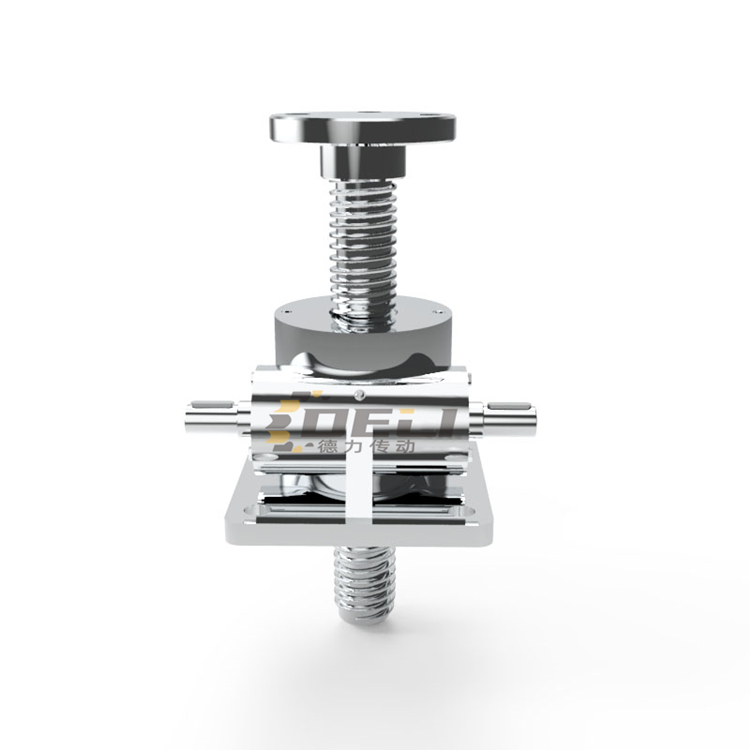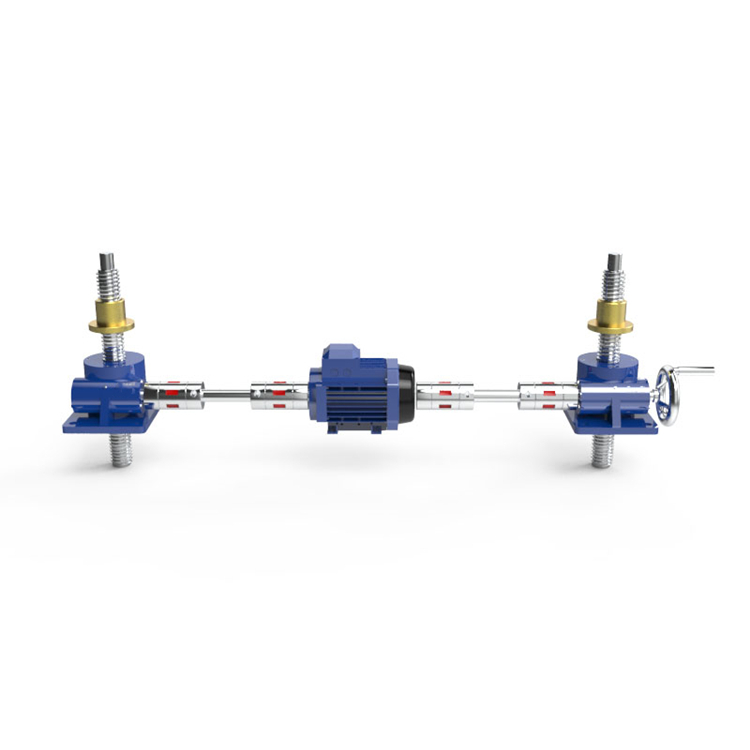

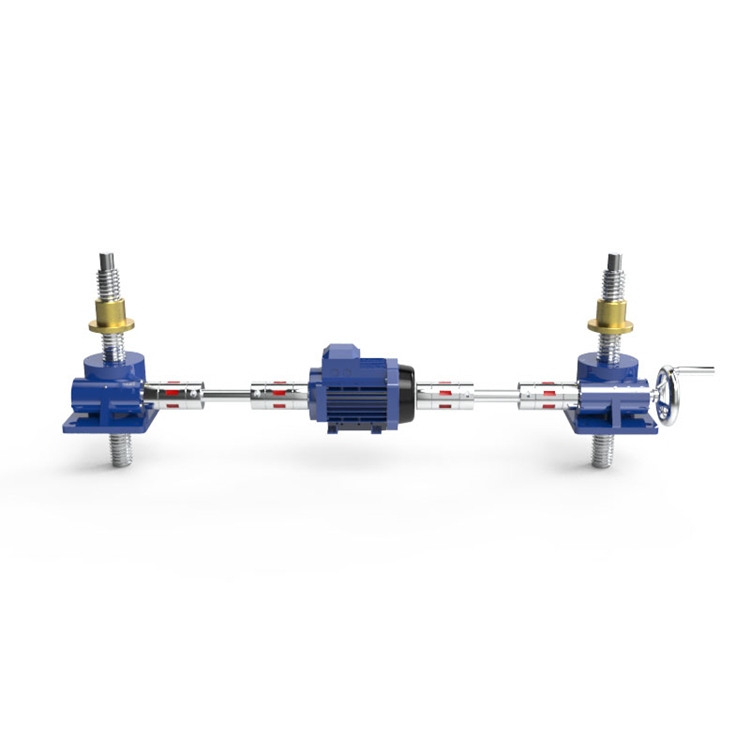
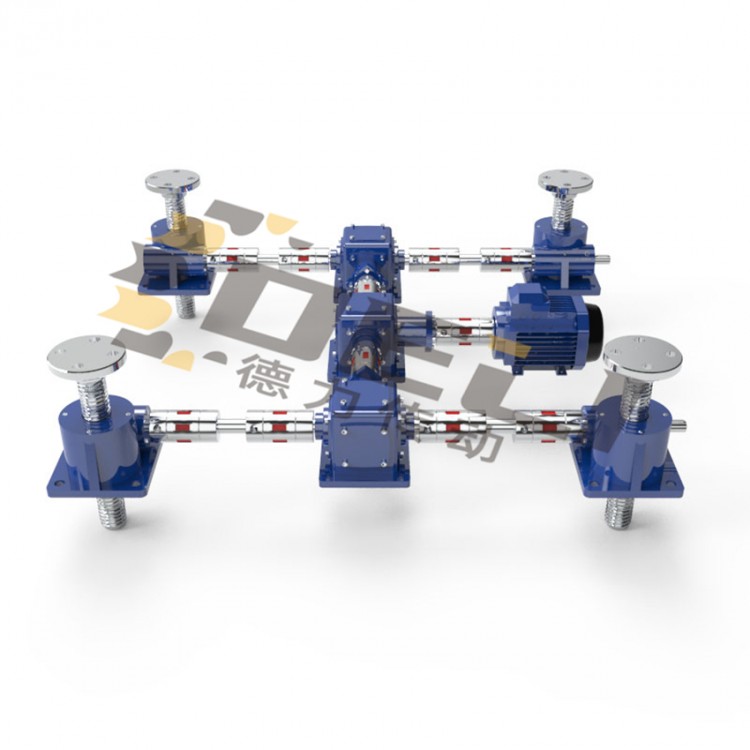
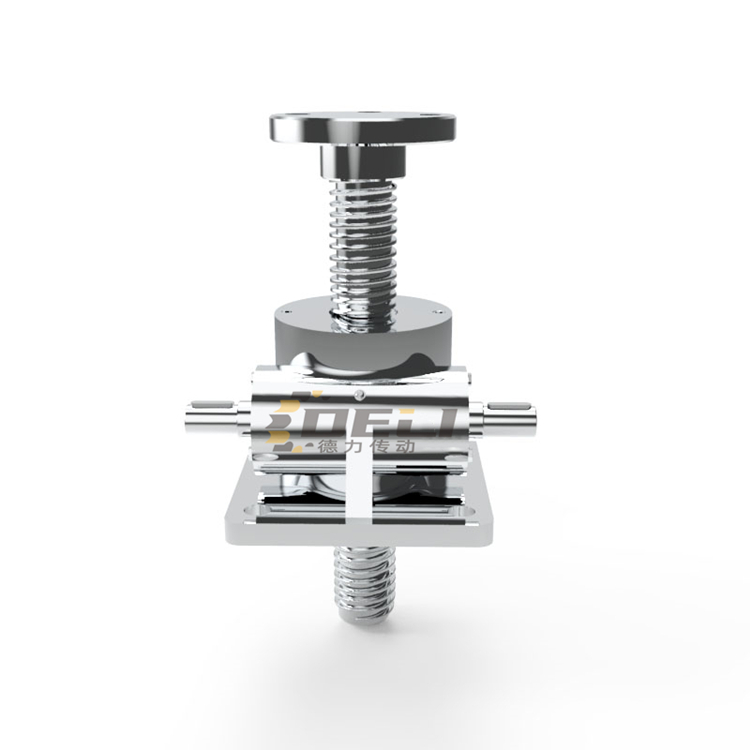







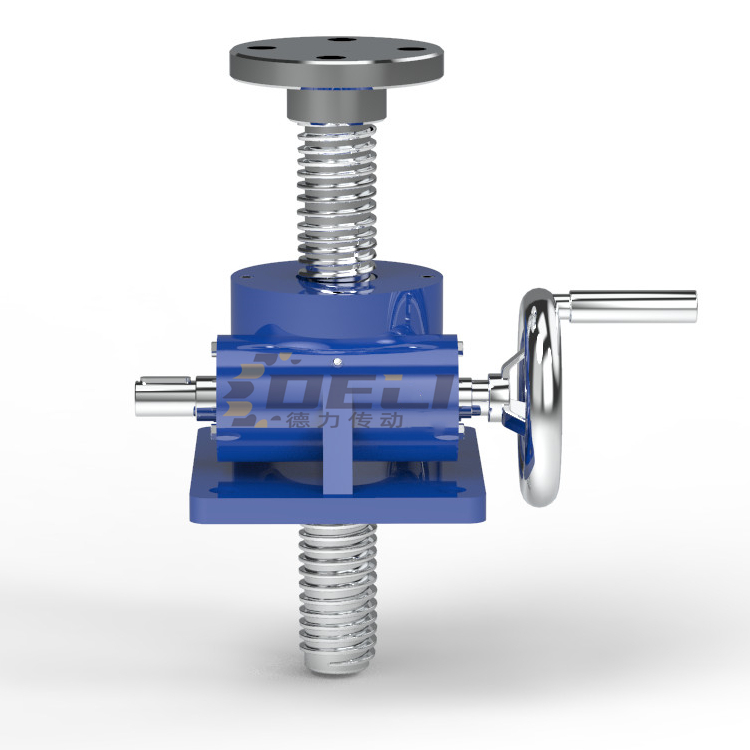
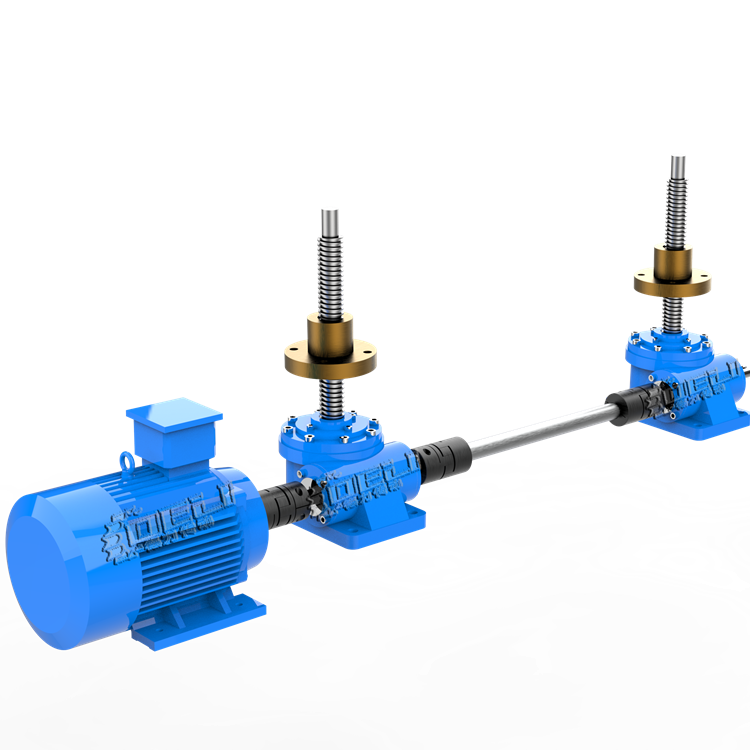
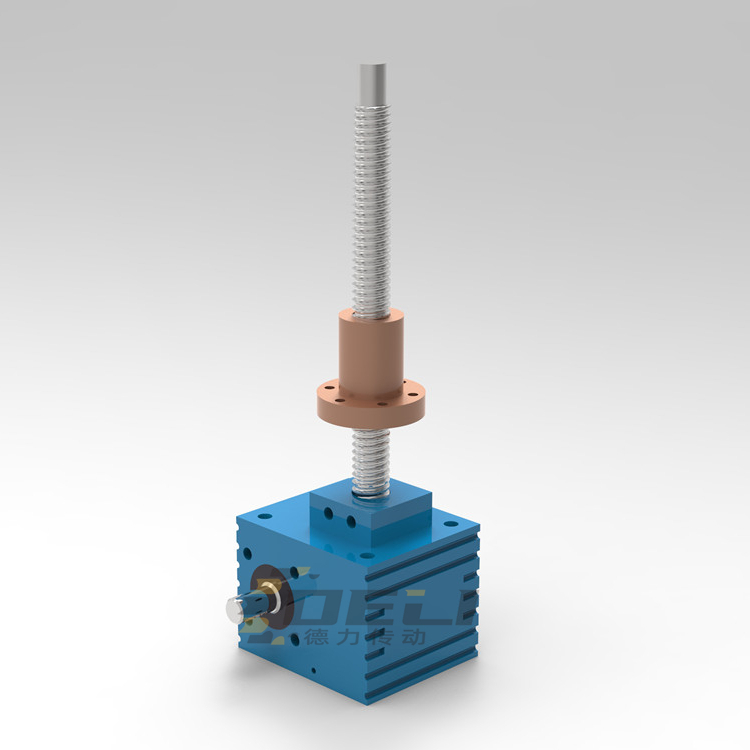
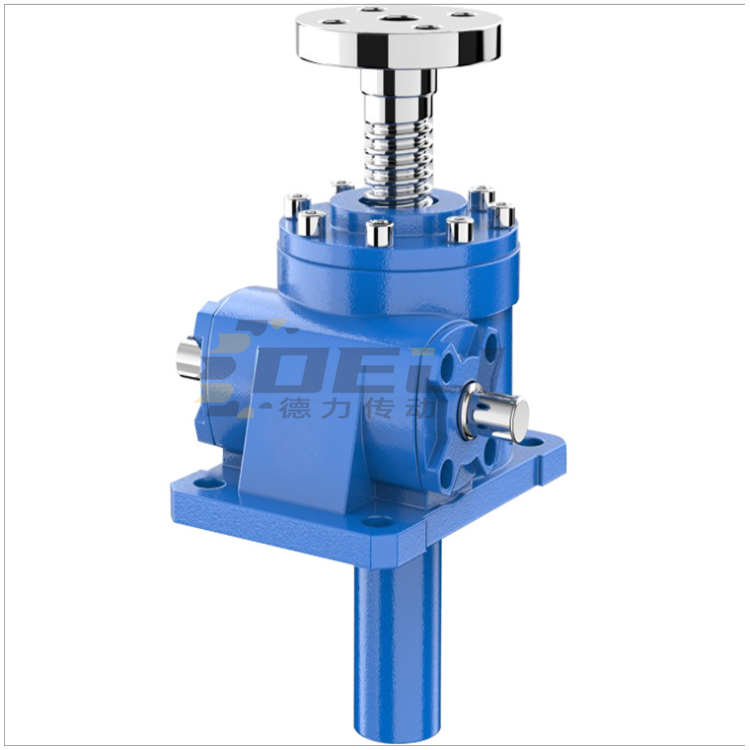
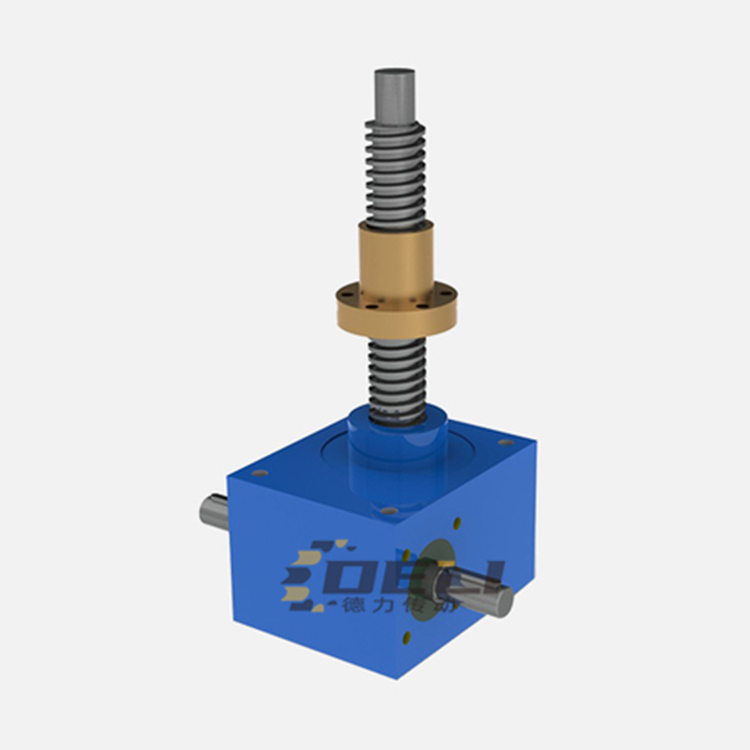
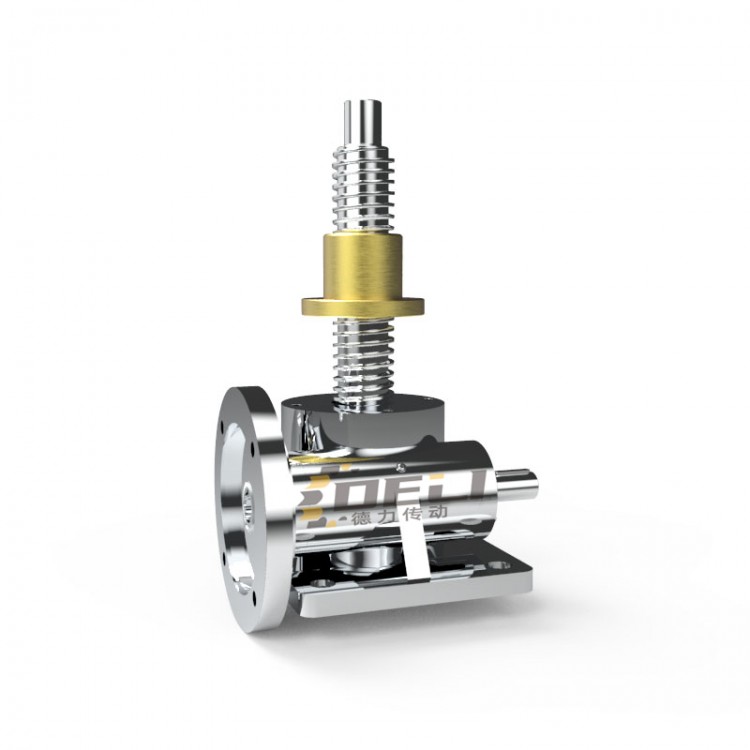
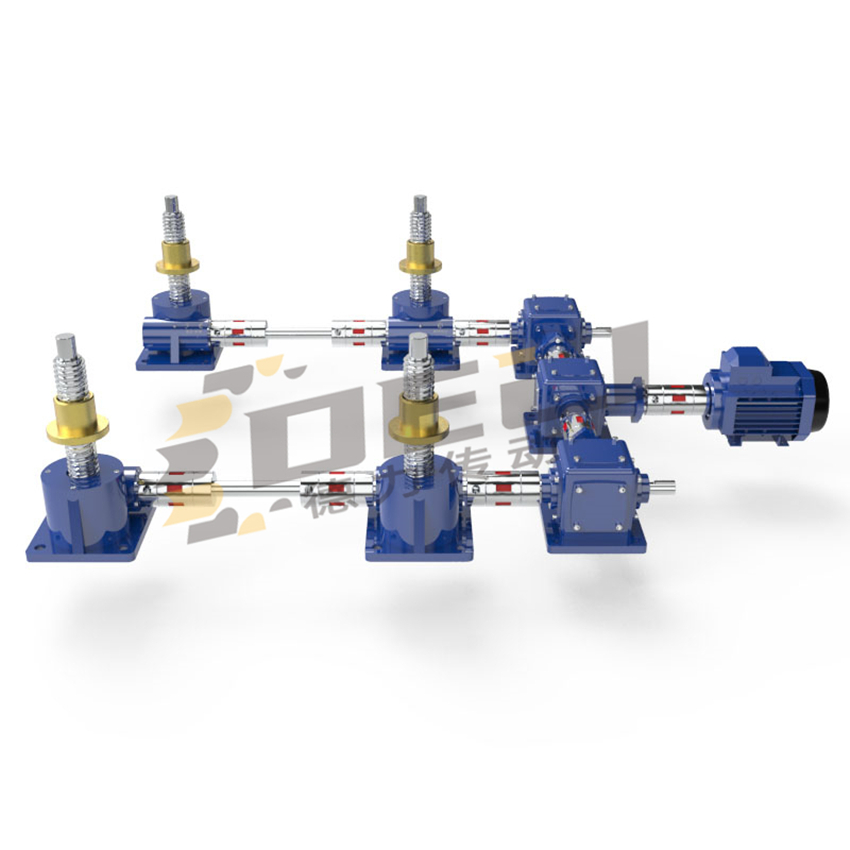
Screw jack elevators operate through worm gear and screw threads to achieve lifting, lowering, advancing, and reversing functions. They are fundamental lifting components widely used in various industries such as machinery, metallurgy, water conservancy, chemicals, culture, and healthcare. They offer advantages like compact structure, small size, light weight, easy installation, flexible operation, high reliability, excellent stability, and long service life. They can be powered directly by an electric motor or other sources, or operated manually. This series of worm screw jack elevators is capable of self-locking and has a high load-bearing capacity.2.5t to 120t capacity, input speed of 1500 rpm, hoisting speed of 2.7 m/min, available in various structural types and assembly methods. Operating temperature range is -20 to 100°C, with hoisting height customized to customer specifications.
Features of screw jack:
Smooth transmission with no noise.
2. Low impact and vibration.
3. Suitable for low-speed operations and both high and low-frequency applications.
4. Primarily for medium to small loads.
5. Maintain Load Capacity: Trapezoidal screw features an automatic locking function, allowing it to maintain load capacity even without a braking device.
6. Safety Setting: To prevent exceeding its stroke and damage to the screw and nut, a stroke switch is specially configured.
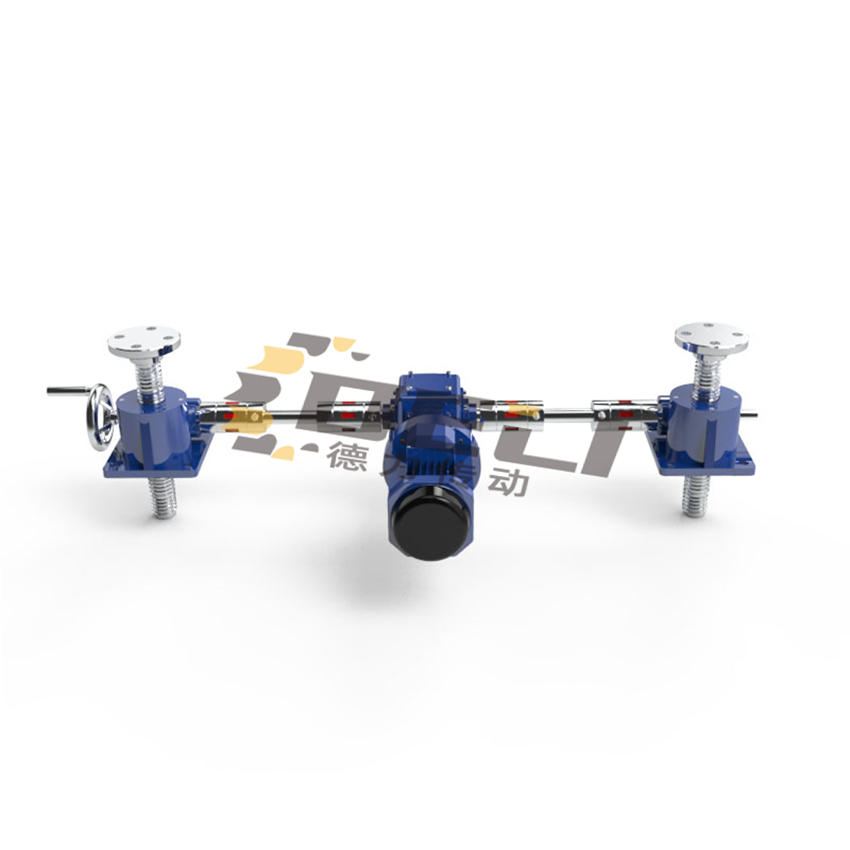
Features of screw jack:
1Ball bearings are placed between the screw thread and nut thread grooves.
2When the screw or nut turns, the ball bearings roll along the thread raceway, resulting in rolling friction between the screw and nut during relative movement. To prevent the ball bearings from rolling out of the raceway, return guide devices are installed at both ends of the nut's helical slots.
3They form a circulating loop with the threaded raceway, allowing the ball to circulate within the nut's raceway.
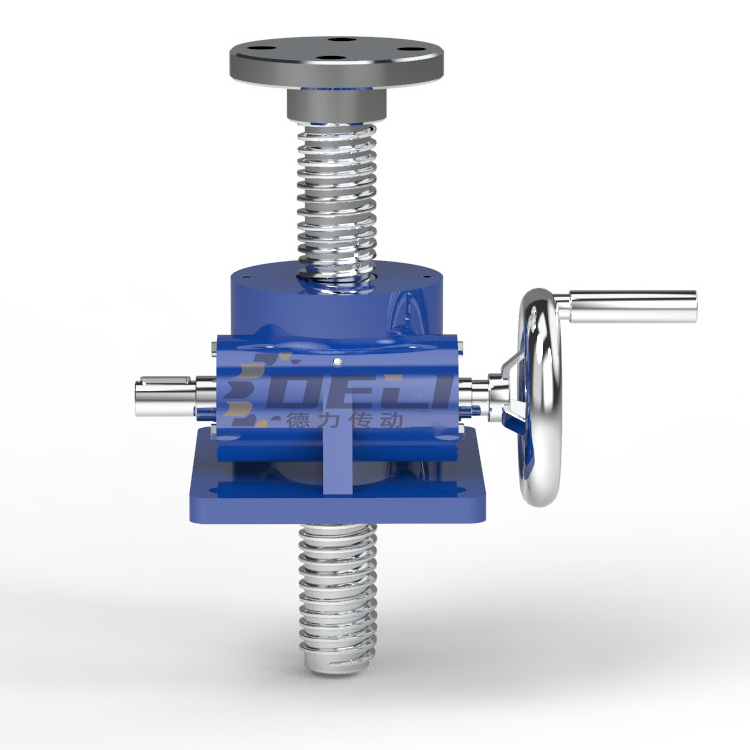
The transmission type varies based on the relative motion combination of the screw and nut. The basic transmission forms of screw jacks generally consist of two types.
(1)Nut fastening, screw shaft rotation and movement. This type of transmission, with the nut itself acting as a support, eliminates additional axial movement that might be caused by the screw shaft bearing, resulting in a simpler structure and higher transmission accuracy. However, its axial dimensions should not be too long, as this would reduce rigidity. Therefore, it is only suitable for applications with short travel distances.
(2)The screw shaft rotates, the nut moves; this type of transmission requires limiting the nut's rotation, thus necessitating a guiding device. Its features include a compact structure, good rigidity of the screw shaft, and is suitable for applications with a large working stroke.