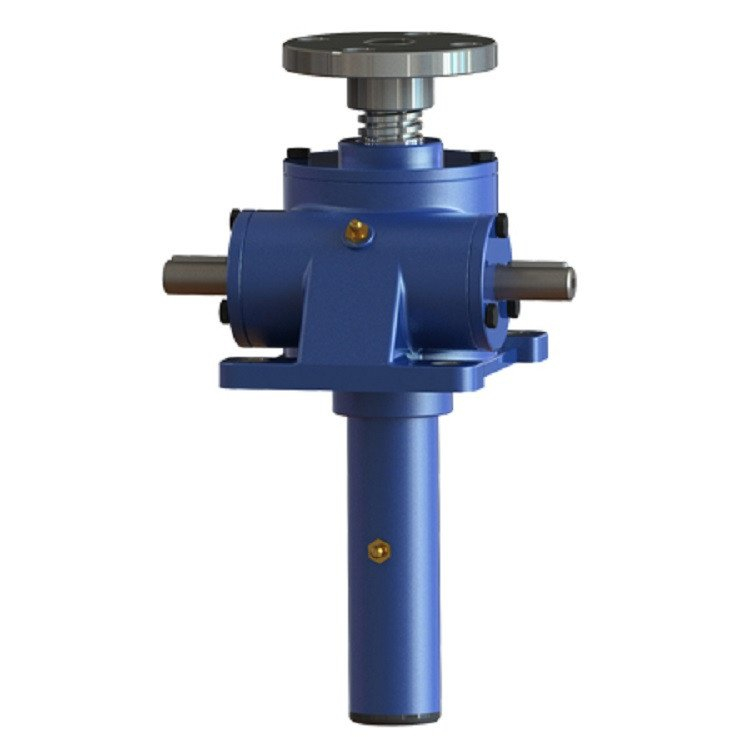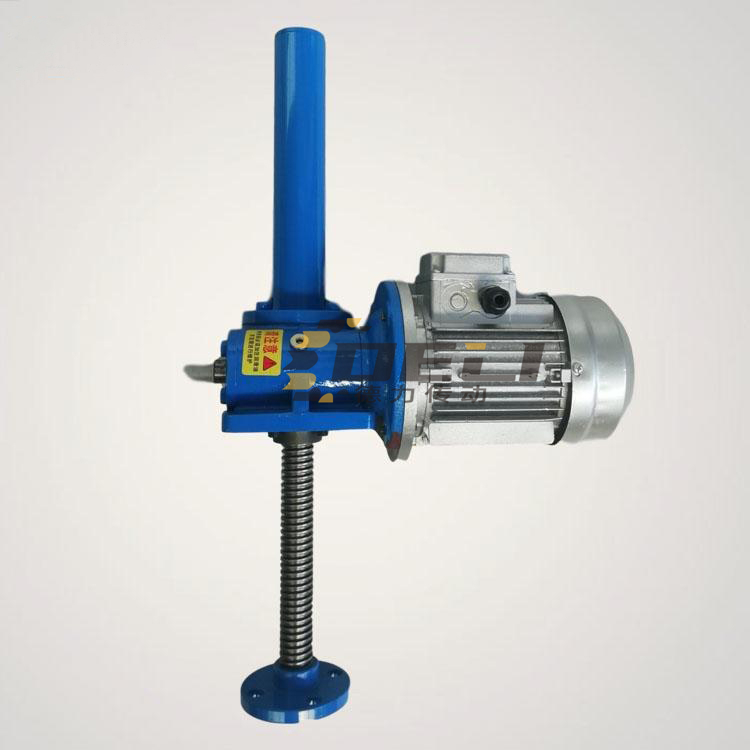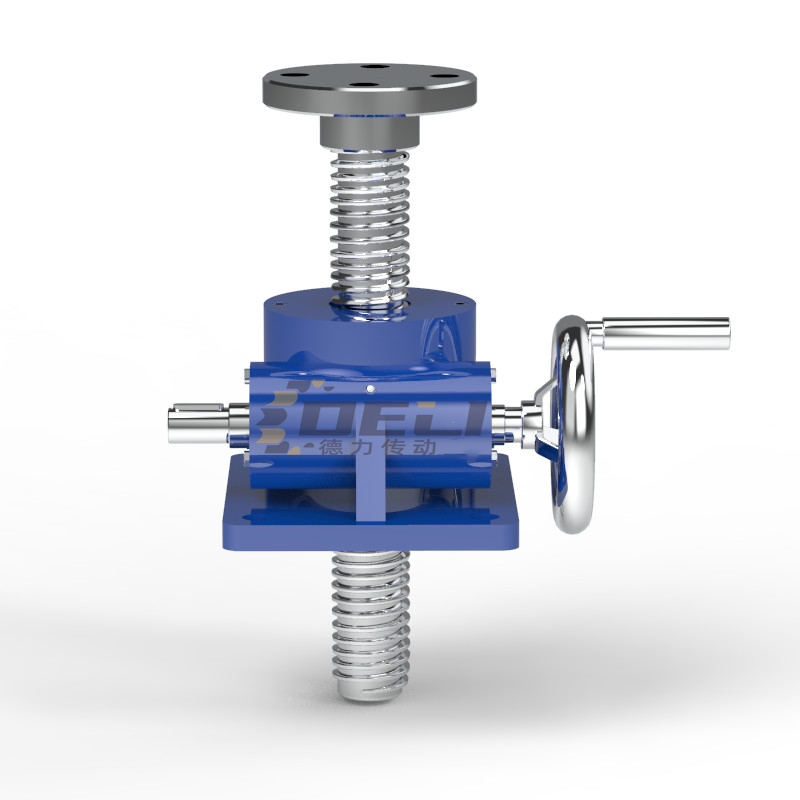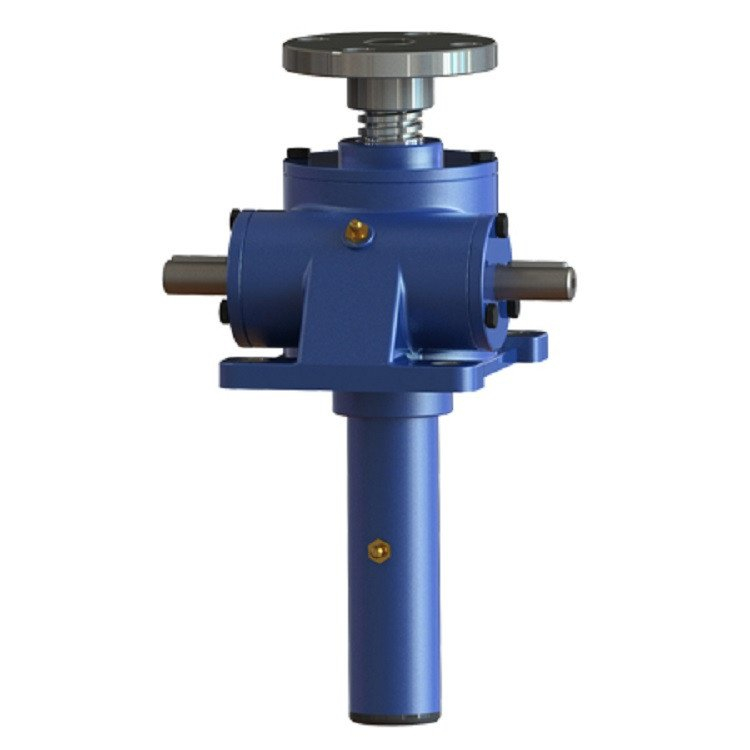


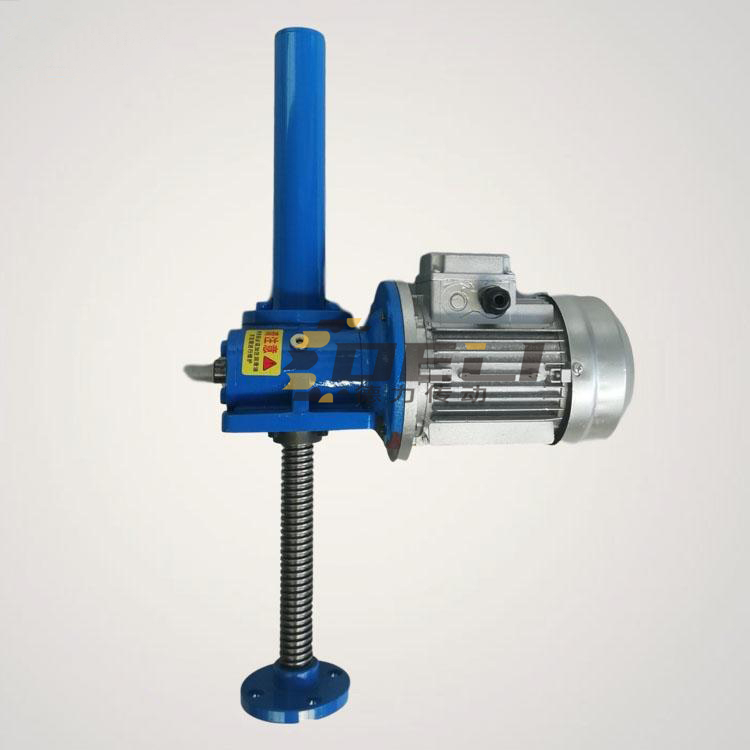
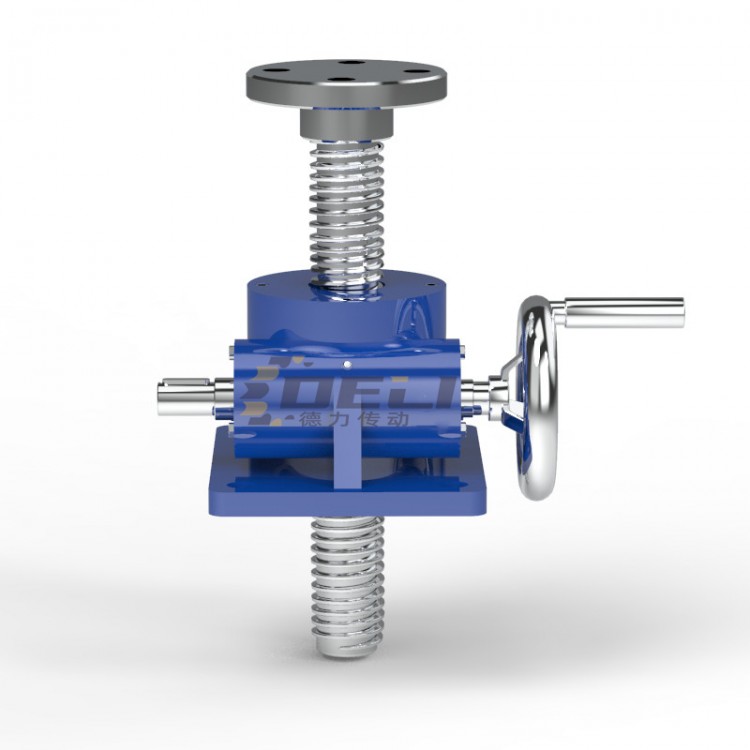







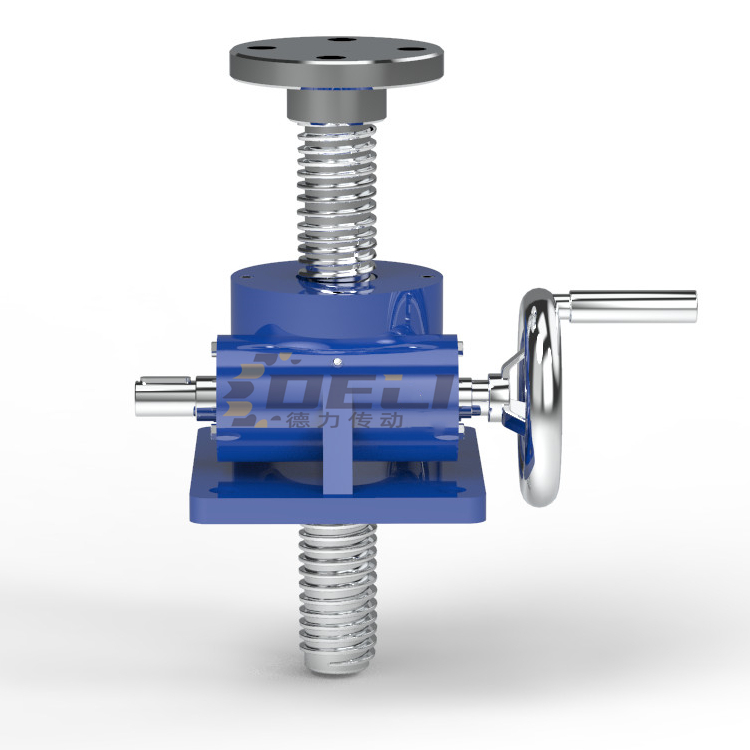
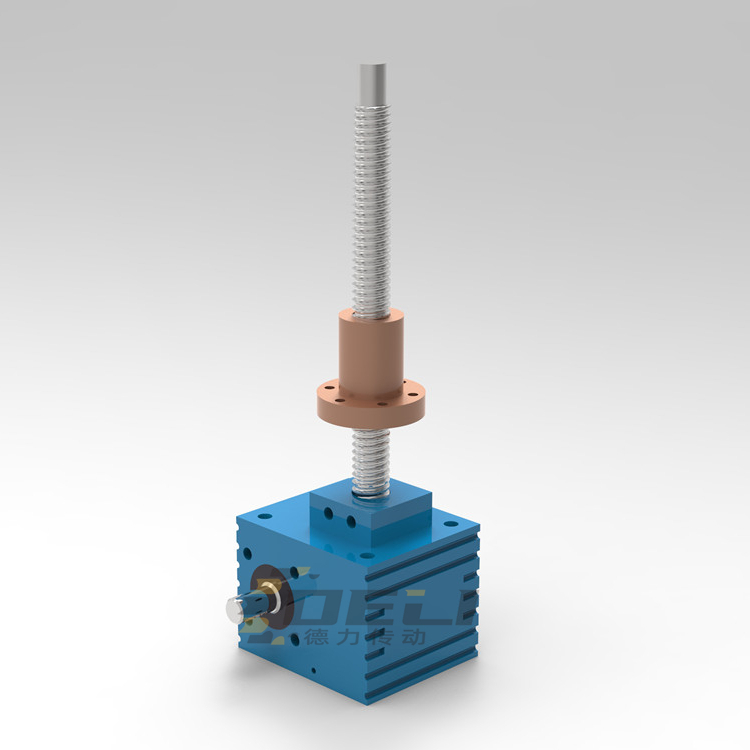
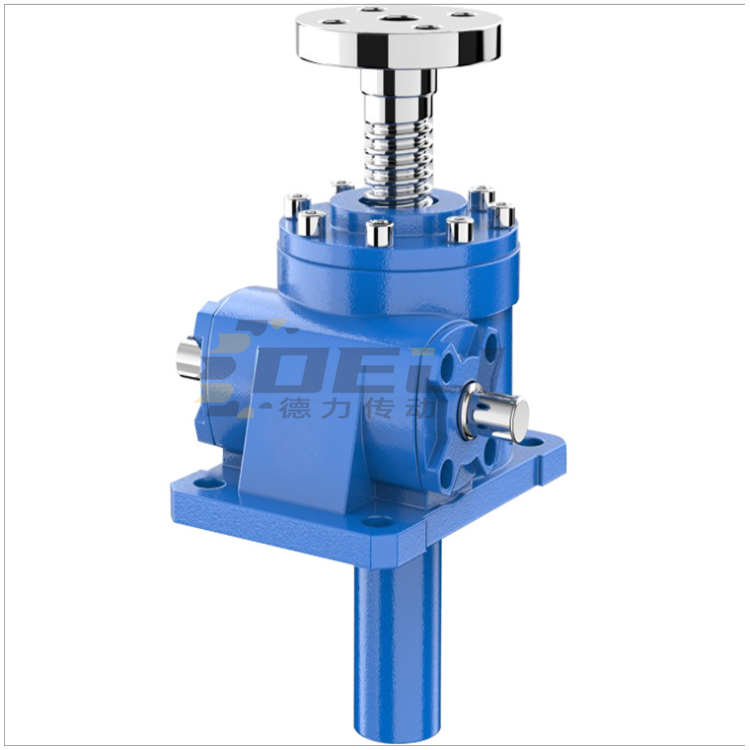
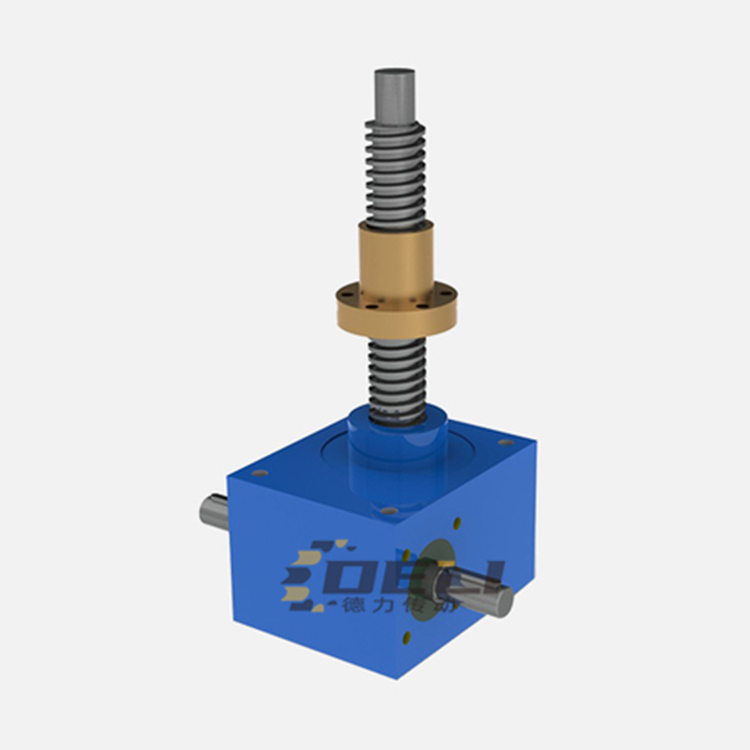
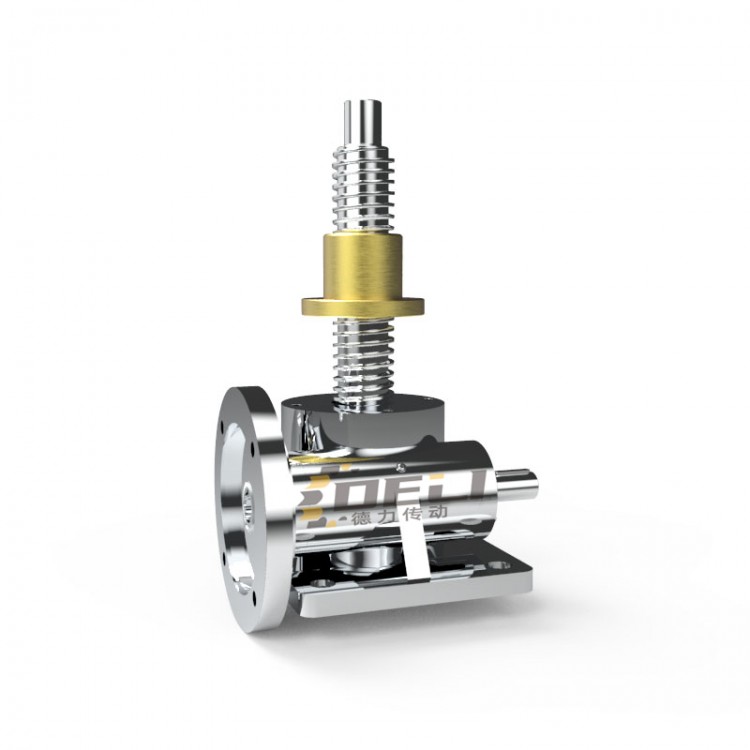
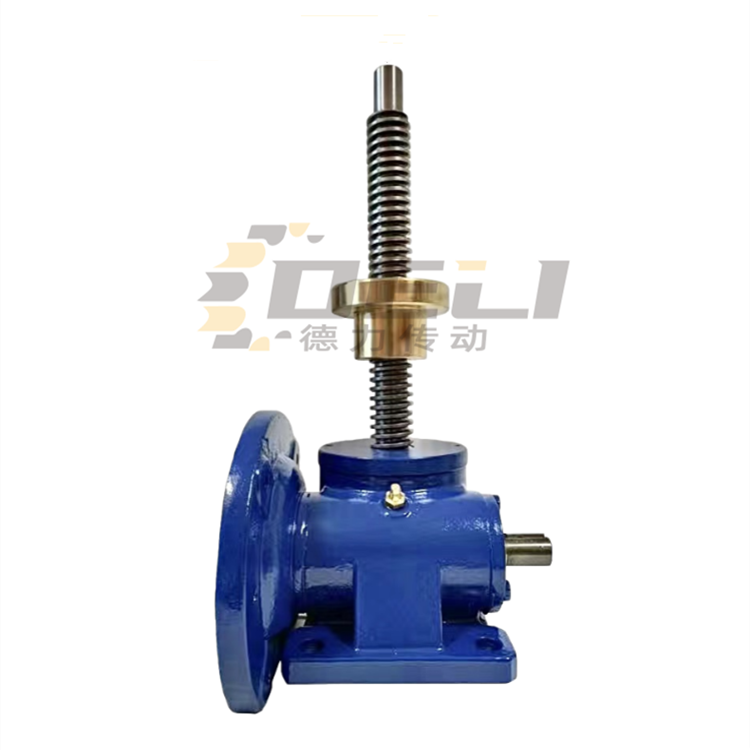
The screw jack, also known as a spiral drive mechanism, is primarily used to convert rotary motion into linear motion or vice versa. There are types that are mainly for transmitting motion, such as the feed screw of machine tool tables, and others that adjust the relative positions of parts, etc. The screw jack consists of a worm gear reducer and a screw, with the减速 mechanism being the worm drive that uses the worm to rotate the worm gear for reduction. The worm gear acts like the nut for the lifting screw and is matched to it.
Features of Screw Jacks:
1Ball bearings are placed between the screw thread and nut thread grooves for the working principle.
2As the lead screw or nut rotates, the ball bearings roll along the thread raceway, creating rolling friction between the lead screw and nut during relative movement. To prevent the ball bearings from rolling out of the raceway, return guiding devices are installed at both ends of the nut's helical groove.
3They form a circulating loop with the threaded raceway, allowing the ball to circulate within the nut's raceway.
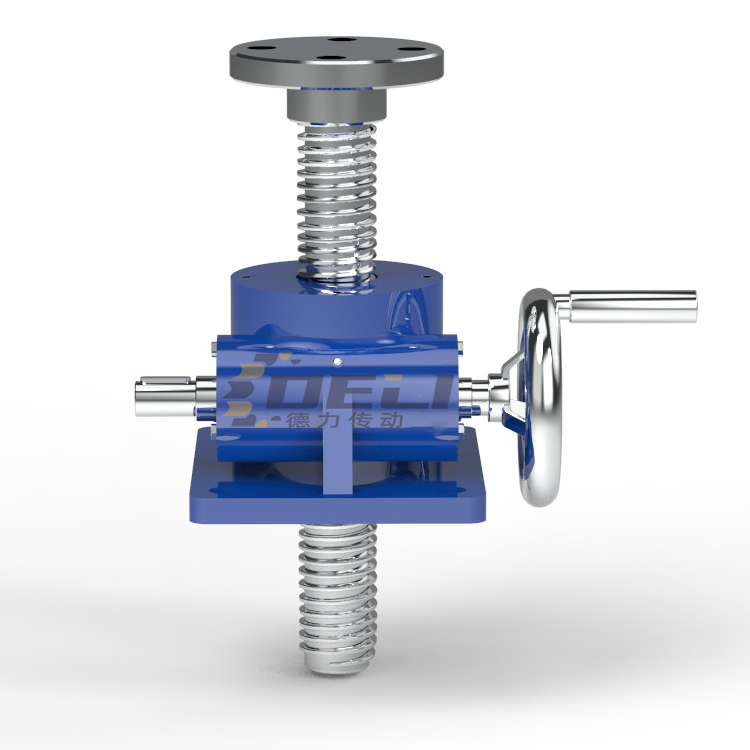
The transmission forms of screw jacks are based on the relative motion combinations between the screw and nut. There are essentially two types of basic transmission forms for screw jacks.
(1)Nut fixation, screw rotation and movement; this type of transmission, with the nut itself serving as a support, eliminates the additional axial movement that may be caused by screw shaft bearings, resulting in a simpler structure and higher transmission accuracy. However, its axial dimensions should not be too long, otherwise the rigidity is poor. Therefore, it is only suitable for applications with short travel distances.
(2)The screw shaft rotates and the nut moves; this type of transmission requires limiting the nut's rotation, hence the need for a guiding device. Its features include a compact structure, good rigidity of the screw shaft, and is suitable for applications with a large working stroke.
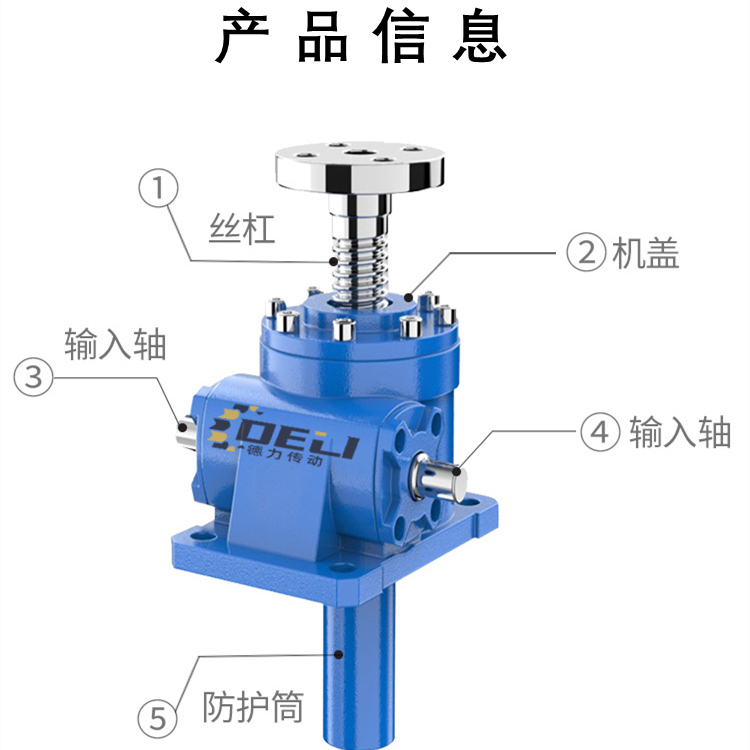
Features of Screw Jack:
1. Smooth transmission, noise-free.
2. Low impact and vibration.
3. Suitable for low-speed, high and low frequency applications.
4. Primarily for medium to small loads.
5. Maintain Load Capacity: The trapezoidal screw features an automatic locking function, enabling load retention even without a braking mechanism.
6. Safety Setting: To prevent over-travel and damage to the screw and nut, a travel switch is specifically configured.
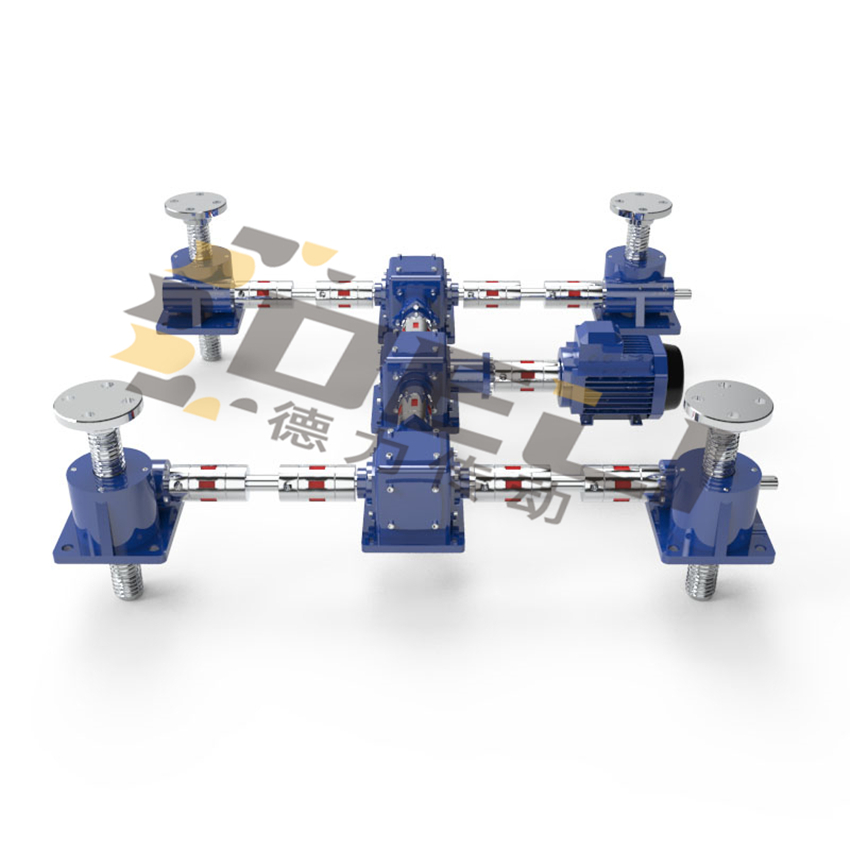
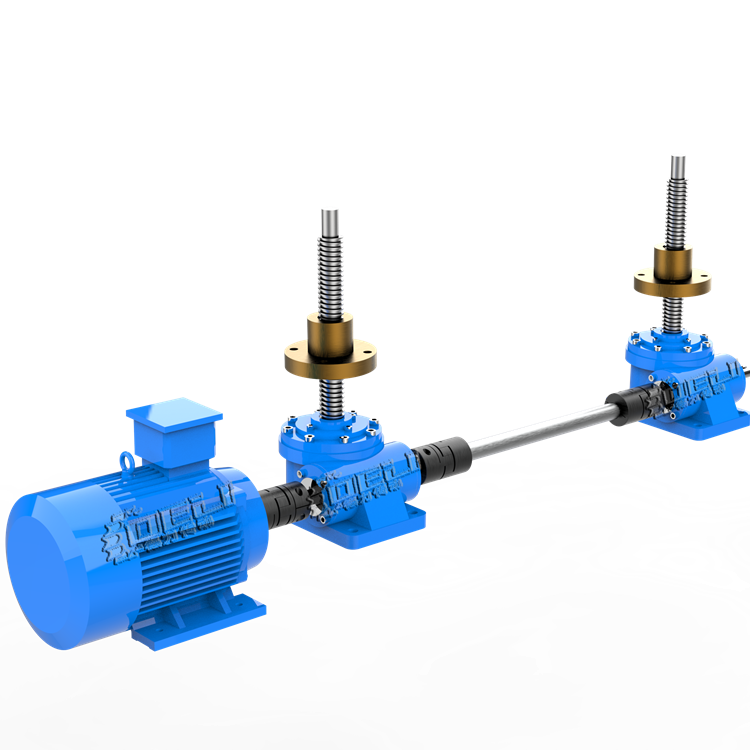
The screw jack system components include: screw jacks, reducers, motors, reversers, drive shafts, couplings, brakes, clutches, etc. As long as the client provides specific technical requirements, Engineers will provide detailed calculation processes, system component selections, andCAD Assembly Drawing. Our technical support will be professional. A mature and reliable technical solution will ensure the safety of your equipment.
The screw jack can be used as a single drive unit or in multi-screw configuration for a single lift. Multi-screw units with mechanical synchronization are driven by a single motor, making them unsuitable for uneven load distribution and requiring high synchronization of lifting components. Multi-screw units with electrical synchronization have lower requirements for mechanical connections but necessitate more complex control components and systems. The configuration of the drive motor, combined with a master-slave layout, can achieve the corresponding synchronization of the drive system.
Once the layout is set according to your requirements, it can be confirmed.: Worm gear reducer, gear reducer, couplings, connecting shafts, and dumbbell glaze. The installation of bearing mounts can be related to the length of the connecting shaft and its rotational speed.