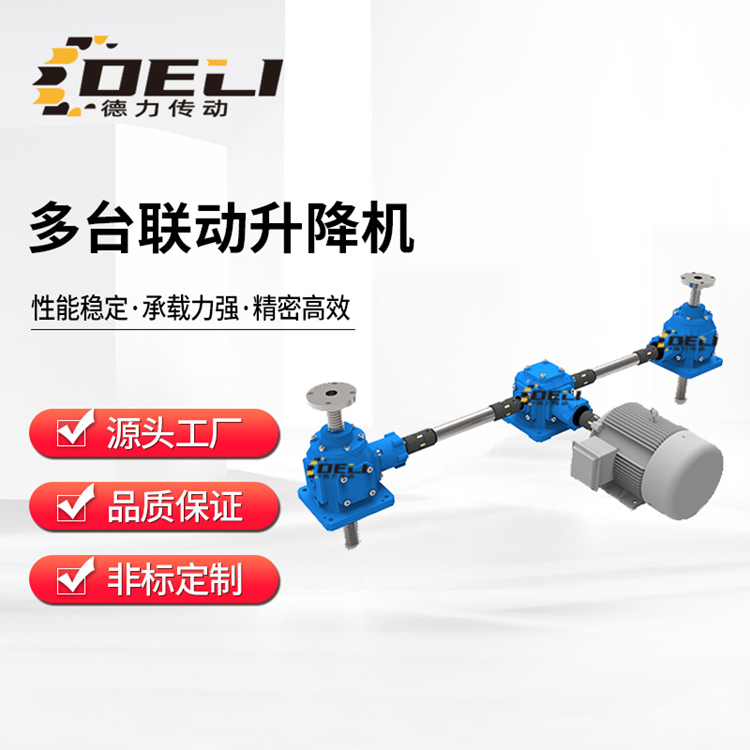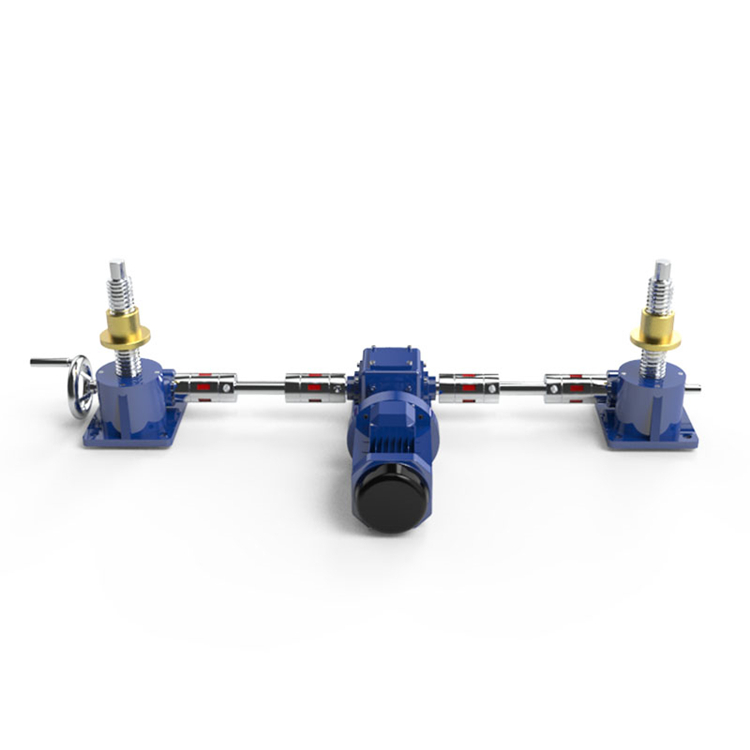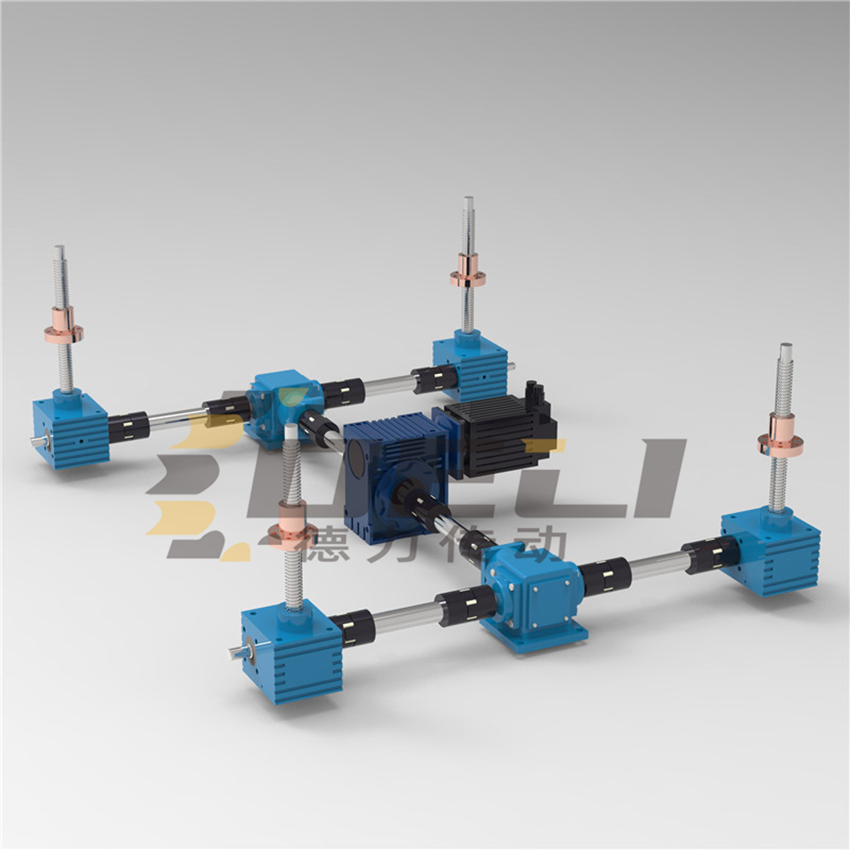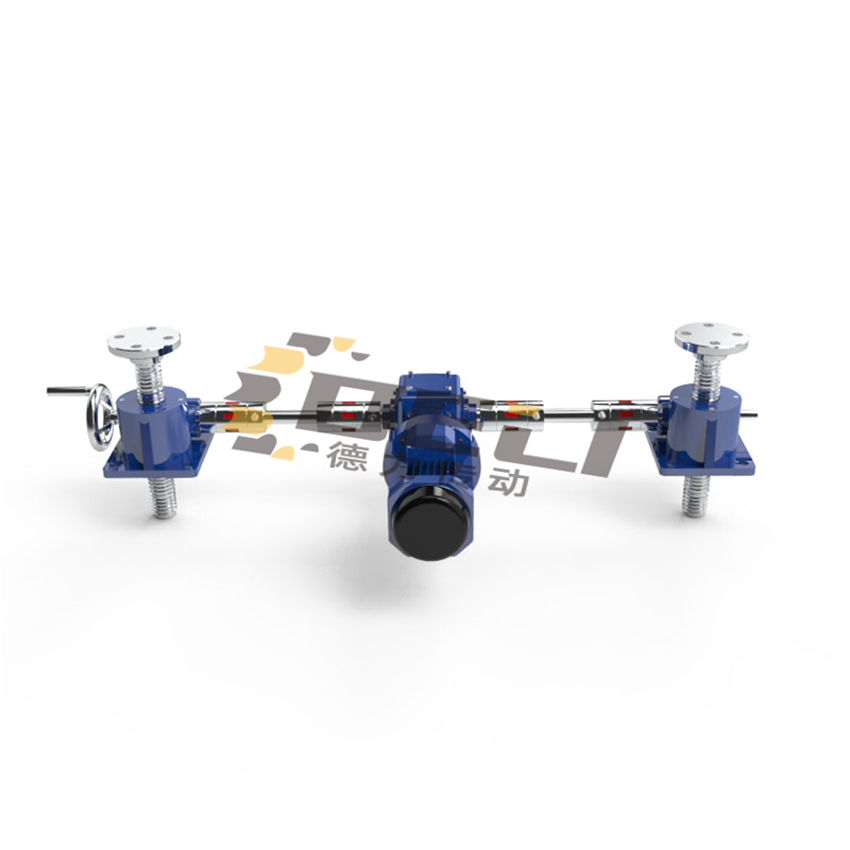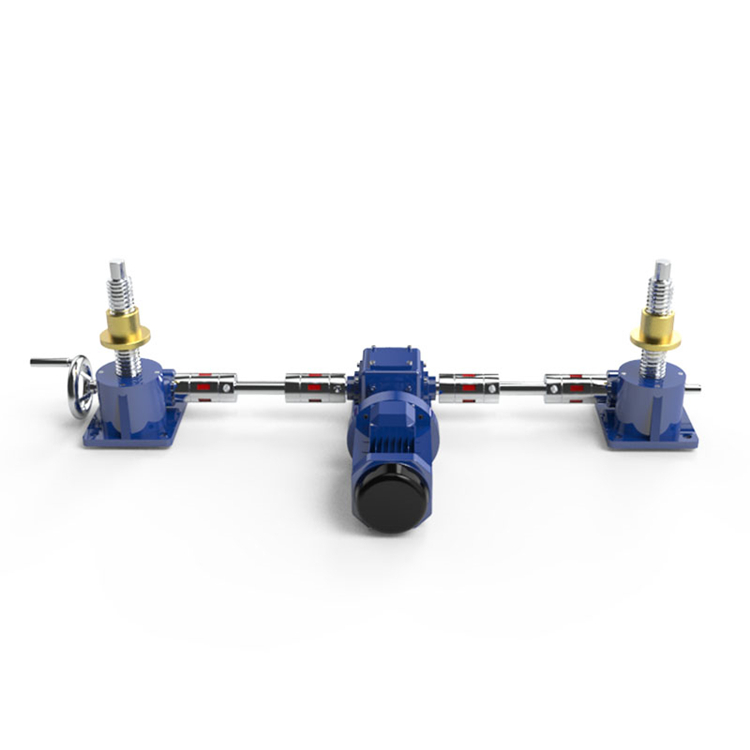


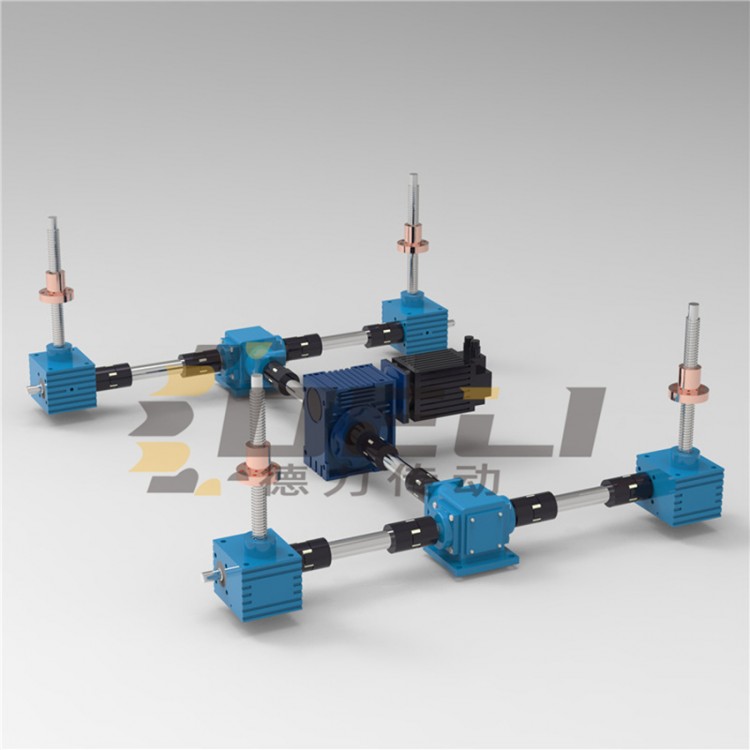
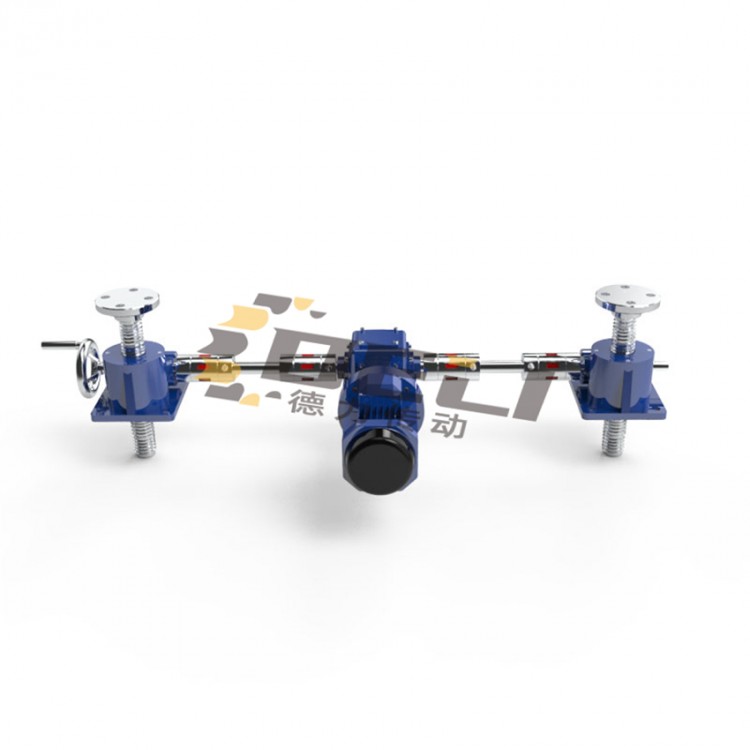







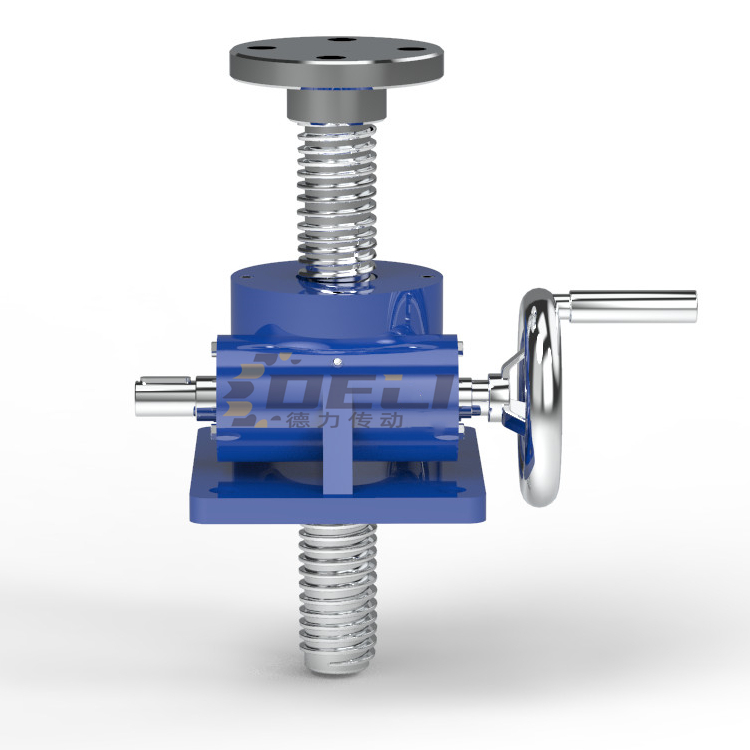
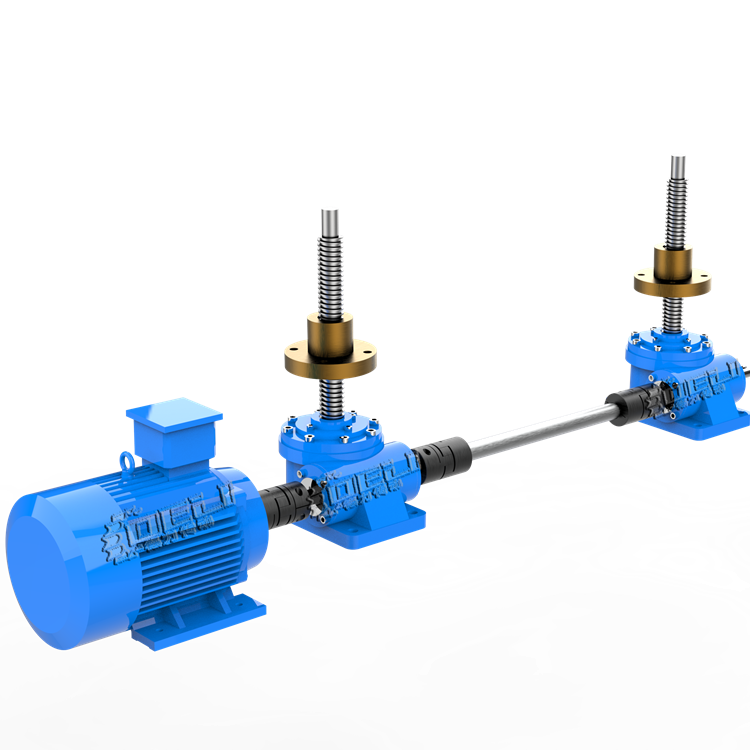
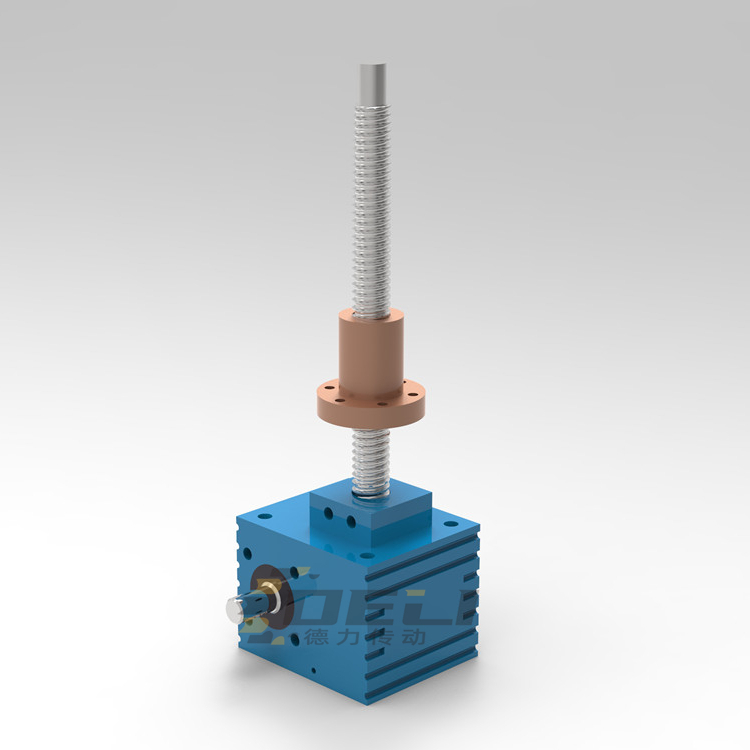
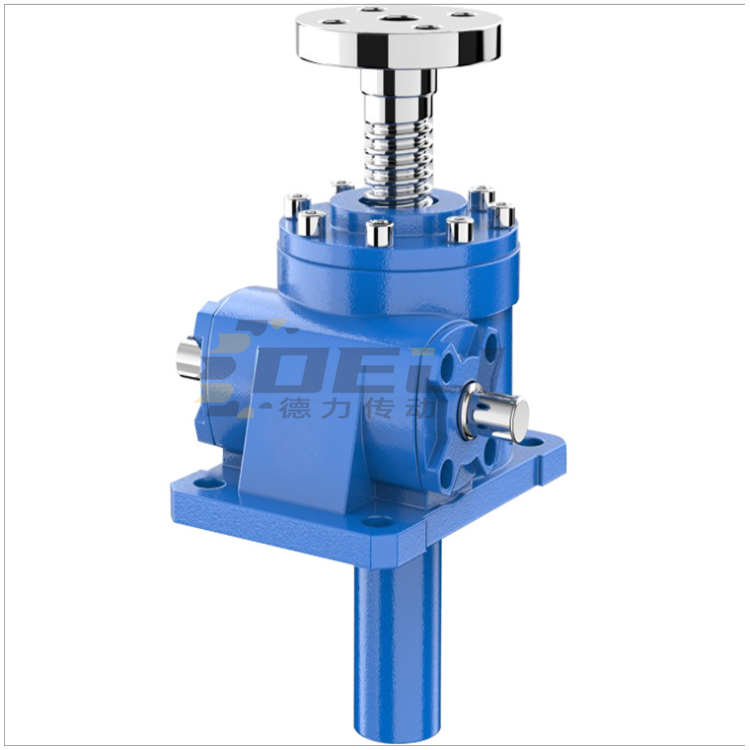
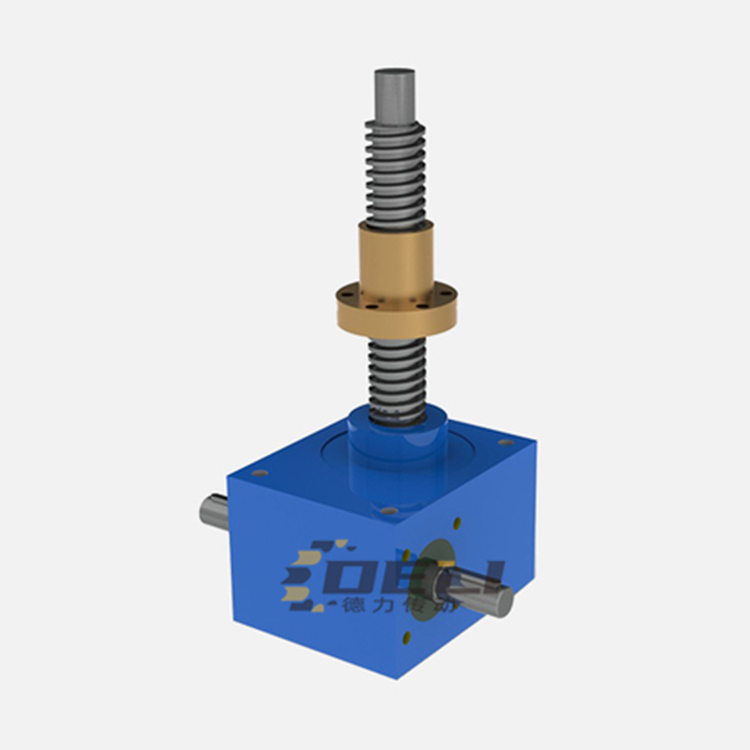
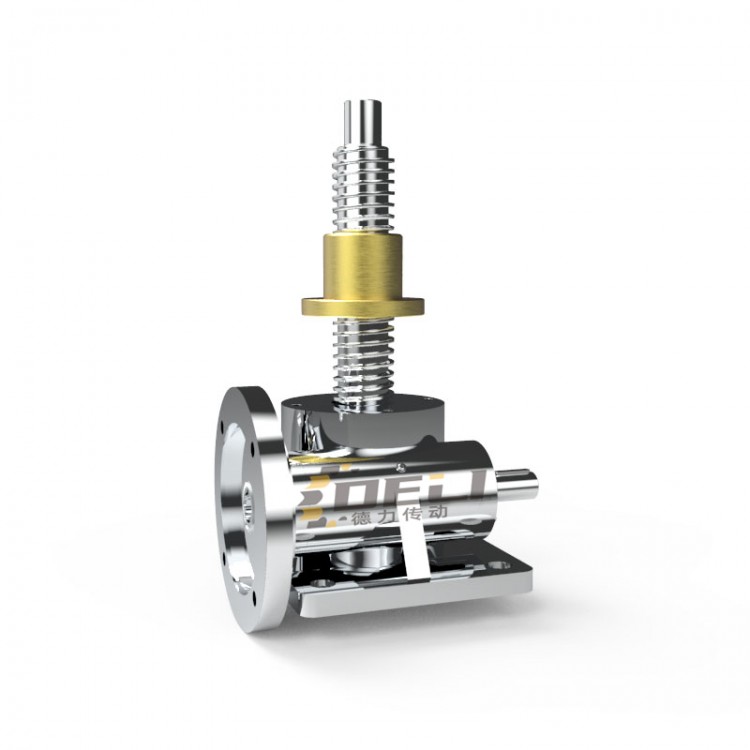
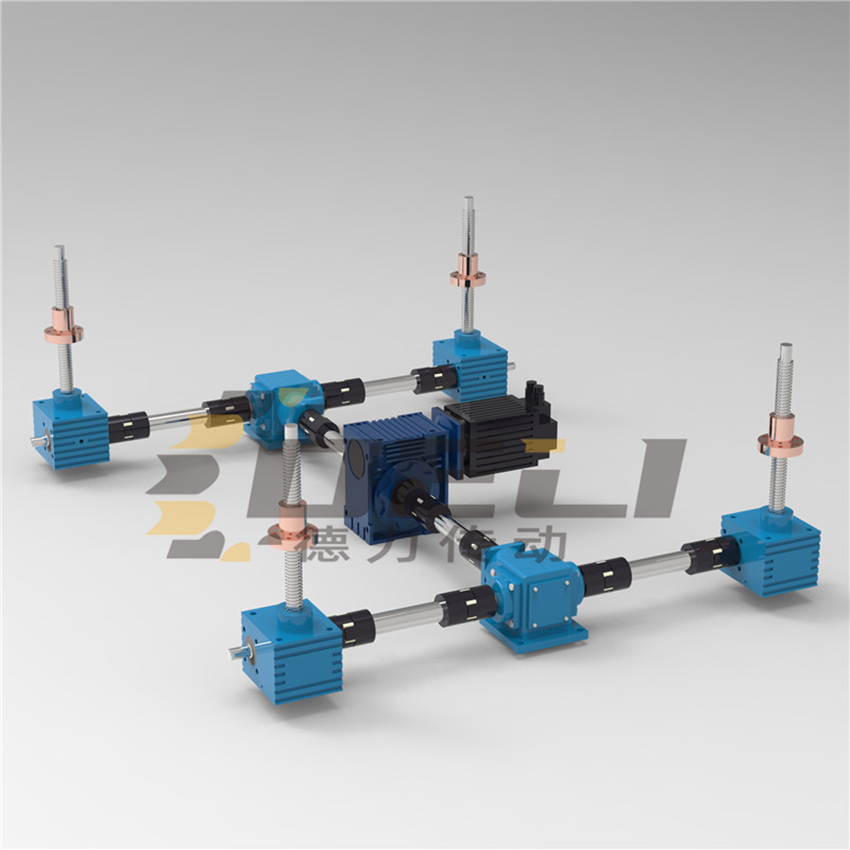
Lead screw lifting machine, also known as a helical drive mechanism. It is primarily used to convert rotational motion into linear motion or vice versa. There are models that are mainly designed for energy transmission.(Spiral presses, jacks, etc.)Also, there are those primarily designed for transmitting motion, such as the feeding screw of machine tool worktables.)There are also spiral drive mechanisms that adjust the relative positions of parts. Screw jacks are divided into sliding friction and rolling friction types. The sliding screw and nut mechanism is simple in structure, easy to process, low in manufacturing cost, and has an automatic locking function, but it has a large frictional resistance moment and low transmission efficiency.(30%~40%)The ball screw nut mechanism, despite its complex structure and high manufacturing cost, and the inability to self-lock, boasts the advantages of a small frictional torque and high transmission efficiency.(92%~98%)High precision, good system stiffness, reversible motion, long service life, thus widely used in mechatronic systems.
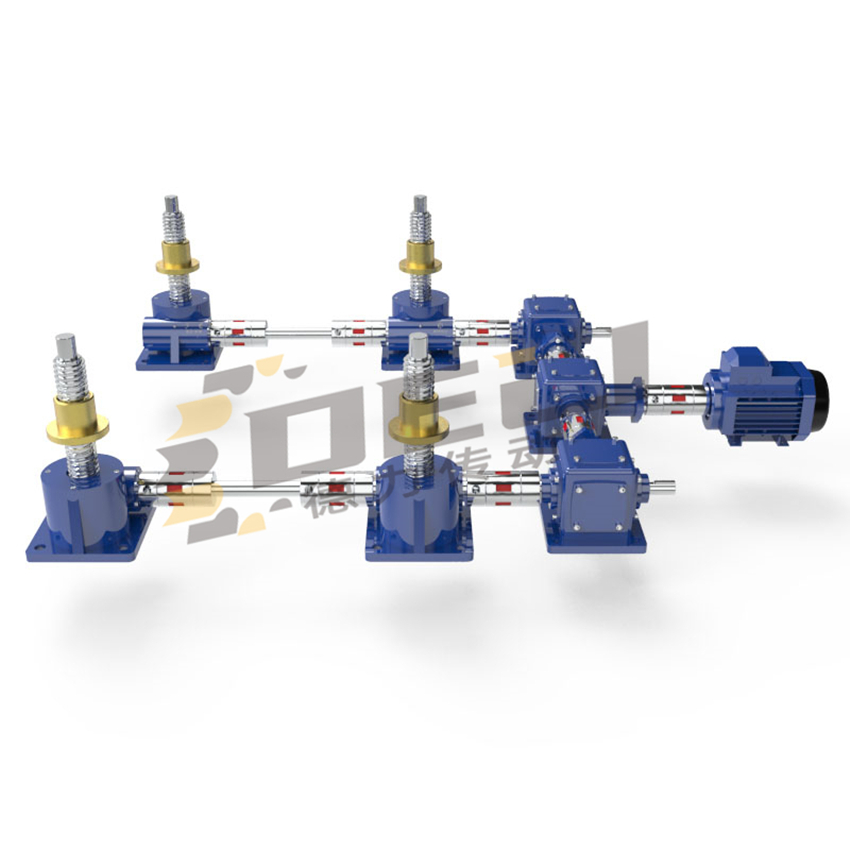
Screw Jack Mechanism 1Principle of operation: Ball screw4With nuts1Ball bearings are housed between the threaded grooves.2As the screw or nut rotates, the ball2As the screw thread raceway rolls, rolling friction occurs between the screw and nut during relative motion. To prevent the ball from rolling out of the raceway, return guide devices are installed at both ends of the nut's helical groove.3They form a closed loop with the threaded raceways, allowing the ball bearings to circulate within the nut's raceway. The transmission type varies depending on the combination of relative motion between the screw and nut. The basic transmission types of screw jack include four types.(1)Nut fixation, screw rotation and movement; this type of transmission, due to the nut's inherent supporting role, eliminates additional axial movement that may occur in screw shaft bearings, resulting in a simpler structure and higher transmission accuracy. However, its axial size should not be too long, as this would reduce rigidity. Therefore, it is only suitable for applications with shorter travel distances.(2)The screw rotates, and the nut moves. This type of transmission requires limiting the nut's rotation, thus necessitating a guiding device. Its features include a compact structure and good rigidity of the screw, making it suitable for applications with large working travel.
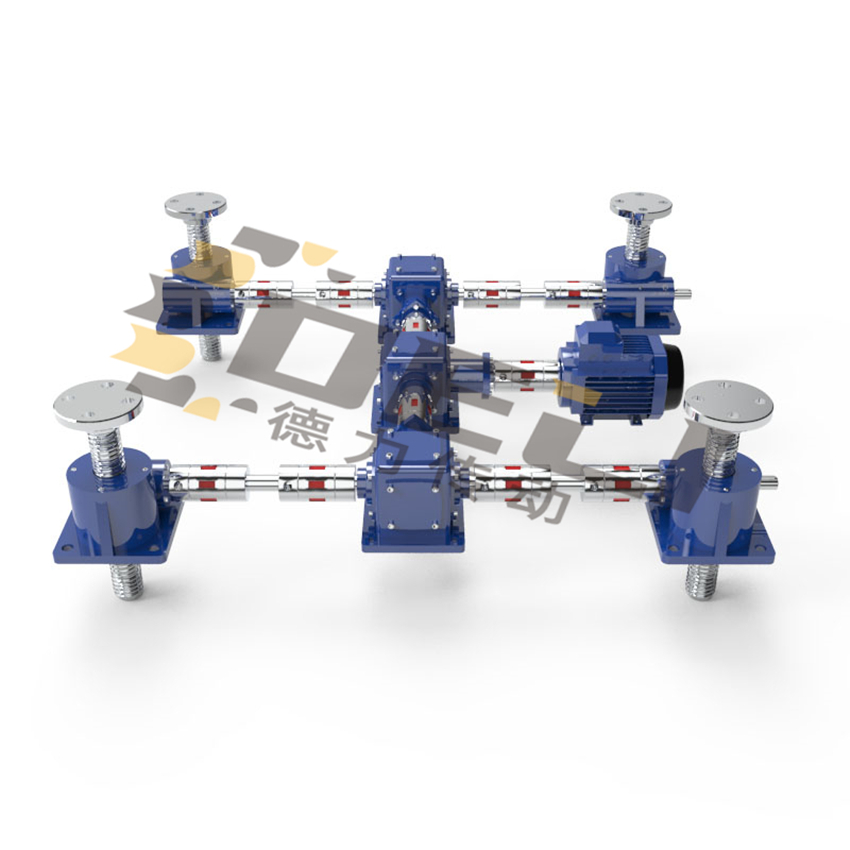
The transmission type is based on the combination of relative motion between the screw and nut. The basic transmission types of screw jack are two in number.
(1)Nut fixation, screw rotation, and movement; this type of transmission, due to the nut's inherent supporting function, eliminates additional axial movement that might be caused by screw shaft bearings, resulting in a simpler structure and higher transmission accuracy. However, the axial dimension should not be too long, otherwise, the rigidity is poor. Therefore, it is only suitable for applications with a short travel distance.
(2)The screw shaft rotates, and the nut moves. This type of transmission requires limiting the nut's rotation, thus necessitating a guiding device. Its features include a compact structure, good rigidity of the screw shaft, and suitability for applications with a large working travel.