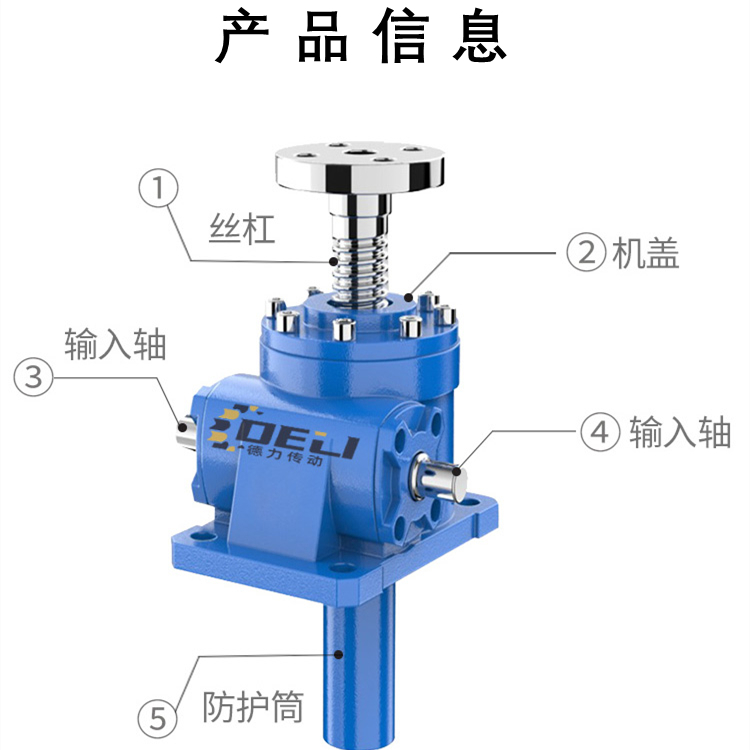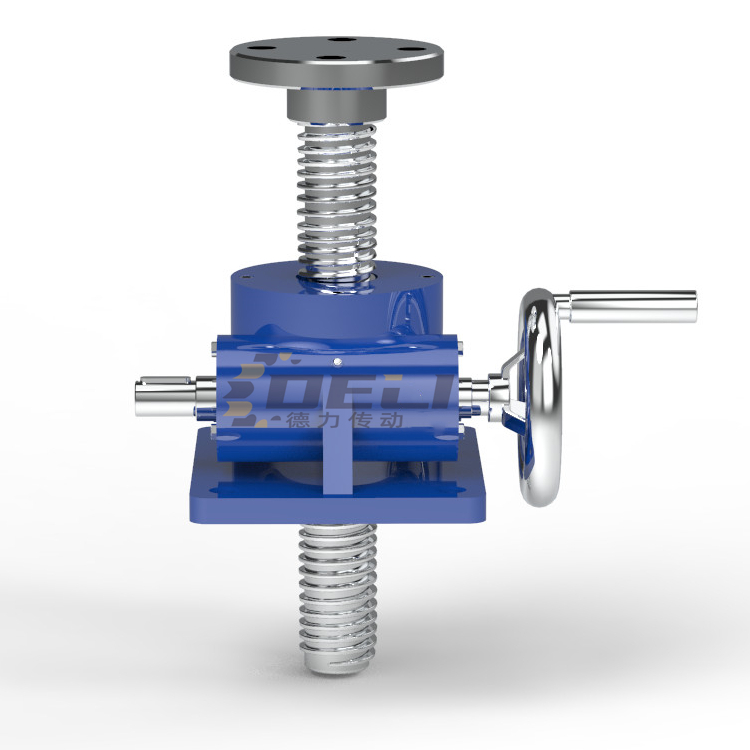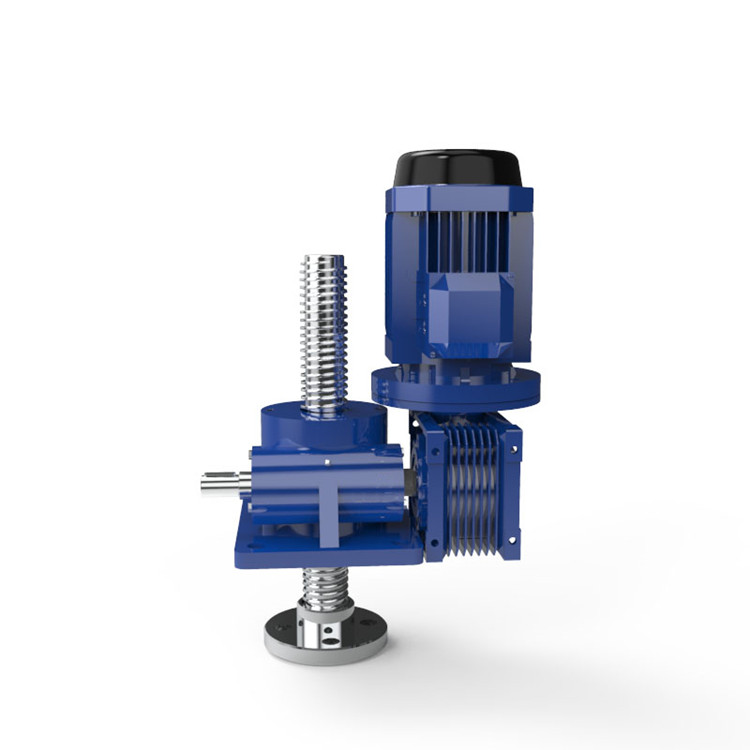

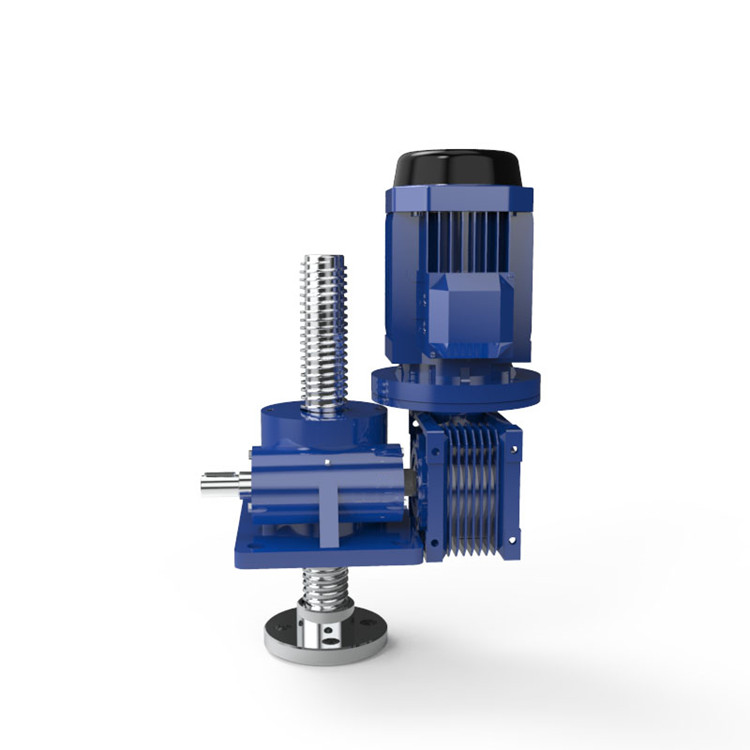
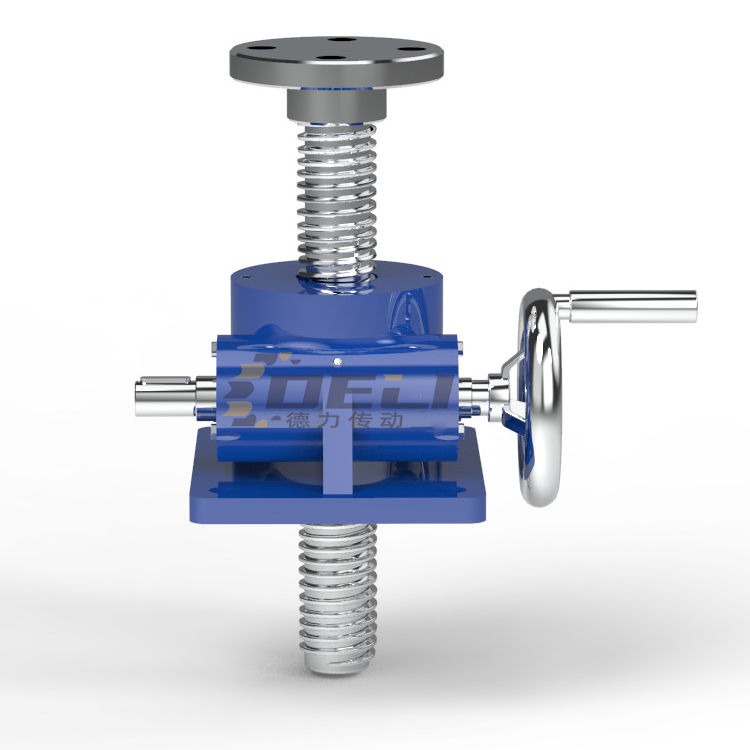







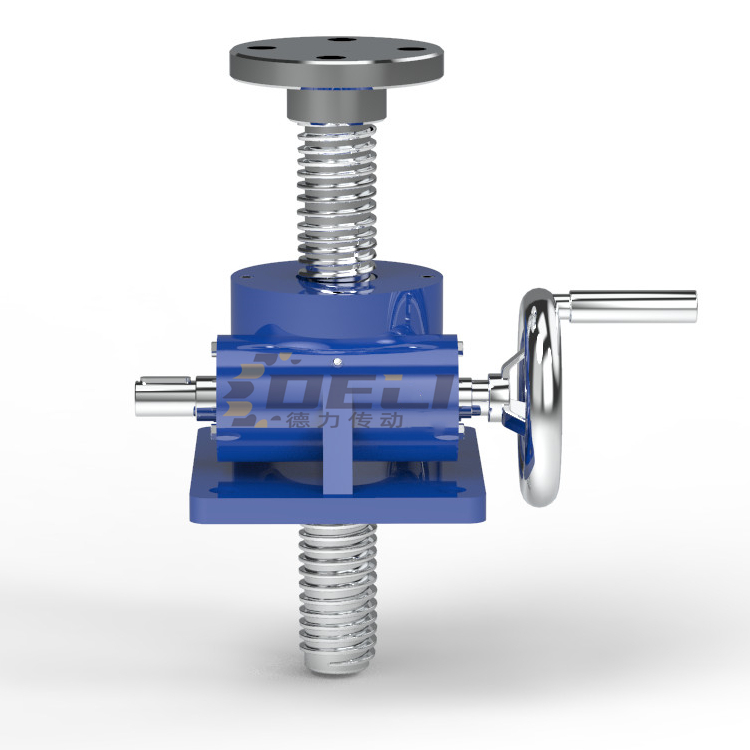
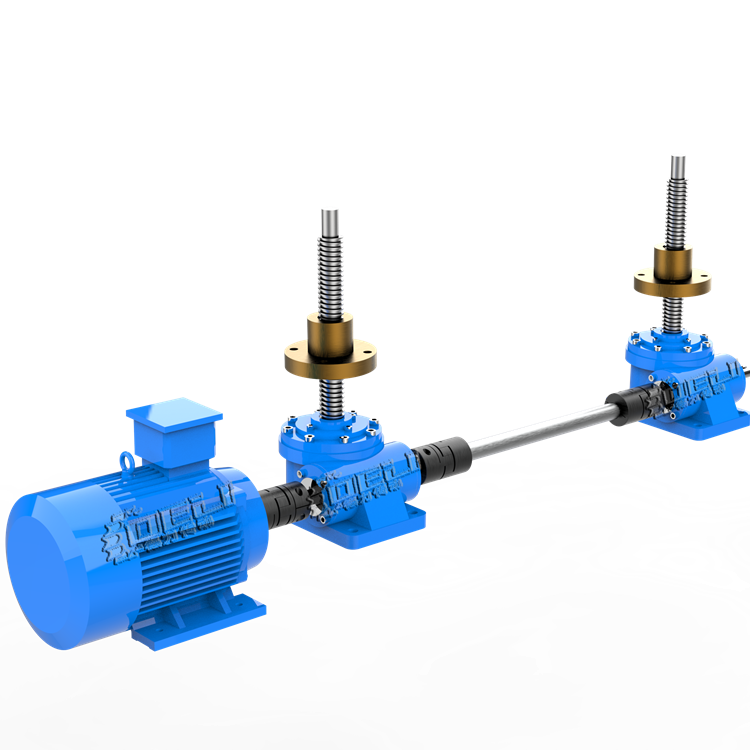
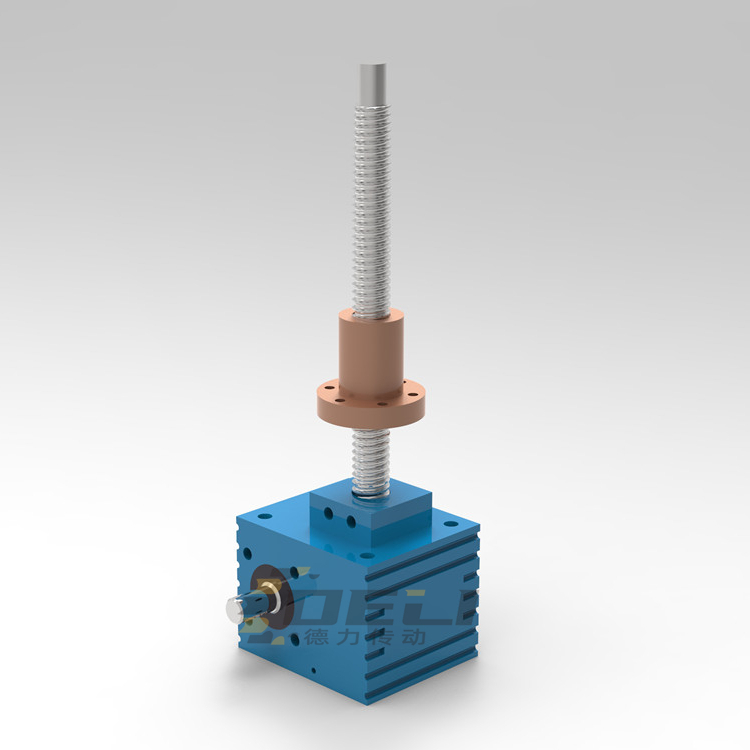
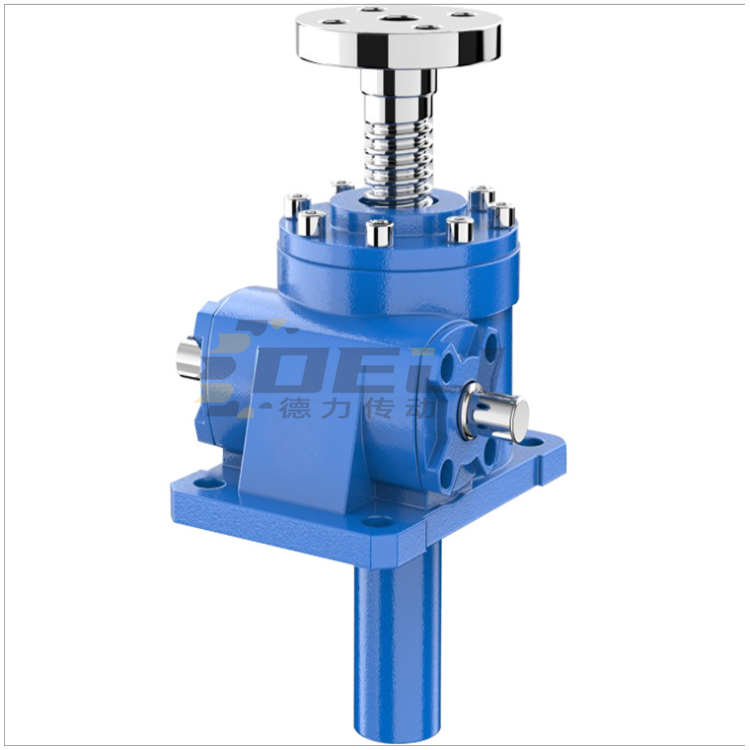
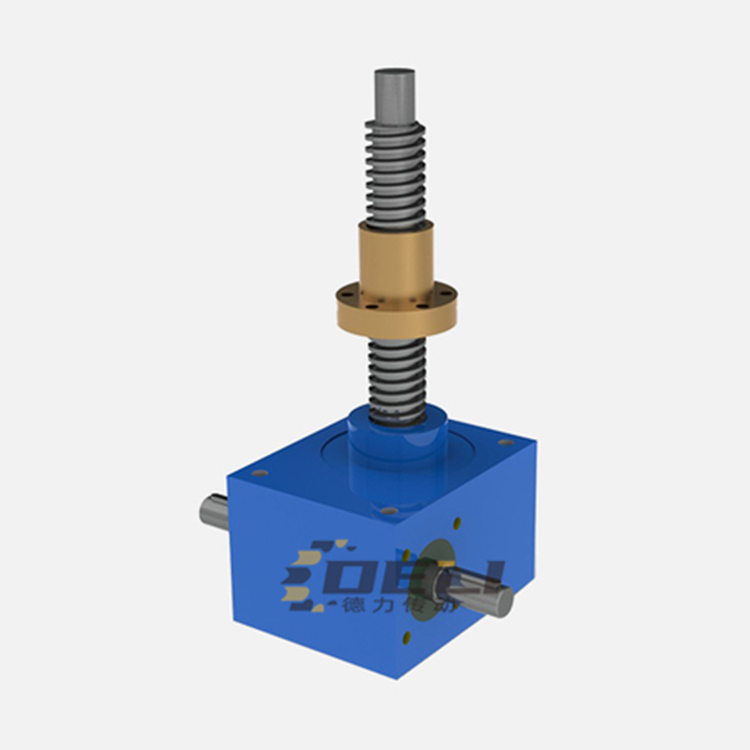
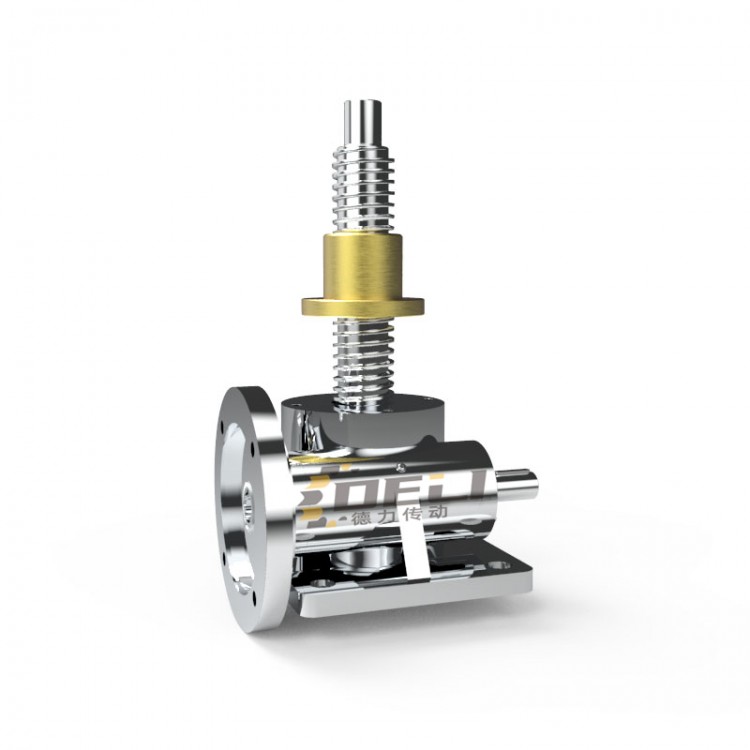

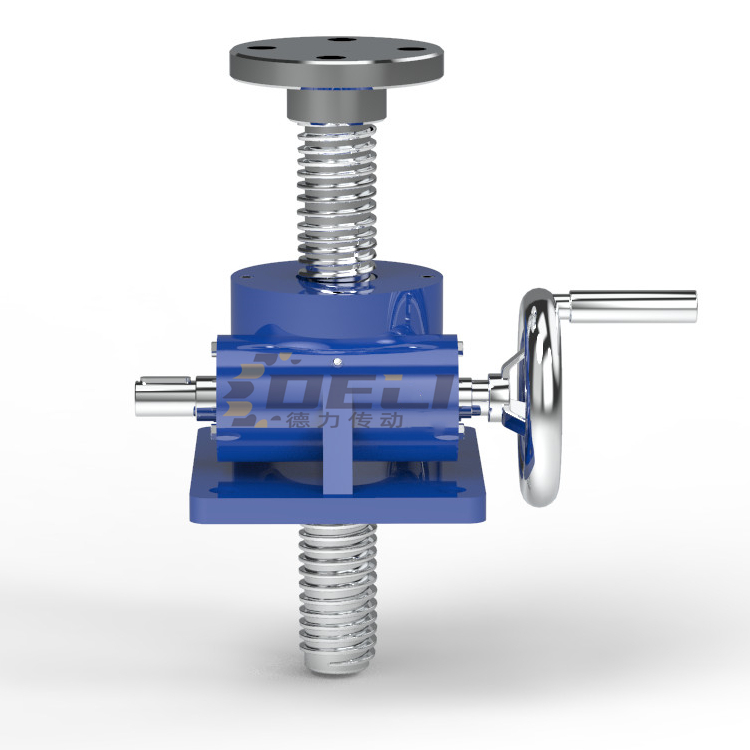
Screw jack, also known as a螺旋传动机构, primarily converts rotational motion into linear motion or vice versa. Examples include feed screws on machine tool tables, which transmit motion, as well as screw transmission mechanisms used to adjust the relative positions of components. The screw jack consists of a worm gear reducer and a screw, with the减速 component being the worm gear drive, which uses the worm to drive the worm gear for deceleration. The worm gear is akin to the nut of the lifting screw and is matched with the lifting screw.
Features of screw jack:
1The working principle involves ball bearings placed between the screw thread raceways of the screw and nut.
2When the screw or nut rotates, the ball bearings roll along the thread groove, generating rolling friction between the screw and nut during relative motion. To prevent the ball bearings from rolling out of the groove, return guide devices are installed at both ends of the nut's helical slots.
3They form a closed loop with the threaded raceway, allowing the ball to circulate within the nut's raceway.
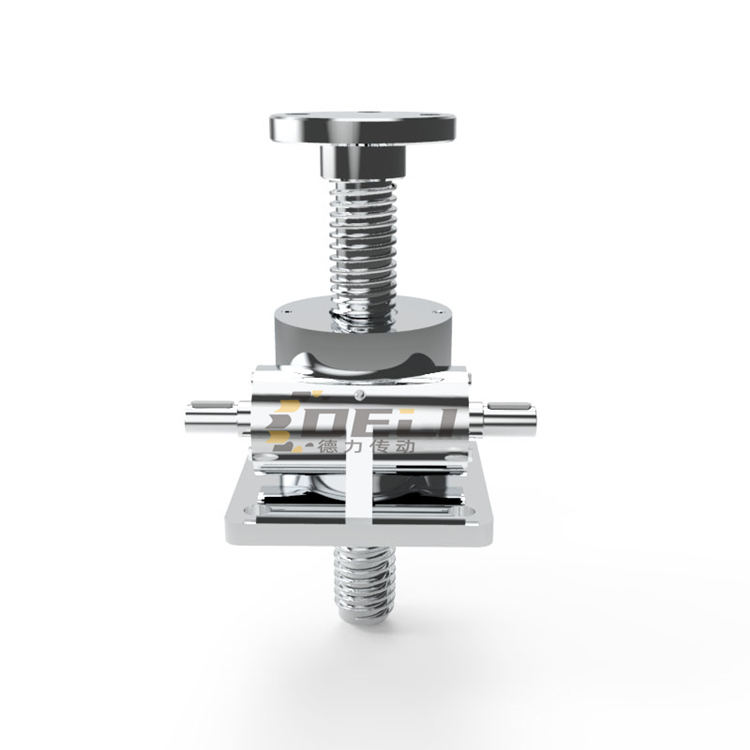
The transmission forms, based on the relative motion combinations of the screw and nut, are fundamentally divided into two types for screw elevators.
(1)Nut fixation, screw rotation and movement; this type of transmission is simple in structure and achieves high transmission accuracy due to the nut itself serving as a support, eliminating additional axial movement that might be caused by screw shaft bearings. However, the axial dimension should not be too long, as it would reduce rigidity. Therefore, it is only suitable for applications with short travel distances.
(2)Ball screw rotation, nut movement; this transmission type requires limiting the nut's rotation, hence the need for a guiding device. Its features include a compact structure, good ball screw rigidity, and is suitable for applications with long working strokes.
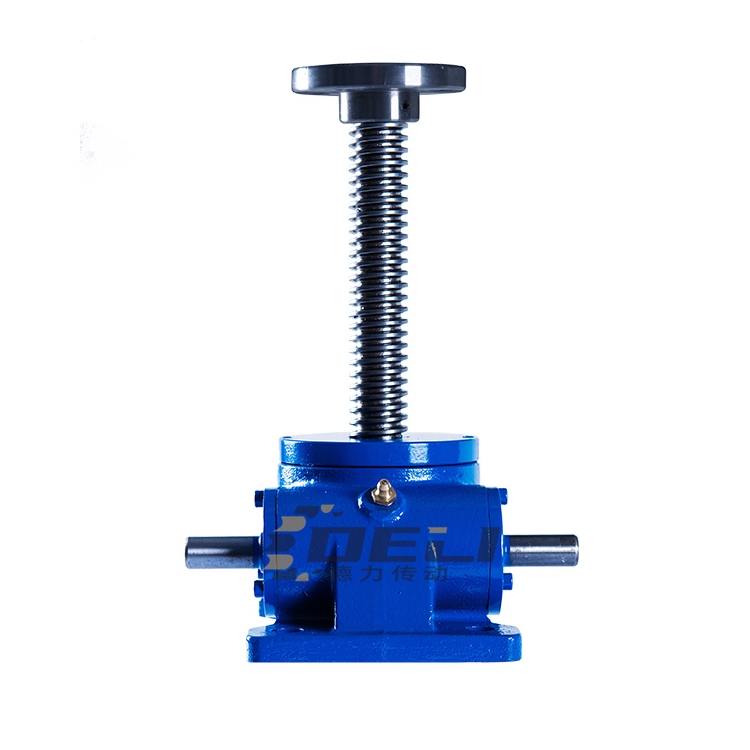
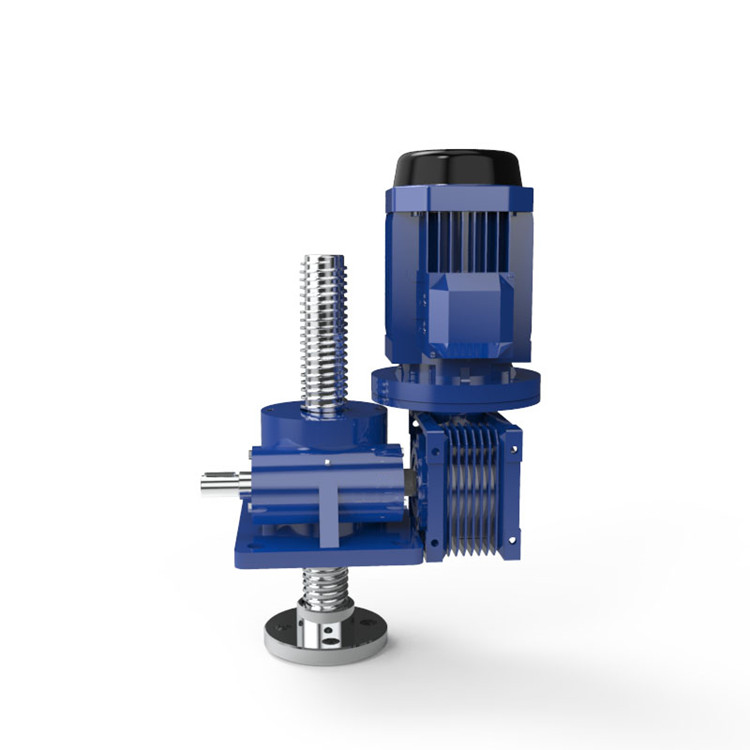
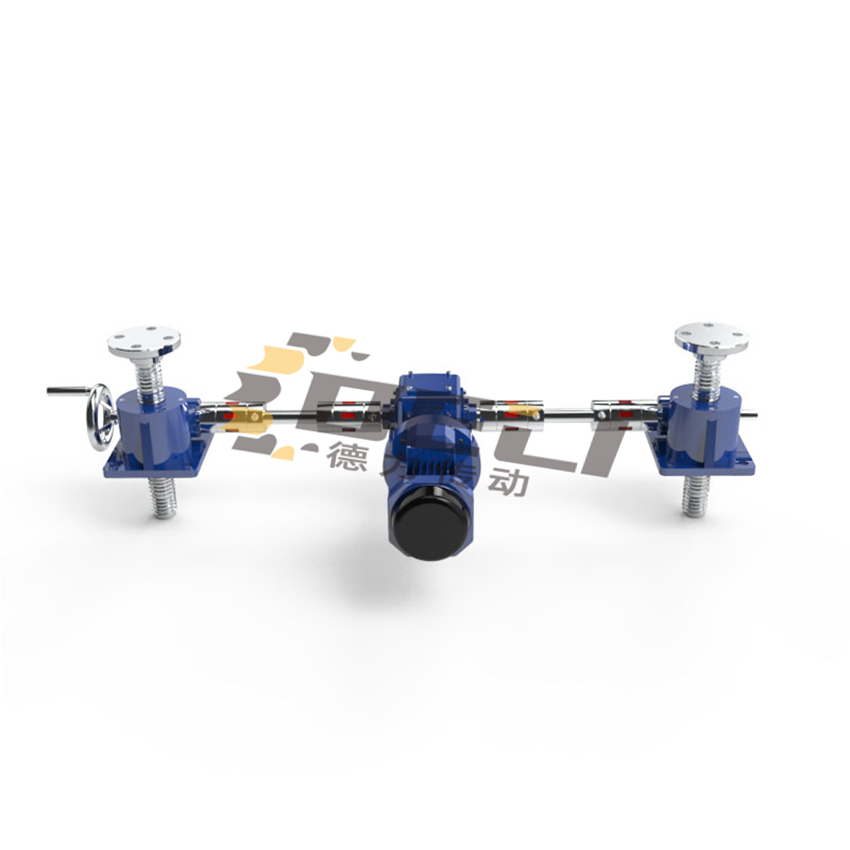
Ball screw lifting machine system components include: screw lifters, reducers, motors, reversing switches, drive shafts, couplings, brakes, clutches, etc. As long as the customer provides specific technical requirements, Engineers will provide detailed calculation procedures, system component selection, andCAD Assembly Drawing. Our technical support will be professional. A mature and reliable technical solution will ensure the safety of your equipment.
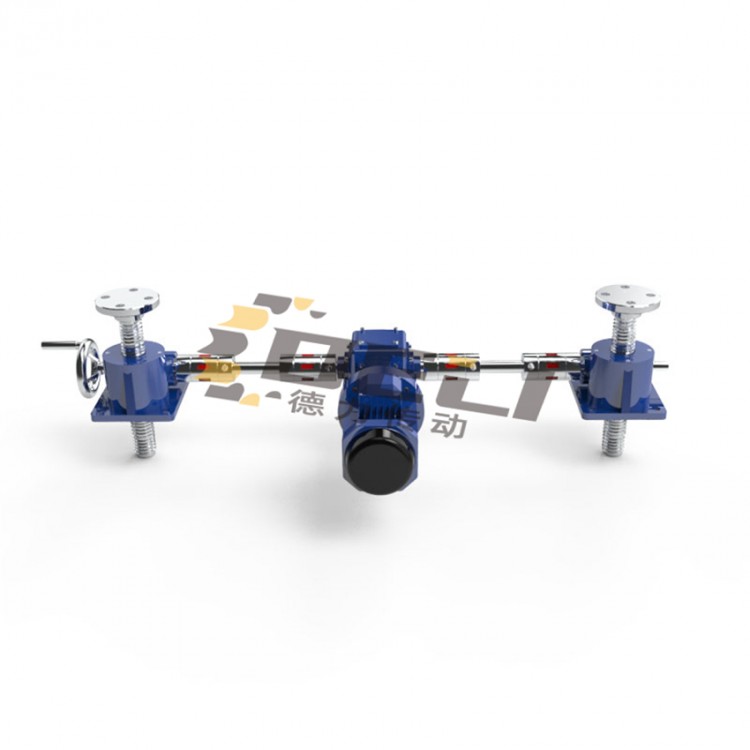
The screw jack can be used as a single driving unit or in multi-screw configurations to drive a single lifting mechanism. The multi-screw units, featuring mechanical synchronization, are powered by a single motor.This makes them unable to withstand uneven load distribution and places high demands on the synchronization of the lifting components. The multi-threaded screw unit drives with electrical synchronization have low requirements for the mechanical connection components, but they require more complex control components and a control system. The configuration of the drive motor combined with a master-slave layout can achieve the corresponding synchronization of the drive system.