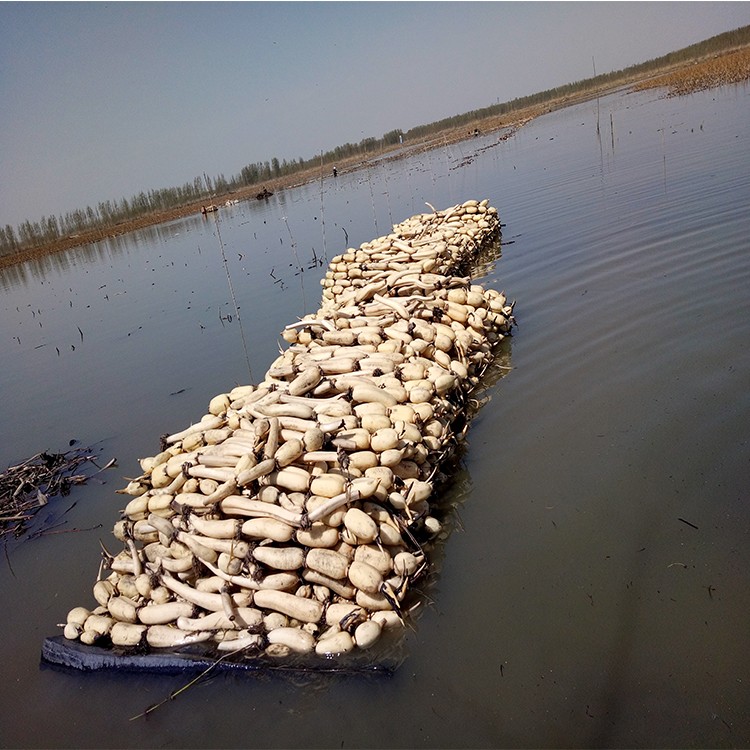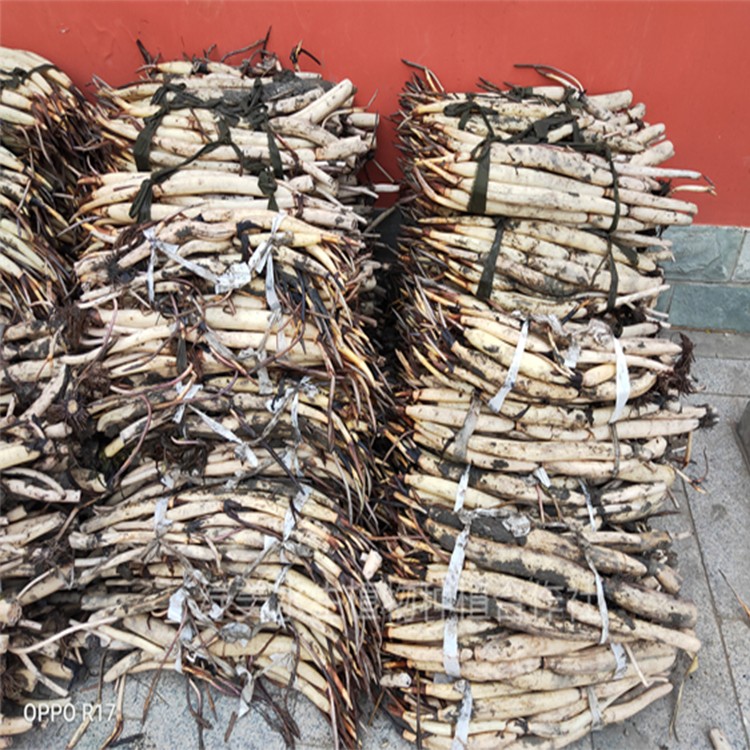


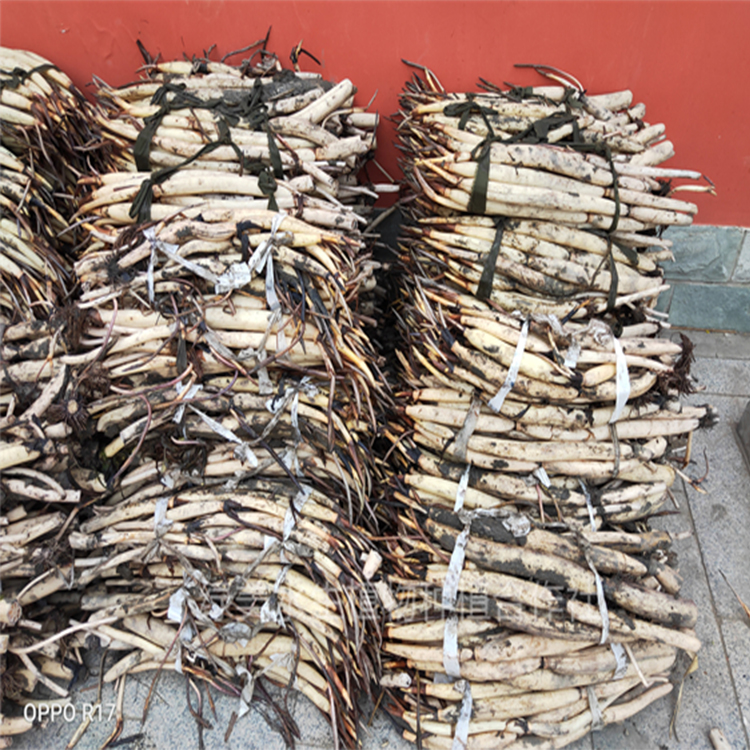











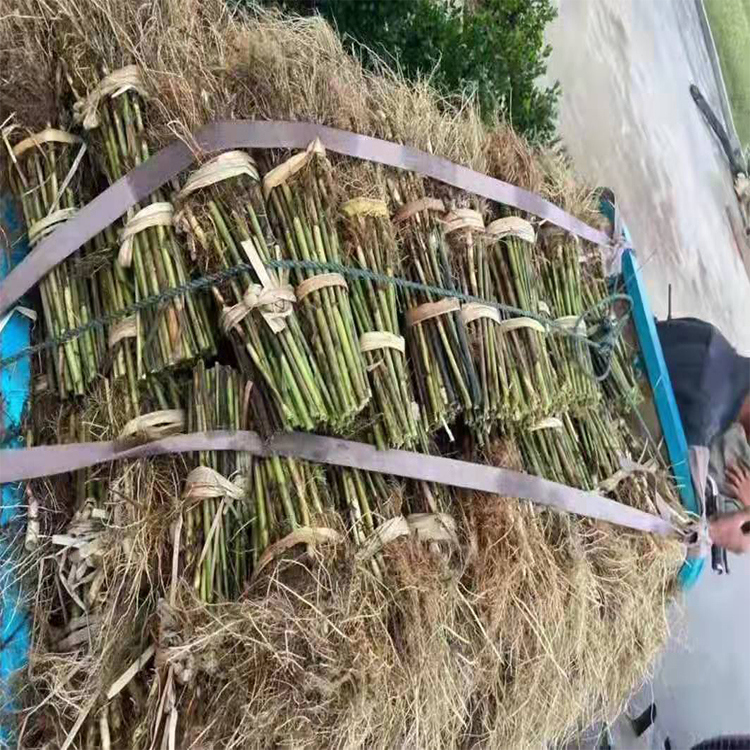
Lotus is a perennial aquatic herb; its rhizome is horizontal, thick, with enlarged internodes, containing numerous longitudinal ventilation channels. The nodes are constricted, with black scale leaves above and须状 adventitious roots below.
Leaf is roundish, shield-shaped, with a diameter of 25-90 cm, dark green on the surface covered with waxy white powder, grayish green on the underside, margin entire and slightly wavy, upper surface smooth with white powder, lower surface with central veins radiating and 1-2 times forked; petiole robust, cylindrical, 1-2 meters long, hollow, with scattered small spines on the outside. Peduncle is as long as or slightly longer than the petiole, also with scattered small spines; petiole cylindrical, densely covered with downward-pointing spines.
The flowers bloom singly at the top of the stem, above the water surface, with a diameter of 10-20 cm, they are beautiful and fragrant; available in single, double, semi-double, and multiple-petaled shapes; colors range from white, pink, deep red, light purple, yellow, to bicolor variations; the lotus leaf is obovate-elliptical to inversely ovate, measuring 5-10 cm in length and 3-5 cm in width, gradually decreasing in size from the outside to the inside, sometimes transforming into stamens, with a rounded or slightly pointed tip, and many stamens; the pistil is separate, embedded within a conical, spongy receptacle, with a surface covered in numerous scattered honeycomb-like holes; after fertilization, the receptacle gradually swells into a spike, each hole containing a small nut (lotus seed); anther is linear, filaments are slender and long, attached below the receptacle; the style is extremely short, with the stigma at the top; the receptacle (lotus pod) has a diameter of 5-10 cm.