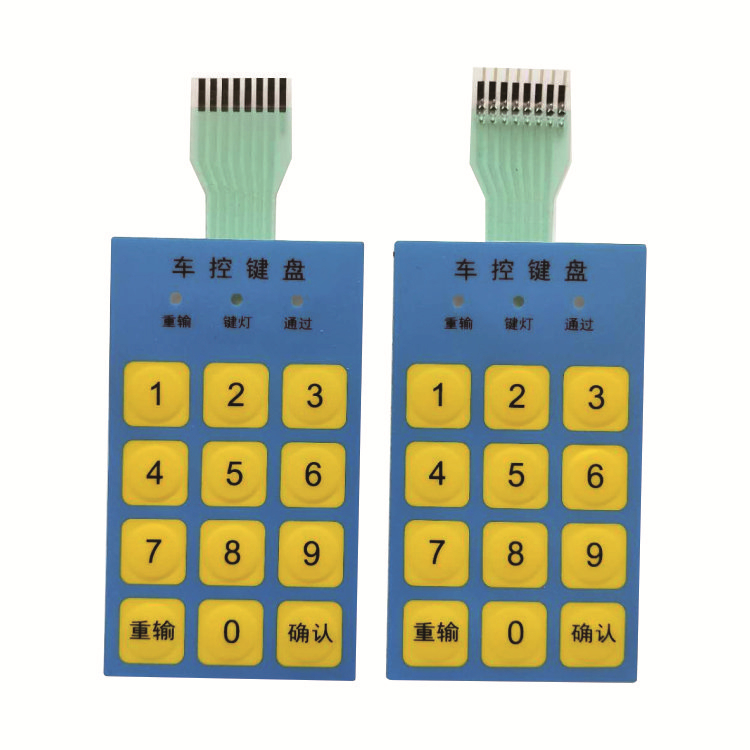

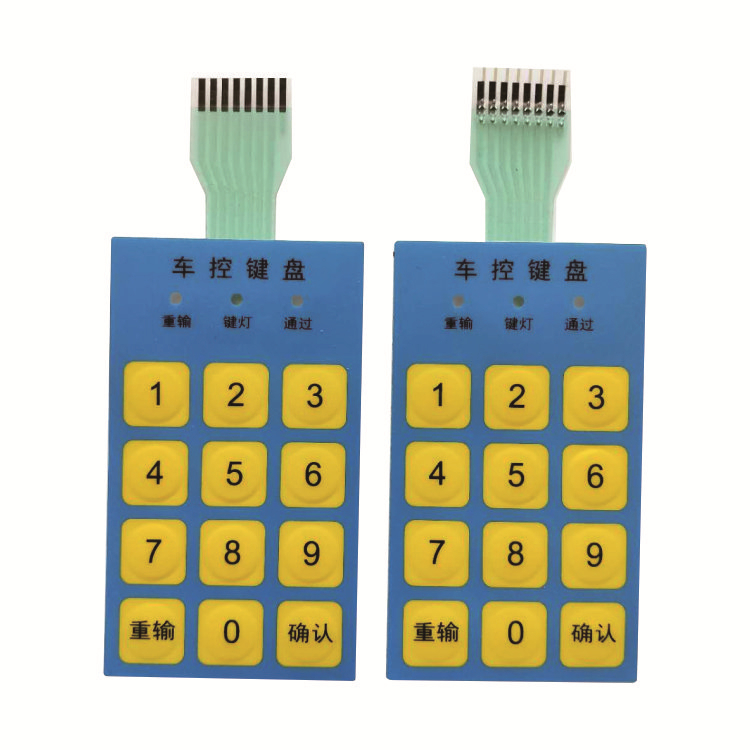
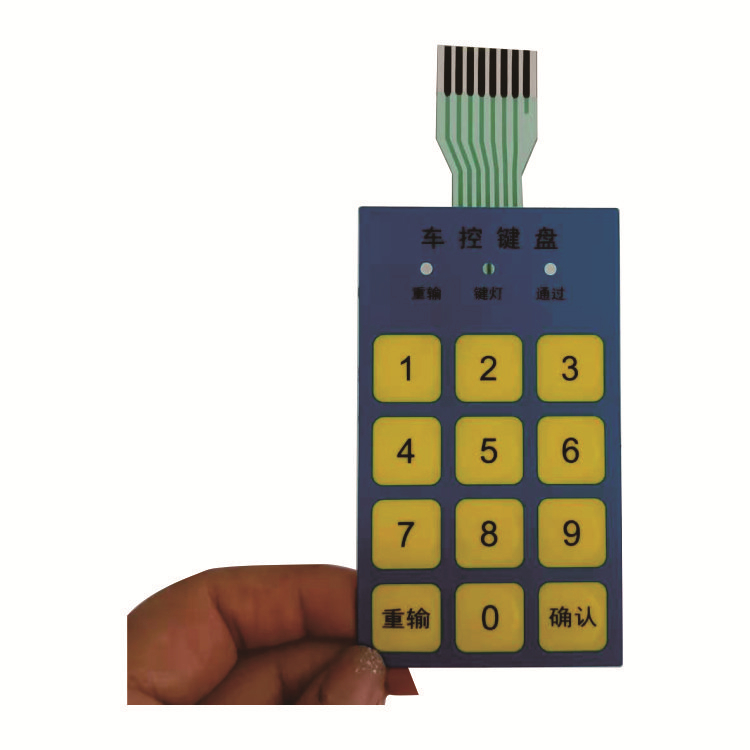
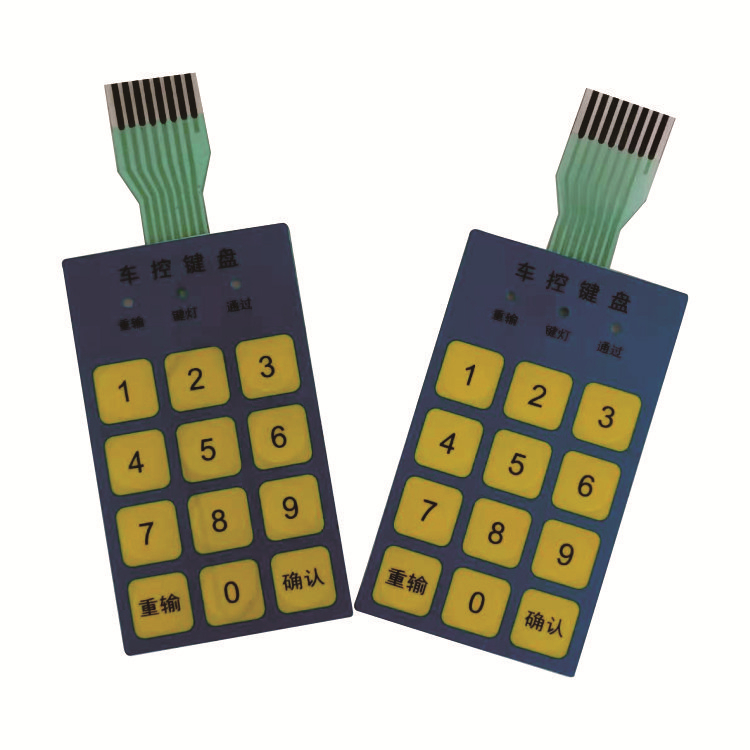









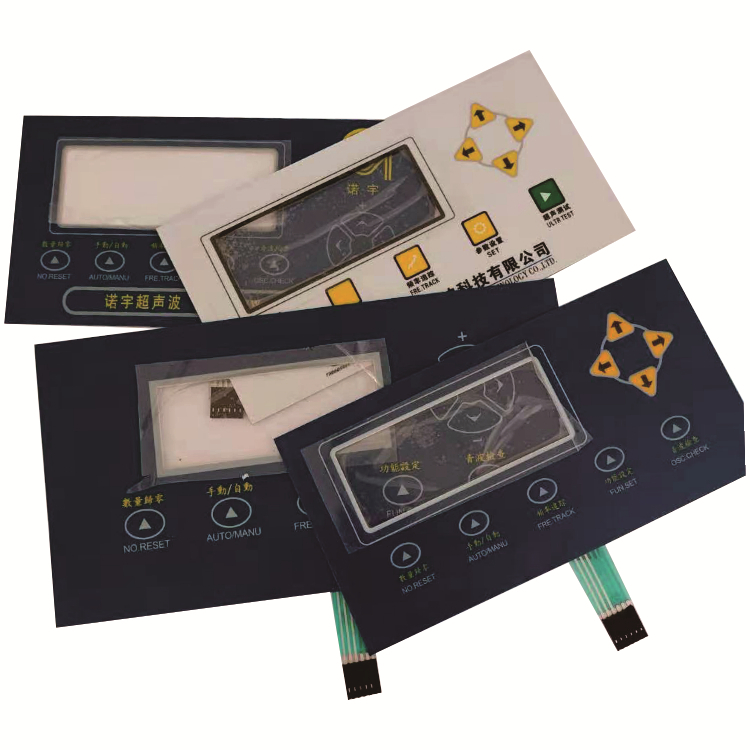
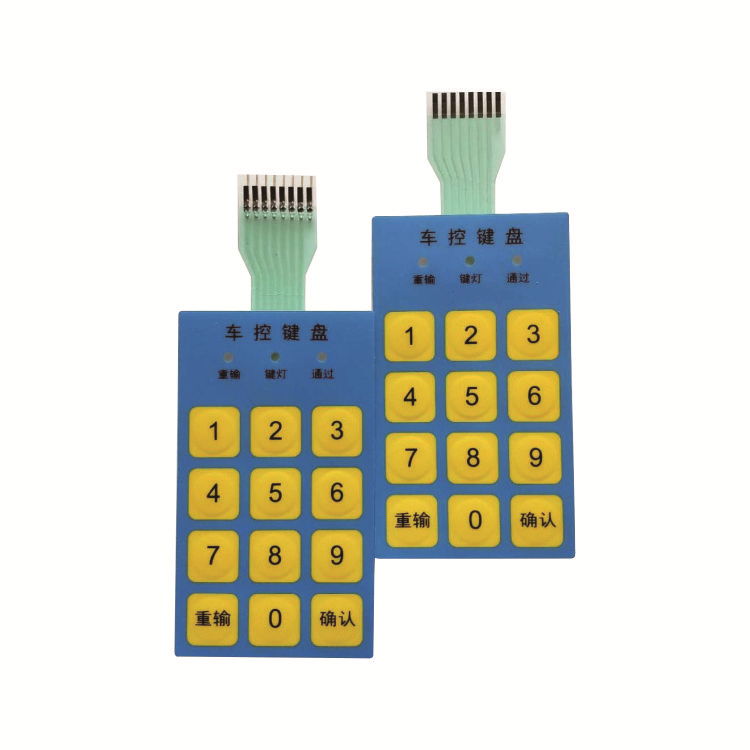
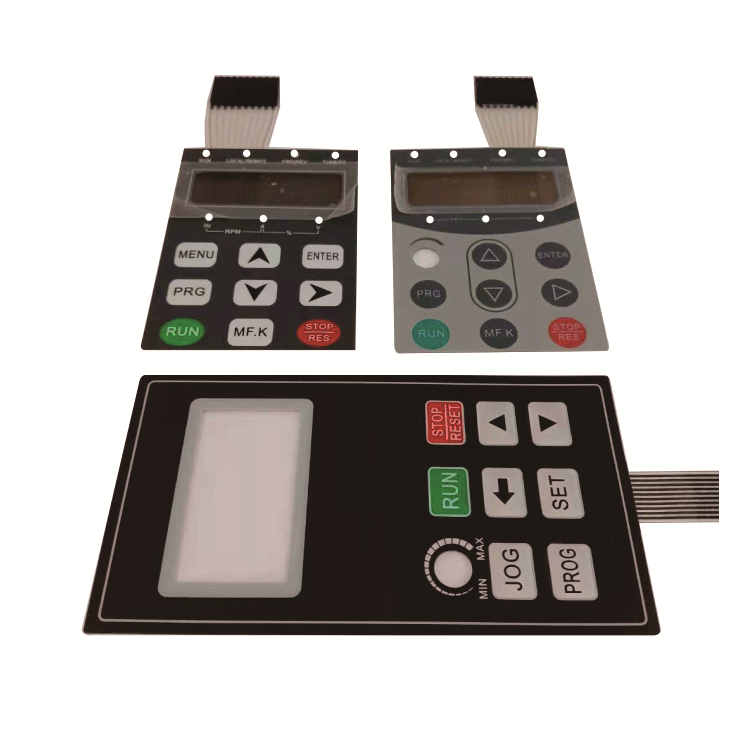
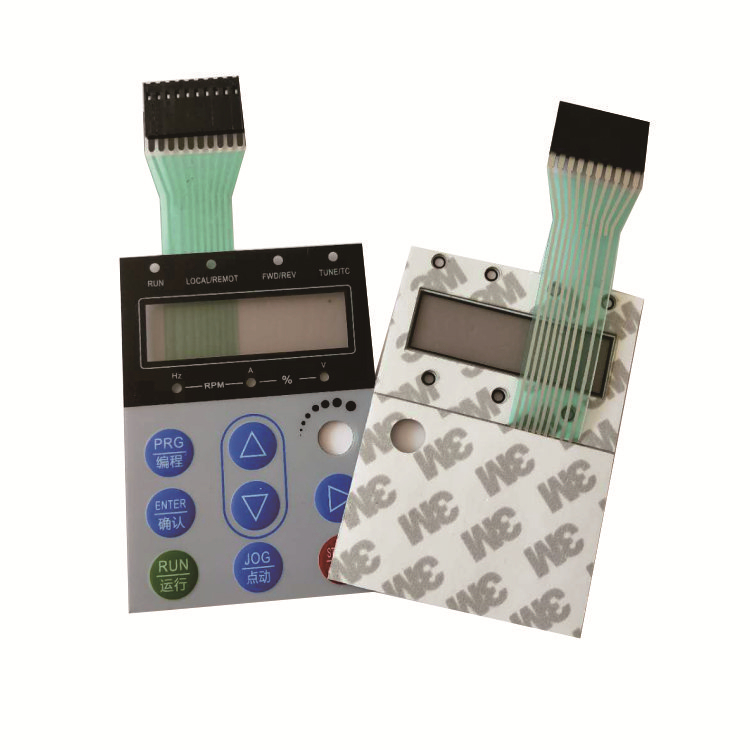
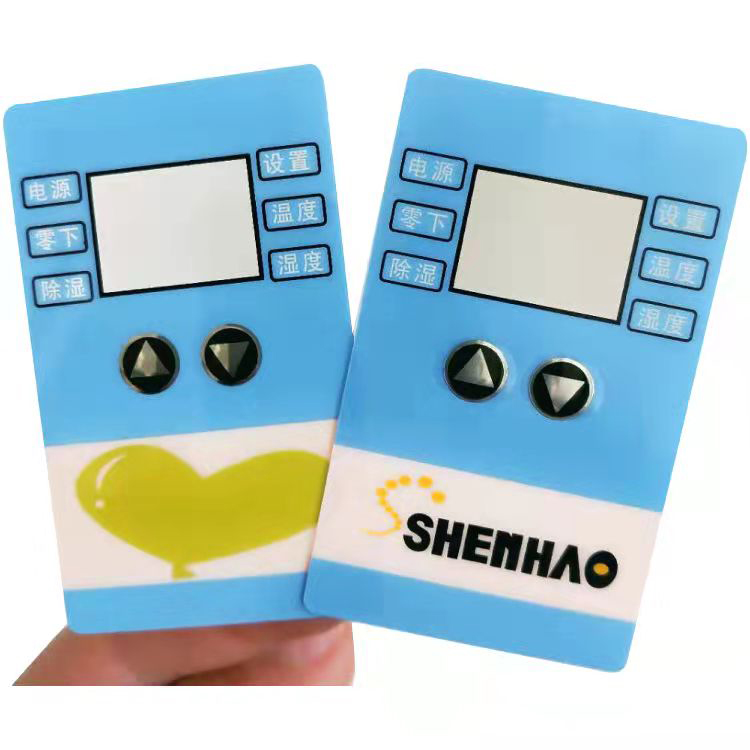
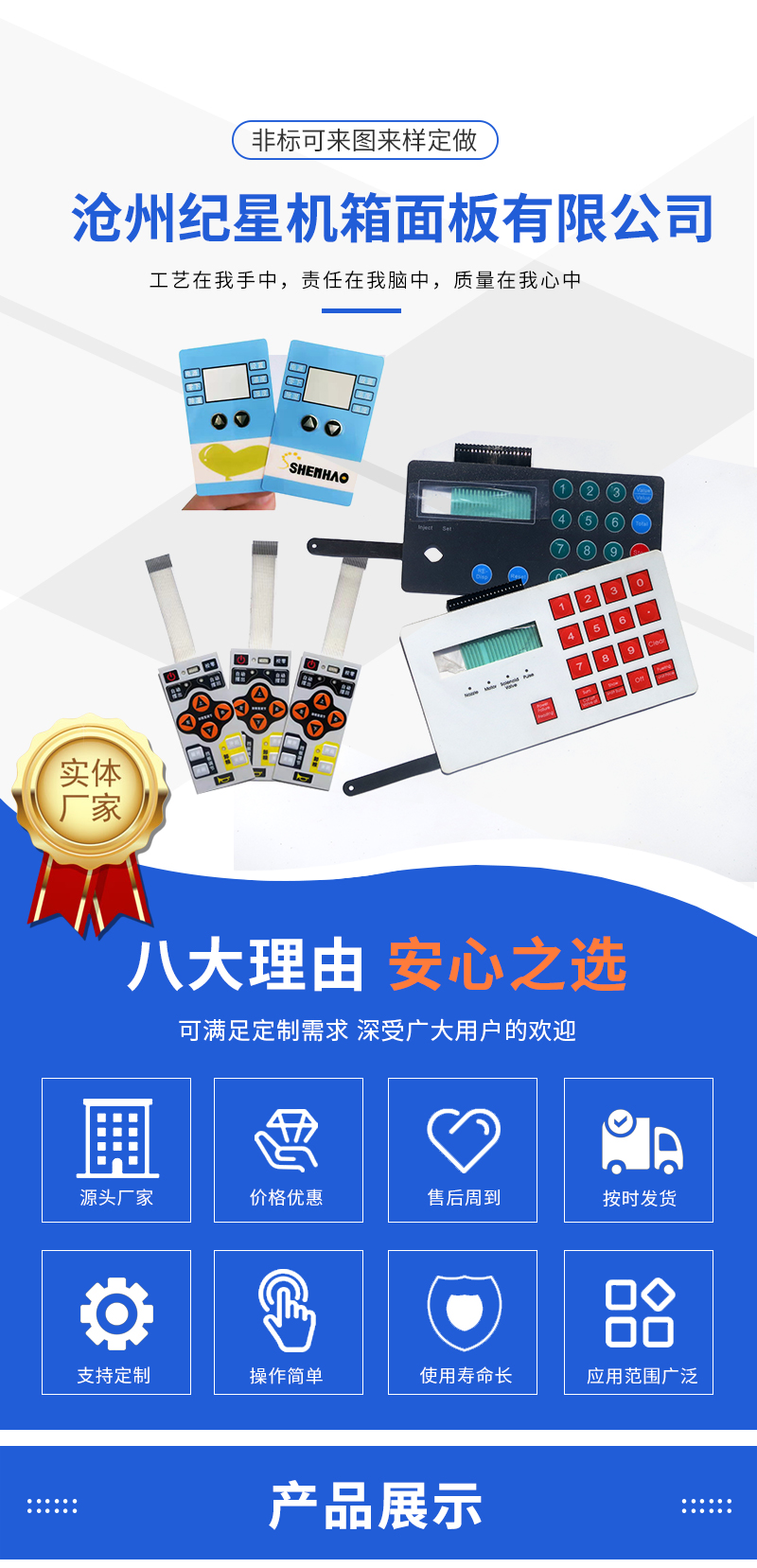
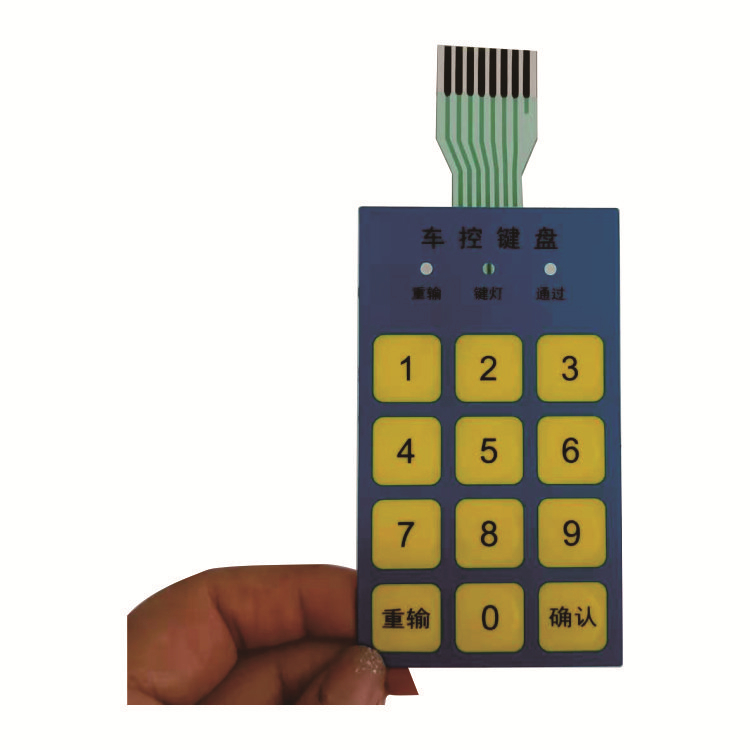

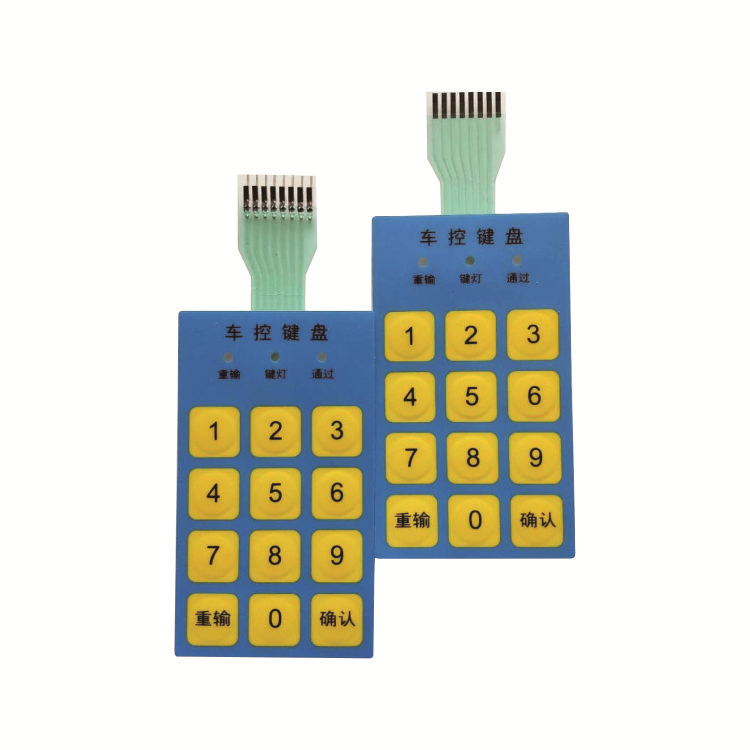

A membrane switch is an integrated operating system that combines key functions, indicator components, and instrument panels. It consists of four parts: the panel, upper circuit, isolation layer, and lower circuit. When the membrane switch is pressed, the upper circuit's contacts deform downward and make contact with the lower circuit's plates, allowing conduction. Upon releasing the finger, the upper circuit's contacts snap back, breaking the circuit and triggering a signal. The membrane switch has a strict structure, attractive appearance, and good sealing properties. It features a long service life and is widely used in industries such as electronic communications, electronic measurement instruments, industrial control, automotive industry, smart toys, and household appliances.