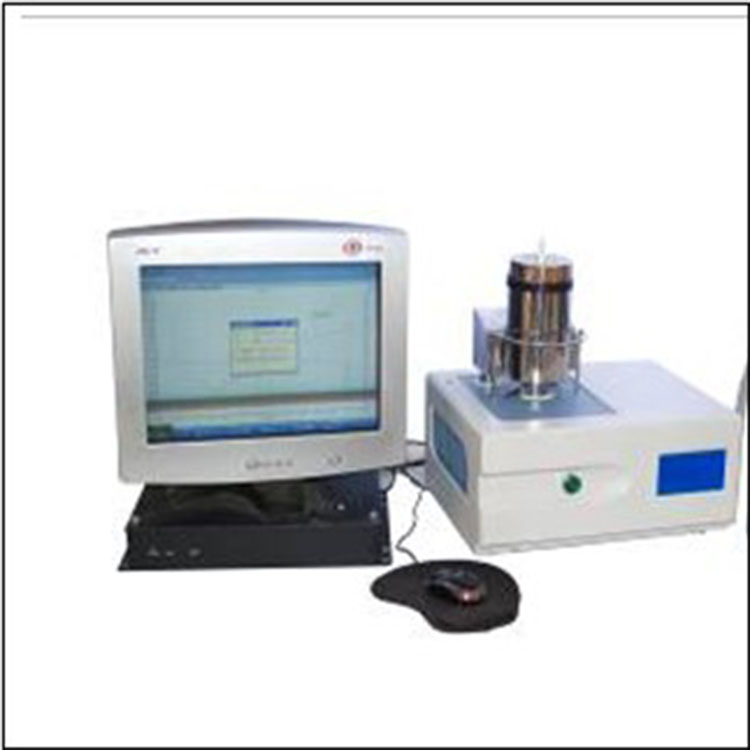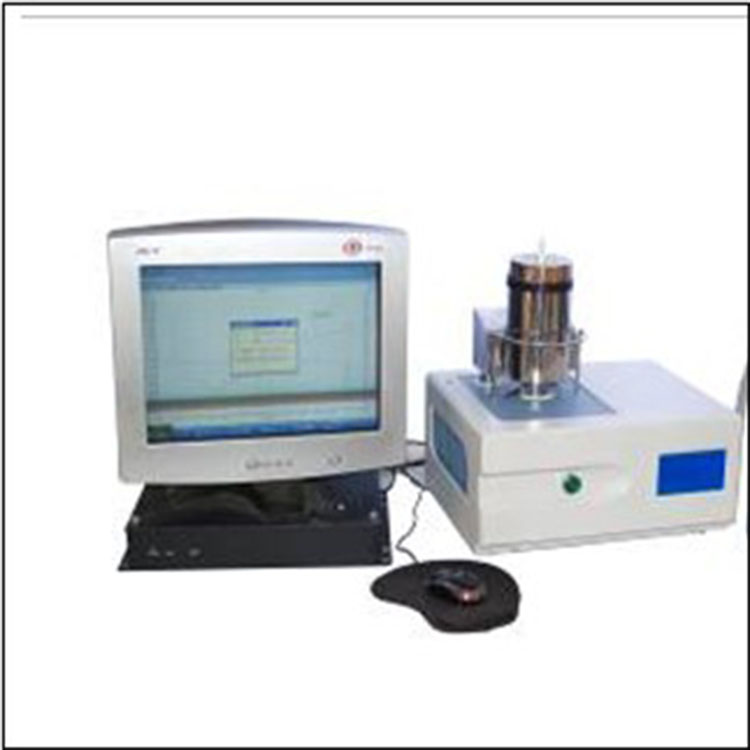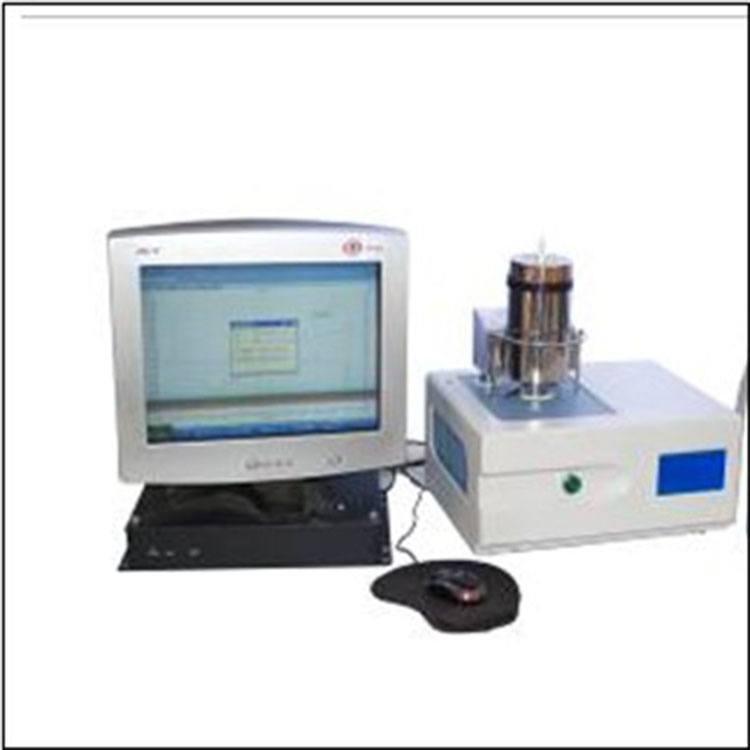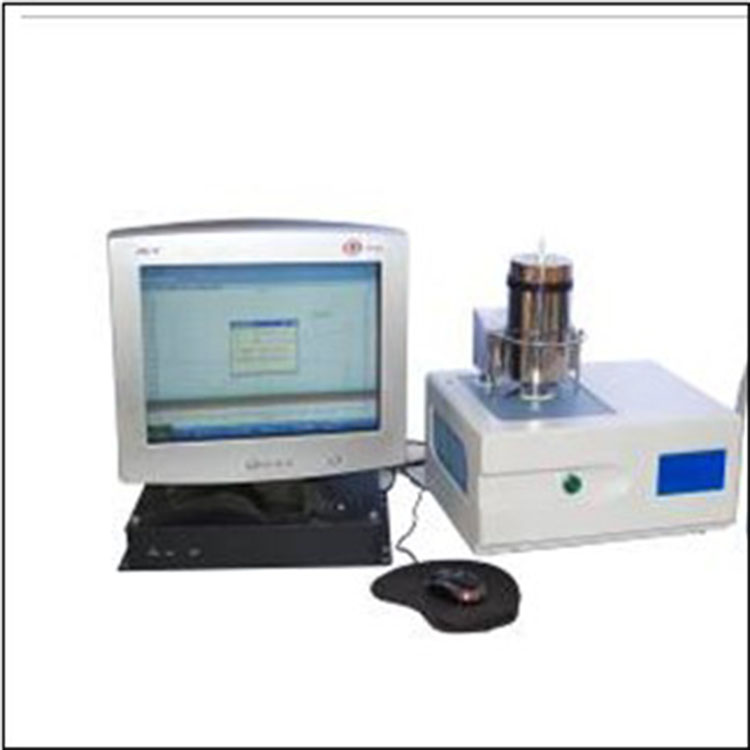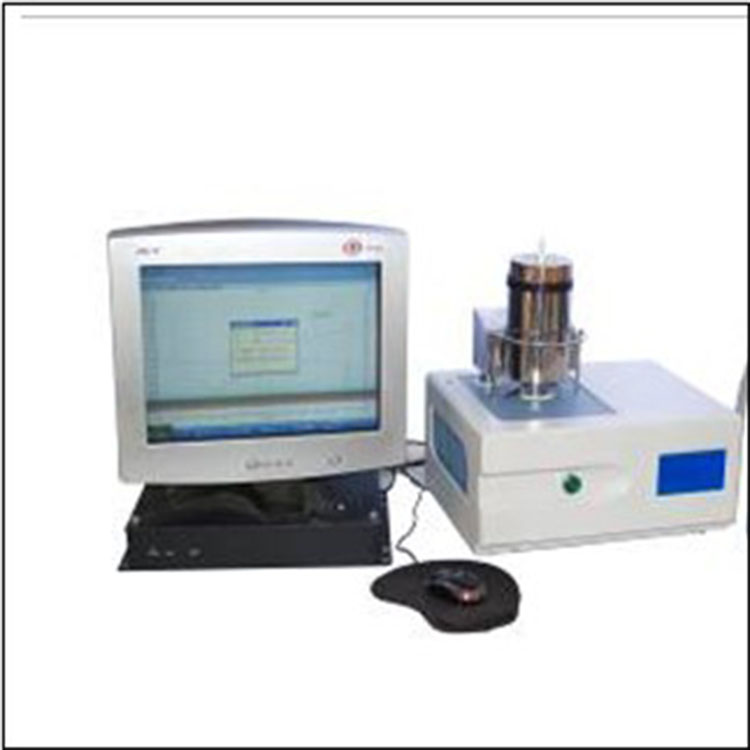







[Basic Technical Indicators]:
Temperature range: Room temperature -1150 ℃
Heating rate: 0.1 ℃/min to 80 ℃/min
Temperature accuracy: ± 0.1 ℃
DTA resolution: 0.01 μ v
DSC resolution: 0.1 μ w
[Overview]
The oxidation induction period thermal stability test is applicable to the national standard GB/T17391-1998
Main parameters:
Differential Thermal Analysis (DTA), Differential Scanning Calorimetry (DSC), or other similar thermal analysis instruments that can continuously record the temperature of the sample,
Temperature control accuracy of 0.1 degrees
Test method:
1. Take a small amount of sample and place it in the instrument sample holder, then connect it to oxygen and nitrogen. Raise the temperature from room temperature to 200 ℃± 0.1 ℃ at a rate of 20 ℃/min under nitrogen and maintain a constant temperature for 7 minutes;
2. After maintaining a constant temperature of 200 ℃ for 7 minutes, quickly switch to oxygen and record the time when the curve changes significantly, which is the oxidation induction period time.
[Other uses]
Measure physical and chemical changes related to heat, such as the melting point, melting heat, crystallization and crystallization heat, phase transition reaction heat, thermal stability, and other changes of a substance.
Main technical indicators
temperature data Differential thermal data
temperature range CT room temperature~1150 ℃ measurement range ±10μv~±2000μv
Temperature accuracy ±0.1℃ DTA resolution 0.01μv
heating rate 0.1℃/min−80℃/min DTA noise < 0.01μv
Temperature repeatability ±0.1℃ crucible capacity 0.06ml
Featured Features DSC data
temperature control Heating up, constant temperature (program automatic control) measurement range ±100mw
display mode Chinese character large screen LCD display Small resolution ±0.1μw
Atmosphere system Automatic switching between nitrogen and oxygen Power noise ±0.1μw
gas flow rate 10 ~ 200 mL/min Power accuracy ±0.1μw