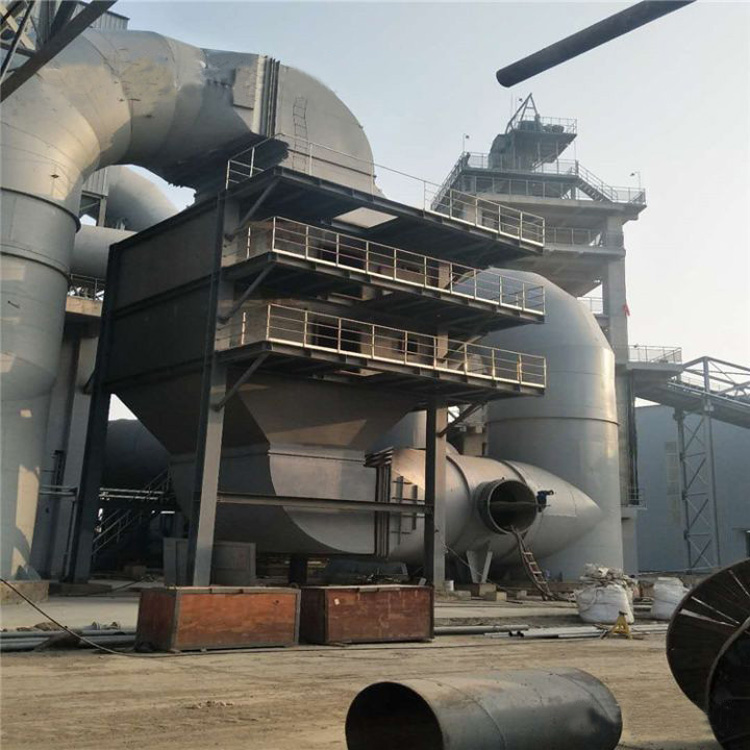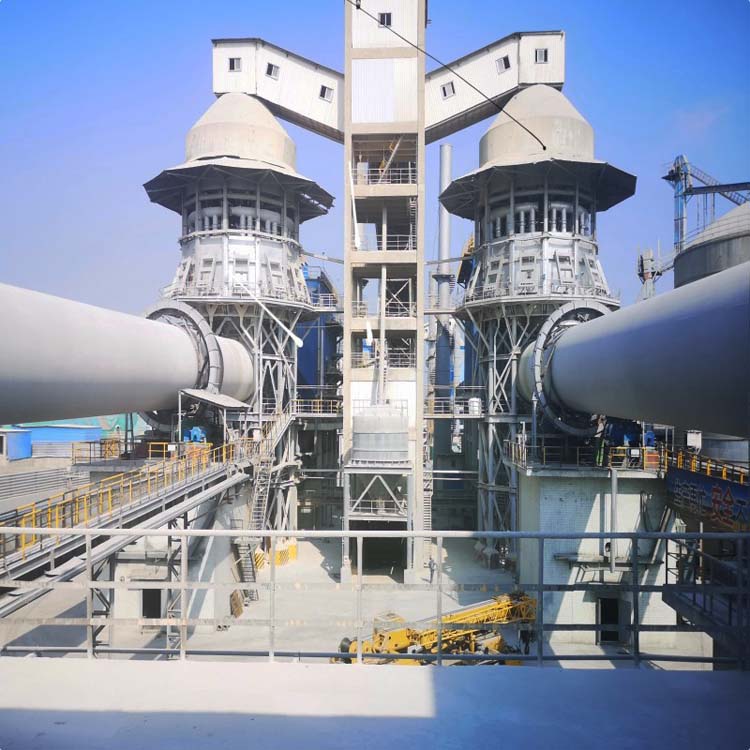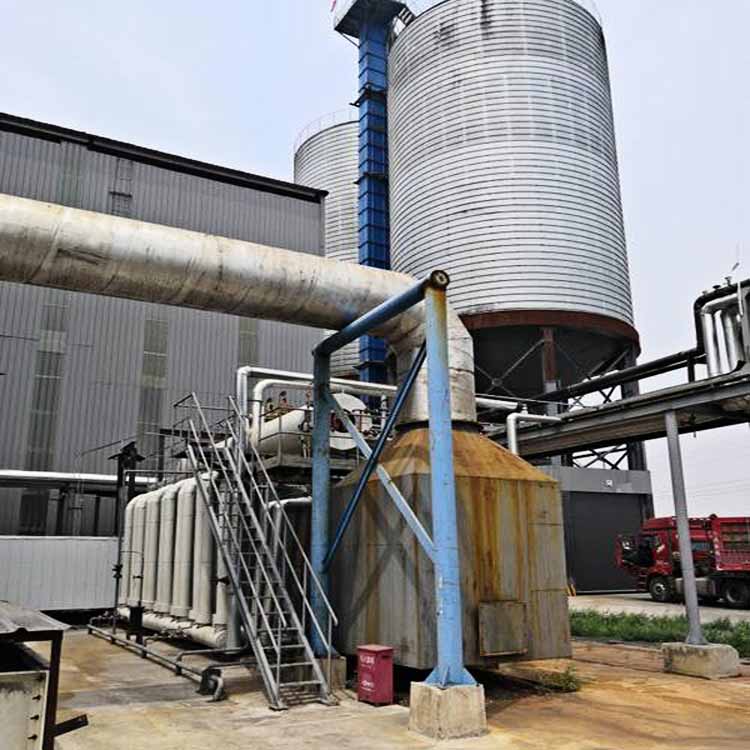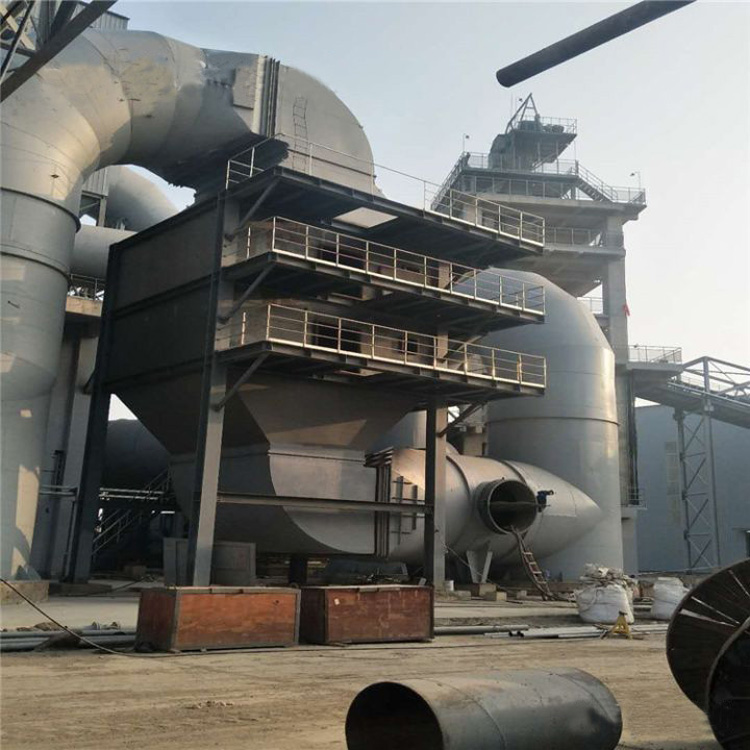

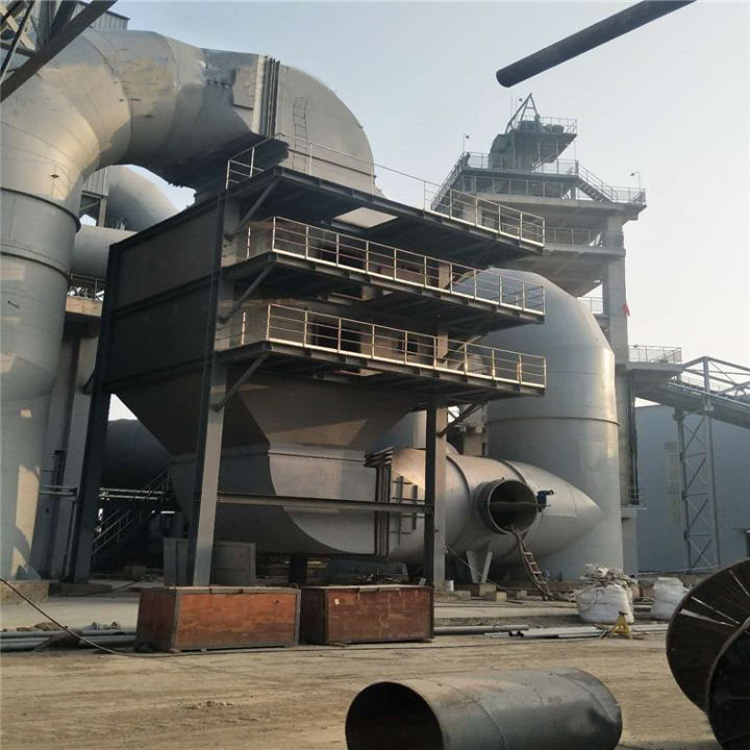












Process flow of desulfurization, denitrification and dust removal equipment for glass kilns
1. Absorption reaction: SO2 is absorbed in the absorption tower using NaOH to absorb 2NaOH+SO2 → Na2SO3+H2O is absorbed using Na2CO3 to absorb Na2CO3+SO2 → Na2SO3+CO2 is absorbed using Na2SO3 to absorb Na2SO3+SO2+H2O → 2NaHSO3. During this process, sodium alkali is used as the absorption solution, so the system will not generate precipitated scaling. The main side reaction of this process is oxidation reaction, which generates Na2SO4. 2Na2SO3 + O2 → 2Na2SO4
2. Regeneration reaction: Send the absorption solution that has absorbed SO2 to the lime reactor, and use lime slurry to regenerate the absorption solution and precipitate solid by-products. If sodium salt is used as a desulfurizer and lime or limestone is used to regenerate the absorbent, the following reaction will occur in the reactor. Regeneration with Lime: CaO+H2O =Ca(OH)2Ca(OH)2+ Na2SO3+ 1/2 H2O=2NaOH+ CaSO3•1/2 H2O2NaHSO3+ Ca(OH)2=Na2SO3+ CaSO3•1/2 H2O + 1/2 H2O The NaOH solution obtained after regeneration is sent back to the absorption system for use, and the resulting hemihydrate calcium sulfite can be oxidized to produce gypsum (CaSO4 • 2H2O).
3. The reaction between urea and NOX is as follows:
6NO2+4CO(NH2)2=4CO2+7N2+8H2O
NO+ NO2 + CO(NH2)2=2H2O+CO2+2N2
Urea denitrification equipment has the advantages of high efficiency, low investment, and simple operation. However, the absorption time of nitric oxide in flue gas in the equipment is long and the efficiency is low, so specialized oxidants and additives need to be added.