






Introduction to Combustible Gas Detectors
fixed type The industrial fixed combustible gas alarm consists of an alarm controller and a detector. The controller can be placed in the duty room and mainly controls various monitoring points. The detector is installed in locations where combustible gases are prone to leakage. Its core component is the built-in combustible gas sensor, which detects the concentration of gases in the air.The detector converts the gas concentration detected by the sensor into an electrical signal, which is transmitted to the controller through a cable. The higher the gas concentration, the stronger the electrical signal. When the gas concentration reaches or exceeds the alarm point set by the alarm controller, the alarm sends an alarm signal and can activate external devices such as solenoid valves and exhaust fans to automatically eliminate hidden dangers.

Specification of combustible gas detector
The portable combustible gas alarm is handheld and can be carried by staff to detect the concentration of combustible gases in different locations. The portable gas detector integrates a controller and a detector.The main difference compared to fixed gas detectors is that portable gas detectors cannot be connected to other devices. Semiconductor type
It is manufactured based on the principle that the conductivity changes with the composition of the ambient gas at a certain temperature.For example, an alcohol detector is prepared based on the principle that when tin dioxide encounters alcohol gas at high temperatures, its resistance will sharply decrease.
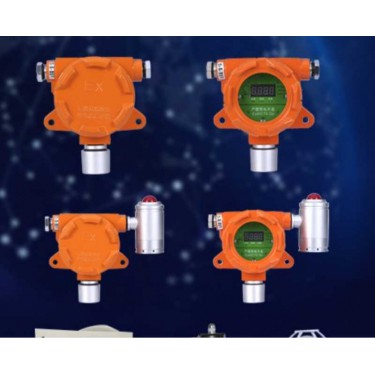
Customized combustible gas detector
Combustible gas detector is a detector that responds to the concentration of a single or multiple combustible gases; There are two types of combustible gas detectors: catalytic type and infrared optical type. Catalytic combustible gas detector uses the resistance change of refractory metal platinum wire after heating to determine the concentration of combustible gases. When combustible gas enters the detector, it causes an oxidation reaction (flameless combustion) on the surface of the platinum wire, and the heat generated increases the temperature of the platinum wire, causing a change in its electrical resistivity; Infrared spectroscopy uses infrared sensors to detect combustible gases of hydrocarbons in the on-site environment through the absorption principle of infrared light sources. The installation of combustible gas detectors is simple and does not require debugging. Some products can also be used separately for gas leakage detection and alarm. The encoded products can be connected to various fire alarm controllers in a non-polar signal two bus manner, and together with other types of fire detectors, form a bus based fire alarm system with independent alarm function. The detector can be equipped with two pairs of output control points for controlling ventilation equipment (passive normally open contacts) and gas pipeline shut-off valves (active pulse contacts). Combustible gas detectors work stably, sensitively, reliably, and have a long service life. They can be widely used for safety monitoring in places where combustible gases exist, such as homes, hotels, and apartments; It can also be used in explosion-proof places.