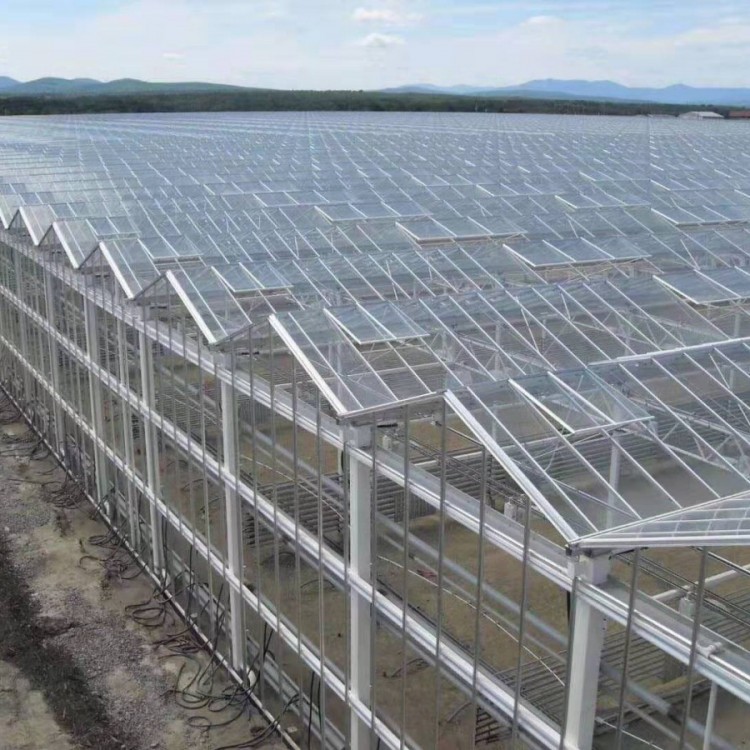
Smart Glass Greenhouses (Dutch-style greenhouses, Latticework greenhouses), Polycarbonate Intelligent Greenhouses, Film Multi-span Greenhouses, Energy-saving Solar Greenhouses
13791891937


To ensure the prolonged operation of smart glass greenhouse hose micro-irrigation systems and to extend the lifespan of micro-irrigation equipment, the key is proper use, protection, and maintenance.
Equipment Processing
For the operation of micro-irrigation equipment, it is essential to strictly adhere to all technical specifications of the equipment's operation and to apply and protect the micro-irrigation equipment. After initial work and after switching crops, the pumps and pipelines of the water collection areas (dams, canals, ponds, etc.) should be repaired and pressure tested to ensure the normal operation of the micro-irrigation equipment.
2. Protect and Preserve
Routine inspections and protection of the micro-irrigation hose equipment are crucial, as protection is a vital part of the handling process and ensures the equipment operates in optimal condition, extending its service life. Therefore, enhancing maintenance and protection of the equipment is particularly important.
Regularly maintain and protect water source projects such as reservoirs, ensuring equipment availability.
(2) It is essential to regularly clean and remove sediment and other debris from reservoirs. Algae in still water in open reservoirs tend to proliferate, so during the irrigation season, green vanadium should be applied to the pool to maintain a concentration of 0.1 to 1.0 ppm, preventing algae growth.
(Water sources must not contain suspended particles larger than 0.8mm; otherwise, equipment with filtering capabilities is required.)
(4) Pumps should be maintained and protected according to the pump operation rules, and be cautious to prevent freezing damage during winter use.
During the micro-irrigation process, it is essential to regularly clean the hose reels, removing any residue and sediment from the pipes. When cleaning, open the end cap or plug of the hose reel. After cleaning, secure the end and resume normal operation.
(6) After each fertilization and medication, it is necessary to flush the pipes with clean water for a period of time to ensure cleanliness.
(7) Upon the completion of each crop's irrigation period, the hoses are removed from the triple-pass soil and rinsed clean. Subsequently, the hoses are typically coiled into disks according to the greenhouse and box numbers and stored in a cool, dark, and dry warehouse to prevent rodent damage for future use.
(8) For accessories of micro-irrigation equipment, such as tees, straight connectors, and rigid pipes, it is generally not recommended to disassemble the connections between tees and rigid pipes at the end of each irrigation cycle. Instead, they should be stored in the warehouse along with the flexible hoses. Straight connectors and flexible hoses can be coiled directly onto the hose reel without disassembly.
(9) When coiling hoses, it is generally required to follow the original folding method; wrinkles should be flattened before coiling.
(10) Due to the thin wall of the hose tape, a thickness of only 0.2mm is generally required. Therefore, during regular fieldwork and crop rotation storage, attention must be paid to operation to avoid cutting or piercing the hose tape. Moreover, when rolling the reels, move as you roll and do not extend the hose tape.
Contact us

Service Hotline
13791891937
Company Telephone
13791891937

Address
Room 611, Rose Garden Apartment, Shengcheng Street, Shouguang City
b2b.china9.net © Zhongshang 114 Hebei Network Technology Co., Ltd.Address: Room 6009, Oriental New World Center, No.118 East Zhongshan Road, Qiaoxi District, Shijiazhuang City, Hebei ProvincePlatform Service Hotline: 4006299930



![Tibet Glass Smart Greenhouse Vegetable Greenhouse Construction [Zhu'an Jin]](https://img.file.zhongshang114.com/file/upload/202211/23/12255133111424.png.thumb.png)
![Xining Glass Intelligent Greenhouse Vegetable Greenhouse Construction [Zhu'an Jin]](https://img.file.zhongshang114.com/file/upload/202211/23/12321455111424.jpg.thumb.jpg)