





- AllProduct Category
-
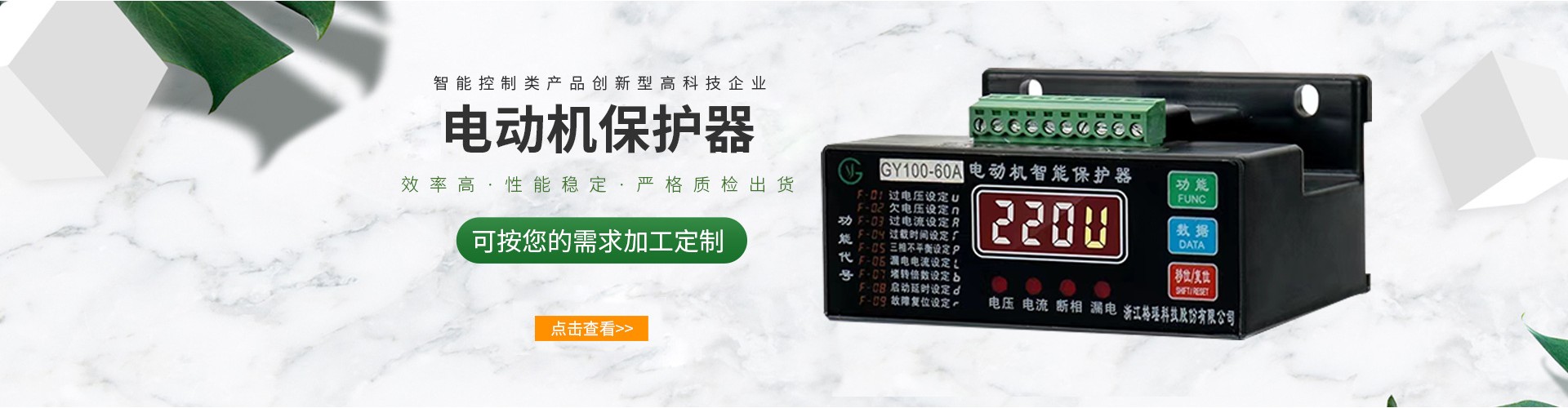
Motor Protector
High Voltage Microcomputer Integrated Protection Device
Multi-functional Power Instrument
Dehumidification Unit
Electrical Valve
Motor Protector
Robotics
Switchgear
Motor Monitoring and Protection Device
Motor Protection Device



详情描述

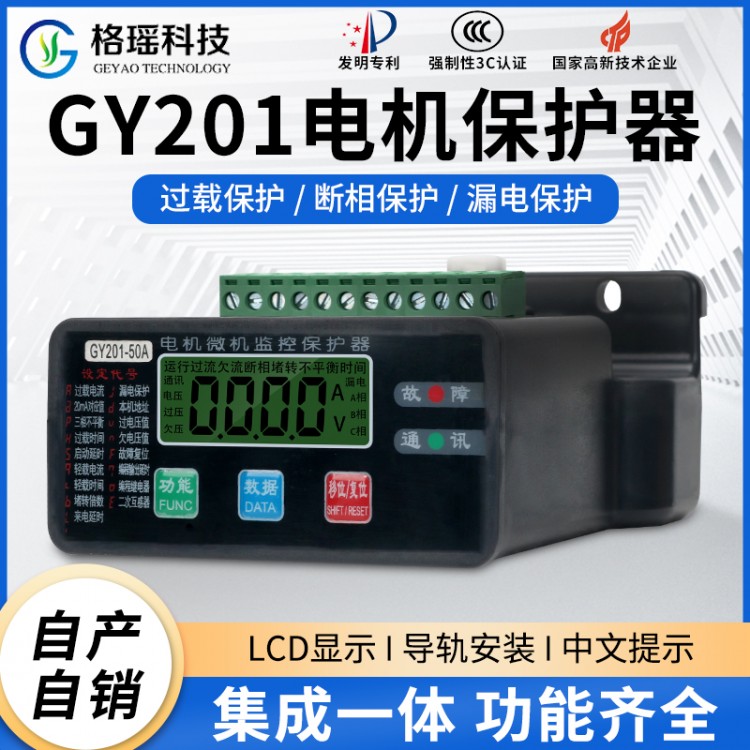
Motor Monitor Protectors are an essential component of the power supply system for motors, playing a critical protective control role in the start-up and operation of electric motors. Therefore, an analysis of the protective principles and composition of electric motors is provided, along with an explanation of the application and selection principles of motor protectors throughout their development.
1. Electric motors are an indispensable transmission equipment in current productivity applications, serving as the power source for other electromechanical equipment. The normal output of an electric motor is a prerequisite for the smooth operation of the driven electromechanical equipment. Today, motors are widely used in industrial and agricultural, transportation, mining, chemical, aerospace, and aviation fields. The load types carried by electric motors are diverse and often a critical part of the entire equipment, making the normal operation of the motor extremely important. Motor protectors (motor protection devices) are a crucial component in power generation, supply, and consumption systems, and are energy-saving electromechanical products with significant energy-saving effects across various industries, with large quantities and widespread applications.
Motor protectors provide comprehensive protection and control for motors, addressing issues such as overload (overcurrent), underload, phase loss, stalling, short circuit, leakage, unbalanced three phases, overheating, overvoltage, undervoltage, grounding, power, energy consumption analysis, winding insulation, bearing wear, rotor eccentricity, and winding aging, triggering alarm alerts and controlling protective actions. Today, motor protectors have almost permeated all electrical usage fields, holding an indispensable and crucial position and role in the national economy and energy-saving endeavors.
TwoPrinciple and Composition of Motor Protectors
For electric motors, their failure modes can be divided into two aspects from a mechanical standpoint: winding damage and bearing damage. The main reasons for motor damage are as follows:1. Long-term exposure to electrical, thermal, mechanical, and chemical stresses on the motor causes insulation aging and damage in the windings, resulting in short circuits between the stator and rotor windings or to ground. 2. Poor power grid quality, such as unbalanced three-phase voltage, large voltage fluctuations, distorted waveform due to grid voltage sag, severe harmonic distortion, or single-phase operation of the motor. 3. Low supply voltage results in insufficient starting torque for the motor, preventing smooth startup or repeated startups within a short period, leading to excessive startup current and motor overheating over time. 4. Mechanical failure or other causes lead to blockage of the motor's rotor. 5. Cooling system failure in certain large motors or operation under high temperature and humidity conditions for extended periods can cause motor failure.
The study of motor protection principles is crucial for ensuring the performance of motor protectors. According to the theory of three-phase symmetrical component method, three unsymmetrical vectors can be decomposed into three groups of symmetrical vectors, respectively: positive sequence components, negative sequence components, and zero sequence components. The calculation formula for symmetrical components is as follows:
Based on1) In the event of both symmetrical and asymmetrical faults, the three-phase current of the motor will change. The excessive current flowing through the winding of the motor fault power source, exceeding the rated current of the motor, allows for overcurrent protection of the motor based on this characteristic. Overload, phase loss, and under-voltage can all cause the winding current to exceed the rated current value. When the power supply voltage is under-voltage, the proportion of the increase in operating current will equal the proportion of the voltage drop; during motor overload, it often results in stalling, causing the operating current to greatly exceed the rated current. For these conditions, the motor protector can detect the three-phase operating currents, determine different protection methods based on the different characteristics of the operating current, and thereby provide power-off protection for the motor. The types of motor faults include overcurrent protection, negative sequence current protection, zero sequence current protection, voltage protection, and overheat protection, among others.
By analyzing the protective principle of motor protectors, it can be seen that an ideal motor protector should meet elements such as reliability, economy, and convenience, offering a high performance-to-price ratio. Through development and updates, modern motor protectors typically consist of current detection circuits, insulation detection circuits, temperature detection circuits, reference voltage circuits, logic processing circuits, timing processing circuits, start block and reset circuits, fault memory circuits, drive circuits, working power supply circuits, action control circuits, parameter display circuits, digital amplification circuits, and signal collection circuits.
III.Types and Applications Analysis of Motor Protectors
The commonly used motor protectors in our country include thermal relays, temperature relays, and electronic motor protectors. The thermal relay, introduced from the Soviet Union in the early 1950s, is a metal foil mechanical motor overload protector with the characteristics of inverse time performance and simple structure for overload protection. However, it lacks functions, has no phase failure protection, and does not provide protection against malfunctions such as poor ventilation, shafting, stalling, prolonged overload, and frequent startups. This is mainly due to the mismatch between the thermal relay's operating value and the actual motor protection value, resulting in the loss of protective function, poor repeat performance, inability to be used promptly after a large current overload or short circuit, significant setting errors, sensitivity to environmental temperature, or failure to operate, high power consumption, excessive materials, and outdated performance indicators. The temperature relay is a disk-type or other form of relay made of bimetallic strips, which embeds a heating element in the motor for temperature-based protection. However, when the motor capacity is large, it needs to be used with a current monitoring type to prevent the temperature from rising sharply when the motor stalls. Due to the lag in the temperature sensing element, it can cause motor winding damage. The temperature relay has the advantages of simple structure, reliable operation, and wide protection range, but it operates slowly, has a long return time, and is not suitable for motors with a large current delta connection. Currently, it is widely used in exhaust fans, refrigerators, and other applications. The electronic motor protector, by detecting the three-phase current values and the set current values, achieves motor protection through potentiometer dials or switch settings. The circuit generally uses an analog inverse time or timed limit working characteristic, which cannot display operating data or set parameters, and cannot realize automated management platforms.
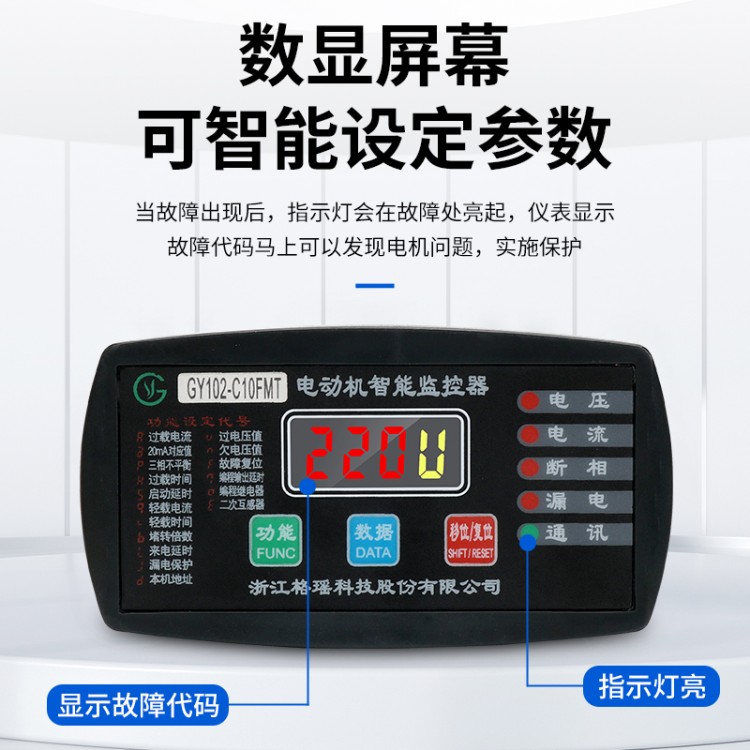
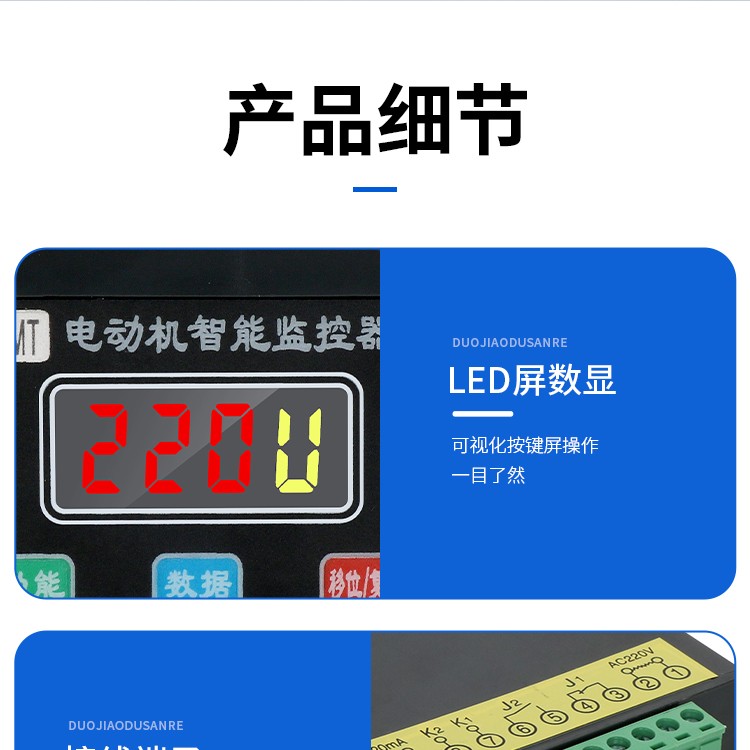
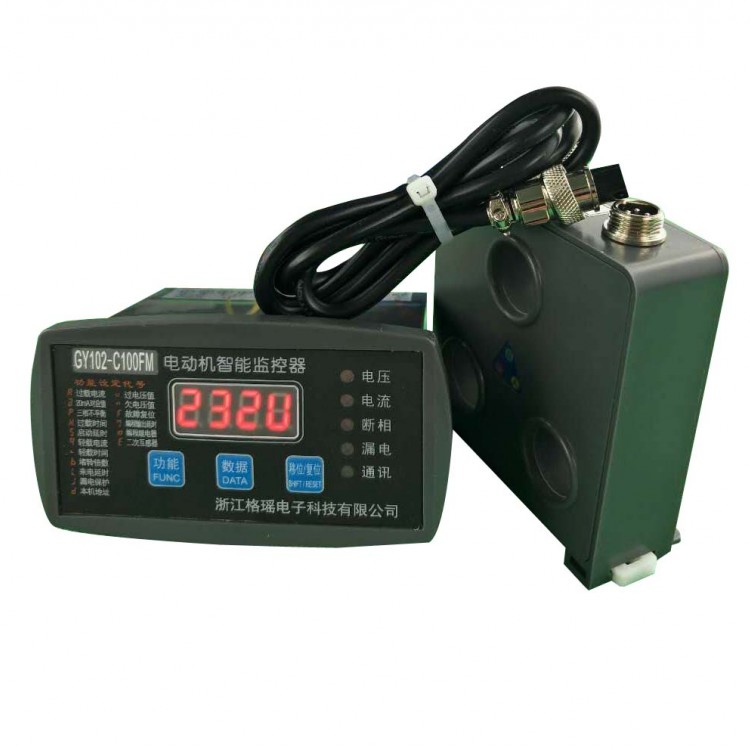
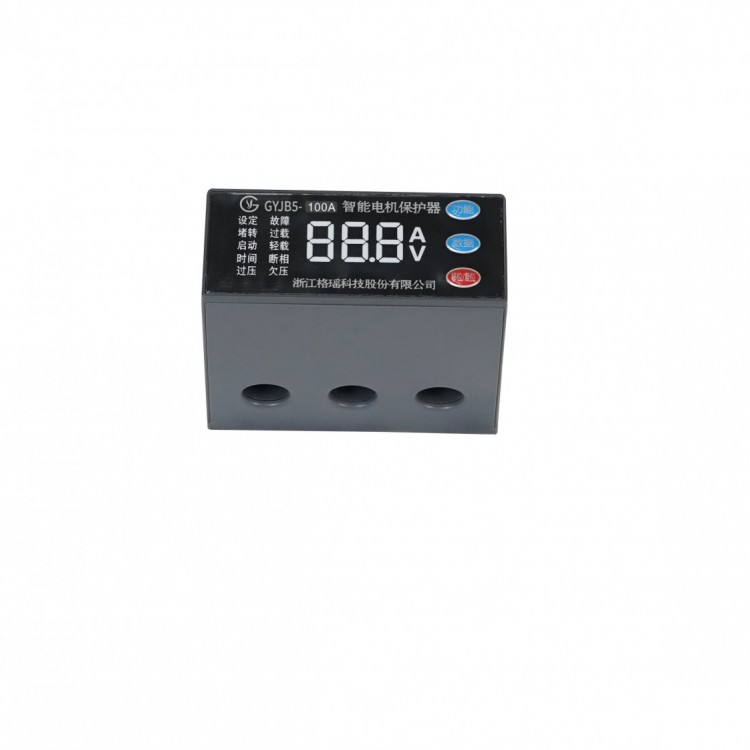
In addition to the three common types of motor protectors mentioned above, magnetic field temperature detection relays and intelligent motor protectors are also widely used in motor fault protection. Magnetic field temperature detection protectors achieve protection by embedding magnetic field detection coils and temperature probes within the motor, based on changes in the internal rotating magnetic field and temperature. Their main functions include overload, overheating, over/under voltage, stall, short circuit, phase loss, and wear monitoring. These protectors offer comprehensive protection features, but the drawback is that they require the installation of magnetic field detection coils and temperature sensors inside the motor. Intelligent motor protectors can realize comprehensive intelligent protection for motors, integrating protection, measurement, communication, and display into a mechatronic system. The set parameters are digitally adjustable through the operation panel buttons, allowing users to customize various parameters based on actual site usage requirements and protection conditions. Users can choose to enable or disable protection functions, and more.LCD display with large Chinese and English characters, LED fault indication, query for motor operating time and fault memory function, supports multiple communication protocols, transmitter current output for actual multi-party control, currently, all high-voltage motor protection adopts Gerey explosion-proof intelligent type.


