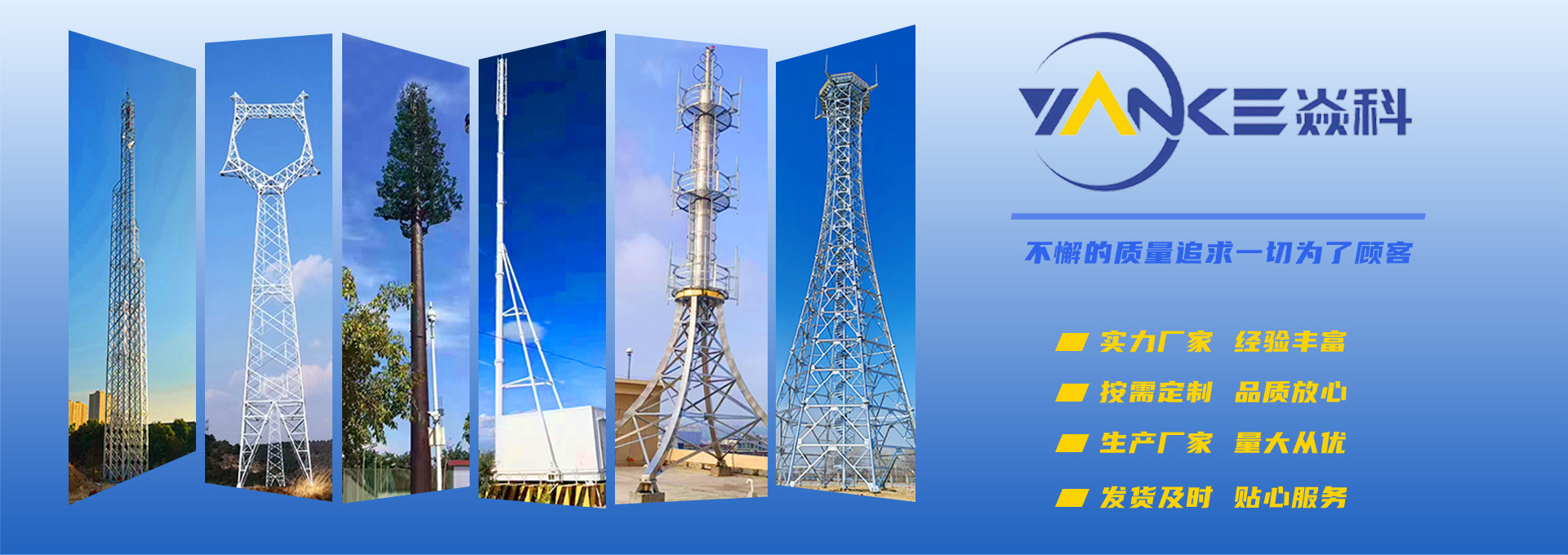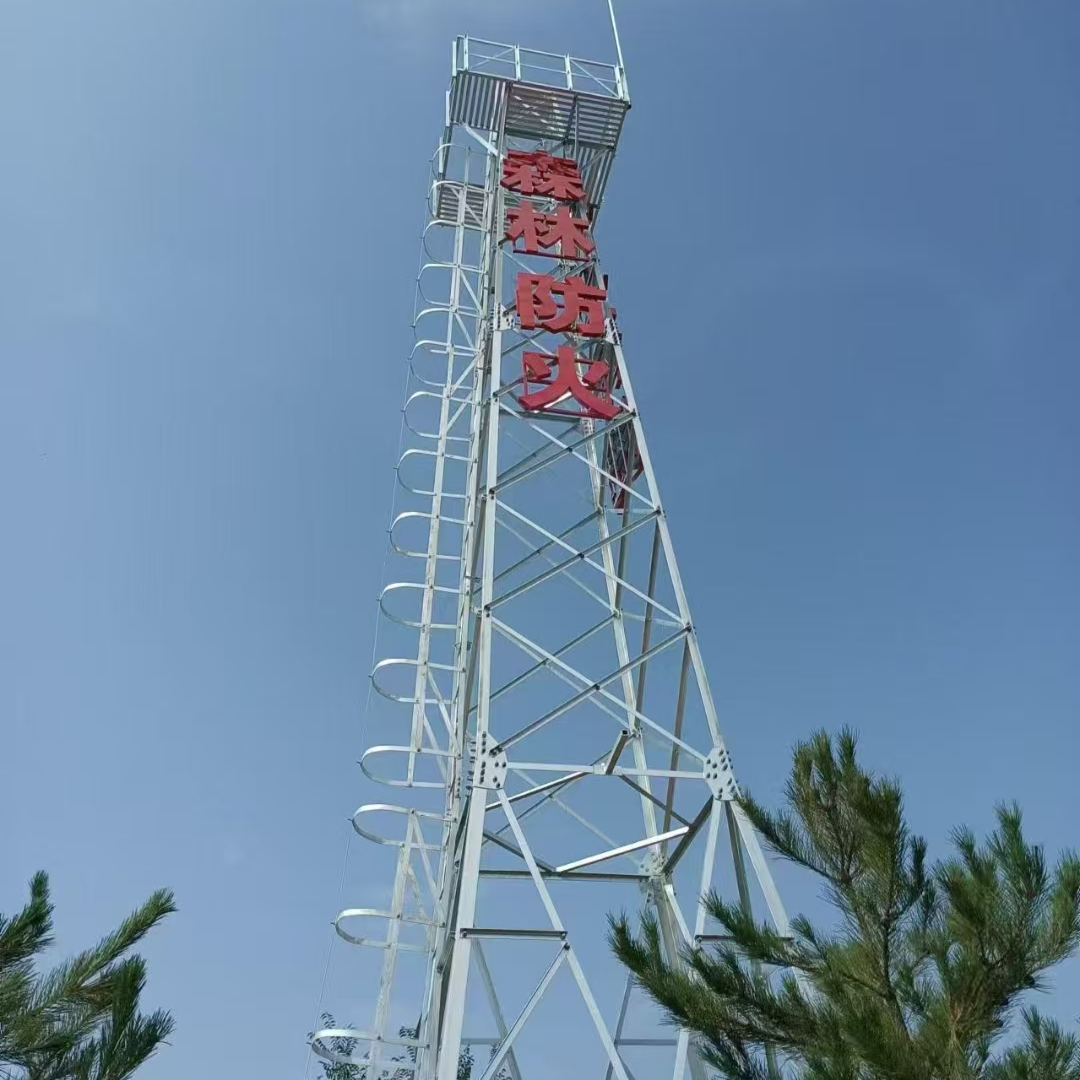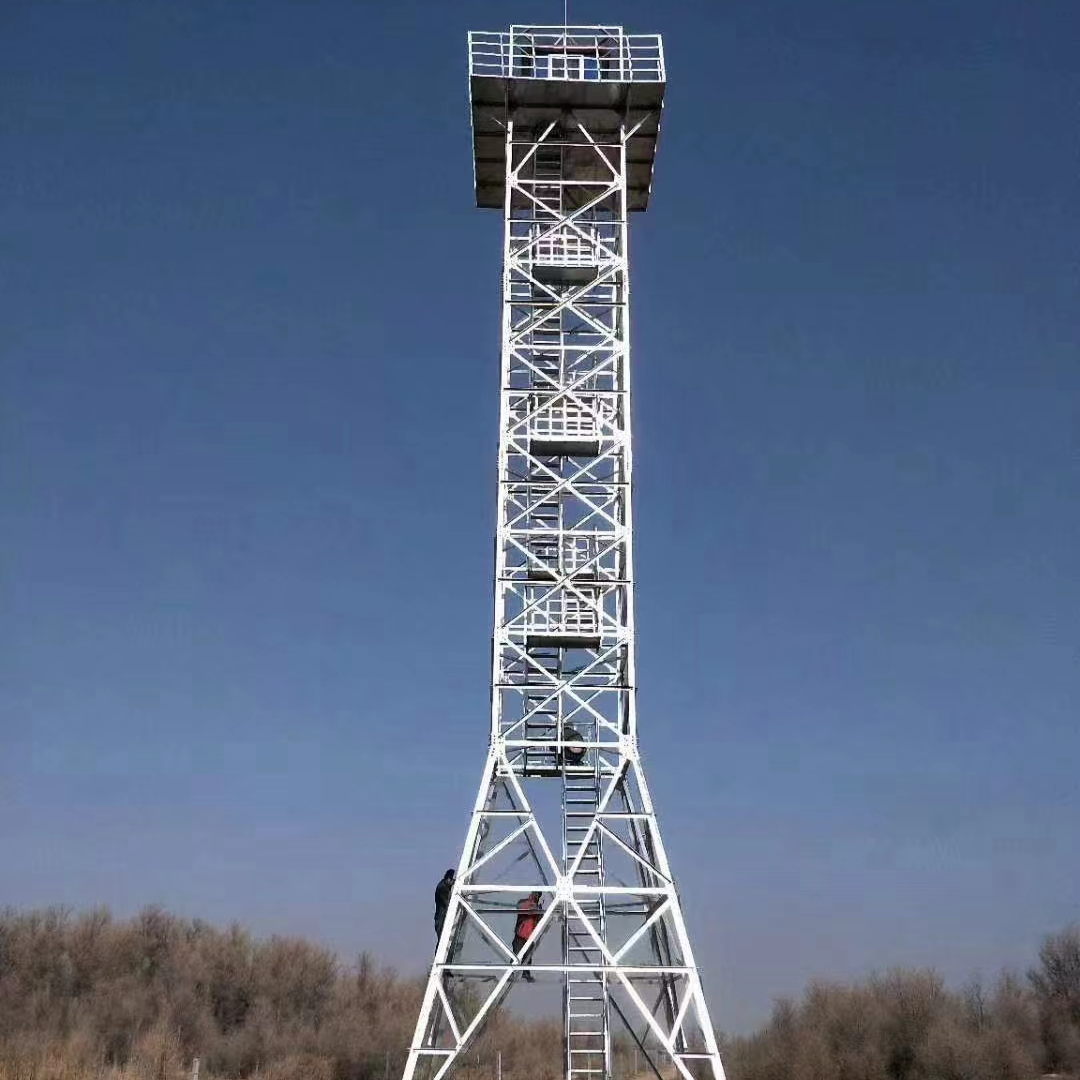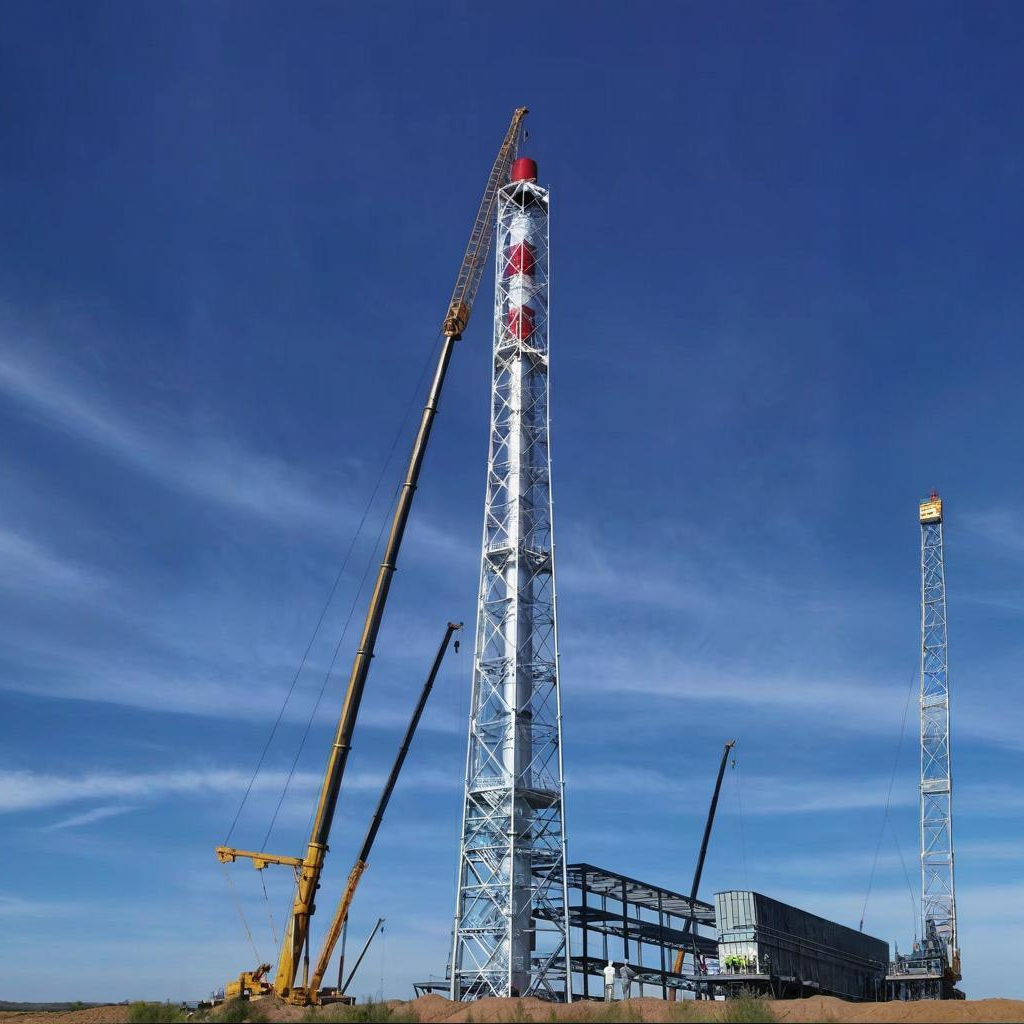
Chimney towers, lightning rods, surveillance towers, stee...

Tower Categories: Angle Steel Tower, Steel Pipe Tower, Conical Pipe Tower
By function type:
1. Communication towers, also known as communication iron towers, are commonly constructed on ground, rooftops, or mountain peaks. They are made of angle steel, supplemented by steel plate and steel pipe materials. The components of the tower are connected with bolts, and all the tower components are heat galvanized for corrosion protection after processing. The angle steel tower consists of parts such as the base, tower body, lightning rod tower, lightning rod, platform, ladder, antenna bracket, feeder line bracket, and lightning rod down conductor.
2. Decorative towers integrate multiple functions such as decoration, communication, lightning protection, and landscaping, commonly constructed on high-rise buildings and rooftops. They can also serve as iconic structures in squares, theme parks, and scenic areas. Decorative towers, also known as artistic towers, typically feature steel structures for their frames and employ titanium and stainless steel materials for their outer surfaces. Their diverse shapes are further highlighted by lighting decorations.
3. Microwave Towers, also known as microwave iron towers or microwave communication iron towers, are commonly constructed on ground, rooftops, and mountain peaks. These towers have strong wind-bearing capacity, with the tower frame typically made of angle steel and reinforced with steel plate materials, or entirely composed of steel pipe materials. The components of the tower frame are connected with bolts, and all frame components are treated with hot-dipped galvanized anti-corrosion processing after fabrication. The angle steel tower is composed of parts such as the base, tower body, lightning rod tower, lightning rod, platform, ladder, antenna bracket, feedline架, and lightning rod down conductor.
4. Tower components, serving as supports for communication transmission antennas, are crucial infrastructure for communication transmission. The quality of tower structure maintenance directly impacts the normal operation of the communication transmission system. As tower components are exposed to the outdoors, they are subjected to various natural weather and ecological conditions over time, which inevitably affects their performance and structure. Additionally, besides directly affecting communication safety, tower components also relate to personal safety. Therefore, it is imperative to give great attention to the maintenance and care of tower components.
The tower construction party is responsible for lifelong maintenance. One year after the tower installation, the verticality of the tower should be rechecked and corrected. After the adjustment, the construction party should pour fine stone concrete around the exposed anchor bolts to prevent rusting.
6. Tower inspections are typically conducted every six months. Additionally, comprehensive checks must be carried out following typhoons of level 8 or above, earthquakes, or other special circumstances. Each inspection must be supervised by a responsible person, with detailed records kept and maintenance files established. Any issues should be addressed promptly.
7. Key Inspection Items:
1) Structural deformation and foundation settlement conditions. Structural deformation primarily refers to the verticality of the tower and the bending of components. Verticality refers to the degree of deviation of the tower's actual axis from the designed position (axis), which should not exceed 1/1500 of the measured height. The bending requirements for components include the overall bending of the component not exceeding 1/1000 of its length, and local bending not exceeding 1/750 of the measured length.
During inspections, particular attention should be given to the bending condition of the components where the antenna is located. The foundation settlement should be measured using a theodolite. If the tower is on top of a building, check for cracking and deformation of the surrounding roof.
2) The tightness of structural bolt connections. Generally, for masts with paint coatings, bolts are less likely to loosen. However, for masts with hot-dipped galvanized or hot-sprayed zinc coatings, bolts tend to loosen more easily. When checking the tightness of bolts, particular attention should be given to the bolts at the antenna location and the mast column. During the inspection, bolts should be tightened, and the entire mast should ideally be tightened in one go.
3) The integrity and tightness of the tower lines and tower lights.
4) Corrosion and rust prevention. The maintenance interval (repainting) for paint surface corrosion prevention should be determined based on the type of paint and the atmospheric conditions of the environment. If the area of the coating surface losing luster reaches 90%, the area of the coating surface being rough, weathered, or cracked reaches 25%, there are blisters in the paint film, or the area of minor rust on the components reaches 40%, maintenance painting should be carried out promptly. Whether it is local or full tower painting depends on the specific situation. If there are rust spots, they should be cleaned thoroughly before painting. Hot-dip galvanized corrosion and rust prevention performance is good, but it is inevitable that some galvanized parts will be damaged during transportation and installation, causing them to rust easily later. If rust spots are found during inspection, they should be removed and repainted promptly (locally).
5) Ice Encasement Situation. In the event of severe ice encasement that threatens the safety of antenna and tower operations, temporary emergency measures should be taken, such as using electrical heating to melt the ice, thereby reducing the structural load.
6) Maintenance work on towers and masts is a high-altitude operation. Workers must have a climbing certificate and must strictly adhere to safety regulations to ensure personal safety. Climbing personnel should undergo physical examinations regularly.


b2b.china9.net © Zhongshang 114 Hebei Network Technology Co., Ltd.Address: Room 6009, Oriental New World Center, No.118 East Zhongshan Road, Qiaoxi District, Shijiazhuang City, Hebei ProvincePlatform Service Hotline: 4006299930