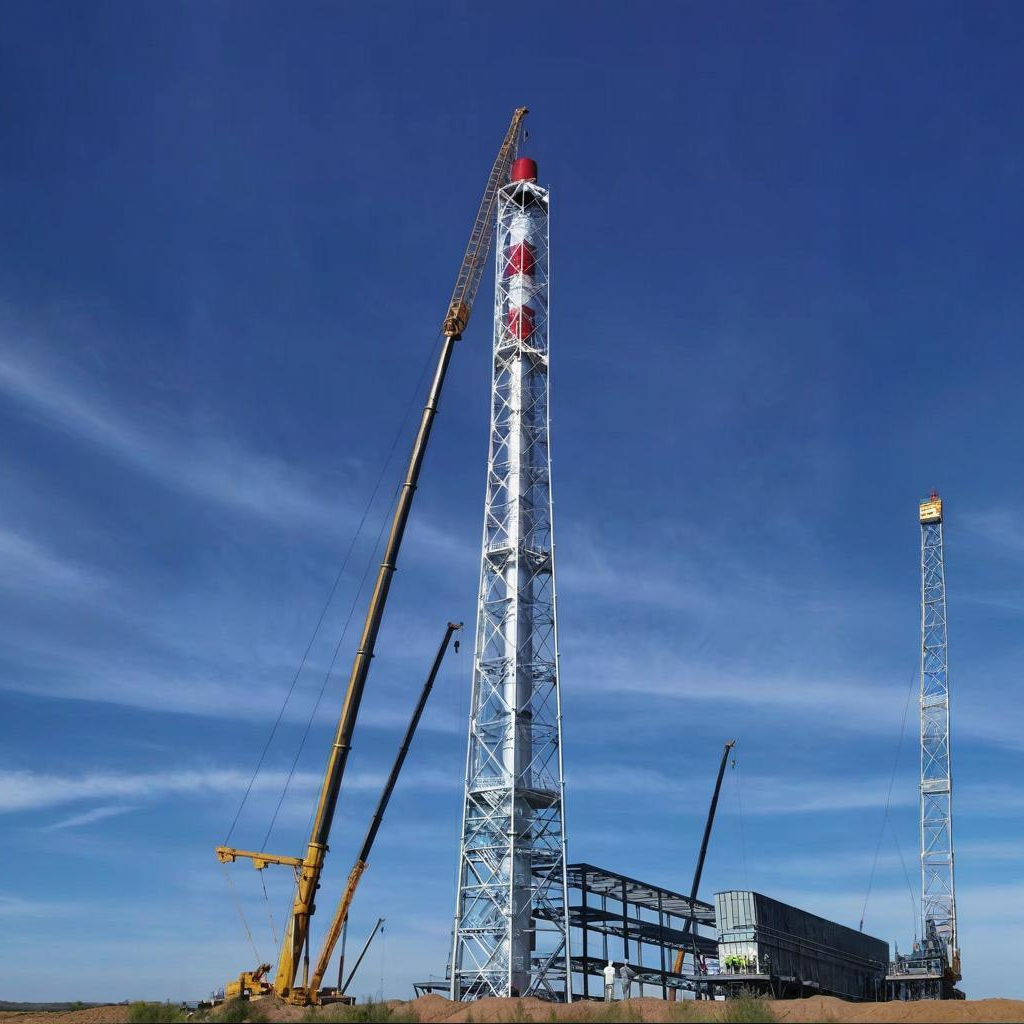
Chimney towers, lightning rods, surveillance towers, stee...

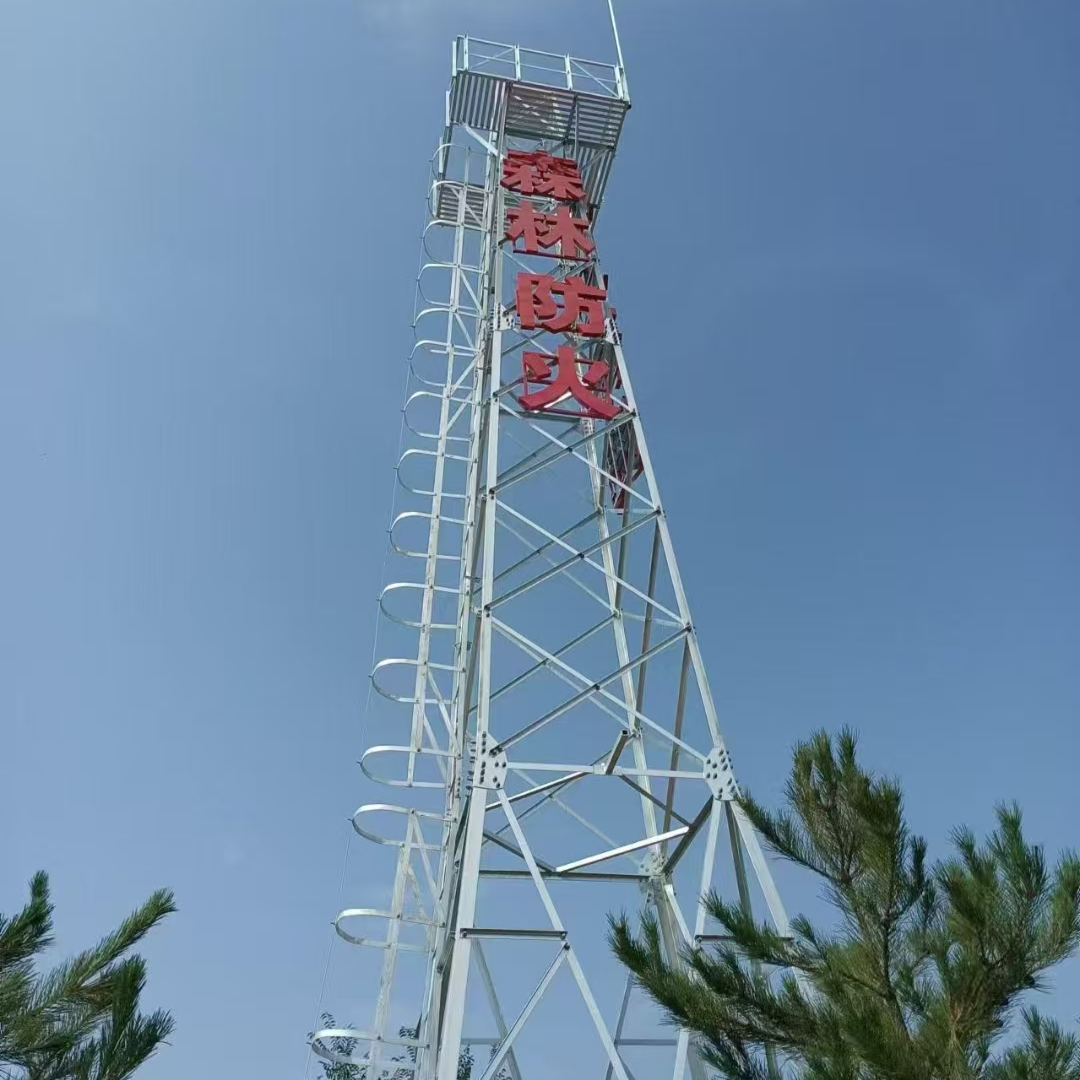
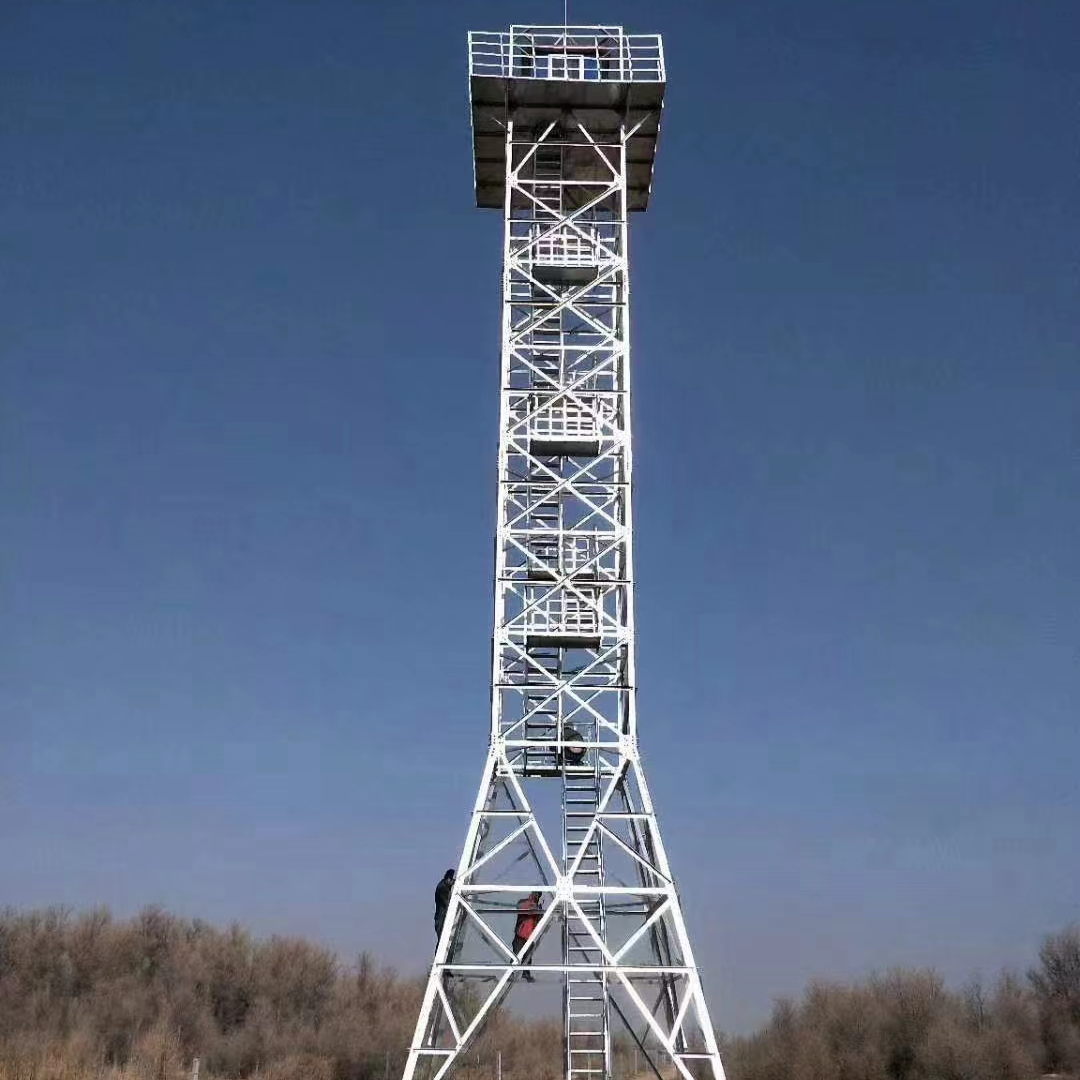
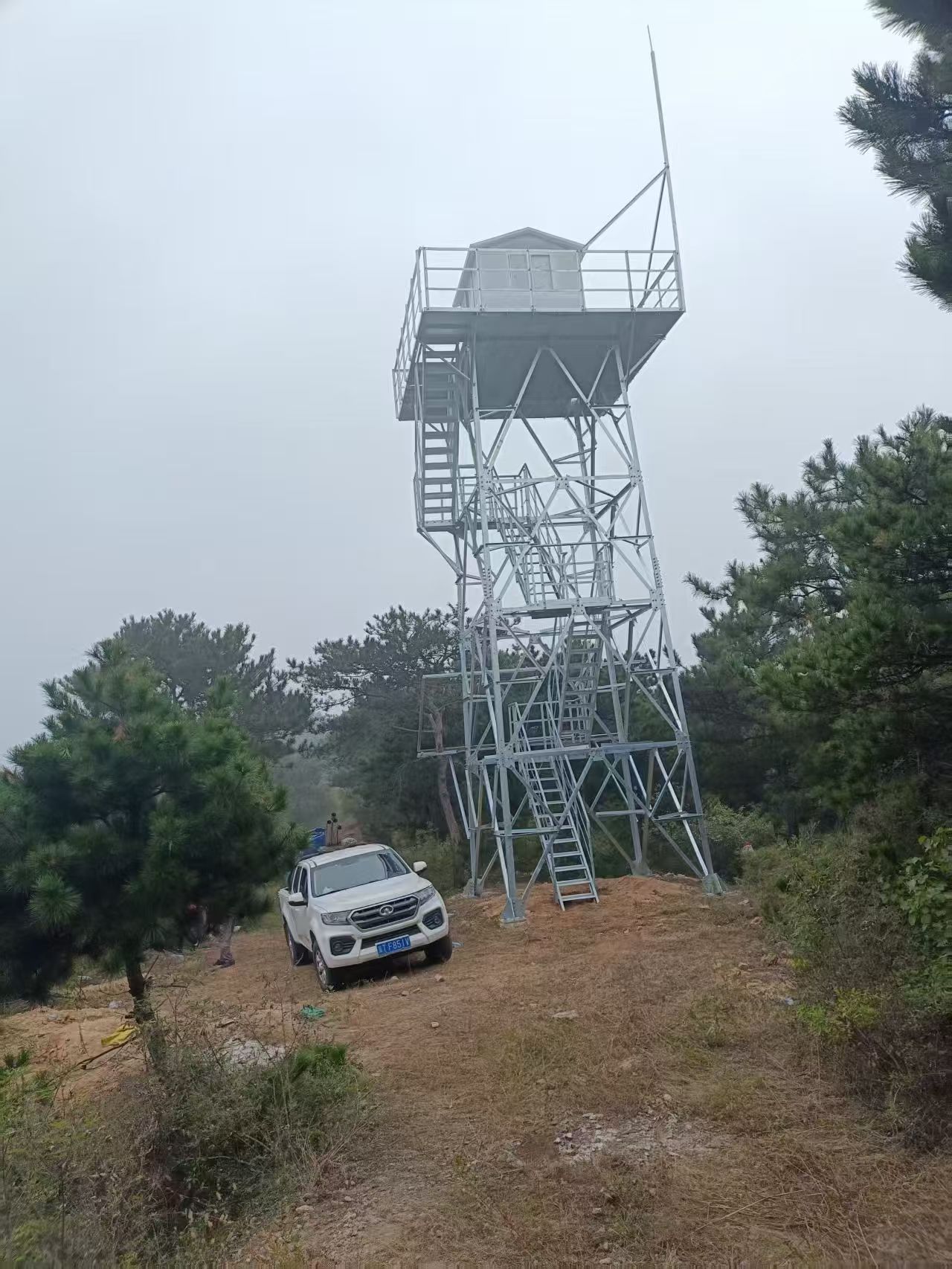
The fire observation tower is a core monitoring facility in the forest fire prevention system, primarily designed with a four-post angular steel structure. The tower is constructed using Q235 low-alloy high-strength steel, equipped with a rotating ladder, a work platform, and lightning protection devices. It is coated with hot-dip galvanized corrosion protection to ensure a service life of over 30 years. The observation radius reaches 15 kilometers, enabling early warnings of forest fires and reducing the pressure on manual patrols. This facility effectively complements the "sky, air, and ground" integrated monitoring network. The observation tower combines observation and command functions with tourism and sightseeing value, but has technical limitations such as restricted observation during thunderstorms and blind spots due to terrain.
Structural Design
The tower is constructed of a corner steel structure with four upright columns, featuring steel plate thicknesses ranging from 10 to 30mm, utilizing a combination of bolted and welded connections.
Equipped with a rotating ladder, a double-layer guardrail working platform, and a closed observation room, the top is fitted with a lightning rod device.
The foundation is constructed using deep burial concrete technology, with a bearing capacity requirement of 100-200 KN/m² and a vertical deviation of ≤1/1000.
Feature Application
Wildfire Monitoring: Forest rangers can observe a 15-kilometer radius forest area from a height advantage and immediately issue an alert upon detecting smoke.
Support Decision-Making: Serve as a fire command node, providing fire location and situation assessment support
Environmental Monitoring: Selected towers are integrated with meteorological sensors and video surveillance equipment
Derivative Function: Mountainous Observation Towers Serve Both Tourism and观光 Purposes, With Two Towers Achieving Full Coverage
Technical Specifications
Design Standards: Wind Resistance: 30 m/s, Seismic Resistance: 8 Degrees, Ice Coating Thickness: 5-10 mm
Environmental Adaptability: Operating temperature range -35℃ to 45℃, ground resistance ≤ 4Ω
Safety Factor: The structural design boasts a safety coefficient of 4-5 times, with wind resistance exceeding 12 levels.
Establishment and maintenance
Location Requirements: Constructed on a mountain peak to ensure unobstructed views with no blind spots.
Construction Standards: Strictly adhere to steel structure design specifications; installation requires layer-by-layer assembly and acceptance.
Maintain System: Comprehensive structural safety and communication equipment status checks prior to the fire season.
Inspection Cycle: Regular checks for galvanized layer corrosion and bolt tightness
Technical Limitations
Observation Blind Spots: Monitoring Dead Ends in Undulating Terrain
Weather Constraints: Thunderstorms, heavy fog, and other severe weather conditions require suspension of operations.
Human Reliance: Fire Detection Accuracy Directly Correlates with Lookout Experience
Response Delay: On-Site Verification Required After Fire Detection


b2b.china9.net © Zhongshang 114 Hebei Network Technology Co., Ltd.Address: Room 6009, Oriental New World Center, No.118 East Zhongshan Road, Qiaoxi District, Shijiazhuang City, Hebei ProvincePlatform Service Hotline: 4006299930