

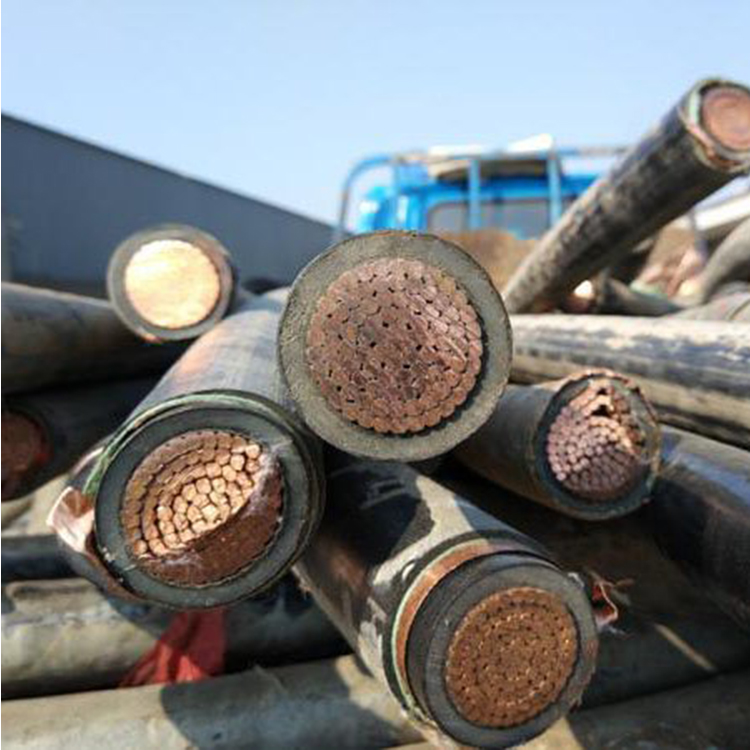
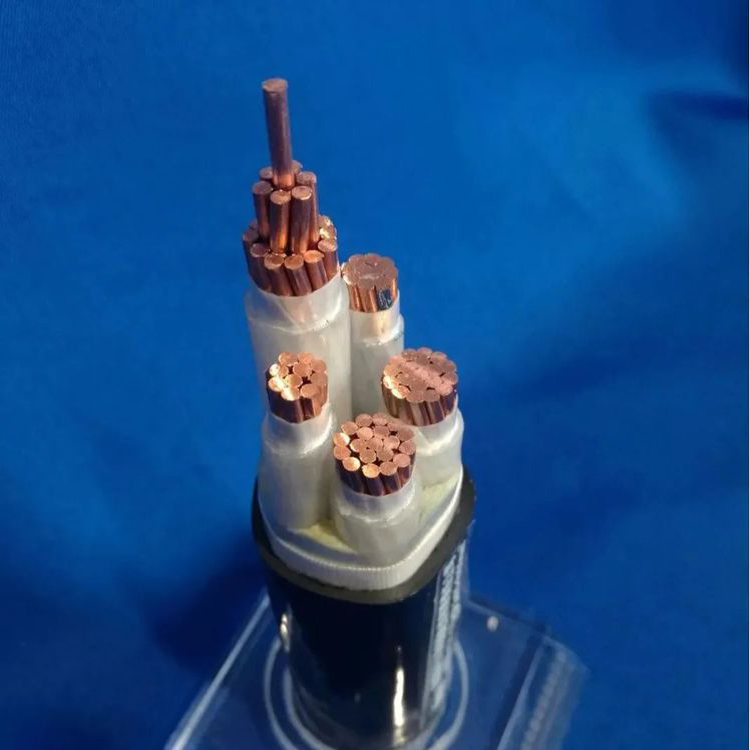
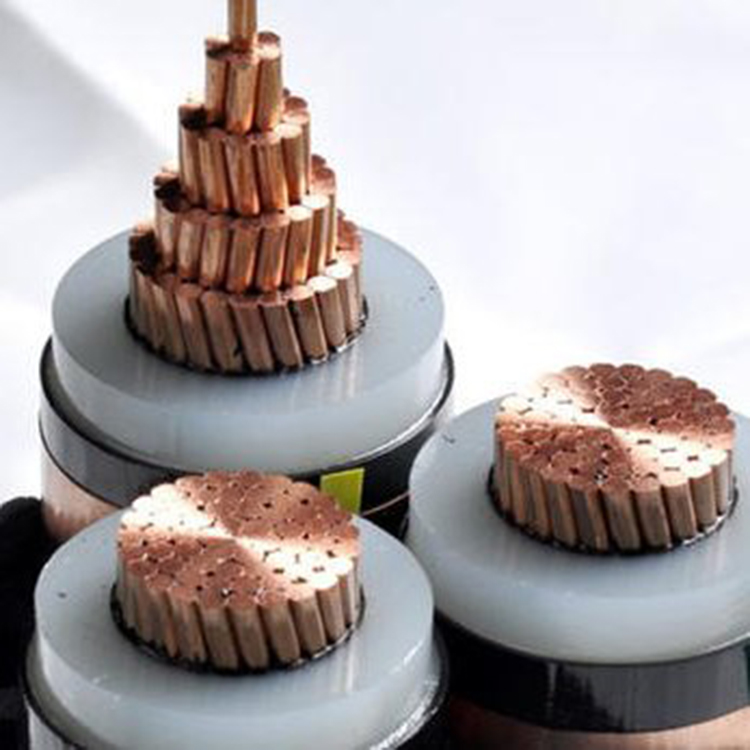

Welcome cable recycling nationwide! On-site cable recycling service, call us for free! No middlemen, direct factory purchase, high recycling prices, 24-hour service, looking forward to your call! We offer top prices for all types of used cables, including power cables, communication cables, marine cables, mining cables, high-voltage cables, control cables, and stock cables. Units and individuals with used cables are welcome to contact us for recycling negotiations. We provide used wire and cable recycling and dismantling services!
Cable recycling methods and introduction:
Section 1: Mechanical Crushing and Separation Method
The mechanical crushing method primarily consists of two units: crushing and sorting. Worn-out cables are decomposed into particles of a certain size by the crushing unit, and then separated into pure copper and plastic by the sorting unit.
Waste cables are conveyed by a feeding belt to a primary crusher (triangle blade crusher). The primary crushed products are then separated by magnetic separation to a screening machine. Larger particles are fed to copper rice crusher 1, while smaller ones go to copper rice crusher 2. The crushed materials are then spirally conveyed to a vibrating screen, with a blower located at the bottom of the screen.
Materials are separated into four components by wind vibration: copper beads and plastic are collected separately, while particles that have not been fully crushed and the mixture of copper beads and plastic are returned to the corresponding stages for recycling crushing and separation.


剥线法: Wire Stripping Method
This method is widely used in factories for the disassembly of large-diameter cables. The working principle of the automatic stripping machine is as shown in the diagram below: The right roller stepper motor drives the upper and lower right rollers to move the held cable left and right; the cutting blade stepper motor drives the upper and lower cutting blades to move in opposite directions, and by controlling the displacement between the upper and lower cutting blades, it achieves the functions of stripping and cutting the cable.
The left scroll wheel stepper motor drives the upper and lower left scroll wheels to move the clamped workpiece line left and right; the helical wheel stepper motor drives the upper and lower left scroll wheels to move forward and backward in the opposite direction, achieving the helical function. The helical wheel and the left scroll wheel refer to the same roller physically.
This method is effective for dismantling large-diameter cables. However, due to its strong reliance on manual labor, it has low production efficiency for cables with medium and small diameters, poor automation, and poor sorting capabilities for cable types.
Section 3: Incineration Method
Incineration typically utilizes the flammability of plastic in wires and cables to recover metals by burning. This is an early, primitive method of metal recovery that has been phased out!
The recycling of cables involves using specific techniques to separate the conductors from the sheath, followed by sorting technology to separate the conductors from the sheath, resulting in relatively pure metals and plastics, thereby achieving the goal of resource utilization.


