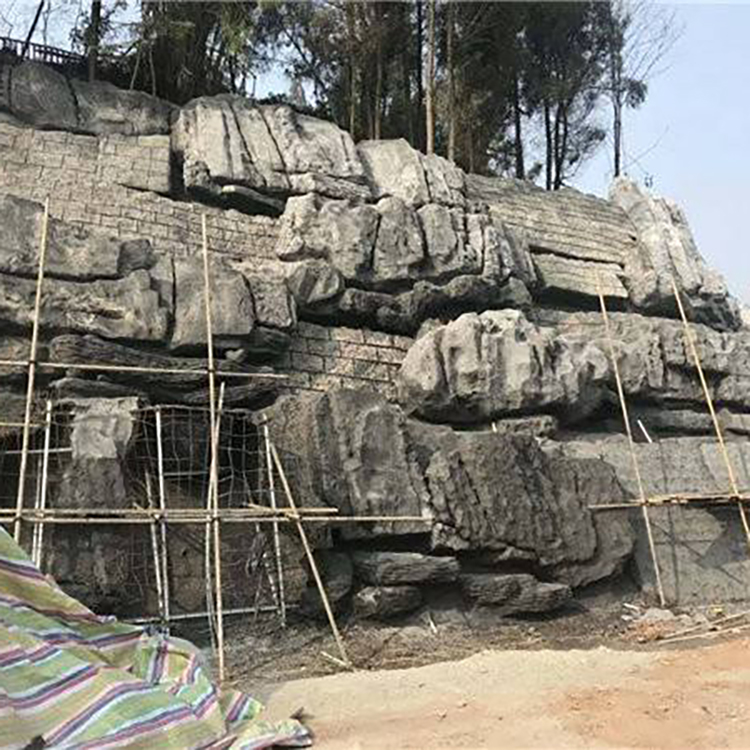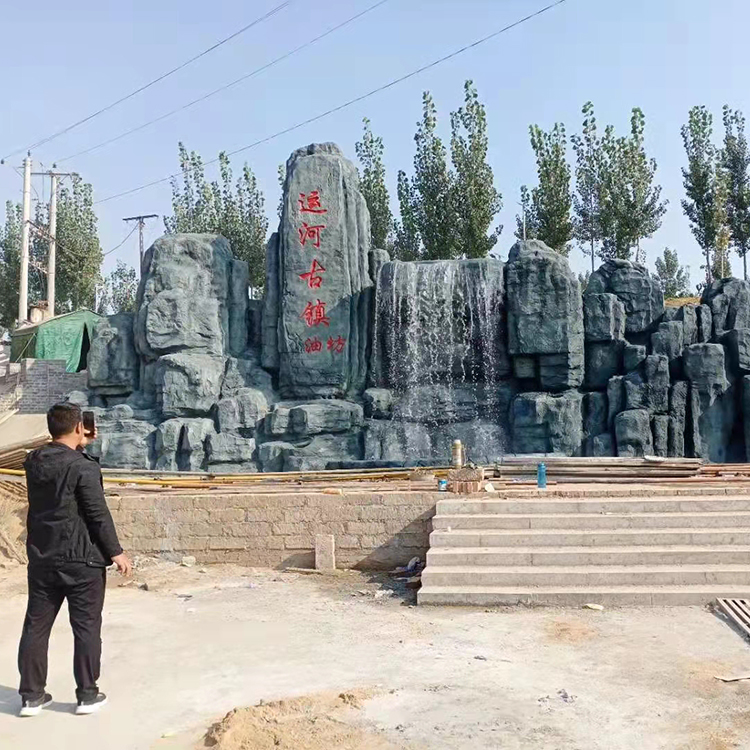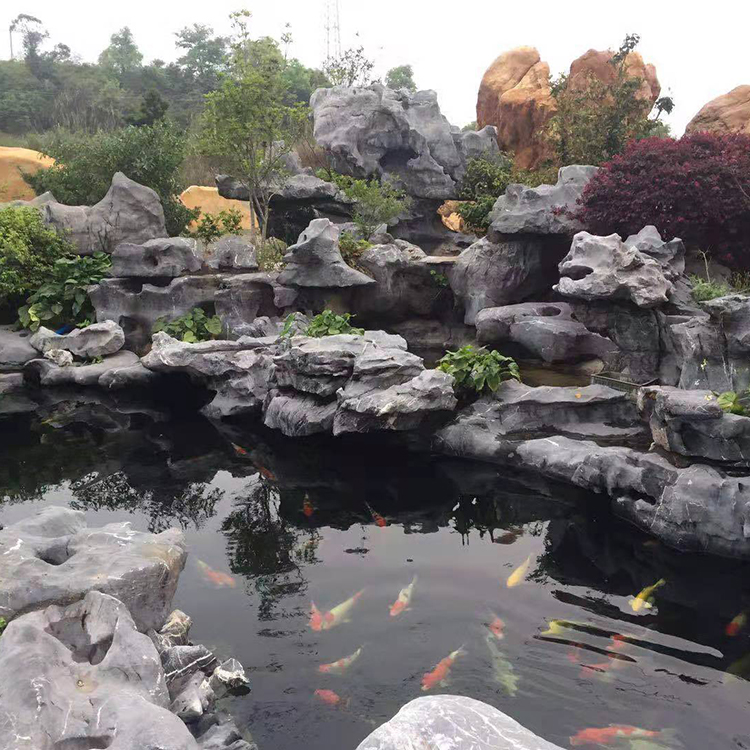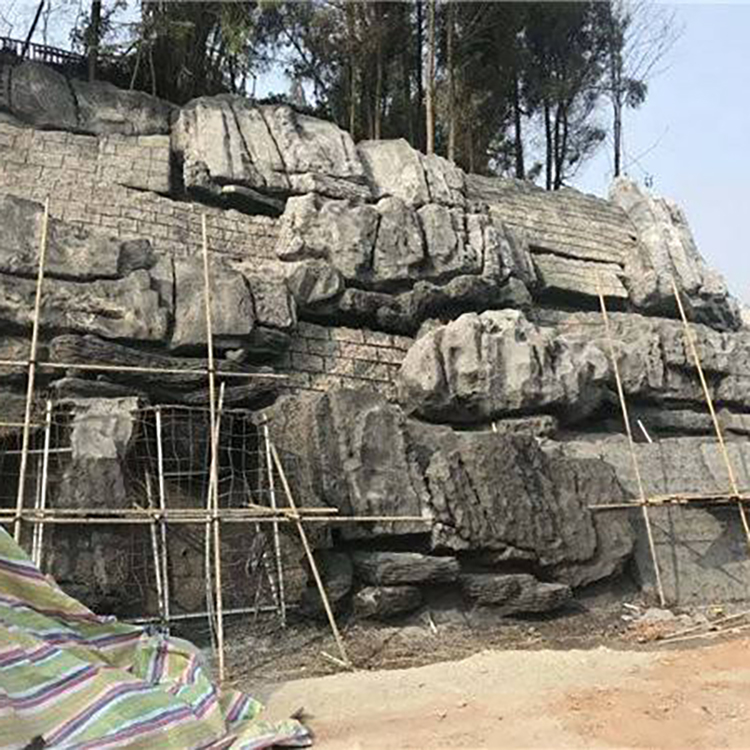
Artificial rock landscapes, also known as plastic mountains, artificial mountains, hollow mountains, etc., differ from the usual natural stone constructions. They feature an internal hollow structure supported by angle steel, channel steel, square tubes, and other steel materials, with the exterior shaped using cement mixed with special materials to create stone textures. They are widely used in various park attractions, residential communities, indoor landscaping, and more. Plastic stones can also be used to create landscape features such as stone plaques and sign stones. With the development of artificial rock mountain craftsmanship, new techniques and products like plastic stone sculptures and plastic wood replicas have emerged. The realism of the artificial rock landscape depends on the skill level of the surface treatment process. To achieve realism, the artist's technique must be precise, and the stone surface must be meticulously textured with cracks and angles to give a lifelike feel. To create a highly realistic and aesthetically pleasing landscape, mere knowledge of these steps is insufficient; it requires the expertise of a professional landscape construction team. Many such teams exist, but we are widely recognized as a high-value team in the industry.
1. Construction method for artificial rockery made of cement: foundation work, angle iron columns, angle iron flat beams, angle iron inclined beams welding, skeleton with external steel mesh cover, zinc-coated wire mesh hung on the steel mesh, preliminary shaping of the mountain body with 1:1.5 cement mortar, artisans carefully craft stone textures and peaks or patterns based on the effect drawing. After successful shaping, the surface is treated with a base layer, followed by three coats of artificial rockery polymer exterior paint. For scenery stones less than 1000MM, no angle iron frame is needed; instead, use steel mesh directly, hang zinc-coated wire mesh, and then proceed with the shaping of the artificial rockery.
2. Craftsmanship of Artificial Rockery Made of Cement: According to the rendering, the mountainous landscape is shaped using cement mortar, forming a false mountain with components such as peaks, ridges, platforms, ridges, cliffs, rocks, valleys, caves, dams, etc. Utilizing the "fifteen-word technique" in the construction of artificial rockery, namely "install, connect, join, fight, wrap, match, hang, sword, clip, hang down, pick, arch, support, prop, and pierce," various construction methods for the artificial rockery's stone structure are created.
3. Artificial Rockery Painting: The color coordination of the rocks is also important in creating a mountain. For the lower part of the artificial mountain, a deeper color should be applied, while the upper part should have a lighter color. For concave areas, a deeper color is preferred, and for protruding areas, a lighter color is chosen. Of course, the overall appearance should be balanced and not overly chaotic. Painting is the final step in the rockery creation process and a crucial aspect in shaping the landscape.

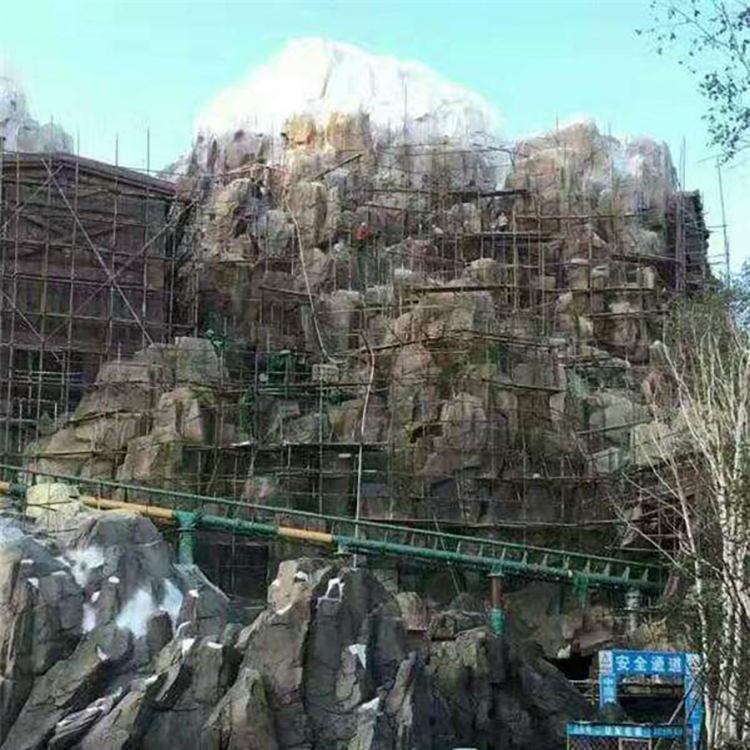 Artificial Rockery
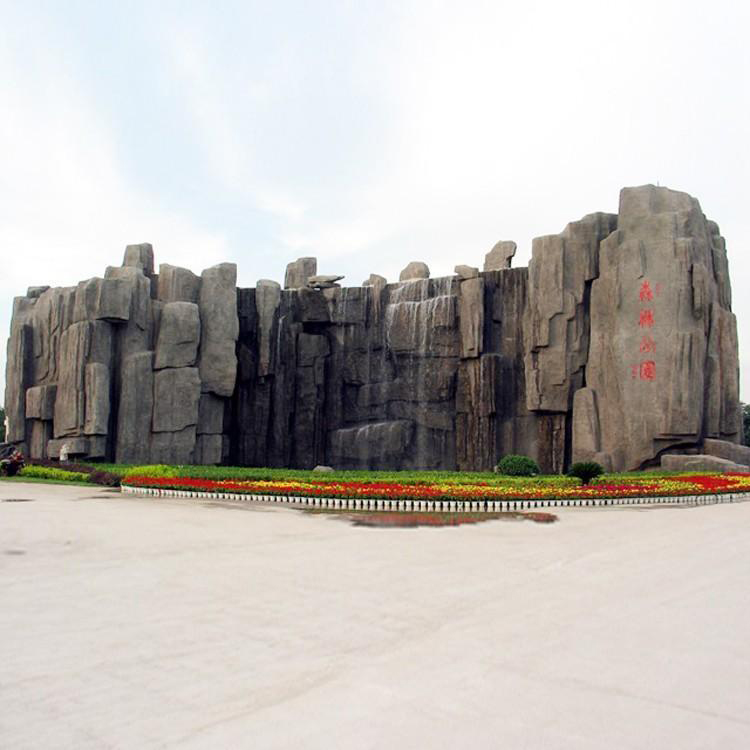 Molded Mountain
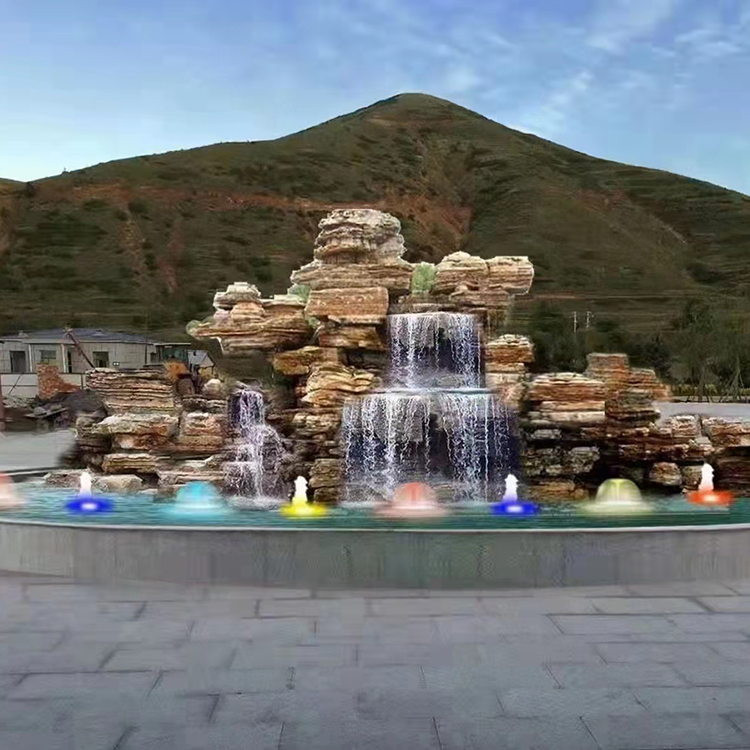 Molded Mountain
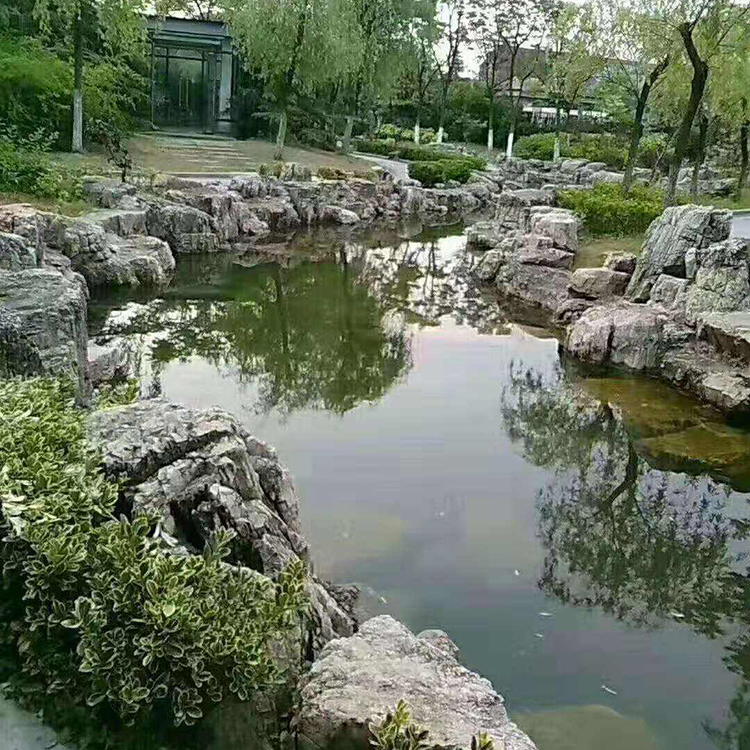 Watercourse riprap
 Waterfront riprap stone
 Watercourse revetment stone
 Artificial Stone Mountain made of cement
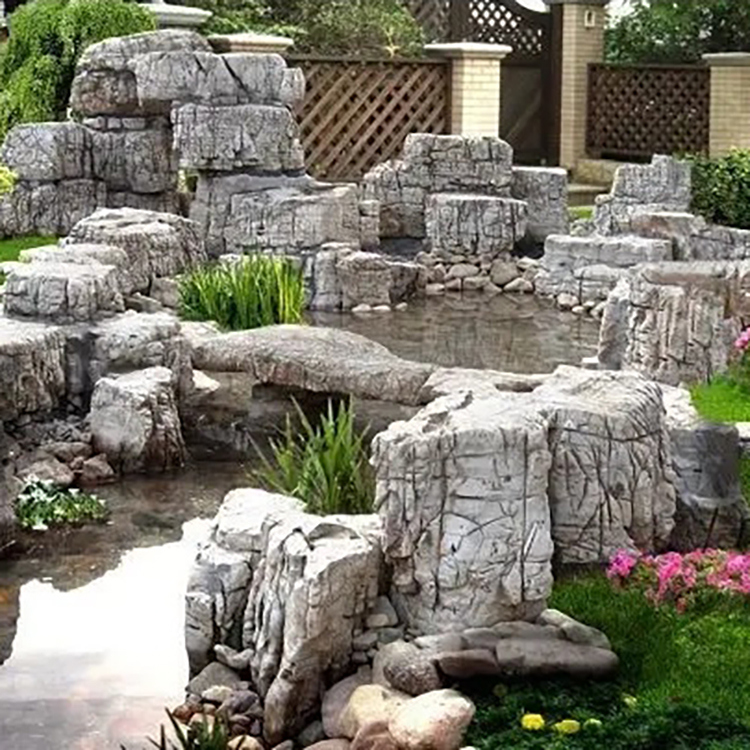 Artificial Stone Mountain made of cement
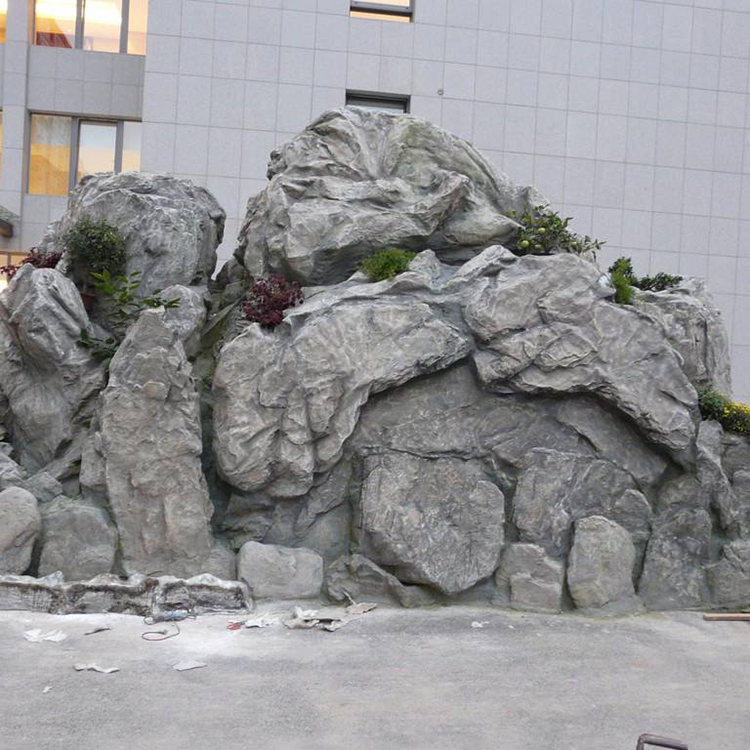 Artificial Rockery Construction