




- AllProduct Category
-
Accessories
Pipe Spark Trap
Boiling Furnace Coal Injector
Humidifier
Aerodynamically Assisted Sifter
Hot Air Furnace
Desulfurization and Denitrification Equipment
Drying Machine
Dust Collector
Fly Ash Separator
Sandstone Powder Separator
Sifter



详情描述
I. Overview
With the continuous maturity and promotion of China's comprehensive utilization technology for fly ash, the comprehensive utilization of fly ash is no longer limited to environmental protection requirements, and its significant economic benefits have been realized. In the southeastern coastal areas and some developed regions of China, the finished fly ash fines are even in short supply. Currently, the fly ash from a large number of coal-fired power plants, with fineness values generally ranging between 20% to 50% (325 mesh residue), fails to meet the national standard (GB196-91) requirements for first-class and second-class fly ash. Power plants typically use dry separation technology for fly ash to separate coarse and fine particles to obtain finished fine fly ash, achieving certain economic benefits. However, the coarse fly ash (usually with a fineness value of around 65%) after separation is not fully utilized, often being discharged locally or sold at a low price, even becoming a burden for enterprises. By using special ultra-fine grinding mills for fly ash, the raw ash or coarse fly ash after separation is mixed and ultra-finely ground to possess certain hydraulic activity, producing blended ultra-fine fly ash that can be used to produce high-performance concrete, thus achieving complete utilization of fly ash and creating greater economic benefits. The use of ball mills for powder grinding has been applied in the cement industry for many years, with mature technology and products that have become relatively standardized. Drawing on the principles and structures of various high-fineness and high-output cement mills domestically and internationally, the Research Department of Yancheng Salt-Fu Environmental Protection Equipment Co., Ltd. collaborated with the Department of Materials Science at Nanjing University of Technology, a leading institution in the comprehensive application of fly ash, successfully developing a ball mill specifically for fine grinding fly ash. This mill grinds the raw ash or coarse fly ash from coal-fired power plants to achieve the desired fineness of finished fly ash. A separation device is added after the ball mill to sort the ground coal ash. After sorting, the coarse ash is returned to the ball mill for ultra-fine grinding, producing blended materials (micro-fines) that can be used to produce high-performance concrete, significantly enhancing the economic benefits of the comprehensive utilization of fly ash and enabling the full utilization of fly ash.
Part Two: Overview of Fly Ash Grinding System
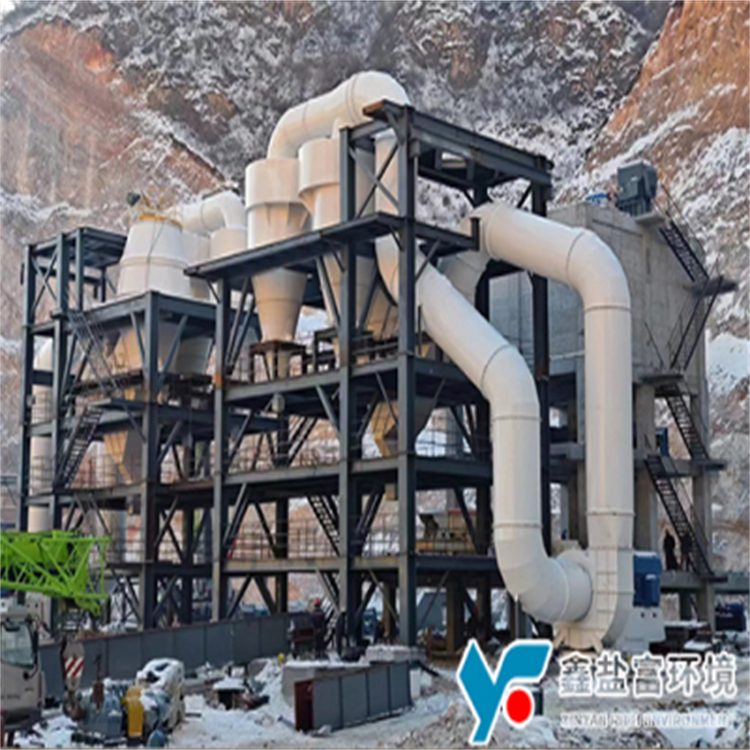
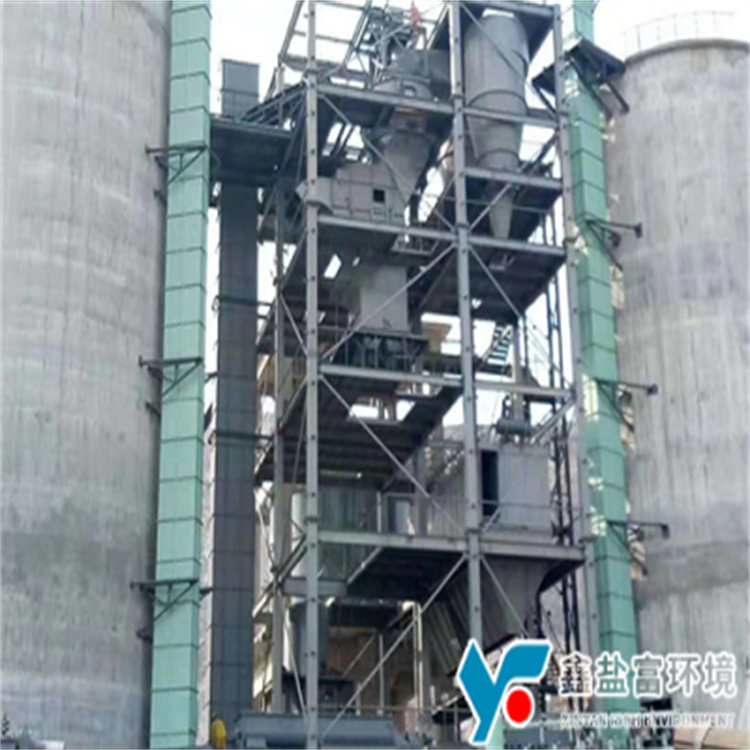
1. Introduction to the Fine Grinding System Process: The YGM series fly ash ultra-fine ball mill system mainly consists of the raw ash storage, auxiliary material storage, screw feeder, electronic weighing scale, fly ash-specific ball mill,SifterGas BoxPulse Jet Bag Dust CollectorThe system consists of an induced draft fan, spiral conveyor, bucket elevator, feed hopper, control system, etc. The system directly extracts fly ash from the original ash storage, feeds it through a spiral feed hopper, weighs it with an electronic scale, and then transports it into the mill head elevator via an air chute. The elevator feeds the material into a classifier for pre-screening before grinding. The coarse ash after screening is sent to the mill feed port via an air chute and enters the ball mill for grinding. The material after grinding contains a large amount of fine ash, which is then re-fed into the classifier by the elevator for further screening. The fine ash is then conveyed to the finished ash storage by subsequent conveying equipment. The mill is equipped with a dust collection system at the tail end. Compared to an open circuit (without a classifier) system, this closed-loop grinding process can increase the hourly output by 30-40% or more, making it an ideal equipment for the deep processing of fly ash.
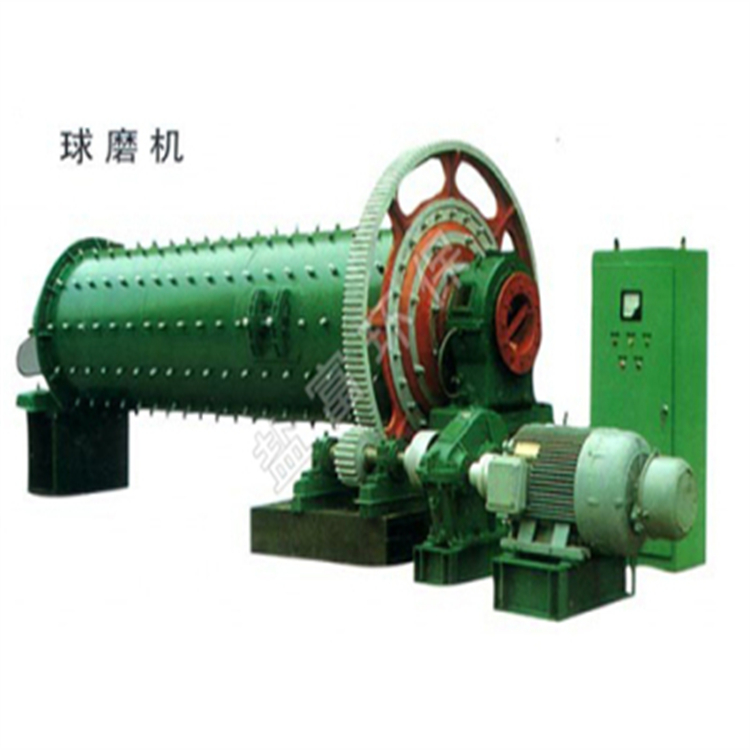
2. Fine Grinding System Flowchart (Enclosed) Working Principle: The YGM series fly ash mill consists of working parts such as the feeding section, drum section, and discharge section, as well as transmission components like bearing bases, large and small gears, reducer, couplings, and motor, electrical control parts, etc.
3. Convert standard ball mills into YGM series fly ash-specific grinding mills. The mill cylinder is typically divided into two compartments. In response to the particle size composition and grindability of fly ash, coarse ash, and mixed materials, we have modified the internal equipment of the ball mill for fly ash-specific ultra-fine grinding: By utilizing our company's YGM series paddle-type fly ash mill with a double-layer sieve separator plate, we have systematically modified the ball mill, making it more suitable for the closed-loop production process of fly ash grinding.
YGM series spiral-shaped fly ash mill double sieve separator chamber plate parameters:
Grating, perforated guard plates: Casting material: manganese-chromium alloy - Bar spacing: 5mm
⑵ Sifter: Specifically designed for fly ash grinding, made of imported wear-resistant steel plate.
⑶ Sieve Plate: Blanking material: 3mm stainless steel; Sieve gap: 1.2-1.5mm
⑷ Standard Components: (Bolt and nut for cylinder and sieve frame connection) varies according to the mill specifications.
II. Specific改造Measures:
⑴ Utilizing a special fly ash double-layer sieve separator plate instead of the original separator plate, the sieve slot of the separator plate is 5mm, and the sieve slot of the middle stainless steel sieve plate is 1.2mm. This effectively controls the particle size of the material entering the second bin, accelerates the transfer of qualified particles from the first bin to the second bin for grinding, and reduces the over-grinding phenomenon in the first bin.
⑵ Determine the length of the first bin of the mill based on the grindability and moisture content of fly ash. Typically, φ20 to φ50 steel balls are used for balling in the first bin, while φ8 to φ16 small-sized steel ingots are used in the second bin. Due to the larger surface area of micro-forged steel, it can grind fine-grained materials, and reducing the diameter of the grinding media can slow down the flow rate of materials inside the mill, increase the residence time of materials in the mill, and enhance the grinding effect.
⑶ Adding activated lining plates in the mill's tail stock can effectively reduce the flow rate of materials within, while enhancing the grinding function of the small forging, thereby increasing the specific surface area of the product.
④ The discharge grate of the mill tail is a special 5mm small slot grate (can be modified based on the original design) to adjust the diameter of the feeding plate to control the flow rate of the material out of the mill. The back surface of the double-layer separator plate uses a guard with ventilation slots to protect the stainless steel sieve plate from being worn by the grinding media, while also enhancing the ventilation inside the mill, promoting the timely discharge of qualified fine powder and reducing over-grinding.
Select an appropriate internal ventilation speed for the mill, with an ideal wind speed of 0.8 to 1.0 m/s. This reduces the residence time of qualified fine material within the mill, facilitates the timely discharge of heat generated from micro-powder and grinding, and enhances the efficiency of the powder grinding process.
⑥ The grinding tail stock requires the installation of a flip gate airlock device, which should operate smoothly. Generally, the circular flow process is adopted, which can significantly increase the hourly output of the system, reduce the electricity consumption per unit product, and lower production costs. The mill uses a pulseBaghouse dust collectorDust removal; the fan motor uses variable frequency speed control to adjust the internal mill airspeed, controlling the material flow rate and fineness.
Section 3: Installation Instructions
Installation Foundation Instructions
The mill of this type must be installed on a solid reinforced concrete foundation that has been dried.
(2) The base must not have any significant tilt or sag; if there is any sag, it should be even and level. Otherwise, installation cannot be performed.
(3) The base of this type of mill should be sufficiently elevated from the ground level to accommodate the replacement of liners and grinding media.
(4) The basic design can be referenced from our company's basic drawings. However, the drawings cannot be directly used as the construction working drawings.
2. Pre-installation Preparation
Prior to installation, all parts and components must have the rust-proof oil protective coatings and any dust or dirt accumulated during transportation removed from the machined surfaces.
(2) Inspect all work surfaces and threads for any defects that may have occurred during transportation and handling, and ensure these are eliminated.
(3) Assembled components should be thoroughly inspected; if any parts are found damaged or missing during transportation or storage, the defective parts must be repaired or replaced, and the missing parts must be replenished.
(4) During installation, the mating or connecting surfaces of the parts should be lubricated; use dry oil for fixed surfaces and thin oil for moving surfaces.
(5) Prior to installation, all slots and holes on the foundation should be thoroughly cleaned, and the final concrete surface should be free of any oil stains.
(6) The friction surface should be protected during installation; do not clean with cotton yarn or dirty oil. Areas prone to dirt on the parts' processing surfaces should be covered with specialized guards and clean canvas.
IV. Technical Specifications
询价单


