



- AllProduct Category
-
X-Ray Analyzer
Radon Detector
Radiation Detector
Gamma Spectrometer
石油录井仪





详情描述
The system is used for real-time measurement of uranium concentration and Σγ measurement at on-line monitoring points in the spent fuel reprocessing plant. The system consists of three parts: detectors, digital spectrometers, and secondary instruments.

During real-time monitoring, the detector is placed in the niche (Red Zone), the digital spectrometer is located on-site (Orange Zone), and the secondary instrument is situated in the main control room (White Zone). The detector conducts real-time detection, transmitting nuclear signals to the digital spectrometer, which processes the signals in real-time and sends spectrum data to the secondary instrument. The secondary instrument displays concentrations, activities, spectrum charts, trend charts, initiates alarms, stores data, remotely controls solenoid valves, and sets parameters remotely. Below, we will explain the detector, digital spectrometer, and secondary instrument separately.
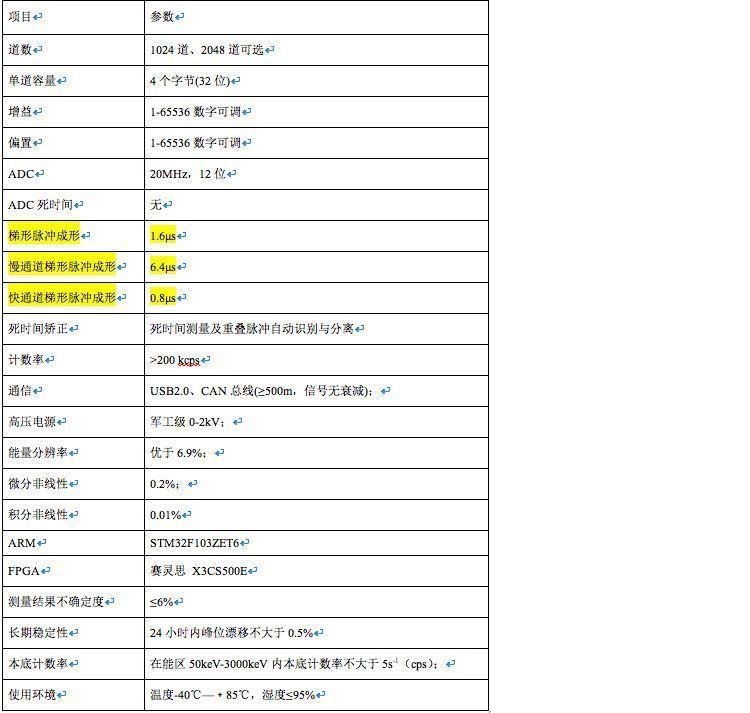
Instrument performance parameters of γ online analytical system
Detector
The probe section includes NaI probes, photomultiplier tubes, and a pre-amplifier circuit. The NaI probe detects gamma rays, outputs the signal to the photomultiplier tube, completes the conversion from light to electrical signal, and then the photomultiplier tube outputs an electrical pulse signal to the pre-amplifier. After conditioning the nuclear pulse signal, the pre-amplifier outputs the signal to the main amplifier. Magnetic shielding is used externally on the photomultiplier tube to enhance its electromagnetic interference resistance.

Digital Spectrometer
The digital spectrometer primarily consists of two main parts, analog and digital, along with peripheral power circuits. The analog section includes the main amplifier and pulse shaping circuits; the digital section encompasses ADC, gain control, bias adjustment, high-voltage control module DAC (HV), FPGA module circuit, and ARM module. The output signal from the front-end amplifier, after processing by the main amplifier and shaping circuit, yields a signal-to-noise ratio and nuclear signal. It is then sampled by a 20MHz high-speed ADC and sent to the FPGA module for digital shaping, baseline recovery, pile-up pulse identification and separation, amplitude discrimination, and dead-time correction. This process completes amplitude discrimination to obtain the measurement spectrum line. Communication between the FPGA and ARM is achieved through an SPI bus, transferring data to the ARM module. The digital spectrometer is connected to a secondary instrument. To ensure effective long-distance communication between the ARM module and the secondary instrument, a CAN bus is designed for long-distance data transmission, along with a CAN-USB module. The ARM module receives and transmits data via the CAN bus, while the secondary instrument transmits and receives data via USB 2.0. The CAN-USB module is responsible for the conversion between the two communication protocols. In addition to transmitting spectrum data, the ARM module can also receive control commands from the secondary instrument, such as controlling the high voltage of the detector, gain of the main amplifier, bias, and measurement time.
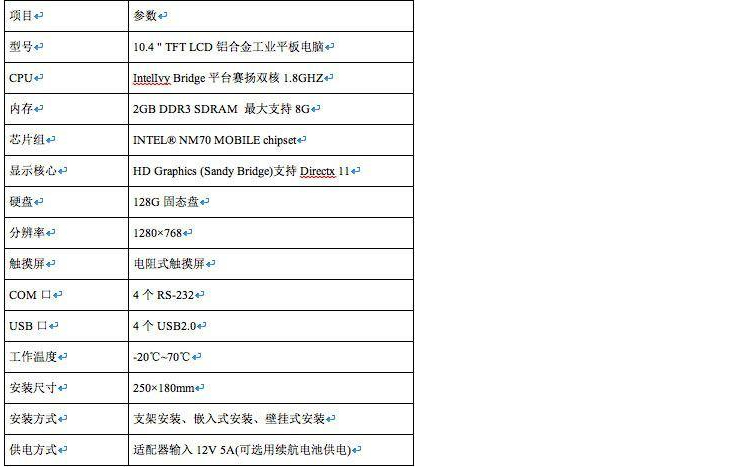
Secondary Instrument
Utilizing a fanless industrial-grade all-in-one computer, supporting touch operation and installed with Windows 7 OS. The operation software features a visual interface, data transmitted and received via USB 2.0. The secondary instrument is used for displaying measurement time, total count, single channel count, energy resolution, marked area count, etc., and completes the analysis of uranium concentration and Σγ at online monitoring points; within the display area, it allows for free switching between measurement concentration, concentration trend lines, and spectrum displays. Additionally, it can remotely control the on-site digital spectrometer, setting working parameters. Software operation can be completed through both mouse and touchscreen.
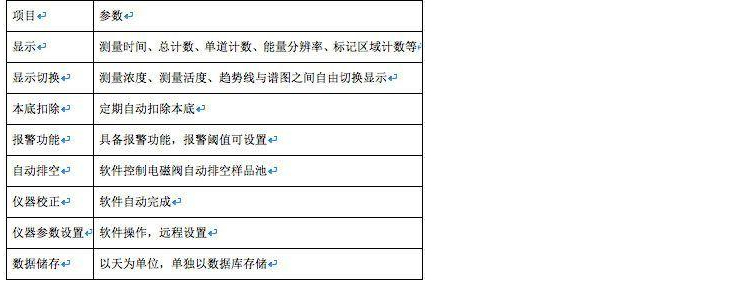
Software Parameters
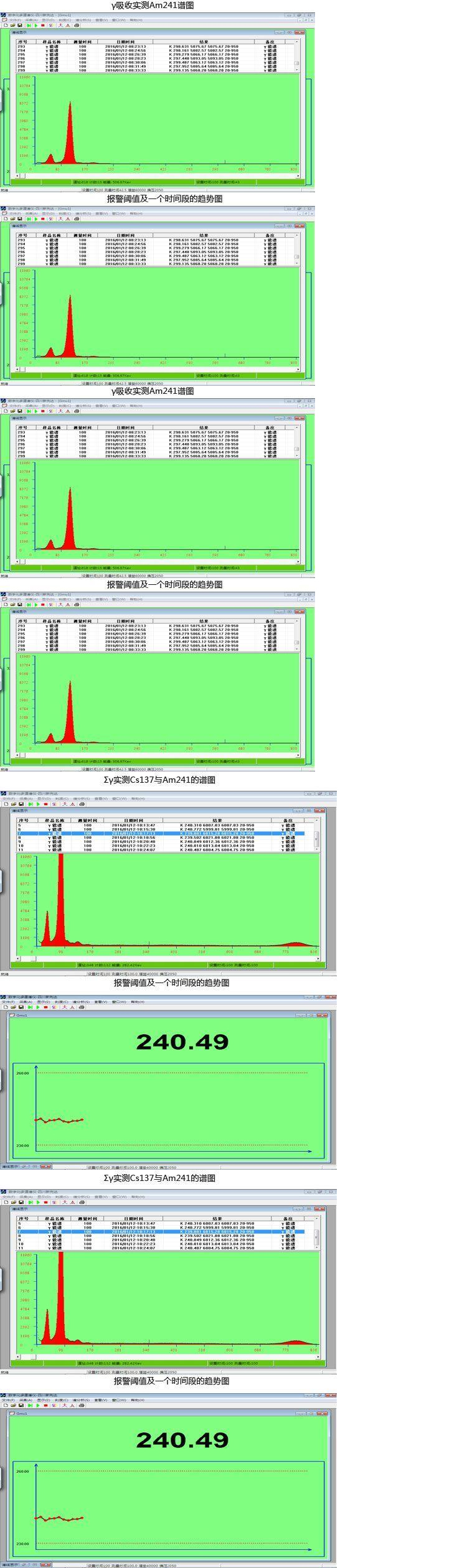
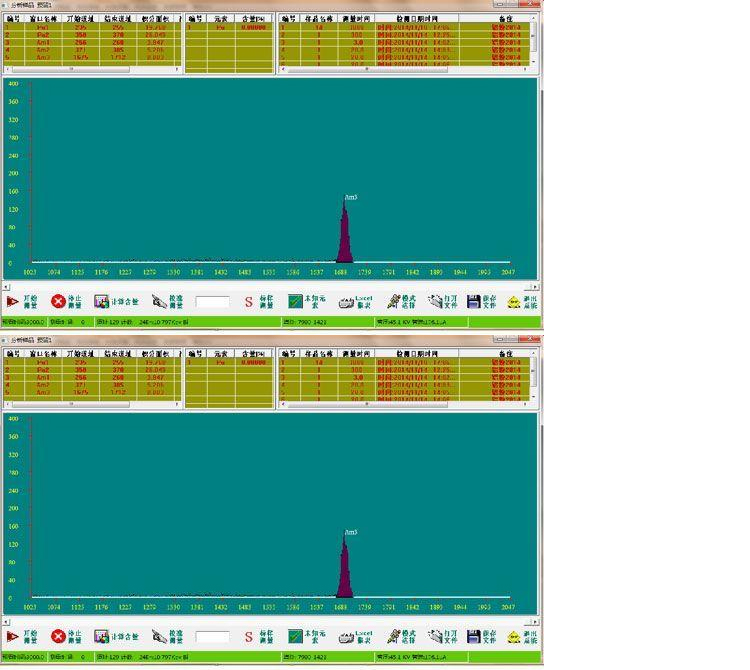
The software interface primarily displays measurement time, total count, single channel count, energy resolution, and marked area count, and during the measurement, it allows for free switching between displaying measurement concentration, activity, trend lines, and spectra. After setting the measurement parameters (bias, gain, etc.), perform a γ-absorption experiment using an Am-241 source, as shown in Figure 9-8 for the measurement results.
Actual spectrum chart
LMX-3000X Plutonium Online Analytical System
The system is used for real-time measurement of plutonium concentration at on-line monitoring points in spent fuel reprocessing plants. It consists of three components: detectors, digital spectrometers, and secondary instruments.
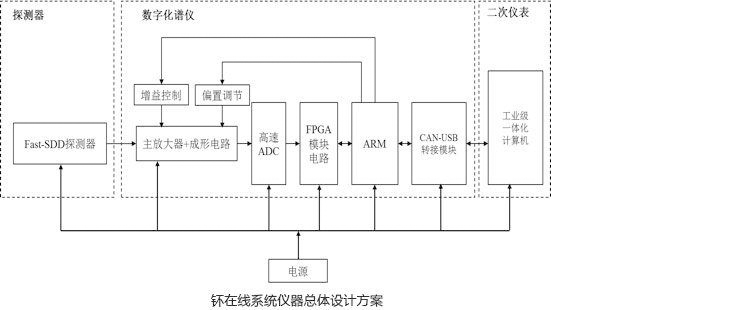
Plutonium Online System Instrument Performance Parameters
The probe section mainly includes the Amptek FAST_SDD semiconductor probe, which integrates a pre-amplifier. The Fast-SDD probe detects the characteristic X-rays of all radioactive isotopes at the online monitoring points and outputs pulse signals to the pre-amplifier. The pre-amplifier filters and shapes the pulse signals before outputting nuclear pulse signals to the main amplifier. Figure 9-13 shows the test results of the performance parameters of the Fast-SDD probe.
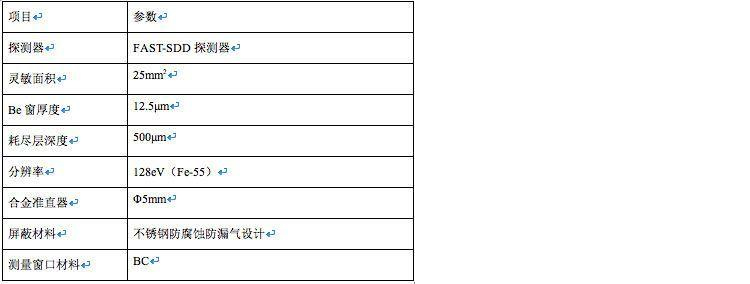
Digital Spectrometer
The digital spectrometer mainly consists of two major parts: analog and digital, along with peripheral power supply circuits. The analog section includes the main amplifier and pulse shaping circuit; the digital section encompasses ADC, gain control, bias adjustment, FPGA module circuit, and ARM module. The output signal from the front-end amplifier, after processing by the main amplifier and shaping circuit, yields a signal-to-noise ratio and nuclear signal. This signal is then sampled at 20MHz by a high-speed ADC and digitized, sent to the FPGA module for digital shaping, baseline recovery, pile-up pulse identification and separation, amplitude discrimination, and dead-time correction, thereby obtaining the measured spectral line. Communication between the FPGA and MCU is achieved via SPI bus, transferring data to the ARM module. The digital spectrometer is connected to secondary instruments, and to ensure effective long-distance communication between the ARM module and secondary instruments, a CAN bus is designed for data transmission over long distances, along with a CAN-USB module. The ARM module receives and transmits data via CAN bus, while the secondary instrument transmits and receives data via USB2.0, with the CAN-USB module responsible for protocol conversion between the two. In addition to transmitting spectral data, the ARM module can also receive control commands from secondary instruments, such as controlling the high voltage of the detector, the gain of the main amplifier, bias, and measurement time.

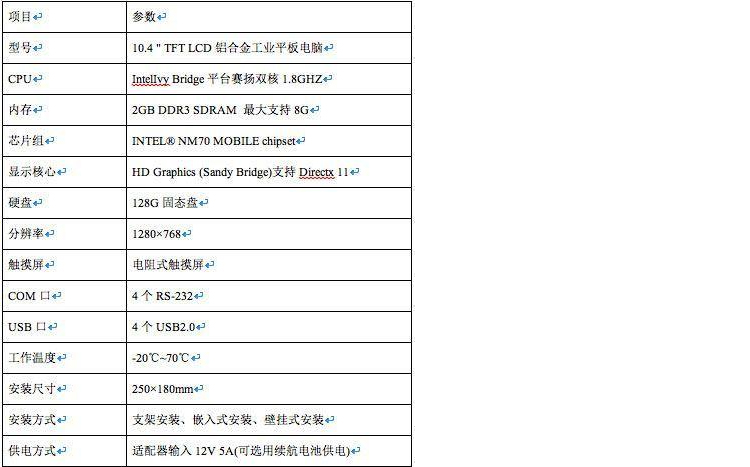
Secondary Instrument
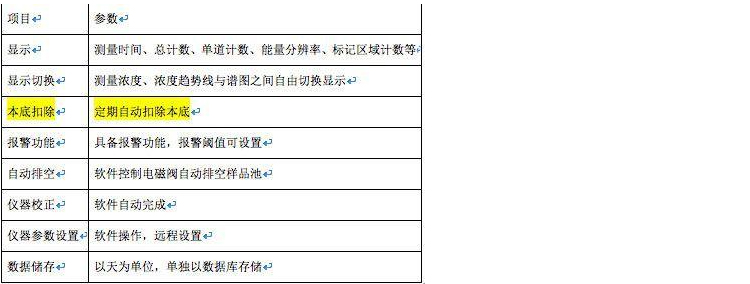
Utilizing a fanless industrial-grade integrated computer, supporting touch operation, and installed with Windows 7 OS. The operation software features a visual interface, transmitting and receiving data via USB 2.0. The secondary instrument is used to display measurement time, total count, single channel count, energy resolution, marked area count, etc., and completes the analysis of uranium concentration at the online monitoring point based on the characteristic X-ray energy of plutonium-239. It allows for free switching between concentration measurement, concentration trend lines, and spectrum display in the display area; Additionally, it can remotely control the on-site digital spectrometer, setting working parameters. Software operation can be completed via mouse or touch screen.
Software Parameters
Measured Spectrum
询价单


