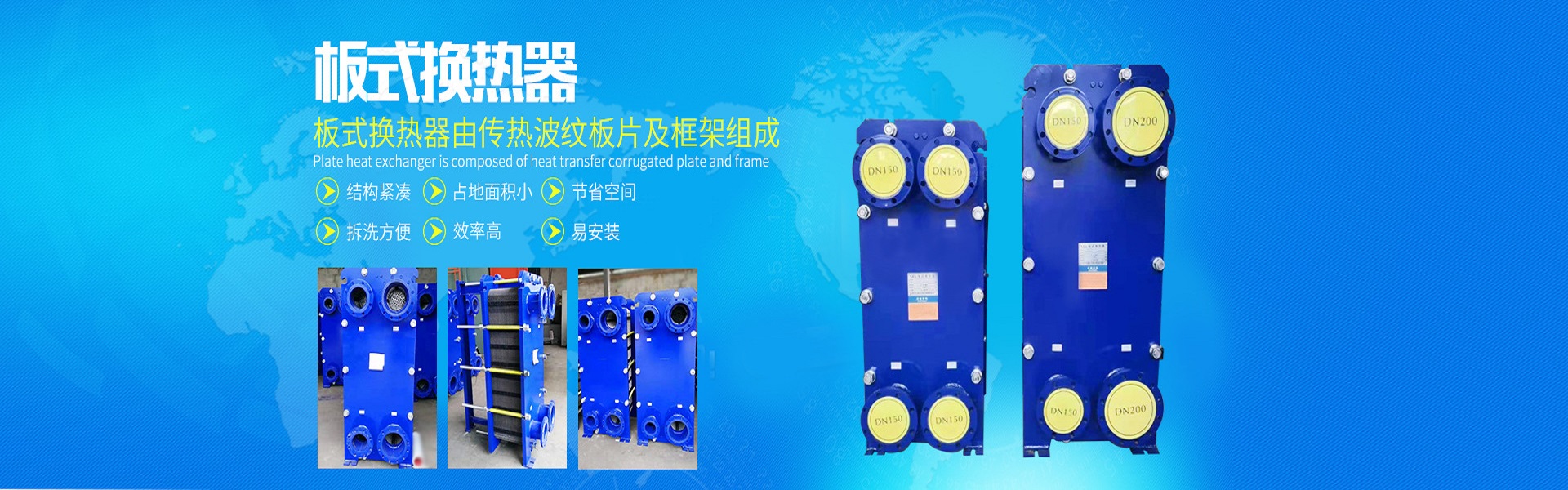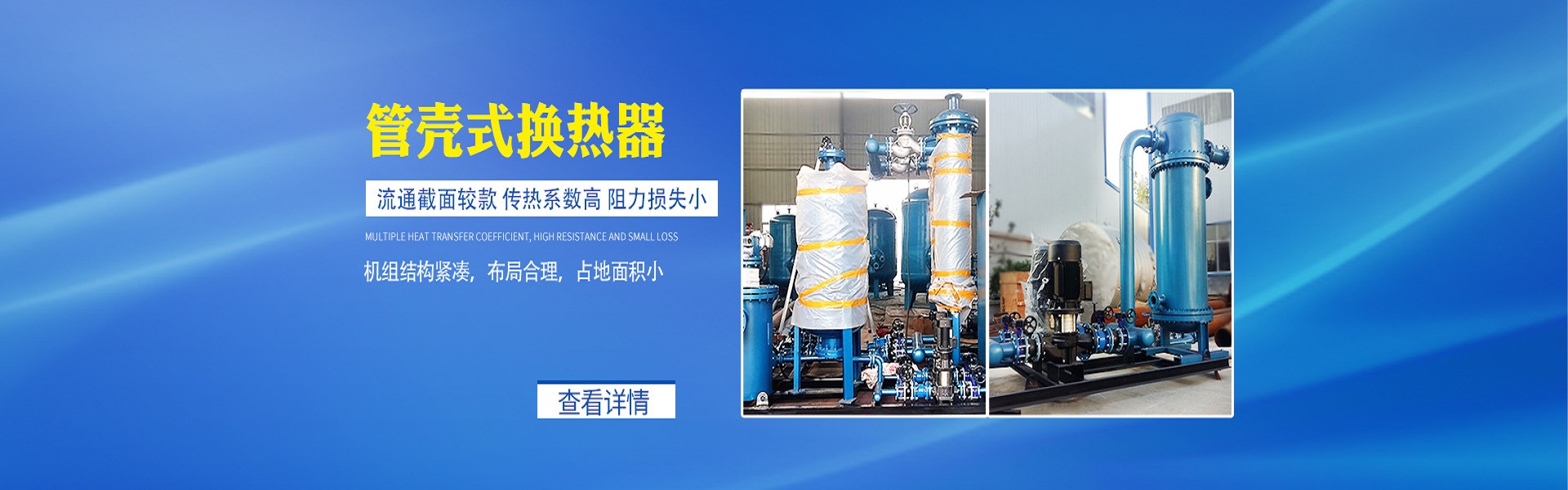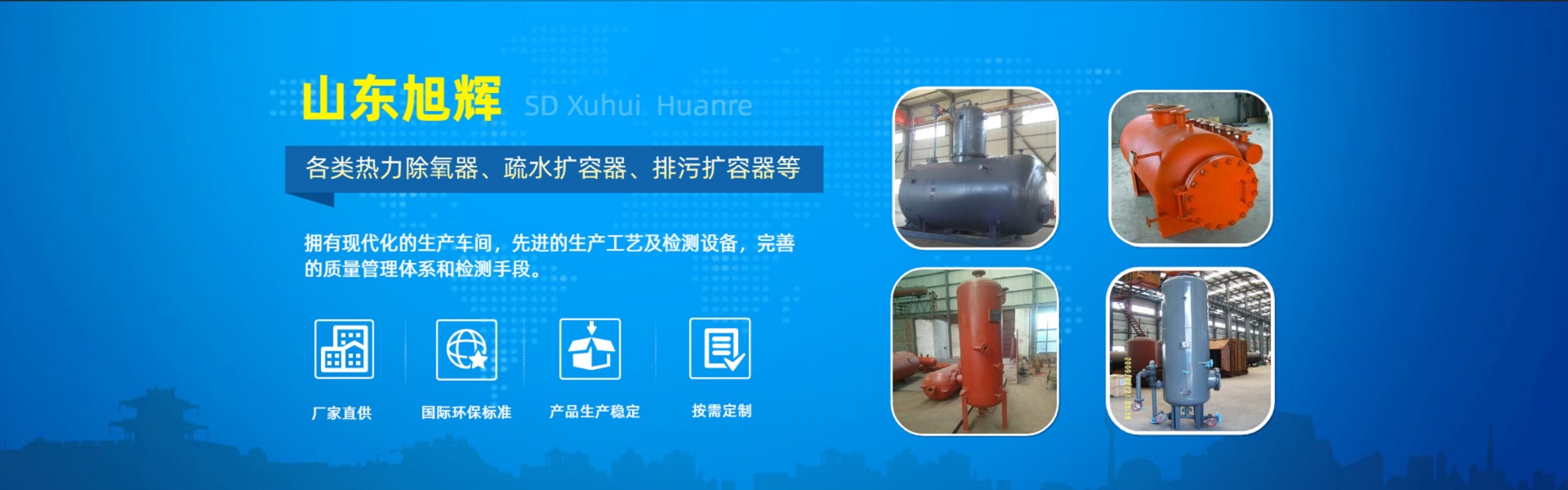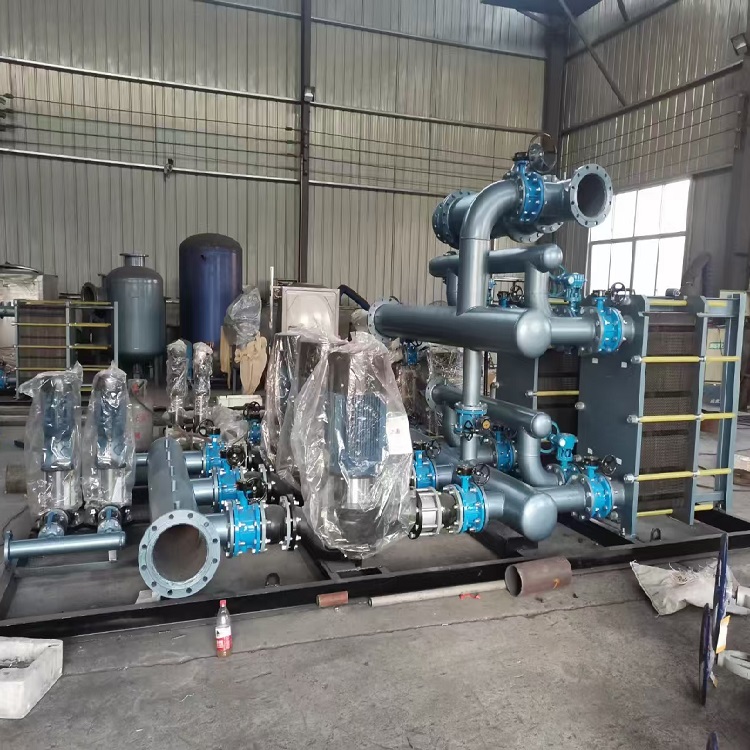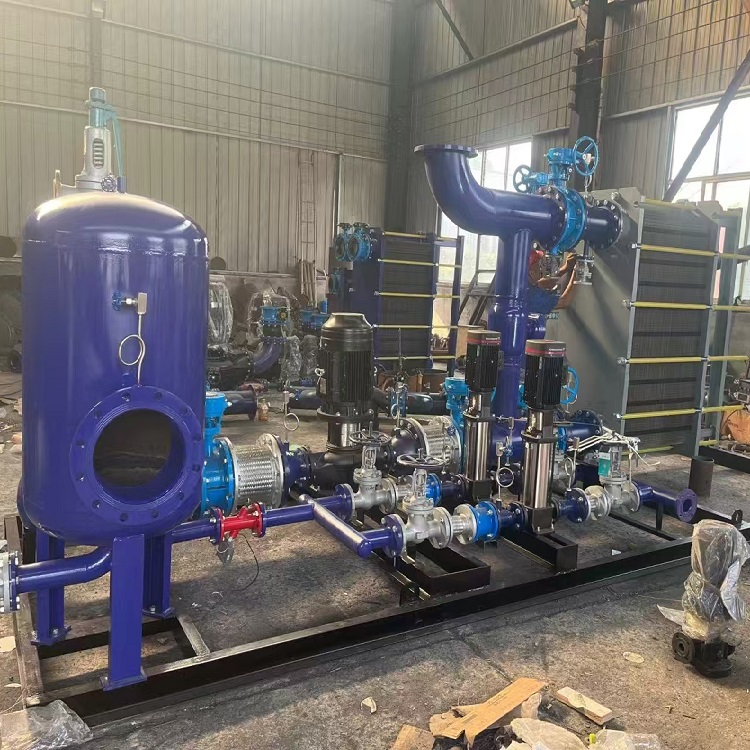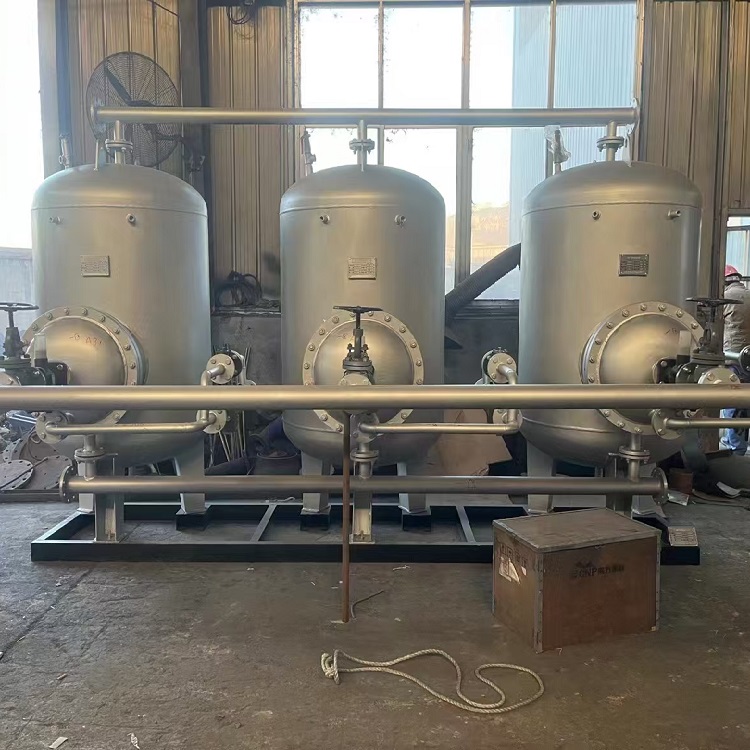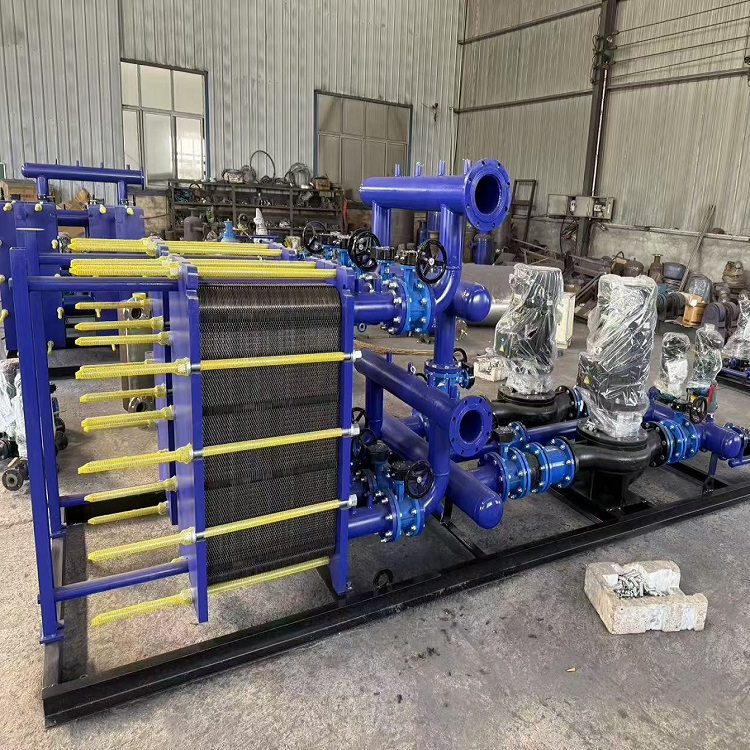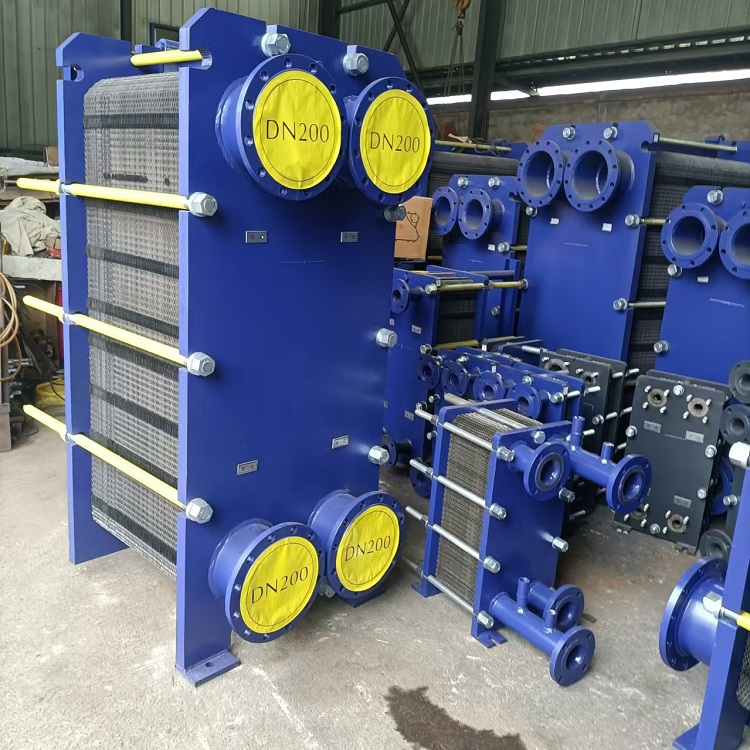
Main Products: Plate Heat Exchangers, Volume Heat Exchangers, Heat Exchanger Packages, Thermal Deaerators, Steam Trap Expansions, etc.
13325139132
Why is it Necessary to Deoxygenate Feed Water in Boilers?
When water comes into contact with a certain gas, a portion of the gas dissolves into the water.
The solubility of a gas typically indicates the amount of gas dissolved in water (measured in mg/L), which is related to the type of gas and the partial pressure of the gas at the water surface, as well as the temperature of the water.
The higher the partial pressure of a gas at the water surface, the greater its solubility; conversely, its solubility decreases. Additionally, at a certain pressure, the higher the water temperature, the lower the solubility of the gas; conversely, the solubility of the gas increases.
Dissolved oxygen in the boiler feed water can reach up to 10mg/L. This dissolved oxygen in the water is a major cause of corrosion in the feed water tank, pipes, pump, and boiler. To minimize the harm caused by corrosion to the boiler system (such as surface pits leading to deep penetration and perforation), it is necessary to remove the oxygen from the boiler feed water. The thermal deaeration method introduced here is the deaeration form commonly used in boiler systems.
Principle of Heat Removal and Deoxygenation
Deoxygenation involves removing all non-condensable gases from water, utilizing the thermal deoxygenation method. Its principle is based on Henry's Law, Dalton's Law, and the laws of heat and mass transfer.
Henry's Law states: When a gas at the surface of a liquid is in dynamic equilibrium with the gas dissolved in the liquid, the mass of the gas dissolved per unit volume of the liquid (b), is directly proportional to the partial pressure of the gas above the liquid surface (Pb).
b=k×Pb/P0(mg/L)
In the equation: K is the solubility coefficient of the gas, which is related to the types of liquid and gas and the temperature.
The partial pressure of the gas above the liquid surface when Pb is in a balanced state.
P0 represents the total pressure at the liquid surface.
It can be observed from the above equation that when the partial pressure of a gas above the water surface is less than the equilibrium pressure corresponding to its dissolution (Pb), the gas will separate from the water and rise to the surface under the action of the imbalance pressure difference (ΔP), until a new equilibrium state is reached.
Therefore, if the partial pressure of the gas on the water surface is maintained at zero, the gas can be completely released from the water and removed. This is the basic principle of thermal deoxygenation.
How to make the partial pressure of gas not condense on the water surface is related to Dalton's Law.
According to Dalton's Law: The total pressure of a mixture of gases equals the sum of the partial pressures of each constituent gas. The total pressure P in the oxygenator space equals the sum of the partial pressures Pi of each gas dissolved in the water at the water surface and the partial pressure Ps of the water vapor above the water, that is:
P=ΣPi+Ps(MPa)
In the deaerator, as water is continuously heated by steam, it gradually evaporates. The steam pressure on the water surface increases gradually, while the partial pressure of other gases decreases. The gas molecules in the water gradually escape and are discharged with the excess steam. Both the internal and external gas partial pressures at the water surface are reduced, maintaining a certain pressure difference ΔP.
When water is heated to the saturation temperature under the working pressure of the deaerator, the partial pressure of water vapor at the water surface equals the pressure of the deaerator head. This means the partial pressure of steam equals the total pressure, with the partial pressures of other gases nearly or equal to zero. This allows for the complete removal of gases from the water, resulting in a near-zero dissolved gas content in the water.
The thermal deoxygenation process is both a heat transfer process and a mass transfer process. The amount of gas desorbed from the water is proportional to the surface area A of the water and the imbalance difference ΔP, i.e.:
G=KmA△P(mg/L)
Among them: Km is the mass transfer coefficient, also known as the segregation coefficient.
Heat Exchanger Deaeration Process
In the deaerator, condensate first passes through a high-pressure nozzle to form a divergent conical water film, which then descends into the primary deaeration zone.
In the initial deoxygenation zone, the water film makes full contact with the ascending steam, quickly heating the water to the saturated temperature under the deoxygenator pressure. Most of the oxygen is then released from the water and accumulates near the nozzles. To prevent excessive oxygen buildup, exhaust ports are set around each nozzle to expel the released oxygen in a timely manner.
The water that has undergone preliminary deoxygenation collects at the bottom of the deoxygenator tank.
The deep oxygen removal process takes place below the water surface, utilizing steam introduced beneath the surface to heat and boil the water, thereby achieving deep oxygen removal. The gases released during the deoxygenation process are expelled through the exhaust pipe, while the deoxygenated water is then mixed with reclaimed condensate in the water tank.
The process of gas desorption from water, known as mass transfer, can be divided into two stages:
The initial stage is the deoxygenation stage, during which, due to the high content of gases in the water, their partial pressure is significantly greater than that of the gases above the water surface. The gases will overcome the water's viscosity and surface tension in the form of bubbles, thereby removing 80% to 90% of the gases from the water.
The second stage is the deep aeration phase. The feed water after primary aeration still contains a small amount of gas. This part of the gas has a very small imbalance pressure difference, weak gas separation capabilities, and can no longer overcome the surface tension of water in bubble form to escape. It can only slowly separate out through the diffusive action of individual molecules.
To achieve deep deoxygenation, increasing the contact surface area of the water film (with low surface tension) and creating turbulent water flow can enhance the diffusion process, thereby intensifying the separation of gases from the water.
Key Influencing Factors in Thermal Deaeration
To achieve an effective thermal deoxygenation, the following conditions must be met:
There is an adequate amount of steam to heat the water to the saturated temperature at the deaerator pressure. Even with a small amount of insufficient heating (as little as a few degrees), it can lead to a deterioration in deaeration effectiveness, increasing the residual dissolved oxygen in the water.
2. It is imperative to promptly expel the extracted gas to ensure that the partial pressures of oxygen and other gases on the water surface are reduced to 0 or the minimum, preventing an increase in the partial pressure of gases at the surface from affecting the extraction process.
3. The deoxygenated water should have sufficient contact area with the heated steam. The steam and water should flow in opposite directions to increase the contact time between the two, maintaining a large heat transfer area and sufficient time for heat and mass transfer, while ensuring a significant pressure differential.
Contact us

Service Hotline
13325139132
Company Telephone
13325139132

Address
Jinan Changqing District Gushan Industrial Development Zone, Gushan Lake Street Office, Changqing District, Jinan City
b2b.china9.net © Zhongshang 114 Hebei Network Technology Co., Ltd.Address: Room 6009, Oriental New World Center, No.118 East Zhongshan Road, Qiaoxi District, Shijiazhuang City, Hebei ProvincePlatform Service Hotline: 4006299930