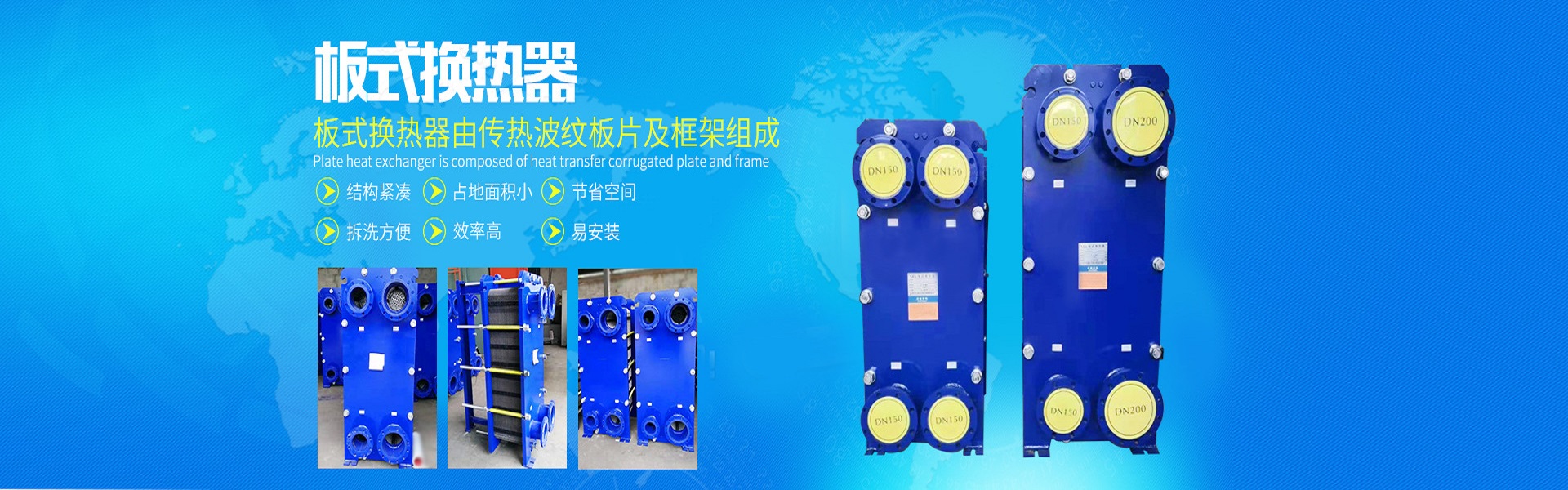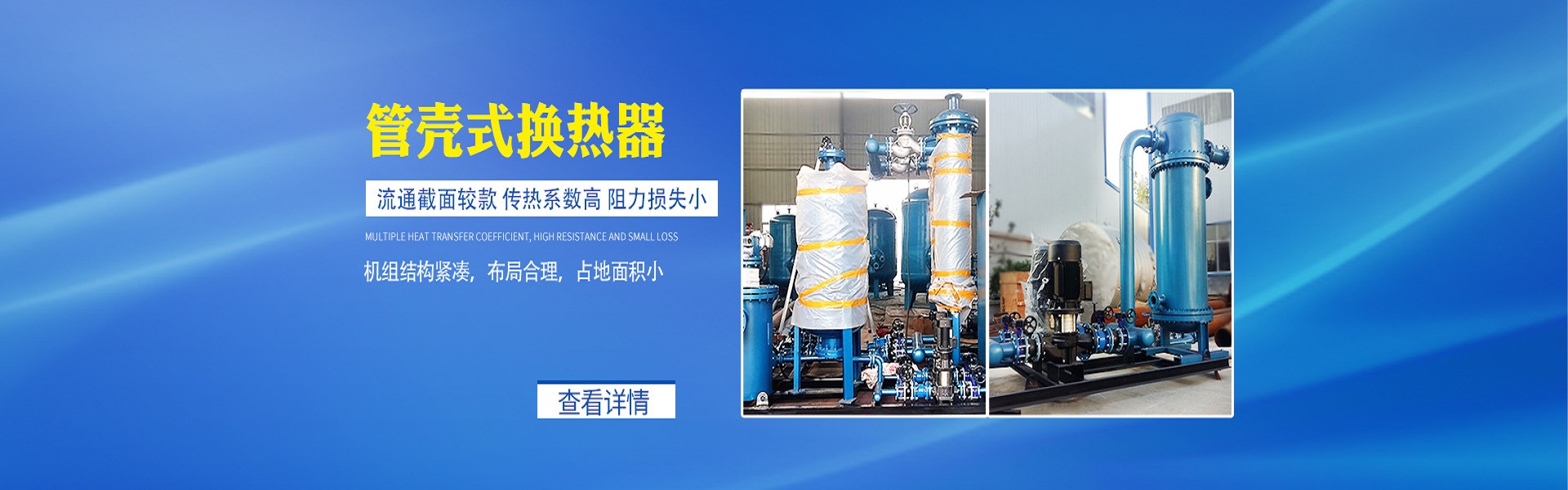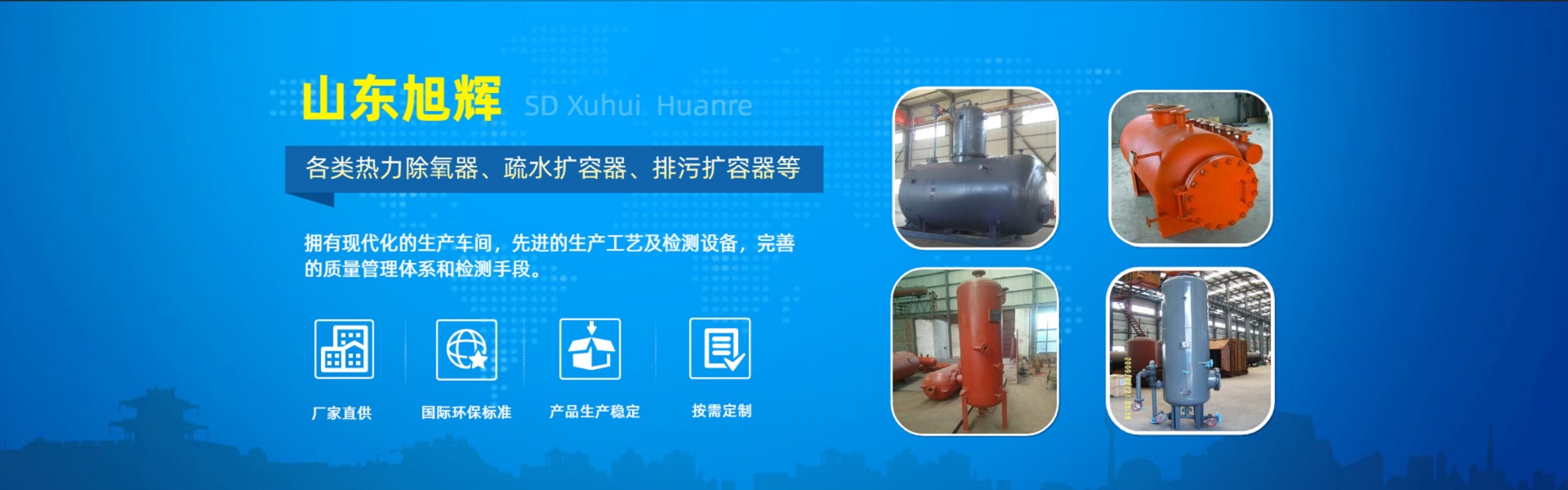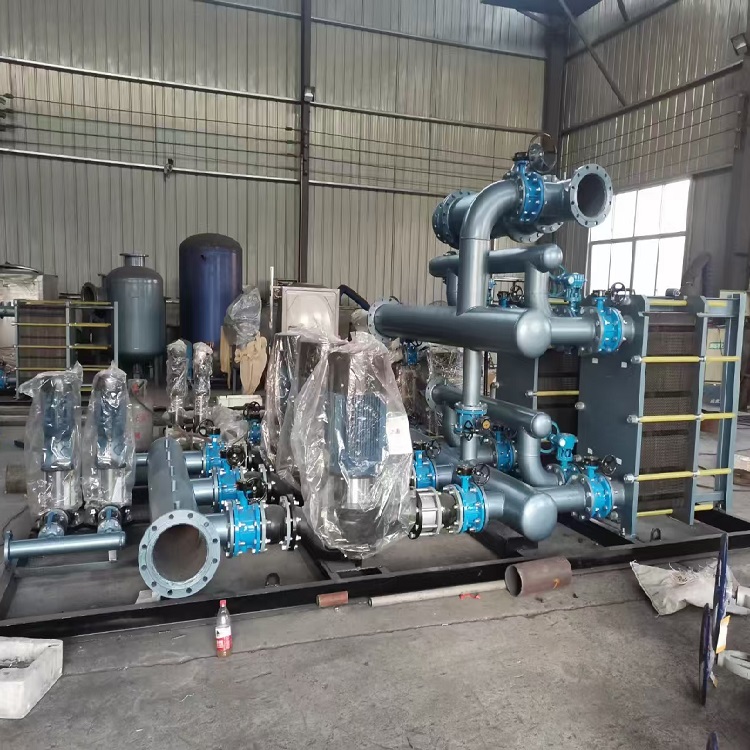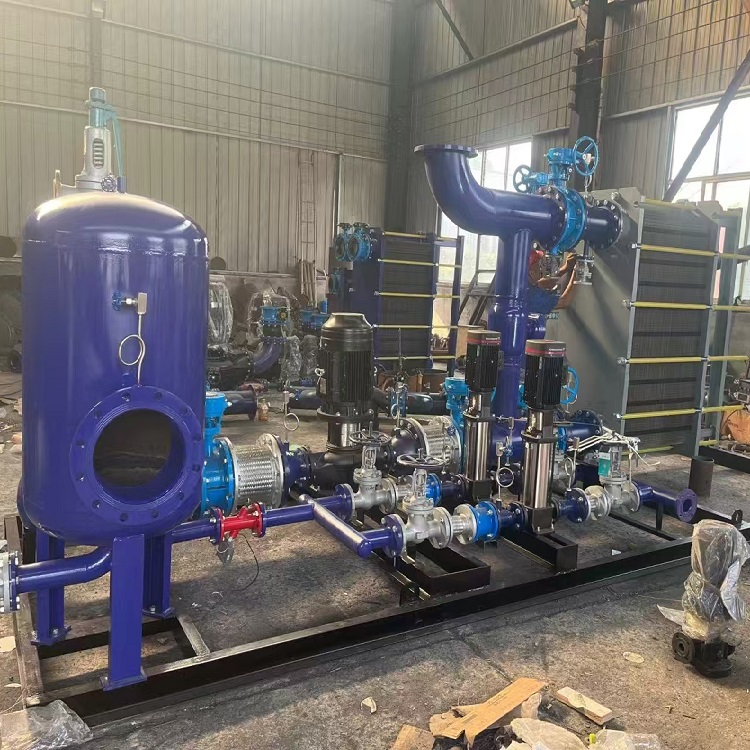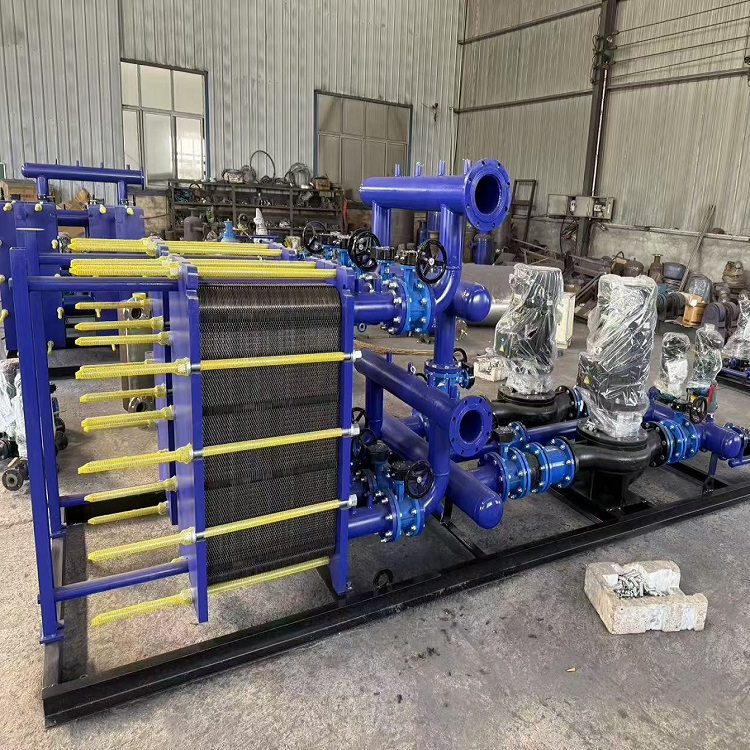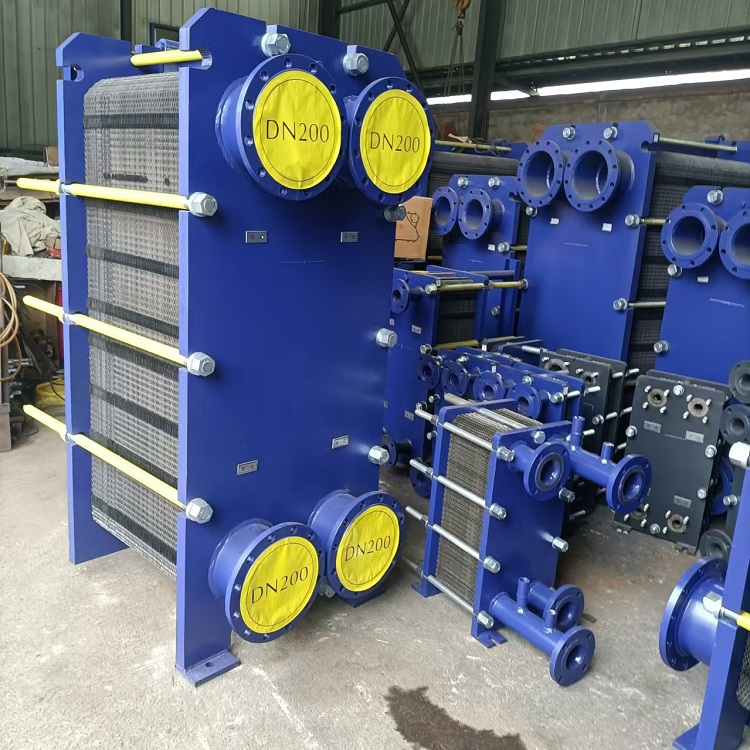
Main Products: Plate Heat Exchangers, Volume Heat Exchangers, Heat Exchanger Packages, Thermal Deaerators, Steam Trap Expansions, etc.
13325139132
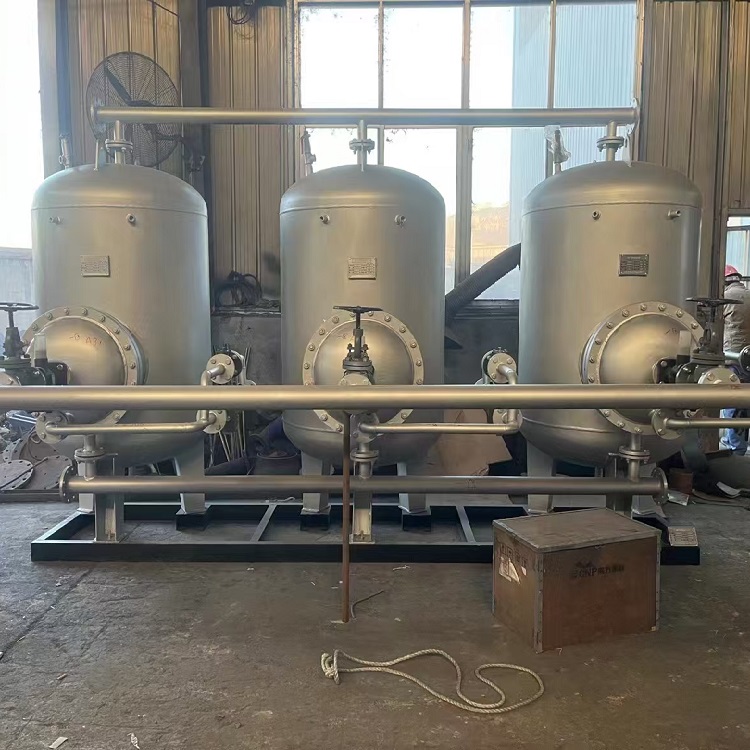
The function of the hydrophobic expander: to reduce the pressure of the hydrophobic fluid entering the expander; to recover and reuse the heat of the working substance.
The expansion vessel features three steam pipe routes: the middle, for condensate entering; the bottom, for the discharge of water after pressure reduction; and the top, for the discharge of steam flashed off after pressure reduction.
The high and low-pressure condensate, after expansion and spray cooling, experiences a reduction in both temperature and pressure. Post-expansion, the steam enters the upper steam space of the condenser, which not only lessens the impact on the condenser but also decreases its thermal load. The condensate entering the hot water well provides heating to the condensate, thereby reducing the supercooling.
Continuous Emission Expansion Vessel
Principle of Continuous Emission Expansion Vessel Operation
Continuous blowdown from the boiler is saturated water under the working pressure of the boiler, with high temperature and high enthalpy. If the pressure is suddenly reduced, the boiling point of the water decreases, disrupting the original saturated state. Some of the water releases excess heat to become saturated water under the new pressure, while some absorbs latent heat of vaporization to become steam. This type of evaporation is called flash evaporation. The continuous blowdown expansion vessel utilizes the principle of flash evaporation to obtain secondary steam. As the boiler blowdown with certain parameters is suddenly introduced into an expander that is several times larger in volume than the pipeline, the pressure drops, the volume increases, and steam is flashed.
Simultaneously, the continuous排污扩容器 utilizes ionic separation, gravitational separation, and molecular friction separation to separate gases and water, thereby obtaining a secondary steam with low salt content. The effluent enters the expander through tangential pipes, causing the fluid to rotate. The steam produced rises within the expander and, after passing through a space, is finally separated from water by the continuous排污扩容器's baffle water-steam separator, completing the entire process of separating steam from water.
Continuous Emission Expansion Vessel Structural Type
The continuous effluent expansion tank is composed of the main body, piping system, and accessories. The main body of the continuous effluent expansion tank consists of a cylindrical shell with internal equipment. The internal equipment includes baffles, a butterfly steam-water separator, and a float ball for controlling the regulating valve. For easy maintenance, either a flanged-connection shell is used, or a manhole is installed on the shell. The types of continuous effluent expansion tanks are vertical and hanging: the base of the vertical expansion tank can be placed on the ground, while the hanging expansion tank's base is at the waist, suitable for placement on a platform. Additionally, safety valves, pressure gauges, level regulating valves, and liquid level indicators are among the attached accessories.
Determine the expansion container size
The waste hot water, which is periodically drained from the boiler or at a pressure higher than that of the regular drain expansion tank, undergoes pressure reduction and expansion to separate secondary steam and waste hot water. The secondary steam is discharged into the atmosphere or used as a heat source, while the waste hot water is typically drained into the sewage system after passing through a drainage cooling pond. The boiler drain water has the same working pressure and saturation water temperature under pressure as the boiler. A throttle valve is installed before the regular drain expansion tank to reduce pressure, allowing for expansion, cooling, and separation of secondary steam within the regular drain expansion tank.
Contact us

Service Hotline
13325139132
Company Telephone
13325139132

Address
Jinan Changqing District Gushan Industrial Development Zone, Gushan Lake Street Office, Changqing District, Jinan City
b2b.china9.net © Zhongshang 114 Hebei Network Technology Co., Ltd.Address: Room 6009, Oriental New World Center, No.118 East Zhongshan Road, Qiaoxi District, Shijiazhuang City, Hebei ProvincePlatform Service Hotline: 4006299930