





- AllProduct Category
-
Eddy Current Flaw Detector
Automated flaw detector
Sorter
Ultrasonic Flaw Detector




详情描述
558HRemote Field Low-Frequency Water-Cooled Wall Tube Heat Exchanger Tube Eddy Current Testing Instrument
Instrument Introduction:
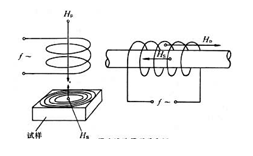
558HRemote FieldLow-frequency water-cooled wall tube heat exchanger tubesEddy current flaw detector equipped with an electromagnetic built-in probe placed on the material to be inspected. The probe features an excitation coil and one (or two) detection coils. The distance between the excitation coil and the detection coil is determined by the thickness of the inspection material.2-3The magnetic lines (energy) emitted by the excitation coil pass through the material and spread outward, then re-enter the tube wall through surface defects in the far-field region, and are detected by the receiving coil.
Determination of the spacing between the激励线圈 and the 检测线圈
Between the excitation coil and the detection coil, there are three zones: the direct coupling zone, the transition zone, and the far-field zone. The amplitude on the outer wall is greater than that on the inner wall; when the spacing is equal to or greater than twice the thickness of the detection material, the amplitudes of the outer and inner walls are proportional to the spacing, and when the spacing is2-3At the time of the multiple material (far-field region), the amplitude of the outer and inner walls is greater; therefore, the distance between the excitation coil and the detection coil is selected2-3Twice the bore size.
Propagation of waves in materials
As waves propagate through steel plates, their amplitude attenuates and their phase shifts. The thicker the material, the greater the amplitude attenuation.
Magnetic field line distribution near the probe
In the far-field region, the path of the magnetic lines is parallel to the tube wall; therefore, the total number of magnetic lines passing through the material wall in the far-field region is proportional to the wall thickness.
Feature Highlights:
Compared to conventional eddy current, flux leakage, and ultrasonic non-destructive testing, far-field eddy current non-destructive testing offers the following advantages: the surface of the material to be inspected does not need to be cleaned; the probe does not come into contact with the material surface, and the gap between the probe outer diameter and the material inner diameter has minimal impact on the test results. It has the same sensitivity in detecting corrosion pits on both the inner and outer surfaces of the material; it has high detection sensitivity for uniform thinning, variable thinning, and uneven thinning; the uniformity of the probe's testing speed does not affect the test results; gases and liquid media within the material have no impact on the test results; the detection equipment is compact and lightweight, facilitating flexible on-site applications; test data can also be stored for long-distance testing.
558HRemote FieldLow-frequency water-cooled wall tube heat exchanger tubesEddy current flaw detector is the next-generation non-destructive testing equipment, utilizingDSPAndFPGADigital electronic technology, far-field eddy current technology, and microprocessor technology enable real-time and effective detection of internal and external wall defects in ferromagnetic metal pipelines. The detection is not affected by probe lift-off, skin effect, uneven electrical conductivity, and magnetic permeability.
558HRemote FieldLow-frequency water-cooled wall tube heat exchanger tubesThe eddy current flaw detector is both a complete off-site eddy current testing system and possesses the advanced capabilities of conventional multi-frequency, multi-channel eddy current flaw detectors. Particularly, it features high sampling rates, ultra-low noise, and high signal-to-noise ratio, making it a high-performance, multi-functional, and intelligent new eddy current testing device in the Asia-Pacific region.
558HRemote FieldLow-frequency water-cooled wall tube heat exchanger tubesEddy current flaw detector for inspectingWater-cooled wall tubes, heat exchange pipesCasing, steel pipe, and tank corrosion conditions; detection equipment includes signal power source, signal measurement, recording, and processing, made in a form that can pass through pipes. The probe, like a piston, moves within the pipeline after applying power. It uses an internal probe to inspect gas pipelines,井下套管, underground pipelines, heat exchangers, and boilers, and an external probe for flat surfaces and steel pipes. Modern detection equipment utilizes computers for data display and storage, along with automatic signal analysis programs. We are committed to researching the far-field eddy current technique in pipeline detection, particularlyWater-cooled wall tubes, heat exchange tubesCasing and buried pipeline inspections for oil, gas, and water transmission.
Scope and Capabilities:
(Water-cooled wall tubes, heat exchange tubesCorrosion and erosion, wear, pitting, cracking, and fissures of井下套管、steel pipes、tanks、condensers、boilers、water heaters、and air conditioners.。
InstrumentParameters:
1Automatic probe calibration system
2Rapid Die Casting/Proposed Electronic Balance
3Automatic (Manual) eddy current signal amplitude and phase measurement, slow (adjustable) expansion and replay of eddy current signal
4Time-based scan and impedance plane diagram displayed on the same screen
5Configuration analysis feature
6Unique non-uniform phase/Range alarm domain
7Hardware alarm output port
8Can store a massive amount of test programs and data
9Automatic Amplitude, Phase/Defect Depth Curve Display
10、Rectangular and Polar Coordinate Systems Background Selection
11On-screen display of active pipeline cross-sectional diagrams, inspected pipe row numbers
12Pipe section diagram with grading symbols, forming an overview of the in-service pipeline
13Graded statistical test results (displayed in tables and histograms), facilitating cumulative analysis and comparison
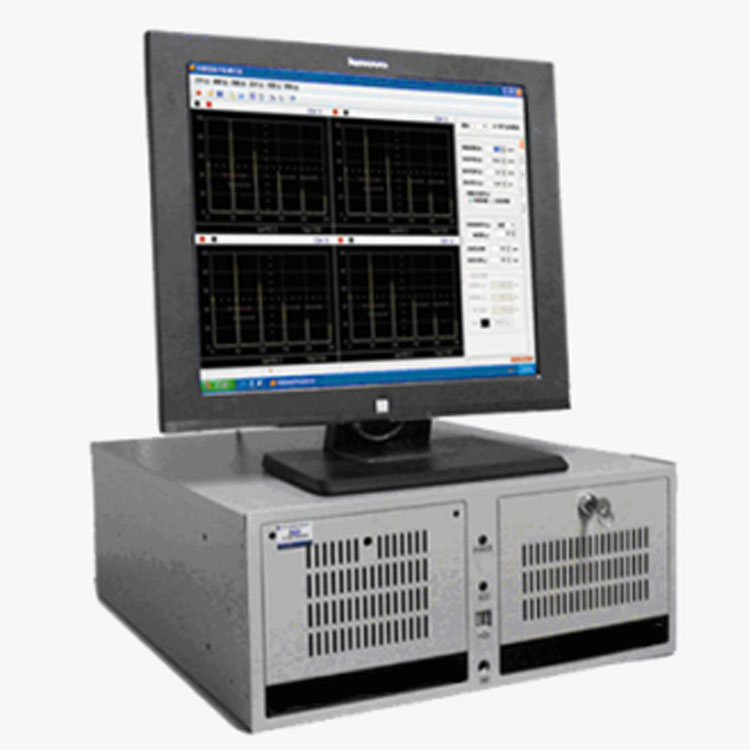
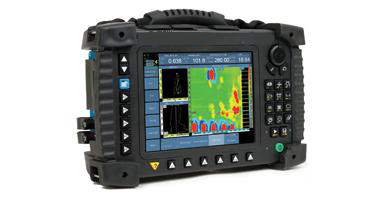
14Desktop, portable, industrial control, choose as desired
15Built-in rechargeable lithium battery (fully charged for use)6-8Hour(s)
16Frequency Range:1 Hz ~ 5 MHzOff-site Frequency1Hz~5KHz);
17Gain:0~90dBStep0.5dB
18Phase Rotation:0~359° Step1 °
19Gain RatioY/X):0.1~10
20Enhancement/Phase Measurement: Manual/Automatic
21Display Mode: Dot/Thread/Discreet
22High-pass filter: Off0~500Hz
23Low-pass Filter: Off10~10kHz
24Number of digital filter points:1~100
25Probe excitation signal amplitude:1-8VPrecision1V
26Hardware alarm output
27Alarm output signal
28Penetration thickness through the surface oxide layer of steel pipe:≤ 6mm。
29Penetration through steel pipe wall thickness:≤ 10mm Alloy steel.
30Pipe diameter range:Φ25~Φ1000mm。
31Inspection Defect Types: Interior and exterior corrosion pits, erosion thinning, hydrogen embrittlement, cracks.
32Magnetic Equipment: Not required.
33Demagnetization: Not applicable, not required.
34Coupling agent: Not required.
35Testing Speed:0~8 m/minStatic detection available.
36Detection Technology: Low-frequency eddy current phase analysis technology.
37Human-Machine Interaction: Dustproof touch screen operation.
38Display: Backlit semi-transparent LCD screen, suitable for long-term observation in dark or direct sunlight conditions.
39Scanning: Erase, refresh, and retain three scanning modes.
40Filtering: Digital and analog filters.
41Driver: 1~12VComma16Adjustable shelves.
42Zeroing: Response Time <0.5Instantly.
43Storage: Can store / Recreate100Multiple sets of parameters and graphical data.
44Probe: Shell, rubber guide wheel, weight≤ 0.9 Kg。
Work Environment:
Operating Temperature:-15~55℃
Storage Temperature:-20~60℃
Relative Humidity: Not exceeding85%
Working Voltage:DC24V
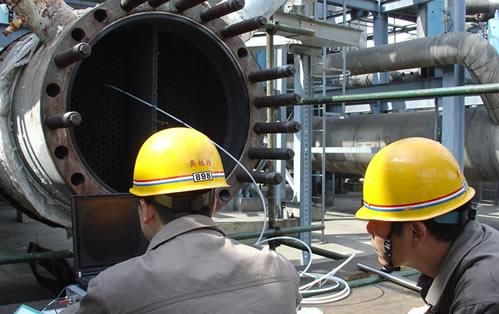
Inspection and Detection Site
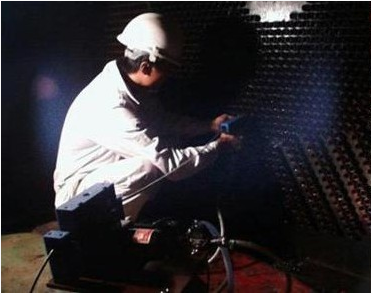
Inspection and Detection Site:
询价单


