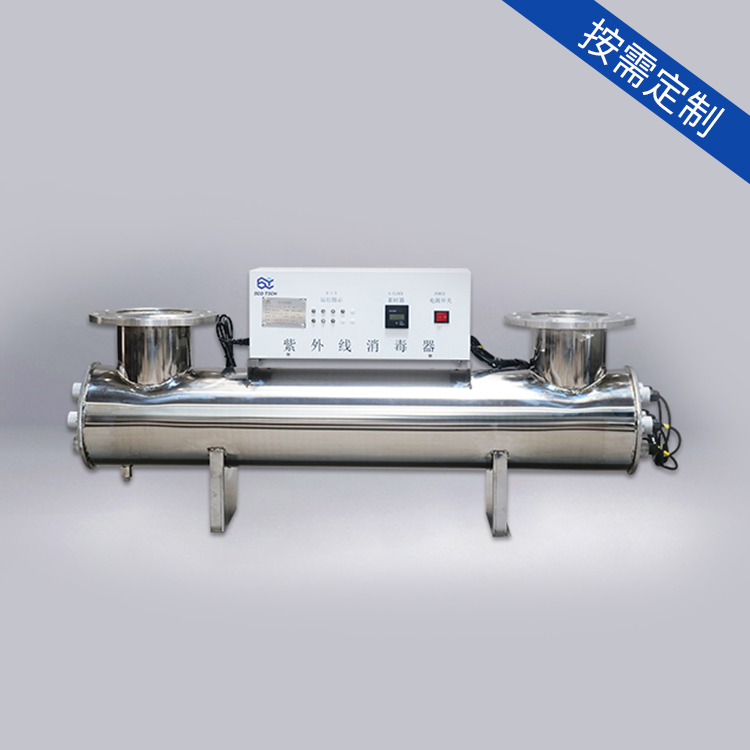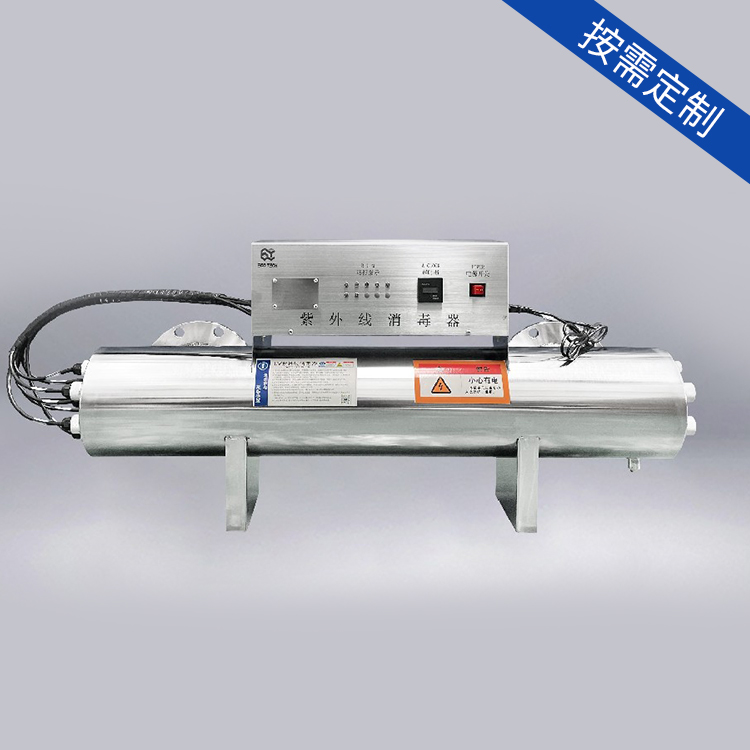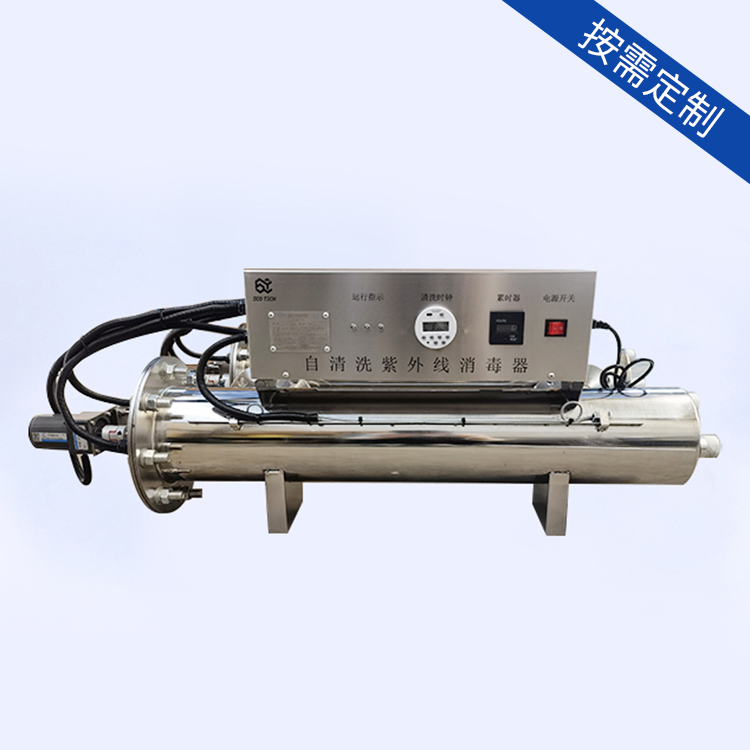
Ultraviolet Disinfection Units, Tank Self-Cleaning Disinf...

Ultraviolet sterilizers eliminate bacteria and viruses in water through UV radiation, gaining widespread application in the water treatment industry due to their quick disinfection and high sterilization efficiency. What are the structural methods of disinfection processing for UV sterilizers? Today, our editor will briefly introduce them.
Ultraviolet Disinfection Systems: Divided into two types of systems based on different water flow boundaries—enclosed and open.
Closed-loop system
The closed UV ultraviolet sterilizer is a pressure vessel type, which encloses the water to be sterilized using a metal cylinder and a quartz sleeve UV lamp.
The cylinder is commonly made of stainless steel, with the inner wall often polished to enhance its reflectivity to UV rays and increase radiation intensity. The number of UV lamps can also be adjusted based on the volume of water treated.
Closed systems are further categorized into open and immersion types. Open-style disinfectors are suitable for medium to large water volume treatment and are commonly used in wastewater treatment plants. Closed-style disinfectors are generally used for medium to small water volume treatment or in situations where pressure must be applied, and the disinfectors cannot be used in open channels.
UV lamps with quartz sleeves for sealing in various systems can be arranged either perpendicular or parallel to the water flow. The parallel system features minimal hydraulic loss and uniform water flow, while the perpendicular system allows for water movement, enhancing disinfection efficiency.
Open Systems
Water purified in an open-type UV sterilizer flows through the sterilizer under gravity, inactivating the microorganisms in the water. The open system can be further divided into immersion and surface-level types.
Immersion method, also known as water-illuminated technique. The ultraviolet lamps with an external concentric quartz sleeve are placed in water, with water flowing around the sleeve. When the lamps (set) need to be replaced, they are lifted to the working surface using lifting equipment for operation. This method is relatively complex in construction, but it offers high efficiency of ultraviolet radiation utilization, excellent results, and ease of maintenance.
Surface-level method, also known as surface irradiation, involves placing ultraviolet lamps above the water surface, where parallel electron tubes generate parallel ultraviolet light to disinfect the water. This method is simpler than immersion, but it wastes more energy and has poor sterilization effectiveness, making it rarely used in actual production.


b2b.china9.net © Zhongshang 114 Hebei Network Technology Co., Ltd.Address: Room 6009, Oriental New World Center, No.118 East Zhongshan Road, Qiaoxi District, Shijiazhuang City, Hebei ProvincePlatform Service Hotline: 4006299930