

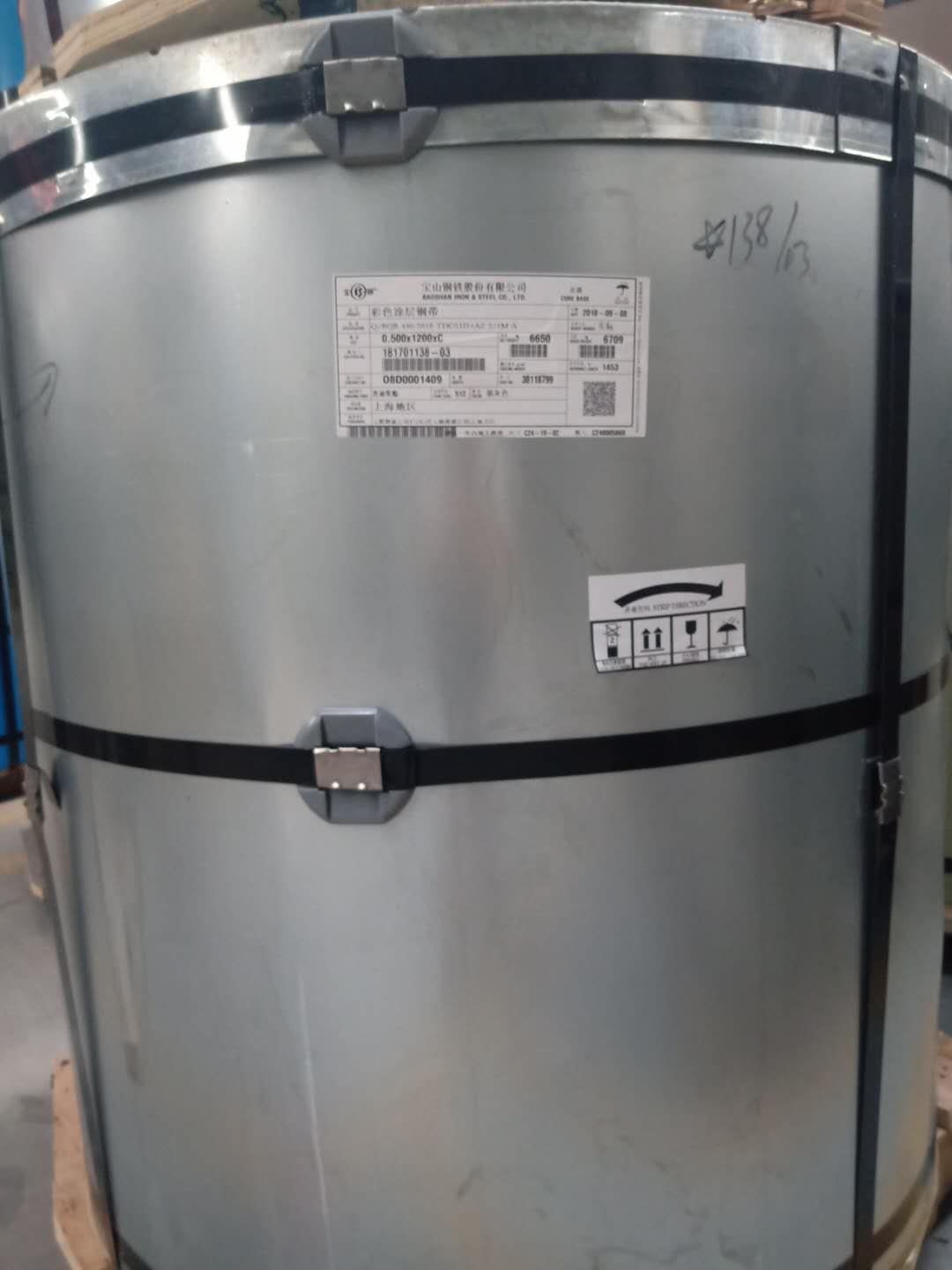
2.5.2.1 Galvanized steel sheet with excellent moisture resistance
Galvalume coated steel sheets exhibit three times greater moisture resistance than galvanized sheets, and they maintain their color even under 315°C of cyclic oxidation (168h) and retain the ability to resist severe oxidation and scaling at 700°C.
2522 Galvalume-coated steel sheet offers excellent cut protection.
Hot-dip Galvalume coatings exhibit superior notch corrosion resistance over hot-dip zinc coatings during the middle and later stages. The zinc in the Galvalume coating provides electrochemical protection for the edge notches of the coated steel plate, suggesting that it might be reasonable to conclude that Galvalume coated steel plates offer less protection against notches than steel plates with the same coating thickness of pure hot-dip zinc. However, in reality, Galvalume coated steel plates provide better notch protection than pure hot-dip zinc plates, a result of the combined action of elements A and Zn in the coating. Initially, pure hot-dip zinc steel plates may offer better notch protection than Galvalume, but the Galvalume coating lasts on the steel plate 2 to 4 times longer than the pure zinc coating, making Galvalume more effective in protecting against notches overall.
2.52.3 Galvalume-coated steel sheet with excellent heat resistance
Galvalume-coated steel sheet exhibits excellent reflectivity to light and heat, even surpassing aluminum-coated steel sheets and outperforming galvanized steel sheets (see Table 2-18). Galvalume can be used for long-term exposure to working temperatures up to 300°C and for short-term exposure to temperatures between 500~600°C, whereas pure zinc coatings are generally limited to use at room temperature, with the maximum working temperature for standard galvanized coatings being 230°C. Galvalume maintains its color under continuous or intermittent use up to 316°C and resists severe oxidation or the formation of oxide scale up to 49°C. However, it is important to note the embrittlement issue of Galvalume-coated steel sheets under high-temperature conditions. Prolonged heating between 316~510°C can reduce the elongation of Galvalume-coated steel sheets, due to the diffusion of zinc from the coating to the base material and the weakening of the grain boundary bonding. This phenomenon is known as high-temperature grain boundary zinc embrittlement. The temperature range of 316~510°C is the critical zone for high-temperature grain boundary zinc embrittlement in Galvalume-coated steel sheets; above or below this range, the phenomenon does not occur. Phosphorus in the steel plate can prevent high-temperature grain boundary zinc embrittlement. When the phosphorus content in the base material of Galvalume-coated steel sheets exceeds 0.04%, high-temperature grain boundary zinc embrittlement does not occur.
The effect of the height of the air knife lip on both sides
The gas knife blade height is often not on the same horizontal line due to factors such as the adjusted precision of the gas knife hole shape, thermal deformation, and the deviation in the base height. During actual production, after a period of use, the direction of zinc splashing at the edge of the steel strip becomes chaotic, and the clogging and nodular formation at the edge of the steel strip and the gas knife intensify. The cause is as shown in Figure 2-34. Assuming the gas knife on the left is slightly higher, the galvanized steel strip leaves the zinc liquid surface after electroplating, the gas stream emitted by the gas knife on the right, which is slightly lower in height, must blow the zinc liquid on the surface of the steel strip before the left gas knife. After the B area on the side of the steel strip is first blown by a unidirectional straight airflow, it cannot be counterbalanced by the gas stream blowing from the left, plus the influence of the chaotic edge currents. The zinc liquid in the B area will inevitably splash chaotically, making it easy for zinc liquid to splash onto the A area under the blade lip of the left gas knife, and form zinc liquid accumulation, leading to gas knife nodules. Similarly, the nodules in the C area are caused by the unidirectional straight airflow from the left. The closer the steel strip is to the gas knife, the more likely nodules are to occur. The gap between the gas knife blade and the steel strip has a significant impact on the nodules at the edge of the steel strip. The general experience value for the gas knife gap is 0.6~6mm. It is usually controlled at 8~12mm. The smaller the gap between the gas knife blade lips, the better the surface quality of the steel strip. However, when the gap is large, the increased cross-sectional area of the gas stream, unstable gas knife pressure, and steel strip vibration will leave marks on the steel strip surface, making it easy to appear gas knife streaks. The distance between the gas knife blade and the steel strip also has a significant impact on the nodules at the edge of the steel strip. The smaller the distance between the blade lip and the steel strip, the more likely nodules are to occur, and the higher the frequency of occurrence. Conversely, the larger the distance, the less likely nodules are to form. After the gas stream exits the blade lip, the shape of the gas stream initially maintains the shape of the blade lip, but as the distance changes, the shape of the gas stream also changes, starting to scatter, become irregular, and cause chaos, which has a significant impact on the surface quality of the steel strip, leading to gas knife streaks. For the production of G1 products, when the sheet shape is normal, the distance between the blade lip and the steel strip is generally 4~10mm. To reduce the occurrence of gas knife nodules and prevent the formation of gas knife line and stripe defects, the following measures can be taken: The gas knives before and after should have a high level of horizontal alignment. Each time the gas knife is installed, a high-precision level instrument should be used for precise adjustment of the gas knife level. Keep the gas knife blade lip clean. During the replacement of the immersion roller, the slag inside and outside the gas knife blade lip must be cleaned up, and the blade lip surface and blade lip must be polished with an oil stone or finer sandpaper to make the blade lip surface smooth.
Important considerations during the cold rolling process for color coated coils
Color coated coils are a type of coated product. With the continuous growth in market demand, the market position of color coated coils is also gradually rising, becoming one of the sought-after goods. The production technology is constantly improving. Although the production technology of color coated boards is already at the forefront of the industry, technical personnel still need to pay special attention to the operation methods, especially during the cold rolling process. So, what are the issues worth noting in this process?
Color coated coils often experience minor oxidation powder detachment and adhesion to the surface during the cold rolling process due to friction and pressing between the roller and the aluminum plate. The rolling oil and suspended components may remain on the aluminum plate, affecting the finishing processes like lamination and painting. This necessitates cleaning with specialized equipment. The cleaning method primarily involves pressurizing the cleaning medium through a pressure pump for a non-contact brush wash of the coil surface, dissolving and removing the oil污 and aluminum powder from the plate. Subsequently, the coils are dried through a squeeze roller and high-pressure air blow-off, and even high-temperature air drying to achieve a clean and smooth finish.
Here are the precautions to take during the cold rolling process for color-coated coils. We hope this helps you better understand color-coated coils and you must adhere to these precautions during use.
Post-coating scratches refer to scratches that occur after steel strip galvanizing, i.e., scratches that appear from the cooling tower to the coiling section are on the surface of the galvanized layer, are concave into the surface of the galvanized plate, and under light can be seen the metallic zinc. Possible scenarios on the galvanizing line that can cause scratches on the surface of the galvanized plate include: (1) Steel strip deviating on the production line, the edge rubbing against structural steel, etc., causing surface abrasion. (2) Zinc slag and debris adhering to the surface of the idler roller, causing scratches on the steel strip surface when the roller operates poorly. Such rollers may include: cooling tower top turn rollers, other turn rollers, various alignment rollers, tension measuring rollers, post-treatment extrusion rollers or passivation coating rollers, anti-fingerprint coating rollers, adjustable turn rollers, and various supporting rollers. (3) Steel strip rubbing against the small zinc flower equipment due to its vibration in the small zinc flower equipment area, causing localized scratches. (4) Steel strip moving through the cooling air box, causing flutter due to the cooling airflow, and rubbing against the surface of the air box, causing abrasion. (5) Steel strip slipping on the water quenching tank roller, and the roller surface having scale, making it prone to many dense scratches on the steel strip surface. Therefore, the water quenching tank rollers should be treated with rubber to increase friction, and demineralized water must be used for water quenching to remove calcium and magnesium ions from the water, preventing scaling on the roller surface in warm water. (6) Zinc slag and impurities falling on the pull leveling roller assembly, causing scratches when the steel strip passes through. 0 Spray-type passivation treatment system nozzles become loose, scratching the steel strip; or the feed tray in the roller coating passivation system is too close to the steel strip, causing abrasion. 3 The anti-fingerprint drying system is too close to the steel strip, causing localized abrasion when the steel strip tension is low and it vibrates. 0 The cutting shear at the exit is too close to the steel strip, causing localized abrasion when the strip loosens. 0 Foreign objects on the exit feed conveyor surface, causing scratches when the steel strip slides on its surface. Identifying and dealing with these issues is relatively easy, as long as they are discovered promptly, they will not cause significant impact.
Color-coated steel sheets feature high strength, excellent durability, good waterproof performance, continuous rolling capability, excellent corrosion resistance, ease of installation during construction, quick assembly and disassembly, minimal time consumption, and low construction costs. They are widely used in the construction industry, such as modern courtyard design, large industrial factories, modern large airports, large sports stadiums, prefabricated insulated sandwich panels, etc. With the development of light industry, transportation, and shipbuilding, the application of color-coated steel sheets has expanded from building materials to automotive manufacturing, ship interior decoration, household appliances, furniture, containers, kitchenware, and more, becoming a new material replacing painted steel sheets.
Color coated steel sheets are classified according to their purpose, type, and coating structure:
Usage: JW for exterior building use; JN for interior building use; JJ for furniture; JD for household appliances; GC for steel windows; QT for others.
Paints: Polyester; Silicon-modified Polyester; Polyvinylidene Fluoride; Polyfluor乙烯-Plastic Solution.
The majority of coating processes are carried out using roller coating. Roller coating involves transferring paint from a paint pan to the coating roller using a feed roller, forming a wet film of a certain thickness on the coating roller first, and then transferring this wet film onto the surface of the steel strip. This method is fast and highly efficient; it produces almost no paint mist, achieving a coating efficiency close to 100%; and the coating thickness can be adjusted by varying the roller gap, pressure, and speed within a certain range; it can coat one side or both sides simultaneously.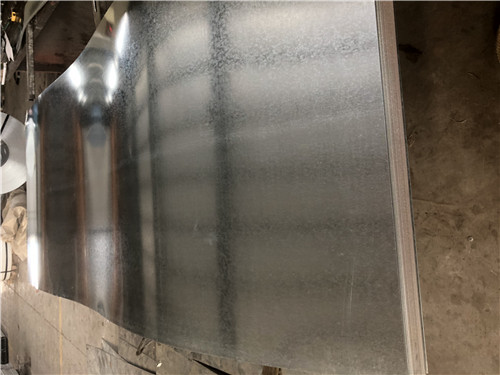
Coated Steel Coil - Trend in the Development of Color Steel
Firstly, high-quality substrates are used, with ever-increasing requirements for surface quality, sheet shape, and dimensional accuracy. This includes outdoor applications such as plain hot-dipped galvanized steel coils with small zinc flowers, plain hot-dipped galvanized steel coils, and the emerging zinc alloy hot-dipped coils; as well as indoor uses like electro-galvanized steel coils, coated cold-rolled sheets, and aluminum coil sheets.
Secondly, improve the pretreatment process and pretreatment solution, with a trend towards fewer equipment and lower costs becoming the mainstream process. Continuously enhance the stability, corrosion resistance, and environmental performance of the pretreatment solution.
Third, focus on the development of new coatings, improve general polyester, polyvinylidene fluoride (PVDF), and plastic sols to achieve superior color reproducibility, UV resistance, sulfur dioxide resistance, and enhanced corrosion resistance; develop functional coatings with pollution resistance and heat absorption properties.
Fourth, the equipment set is more comprehensive. This includes the use of new welding machines, new roll-coating machines, an improved curing furnace, and advanced automation instruments.
Fifth, due to the lower cost of cold-pressed flowers compared to hot-pressed flowers, and their aesthetic appeal, three-dimensional look, and higher strength, the cold-pressed flower production technology is becoming a trend.
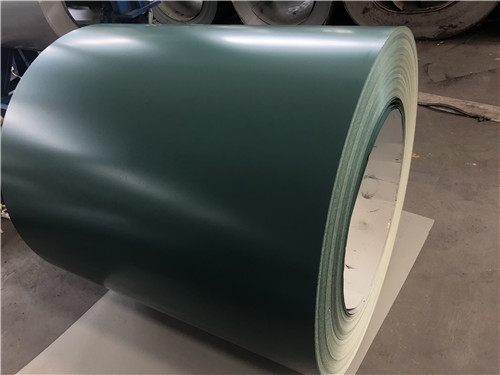
Baosteel Color Coated Steel Coil
