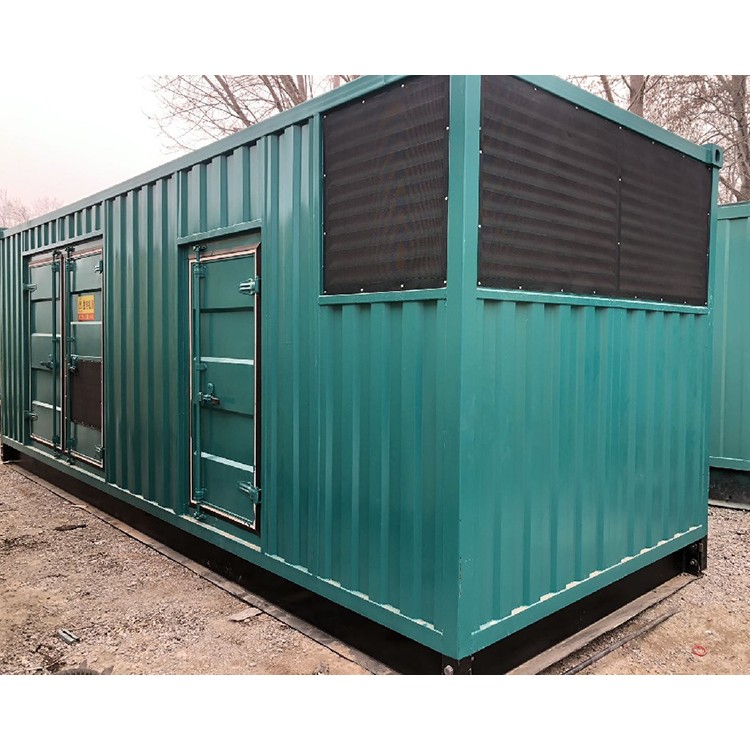
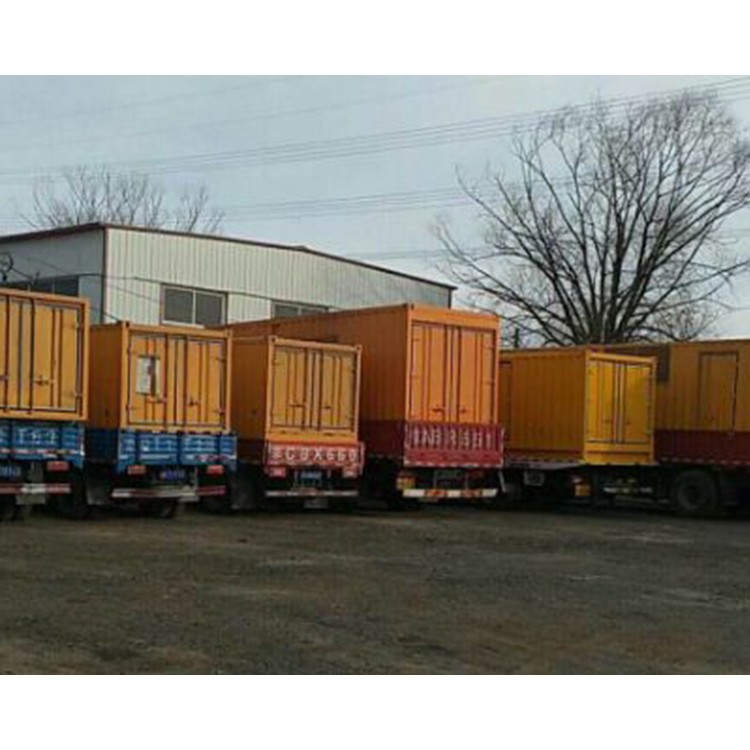
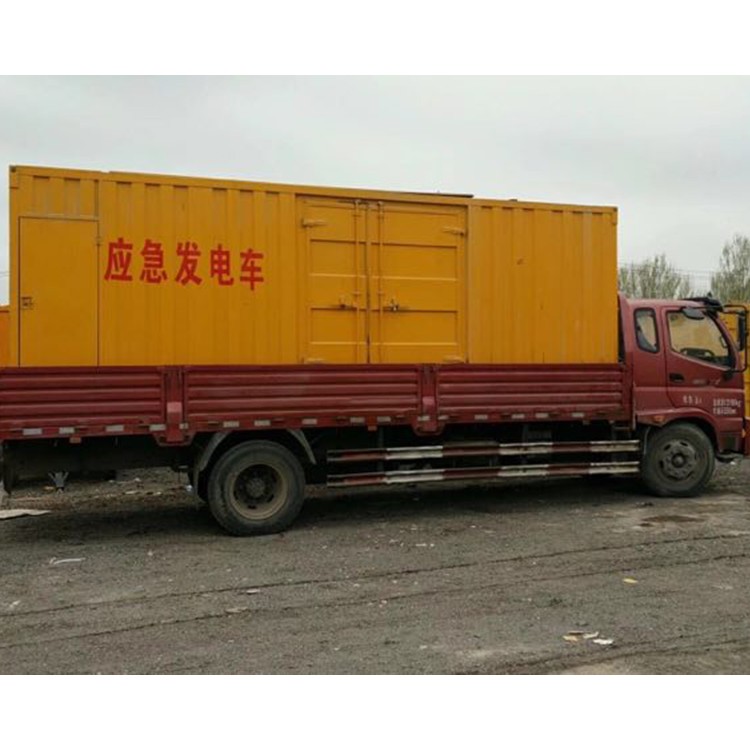
Rentable generator trucks, generator set rentals, emergen...

As the modernization of generator sets advances, the monitoring and control operations become increasingly convenient, even reaching the level of unattended operation.
The generator set control panels are divided into standard and automated types. The standard panel is used for the control of conventional generator sets, where operations such as start, stop, power supply, power cutoff, and status adjustment are all manually operated. The automated panel, on the other hand, is designed for the control of automated generator sets, allowing operations such as start, stop, power supply, power cutoff, and status adjustment to be either manually or automatically controlled.
1. Automated control panel for machine units
The automatic unit control panel consists of automatic controllers, chargers, switching devices, ammeters (AC and DC), voltmeters, frequency meters, water temperature gauges, oil temperature gauges, oil pressure gauges, speedometers, timers, alarms, relays, circuit breakers, protective switches, current transformers, and more. The automatic unit control panel can automatically achieve various control functions and protection functions for the unit.
2. Status indicator for automated generator sets
Automated unit control can be divided into traditional relay and programmable logic controller, as well as single-chip (microcomputer) control. The main status signals of the generator set as control signals include:
(1) Start-up, shutdown signals, and power anomaly signals. Power anomaly signals primarily include power failure, phase loss, and voltage deviation. These signals are sent to the controller in a logical combination manner (when the logical value is 1, the equipment starts and runs; when it is 0, the equipment automatically shuts down). Power anomaly signals are typically detected using phase loss protectors, voltage comparators, and other devices.
(2) Internal Combustion Engine Operating Conditions. These include manual and automatic modes, as well as startup and operation conditions (such as engine speed, oil pressure, and temperature).
When unable to start, exceeding speed, or experiencing abnormal oil pressure and temperature, the unit automatically shuts down, locks itself, and alarms. Operating condition signals are typically detected by speed sensors, pressure sensors, and temperature sensors, etc.
(3) Generator operating condition signals. These primarily include generator voltage, current, frequency, and excitation state, among others. Appropriate protection is implemented when these conditions are abnormal to prevent damage to the generator. Operating condition signals are typically detected by various measuring instruments.
In addition to the aforementioned signals, there are also signals such as battery voltage, charging voltage, and fuel level. The crew uses these signals to control the operation of executing elements to ensure the unit remains in normal standby or operational status.
3. Automation Generator Set Controller
Relay Control. Generator set with relay control.
The system block diagram is shown in Figure 1-3, primarily composed of municipal power monitoring circuit, internal combustion engine monitoring circuit, automatic start controller, display and alarm device, internal combustion engine switching circuit, and municipal power switching circuit. The main functions of this control system include: speed failure, three times of start failure alarm, etc.
Automatic start and power supply. In the event of a power outage, the main power supply circuit is disconnected by the main power switch circuit. The main power monitoring circuit is connected to the starter power supply via the automatic start controller (DC 24V+), causing the starting motor to operate and start the generator set. Once the generator reaches its rated speed, under the action of the automatic voltage regulator (AVR), the generator outputs its rated voltage, and the internal combustion engine switch circuit is energized, supplying power to the load from the generator.
b. Automatic shutdown. After power is restored, the city power monitoring circuit first cuts off the power supply circuit to the generator set. The city power switching circuit switches to...
City power supply. Meanwhile, the internal combustion engine runs at low speed, then automatically shuts down.
c. Fault shutdown and alarms. During the operation of the generator set, if the cooling water or engine oil temperature is too high, or the engine oil pressure is below the specified value, or the speed exceeds the rated speed, the automatic start controller will send an alarm signal through the display alarm device and cut off the internal combustion engine electrical switching circuit, causing the generator set to automatically shut down.
(2) Programmable Logic Controller (PLC) Control. The Programmable Logic Controller (PLC) is specifically designed for industrial environments, featuring simple control circuits and high reliability. The programmable memory used stores user instructions, and through digital or analog inputs/outputs, it achieves automatic control of the generator set.
Our PLC-controlled automatic diesel generator sets have sensors and actuators that are the same as those controlled by relays, but the difference lies in the relay control function, which is completed by the PLC (commonly using Siemens' S1MATICS5 and S7 series). However, the PIX output contact capacity is smaller, typically capable of driving loads of 2A or less. To drive high-capacity loads, a solid-state relay is required. To avoid mutual interference at the output ends, a blocking diode is usually installed between the PU and the solid-state relay, and the critical control sections should also be interlocked (externally).
(3) Microcontrollers (Microcomputers > Control) Currently, high-automation generator sets typically use specialized microcontrollers as their main controllers, which simplifies the system control circuitry, enhances functionality, and improves reliability. Examples include the DSE509, MEC20, and EGT1000 dedicated controllers. Upon the connection of utility and generator voltage signals, these controllers can monitor oil pressure, water temperature, oil temperature, and rotational speed. Additionally, they control the switching circuit between utility power and internal combustion engines, and offer comprehensive alarm functions. The EGT1000 also features remote monitoring capabilities, allowing system operating data and monitoring signals to be transmitted through multiple dedicated lines, RS232 ports, modems, and phone lines to the monitoring center. This ensures unattended operation, with automatic startup and shutdown.


b2b.china9.net © Zhongshang 114 Hebei Network Technology Co., Ltd.Address: Room 6009, Oriental New World Center, No.118 East Zhongshan Road, Qiaoxi District, Shijiazhuang City, Hebei ProvincePlatform Service Hotline: 4006299930