Leveling Instruments, Total Stations, GPS, DJI Drones, 3D Laser Scanners, Handheld Scanners, Unmanned Aerial Vehicles, Unmanned Vessels
13913884813
Two and a half millennia ago, Greek philosophers debated the composition of matter. Two hundred years ago, chemists theoretically discovered the structure at the subatomic scale. To observe the subtle structure of subatomic particles, scientists continue to strive.
Since the invention of the optical microscope in the 16th century, the electron microscope in the early 20th century broke through the inherent diffraction limit of the optical microscope (about 200 nanometers). It can easily distinguish individual atoms, but for the subatomic world, this resolution is still far from sufficient.
In 2018, Professor David Muller from Cornell University's Department of Applied and Engineering Physics (AEP), along with Physics Professor Sol Gruner and Veit Elser, collaborated to develop the EMPAD (Electron Microscope Pixel Array Detector), which at the time was the world's highest-resolution imaging electron microscope pixel array detector.
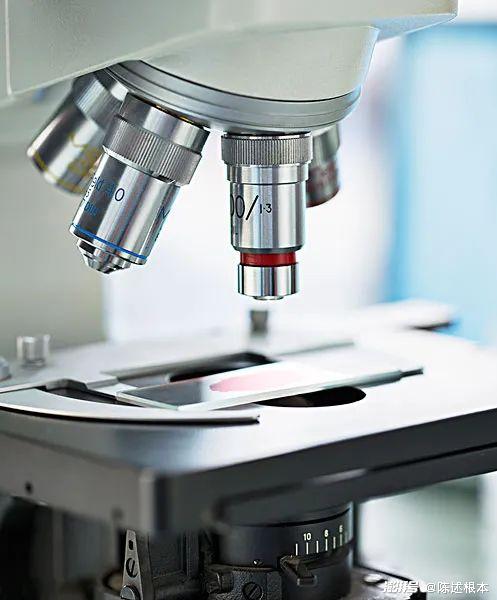
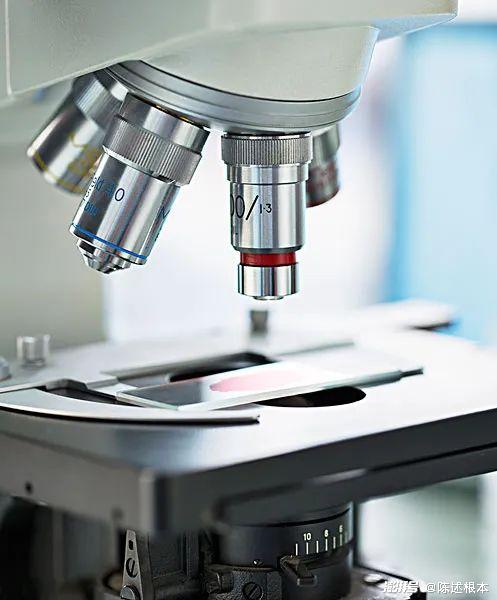
Electron microscopes achieve resolutions far beyond optical microscopes due to their electron wavelengths being significantly shorter than visible light wavelengths. Unfortunately, the lenses of electron microscopes lack the corresponding precision. Moreover, the resolution of electron microscopes is largely dependent on the lens' numerical aperture.
In traditional cameras, the numerical aperture is the reciprocal of the "f-stop" (aperture value), meaning a lower f-stop results in higher resolution. Generally, a good camera has an f-stop slightly less than 2, while an electron microscope's f-stop is around 100. Using aberration correctors can bring this value down to about 40, but that is still far from sufficient.
Lenses in electron microscopes have an inherent flaw known as aberration. For years, scientists have been researching various aberration correctors, akin to fitting a microscope with a pair of glasses, hoping to eliminate this aberration. However, the effectiveness of aberration correctors has always been limited. To correct multiple aberrations, a series of correction units must be used, much like stacking glasses on top of glasses, making the entire instrument bulky and awkward.
The world record in electron microscope resolution—sub-Angstrom resolution—was achieved using aberration-corrected lenses and 300 keV (300,000 electron volts) ultra-high electron beam energy. The length of atomic bonds is approximately one to two Angstroms, thus sub-Angstrom resolution allows scientists to easily distinguish the images of individual atoms.
Using the EMPAD detector, the Muller team, with molybdenum disulfide samples just one atomic layer thick, achieved a new world record in electron microscope imaging resolution of 0.39 angstroms without the use of an aberration corrector. This breakthrough shattered the previous resolution record. However, due to technical limitations, the machine only works on ultra-thin samples just a few atoms thick.
After three years, a research team at Cornell University has developed a new electron microscope pixel array detector. Utilizing a more refined 3D reconstruction algorithm, it has doubled the record set in 2018. The microscope boasts an extremely high resolution, with the blurriness stemming solely from the thermal vibrations of the sample's atoms. In a sense, the new microscope has set another new record.
This microscope addresses the issue of multiple scattering of light in sample studies, and in the future, it is expected to open up new possibilities for scientists to conduct more refined research on finer matters.
Contact us

Service Hotline
13913884813
Company Telephone
13913884813

Address
61 Wenjing Road, Building 1, Suite 405 & 406, Changxinhu, Jiangbei New Area, Nanjing
b2b.china9.net © Zhongshang 114 Hebei Network Technology Co., Ltd.Address: Room 6009, Oriental New World Center, No.118 East Zhongshan Road, Qiaoxi District, Shijiazhuang City, Hebei ProvincePlatform Service Hotline: 4006299930