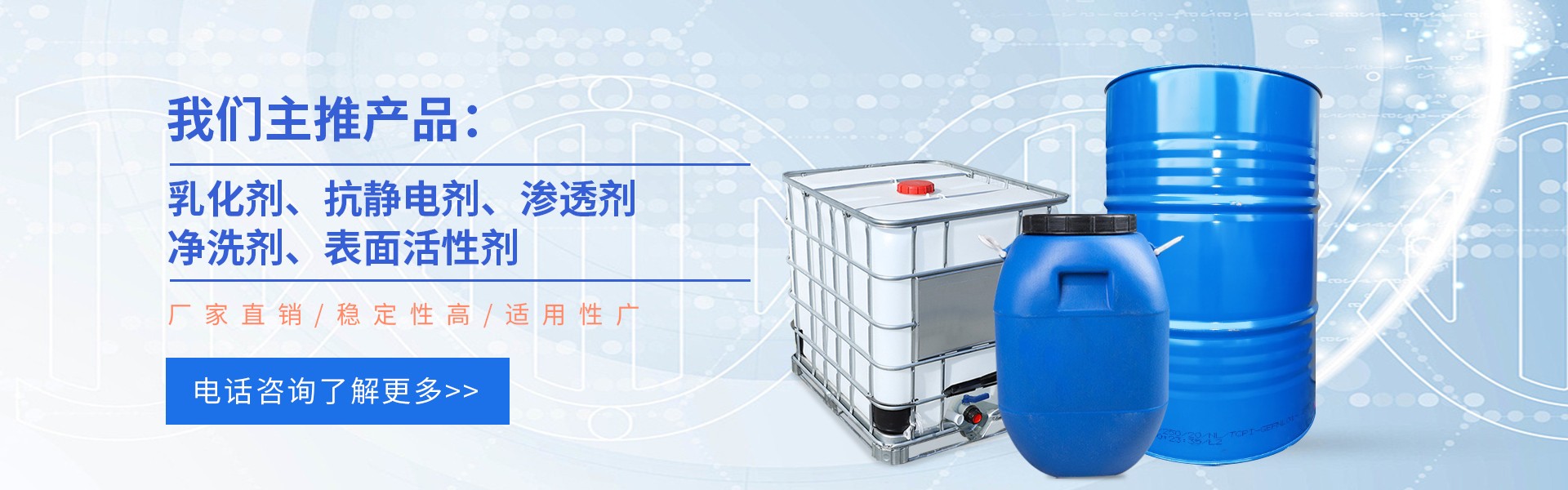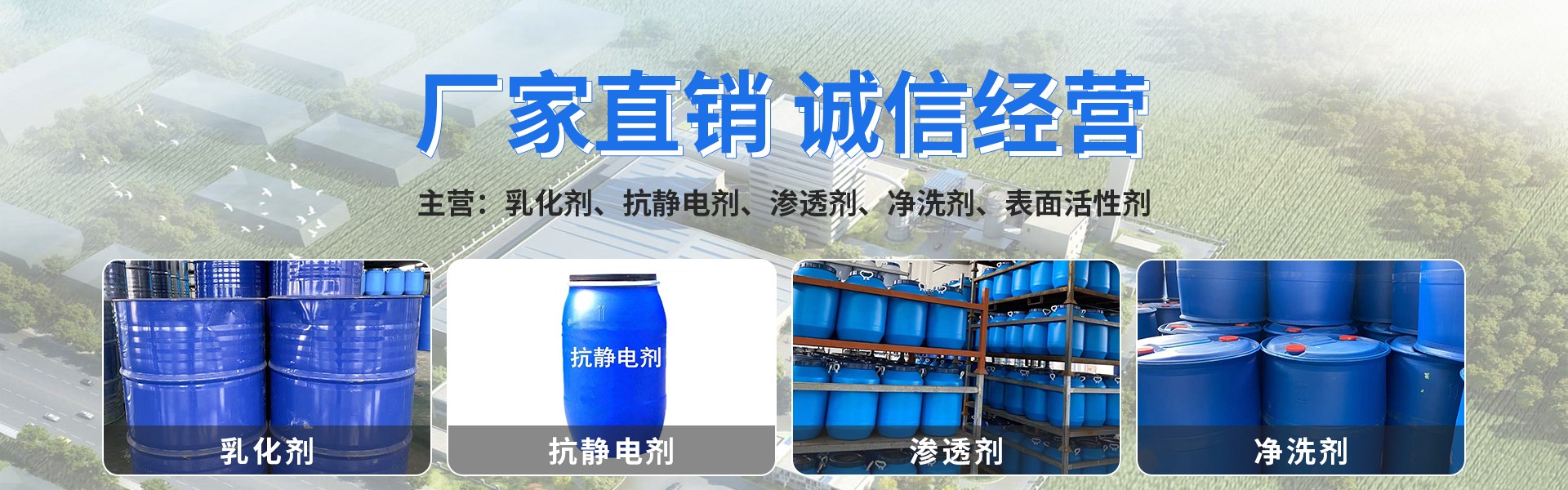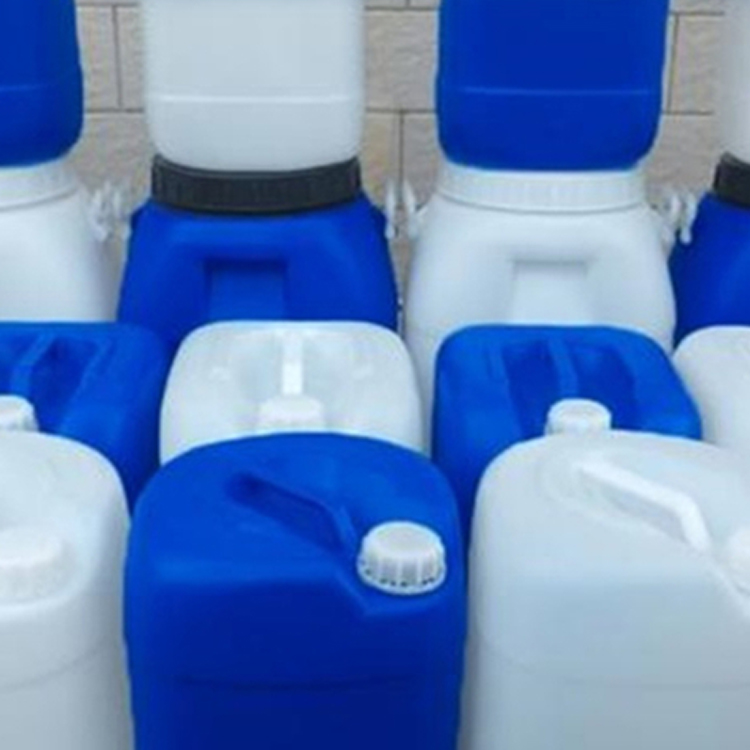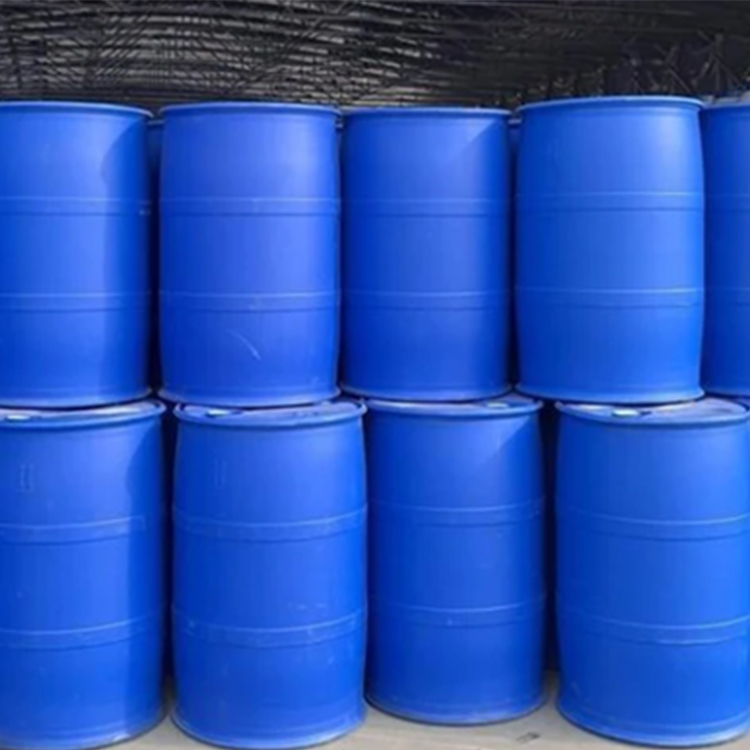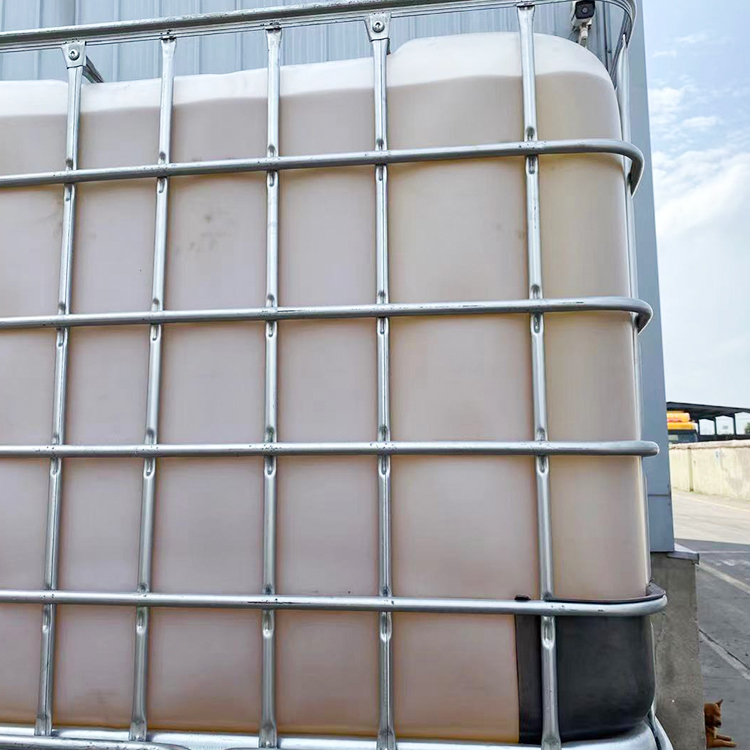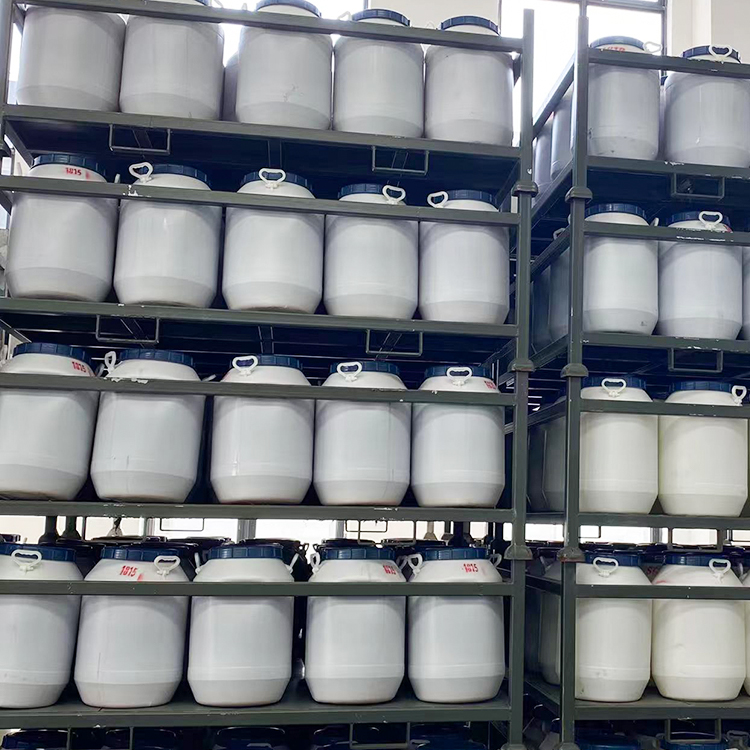
Our main products include surfactants: emulsifiers, penetrants, antistatic agents, defoamers, and more.
18014850813
Mono-methyl ether of polyethylene glycol is a derivative of polyethylene glycol, soluble in water, ethanol, and most polar organic solvents, with low volatility, stable chemical properties, strong hydrophilicity, and resistance to hydrolytic degradation. It has a low vapor pressure and good thermal stability, serving as a thickener and lubricant in the textile dyeing and daily chemical industries. When used in the synthesis reaction with acrylic acid, it forms MPEG acrylic acid esters. The prepared polycarboxylate cement admixtures exhibit strong cement particle dispersion retention, offering low dosage, high water-reducing efficiency, excellent reinforcement effects, durability, resistance to corrosion of reinforcing steel, and environmental friendliness. In the construction materials industry, they are used as cement water-reducing agents and reinforcing agents, suitable for high-performance, high-strength (C60 and above) commercial concrete used in on-site mixing and long-distance transportation.
According to the "2015 China Methyl Ether of PEG Industry Status Quo Research and Development Trend Forecast Report" released by China Industry Research Network, the rapid development of China's refined petrochemical industry has driven the market for raw product环氧乙烷 to remain in a state of supply shortage. The rapid growth in sectors such as polyester and surfactants has led to a significant increase in demand for products like ethylene glycol, synthetic detergents, and surfactants derived from ethylene oxide, indicating a vast market potential for raw products.
This article discusses the preparation and application of polyether monomethyl ether in water-reducing agents in recent years, providing reference for the development and application of the polyether monomethyl ether industry chain.
1. Concrete Additive
Poly-carboxylate superplasticizer, as a new-generation high-performance superplasticizer, is the monosodium glutamate of concrete, boasting low dosage, high water-reducing rate, good slump retention, low shrinkage, excellent late-stage strength enhancement, and non-polluting production process. It is widely used in infrastructure construction. With the substantial investment by the state in road and bridge, stadium buildings, flood control embankments, and drainage facilities, especially the rapid construction of high-speed rail, poly-carboxylate superplasticizer is highly favored for its excellent performance. The pursuit of high-efficiency water reduction, improved weather resistance, and reduced production costs has recently become a hot spot in the research and development of concrete admixtures both domestically and internationally, and it is also the main direction for the future development of superplasticizers.
Zeng Xiaojun and others have successfully synthesized a ternary copolymer polycarboxylic acid superplasticizer, MPEGAA-AA-SMAS, using MPEGAA, AA, and sodium methyl丙烯 sulfonate (SMAS) as raw materials through copolymerization reactions. The study systematically discusses the influence of monomer molar ratios, initiator dosage, reaction temperature, and reaction time on the dispersibility and plasticity retention of the copolymer product, determining the optimal process conditions for synthesizing the MPEGAA-AA-SMAS ternary copolymer polycarboxylic acid superplasticizer. Comparative tests on the concrete application performance with the imported polycarboxylic acid superplasticizer PC from abroad have shown that when the dosage is 0.18% and the water-cement ratio is 0.29, the synthesized polycarboxylic acid superplasticizer exhibits good dispersibility and retention, comparable to foreign similar products.
Utilizing mono(methoxy ethylene glycol) (MPEG) and maleic anhydride (MA) as raw materials, we produced maleic mono(methoxy ethylene glycol) ester (MPEGMA) and a mixture of maleic anhydride by esterification, which were then copolymerized with raw maleic anhydride (MA) and sodium methacrylate sulfonate (SMAS) to yield a MPEGMA-MA-SMAS ternary copolymer as an efficient water-reducing agent. The system discussed the influence of monomer molar ratios, catalyst dosage, esterification temperature and time, polymerization temperature and time, and initiator dosage on the dispersion of the copolymer product. When the molar ratio of n(MPEG):n(MA):n(SMAS) was 1:4:0.9, the catalyst dosage was 5% of the total raw material mass, the esterification temperature was 105℃-115℃, the esterification time was 2 hours, the polymerization time at 85℃ was 5 hours, and the initiator dosage was 10% of the total monomer mass, the synthesized water-reducing agent exhibited excellent comprehensive properties. Performance tests showed that at a dosage of 0.33%, it was uniformly distributed in concrete, enhancing its strength, frost-thaw resistance, and durability. The initial fluidity of cement paste reached 284mm, and the 28-day concrete strength reached 45.8MPa.
Jiang Lin and others have synthesized MPEGMA (polyethylene glycol mono methyl ether methyl丙烯ate) macromonomer using polyethylene glycol mono methyl ether (MPEG1000) and methyl丙烯ic acid (MAA) as raw materials, with p-toluenesulfonic acid (PTSA) as the catalyst, and phenothiazine (PTZ) as the polymerization inhibitor. The product is used as an intermediate for the synthesis of polycarboxylate superplasticizers. Through single-factor experiments, the optimal molar ratio of acid to alcohol was determined to be 6:1, the inhibitor dosage was 0.60%, and the esterification time and yield were optimized at a catalyst concentration of 1-5% under nitrogen atmosphere and water-evaporation conditions. At a catalyst concentration of 5%, the esterification time was approximately 50 minutes, and the esterification yield reached 96.52%. Linear regression analysis determined the esterification reaction to be a second-order reaction. Increasing the catalyst concentration shortened the esterification time, improved the esterification yield, and increased the rate constant. Within an appropriate temperature range, the higher the temperature, the greater the rate constant. Short-term storage of the macromonomer in neutral solutions is feasible.
Polyether carboxylate superplasticizer is a material with a comb-like structure of high polymers. Chain transfer agents are generally used to adjust the relative molecular mass of the polymer and control the molecular weight range. Zhou Nannan used polyethylene glycol monomethyl ether as the raw material, persulfate as the initiator, and adopted the method of esterification followed by polymerization. The three commonly used chain transfer agents in the market— mercaptoacetic acid, sodium methacrylate sulfonate, and isopropanol—were separately selected. By adjusting the amount of chain transfer agents, polyether carboxylate superplasticizers were prepared and used for concrete performance testing. It was found that when sodium allylsulfonate was used as the chain transfer agent with a dosage of 1%, the synthesized polyether carboxylate high-performance superplasticizer concrete showed the best dispersibility.
MPEGAA is used to synthesize aqueous comb-type dispersants, which are block polymers composed of ionic and non-ionic groups, characterized by low dosage and high adaptability. The comb-type dispersants are synthesized directly through esterification under reduced pressure, using MPEG and AA as raw materials and para-toluene sulfonic acid as a catalyst. The optimized process parameters are: reaction temperature of 90°C, reaction pressure of 0.06 MPa, catalyst dosage of 2.0% of the total mass of the reactants, inhibitor dosage of 1.5% of the acrylic acid mass, a molar ratio of AA to MPEG of 3:1, and a reaction time of 5 hours, achieving an esterification rate of up to 92.6%. After extraction with saturated brine and ethyl acetate, the purity of the product reaches 99.2%.
Ester-based polycarboxylate superplasticizers are prepared through a method of first esterification and then polymerization, utilizing MA and MPEG as the main raw materials. The esterification process involves adding inorganic absorbent to absorb water for the preparation of the macromonomer. This macromonomer is then mixed with a certain amount of chain transfer agent, initiated by ammonium persulfate in an aqueous solution, and polymerized to obtain the ester-based polycarboxylate superplasticizer. This product boasts a high water-reducing rate and good slump retention performance, offering clear advantages over naphthalene-based superplasticizers. Wu Feng and others used AA and MPEG as the main reaction raw materials, choosing a molar ratio of 3.5:1.0, adding dropwise with a solvent, toluene, at 90°C over 8 hours. This resulted in an active macromonomer with an esterification rate of 99.6% and a double bond retention rate of 91.5%. The adaptability and dispersancy retention of the polycarboxylate superplasticizer synthesized with this macromonomer were tested with four different brands of cement. The 2-hour net paste fluidity loss was minimal, indicating excellent adaptability. However, the method's use of toluene as a desiccant results in a more complex post-treatment process and potential environmental pollution.
In a closed system, Zhou Zhongqun and others synthesized a methyl丙烯ic acid polyethylene glycol monomethyl ester active monomer using oil bath method, with MPEG and MA as the main raw materials, methyl benzene as the water carrier, para-phenyl sulfonic acid as the catalyst, and hydroquinone as the antipolymerizer. They investigated the effects of process parameters such as the molar ratio of acid to alcohol, the amount of catalyst, esterification time, and esterification temperature on the esterification reaction. It was found that the molar ratio of acid to alcohol was the most significant factor affecting the esterification rate, followed by the esterification temperature, the amount of catalyst, and the amount of antipolymerizer. The optimal reaction conditions were: a molar ratio of raw materials of 3:1, a catalyst concentration of 3wt% (based on the weight of MPEG), a hydroquinone antipolymerizer concentration of 0.5wt%, and a reaction time of 8 hours at 115°C, with an esterification rate of up to 98%. Adding 0.5% of the water-reducing agent to cement paste resulted in an initial fluidity of 301mm, and after standing for 120 minutes, the fluidity remained at 295mm, with good dispersibility and plasticity.
Polycarboxylate superplasticizers are amphoteric polymers, containing both anionic and cationic active groups. This type of superplasticizer exhibits outstanding performance during application and is widely used in the construction industry. In recent years, there have been few reports on the synthesis and mechanism of action of amide-type polycarboxylate superplasticizers. The synthesis of sodium methacrylate sulfonate polyacrylic acid superplasticizer (SP), known as N-polyethylene glycol monomethyl ether-N'-carboxymethyl maleimide (MP-NEM), sodium methacrylate sulfonate (SMAS), and acrylic acid (AA), is achieved by using MP-NEM, SMAS, and AA as raw materials, and producing a MP-NCM-SMAS-AA copolymer under the initiation of ammonium persulfate (APS). The optimal synthesis process for SP involves dissolving 1 mole of MP-NEM and 2 moles of SMAS in water, gradually adding a 0.4% solution of ASP and 4 moles of AA, and reacting at 50°C for 6.0 hours to synthesize SP.
Currently, the preparation of MPEGMA primarily employs the solvent esterification method. Zeng Xiaojun and others have adopted the melt esterification method, using MA and MPEG as raw materials, with para-toluene sulfonic acid as the catalyst to synthesize MPEGMA. The effects of monomer molar ratio, catalyst dosage, and reaction time on the esterification rate were investigated. When the molar ratio of n(MA):n(MPEG) is 1.2:1, the catalyst dosage is 1% of the total mass of MPEG and MA, and the reaction temperature is controlled at 110°C with a reaction time of 6 hours, the esterification rate can reach 83.7%, and the infrared characteristic peak of the double bond structure in the esterification product is pronounced.
Adipic acid has more carboxyl groups than丙烯酸, and the price of adipic anhydride is lower than that of丙烯酸. Ko Changyue et al. used traditional free radical polymerization methods, with adipic acid polyethylene glycol monomethyl ether (MPMA) as the monomer, to copolymerize in an aqueous phase under the initiation of ammonium persulfate, synthesizing MPMA-modified polycarboxylate superplasticizers. The optimized conditions were n(AA):n(MPA):n(MAS):n(MPMA) = 3.5:1:1:1, with the initiator accounting for 2.5% of the total monomer amount. Under these conditions, the solid content of the superplasticizer was 0.2%, the water-cement ratio was 0.29, and the net paste flow was 301mm. Its water-reducing performance is superior to that of commercially available polycarboxylate superplasticizers, with better slump retention than ordinary polycarboxylate performance, offering good research value and market prospects. In recent years, the research and production of concrete admixtures have been developing towards high performance and pollution-free directions. Huang Jian et al. used the Williamson etherification method, with MPEG and chloropropene as raw materials, adding solid alkali NaOH, to synthesize the polycarboxylate superplasticizer macromonomer methyl allyl polyethylene glycol monomethyl ether (APEG). MPEG itself is a phase catalyst, and the optimal etherification conditions are a material molar ratio of n(MPEG):n(NaOH):n(NaO-HC3H5Cl) = 1.7:1.1:1.0, with the etherification reaction at 90℃ for 6h, resulting in a product purity of 91.8% and a yield of 81.4%.
To enhance the performance of concrete applications, the traditional polycarboxylate superplasticizer molecules have been designed by introducing cationic active groups such as amides, amines, and N-heterocyclic compounds, which can effectively improve the application performance of the superplasticizer. Li Jixin and others have adopted the solution polymerization method, using MA, MPEG, N-carboxymethyl maleimide (MPNCM), and sodium methacrylate sulfonate (SMAS) as monomers, and synthesized maleimide-type polycarboxylate superplasticizer (SP) through the initiation of ammonium persulfate (APS). Factors affecting the process were investigated, with the optimal reaction conditions being a MPNCM/SMAS molar ratio of 1.2, a MA/SMAS molar ratio of 5.0, an APS dosage of 0.15 wt%, and a reaction temperature of 60°C. The superplasticizer molecules are oriented to adsorb on the surface of cement particles, forming a double electron layer, and under the action of electrostatic repulsion, the cement particles are dispersed. Polycarboxylate superplasticizers with high efficiency are widely used in modern engineering construction due to their advantages such as high water-reducing rate, good stability, and safety and environmental protection. The development of environmentally friendly or solvent-free products without harmful residue has become the main direction of superplasticizer development. Zeng Xiaojun and others have adopted the solvent-free direct esterification method, using 4A molecular sieve as a desiccant, and directly esterified MA and MPEG to synthesize dimaleic acid bis-polyethylene glycol monomethyl ether (DMPEGMA). The optimal conditions were selected with a n(MPEG):n(MA) ratio of 2.1:1.0, a catalyst dosage of 5% of the total mass of the raw materials, and a reaction time of 8 hours at 130°C, achieving an esterification rate of 97.2%. When the dosage is 0.3% and the water-cement ratio is 0.29, the initial fluidity of the cement paste reaches 300mm, and the fluidity after 1 hour remains at 295mm, demonstrating good dispersibility and plasticity retention.
Song Zhiyong, utilizing polyethylene glycol monomethyl ether (MPEG-1000) and acrylic acid (AA) as the main materials, catalyzed by methyl benzenesulfonic acid, inhibitor of para-hydroxybenzene, and novel non-toxic cyclohexane as the water carrier, prepared polyethylene glycol monomethyl ether acrylic acid ester (MPE-GA) by the direct esterification method with the addition of AA drop by drop. The optimal esterification conditions are: n(MPEG):n(AA) = 2.5:1, catalyst dosage of 4% of the total acid-alcohol content, methyl benzenesulfonic acid dosage of 4% of the total mass of MPEG and AA, inhibitor dosage of 2% of the mass of AA, cyclohexane addition of 2%, and reaction at 115℃ for 7 hours, achieving an esterification rate of 97.46% and a double bond retention rate of 93%.
Maleic anhydride (HPMA) and mono(methyl)ethylene glycol (MPEG) both possess certain grinding aid properties. By adding a mixture of HPMA and MPEG to cement slurry, the mechanical force during the cement powder grinding process promotes hydrolysis of HPMA and MPEG to undergo esterification reactions, forming polycarboxylate grinding aids. This improves the fluidity of cement mortar and significantly enhances its early strength. Zhang Haibo et al. [17] found that the best grinding aid effect is achieved when the mass ratio of HPMA to MPEG is 2:1.
Using MPEG and MAA as raw materials, polyethylene glycol monomethyl ether methyl丙烯ate (MPEGMA) is prepared by catalytic esterification of methyl苯磺酸 under vacuum conditions. Guo Weijie [18] proposes a more precise method to evaluate the esterification rate of polyethylene glycol monomethyl ether esterification reactions. Utilizing orthogonal design, the significant factors affecting the esterification rate of the product, in descending order, are: alcohol to acid molar ratio > reaction temperature > esterification reaction time > catalyst dosage. The optimal esterification conditions are: n(MPEG):n(MAA) = 1.0:2.2, catalyst dosage 4.17%, reaction temperature 123°C, reaction time 5.5h. The obtained product esterification rate reaches 95.12%, and the better the esterification rate of the product, the better the dispersibility of the synthesized water-reducing agent.
Zhang Deliang and his team have successfully synthesized MPEGMA1200, a high-activity monomer of carboxylate superplasticizer, by directly esterifying polyethylene glycol monomethyl ether-1200 (MPEG1200) with methyl丙烯ic acid (MAA). Through orthogonal experiments, the esterification rate and the molar fraction of double bonds were independently investigated, and their influence on these parameters was comprehensively evaluated. The optimal process conditions were determined as follows: a molar ratio of acid to alcohol of 2.0:1, 2.5 wt% of inhibitor, 4 wt% of catalyst, and 40 wt% of water carrier, with a reaction time of 6 hours at 130°C. The esterification rate reached 98.9%, and the molar fraction of double bonds was 91.1%.
Contact us

Service Hotline
18014850813
Company Telephone
18014850813

WeChat Number
qdnjky

Address
No. 832-68, Dongba Information New Material Industrial Park, Gaochun District, Nanjing City
b2b.china9.net © Zhongshang 114 Hebei Network Technology Co., Ltd.Address: Room 6009, Oriental New World Center, No.118 East Zhongshan Road, Qiaoxi District, Shijiazhuang City, Hebei ProvincePlatform Service Hotline: 4006299930