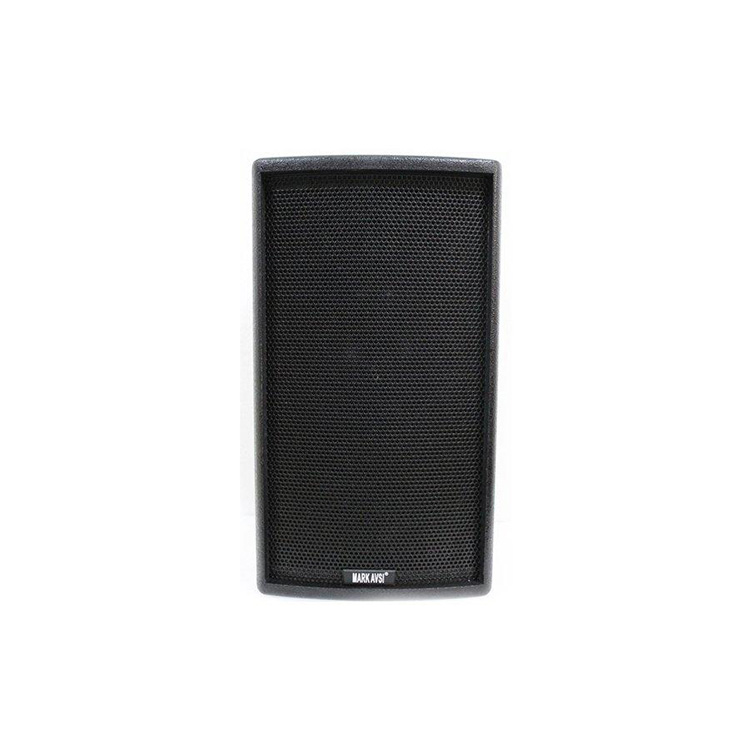
Focused on the research and development of audio-video AV...

Karaoke differs from other entertainment venues in sound engineering design plans. Let's take a simple look at how sound engineering is designed in karaoke establishments.
I. Design Based on and Execution of National Standards
The company's news content is as follows: 1. Based on the primary indicators for both speech and music as requested in the GYJ25-86 specifications (Acoustic Characteristics of Public Address Systems in Halls) issued by the State Administration of Radio, Film and Television of the People's Republic of China.
2. Designed in accordance with the "Acoustic Characteristics and Measurement Methods for Public Address Systems in Entertainment Venues" (WH0301-93) published by the Ministry of Radio, Film and Television of the People's Republic of China in 1993, meeting the specifications for mixed-level entertainment venues.
3. The equipment design installation specifications are in accordance with the newly published "Standard for Electrical Installation Construction and Acceptance" (GB 50258-96) by the People's Republic of China's Ministry of Construction in 1996, as well as the "Standard for Electrical Design of Civil Buildings" (JGJ/T16-92) published in 1992.
Design Technology Request
The卡拉OK sound amplification system is designed with the purpose of using both voice and music amplification at the first-grade standard, with its technical specifications being:
The sound pressure level request is for an even sound pressure level of no less than 120 dB within the frequency range of 100 Hz to 6300 Hz.
Transmission Frequency Characteristics: The request is for an even sound pressure level of 0dB at frequencies between 100Hz and 6300Hz, with allowances for less than or equal to ±4 dB within this frequency range.
3. Sound Reinforcement Gain: Request for an even gain greater than or equal to -8 dB within the frequency range of 100 Hz to 6300 Hz (suitable for music applications):
4. Average Field Sound Level: Request no more than 10 dB at 100 Hz; no more than 8 dB at 1000 Hz; and no more than 8 dB at 6300 Hz.
5. Total Noise Level: Defined as the uniform noise level at various listener seats within the hall when the sound reinforcement system reaches the maximum available gain, but with no useful sound signal input, the request is less than or equal to NR25 (35 dBA).
6. Distortion: 7%
7. Reverb Time: 1.2MS
The design of the sound engineering will directly impact future operational benefits, and karaoke business owners often pay close attention to their sound engineering design plans.
b2b.china9.net © Zhongshang 114 Hebei Network Technology Co., Ltd.Address: Room 6009, Oriental New World Center, No.118 East Zhongshan Road, Qiaoxi District, Shijiazhuang City, Hebei ProvincePlatform Service Hotline: 4006299930