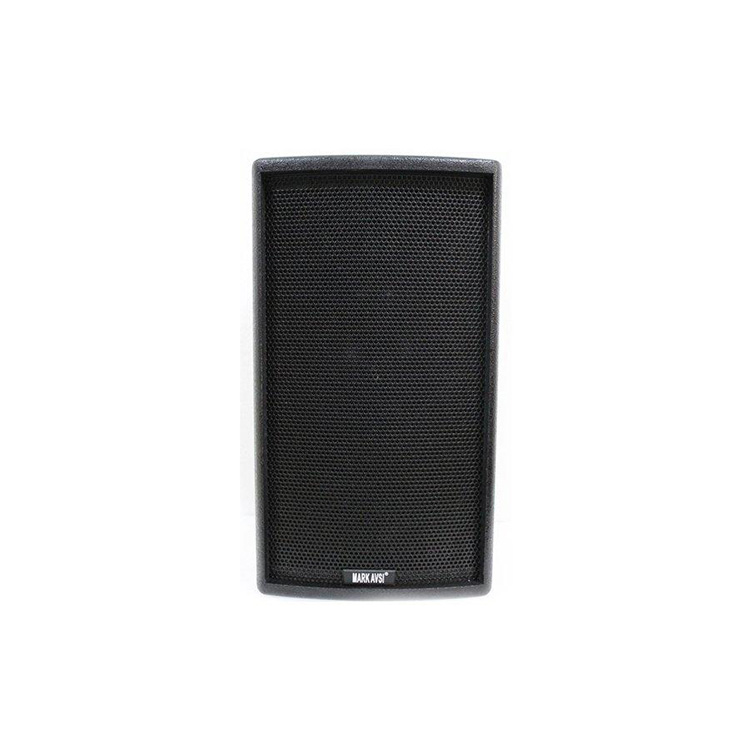
Focused on the research and development of audio-video AV...

Types of Band Pass Filters:
The divider can be categorized into two types: "Power Dividers" and "Electronic Dividers."
Power Splitter: Passive circuit, located after the power amplifier, set upSpeakerInternally, after passing through an LC filter network, the power amplifier's output audio signal is divided into low and high frequencies (two channels) or low, mid, and high frequencies (three channels), which are then sent to their respective destinations.SpeakerSeamless in connection, convenient to use, but power-consuming; presenting audio valley points and causing intermodulation distortion. Its parameters are as follows:SpeakerImpedance has a direct relationship, whereas...SpeakerThe impedance is a function of frequency, deviating significantly from the nominal value, resulting in larger errors and不利于adjustment.
2. Electronic Frequency Divider: An active circuit located before the power amplifier, it divides the front-end audio signal into different frequency bands and then amplifies each audio band signal separately using independent power amplifiers, after which they are sent to the corresponding channels.SpeakerDue to the lower current, a smaller power electronic active filter can be used, which is easier to adjust, reduces power loss, andSpeakerInterference between units minimizes signal loss and ensures high-quality sound. However, this method requires an independent power amplifier for each channel, resulting in high costs and complex circuitry, making it suitable for professional sound reinforcement systems.
The Function of a Band Splitter:
At presentSpeakerThe product has not yet achieved a comparable average frequency response across the entire audio range (20Hz-20kHz), therefore, it can only be used with two...Speaker(A soprano, a bass) or threeSpeakerThe (high, mid, low) tones adopt a similar "relay" approach to achieve excellent sound effects. Consequently, a special circuit (referred to as a crossover or a filter) is required to divide the full audio frequency range into two or more bands, which are then sent to differentSpeakerPlay the sound.
Frequency Band Selection:
1. The directional applicability of mid-low unit frequencies is indicated by f=345/d (where d is the effective diameter of the unit diaphragm). Typically, an 8" unit has a boundary frequency of 2kHz, a 6.5" unit has a boundary frequency of 2.7kHz, a 5" unit has a boundary frequency of 3.4kHz, and a 4" unit has a boundary frequency of 4.3kHz. This means that the crossover points for these units cannot exceed their respective applicable boundary frequencies.
2. Considering the resonance frequency of the tweeter unit, the crossover point should be greater than three times the resonance frequency. In other words, from the perspective of the tweeter unit, the crossover point is typically greater than 2.5k.
3. The high-end response of the mid-low frequency unit, Fh, should typically not exceed 1/2 Fh. In practice, the split frequency...SpeakerIt is challenging to satisfy all these conditions simultaneously. In such cases, designers should make a relatively good compromise among the three. However, it must be emphasized that the first condition, which is the applicable border frequency, should be prioritized.
In a 3rd-octave band situation, it is generally advisable to space the two frequency bands further apart (more than three octaves), as this will result in a better overall system response. Otherwise, complex interference radiation phenomena may occur.
5. The crossover point between bass and mid frequencies should consider the positioning of vocal sound images. The reproduction of vocals should ideally be handled by the mid-range speaker to prevent excessive changes in the timbre of the vocal sound image positioning. This aspect is often overlooked by designers. Typically, this crossover point should be between 200-300 Hz.
b2b.china9.net © Zhongshang 114 Hebei Network Technology Co., Ltd.Address: Room 6009, Oriental New World Center, No.118 East Zhongshan Road, Qiaoxi District, Shijiazhuang City, Hebei ProvincePlatform Service Hotline: 4006299930