


- AllProduct Category
-
Wastewater Pumps
Wastewater Treatment
Suction Mud Remover
Waste Retention & Conveyance
Aeration Oxygenation Equipment
Blender Mixers


详情描述
Principle of Water Purification
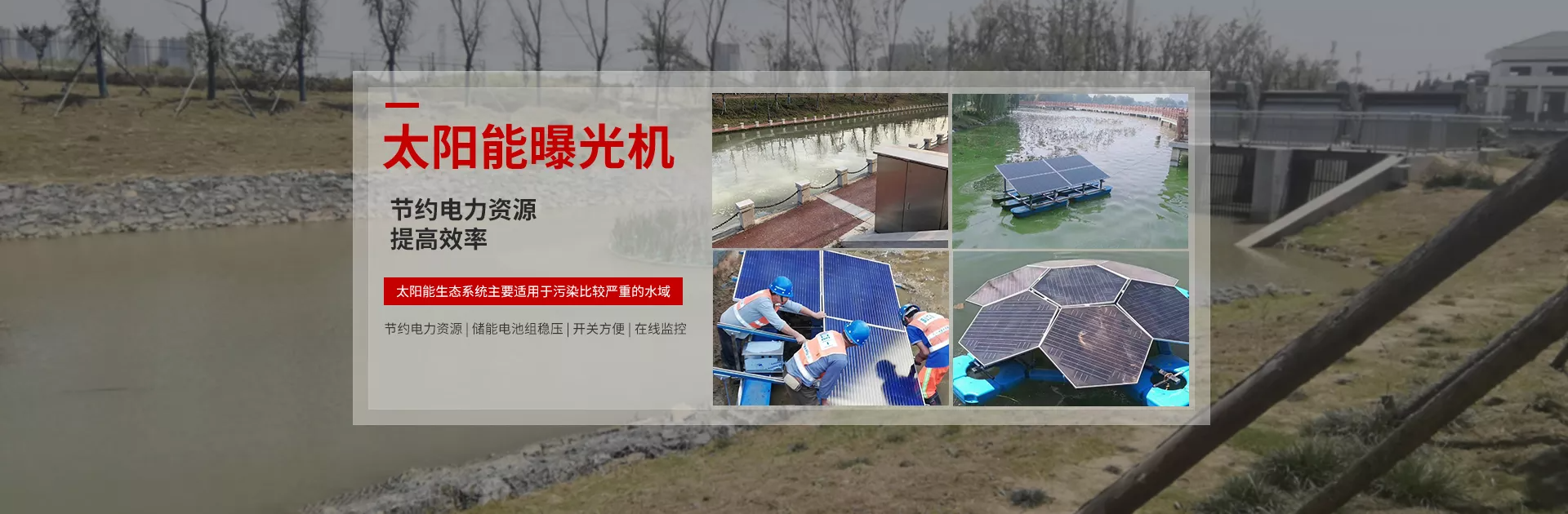
The De-layered Solar Aeration Machine, also known as the Solar Water Recirculation and Oxygenation Control Algae Machine, operates directly with solar energy. It features a spiral cutting and lifting aeration impeller, which, through its rotational force, transfers bottom anoxic water to the water surface for mixing with surface oxygen-rich water. The oxygen-rich surface water diffuses horizontally through centrifugal rotation and vertically into the bottom anoxic zone. This achieves the triple effects of de-layering the water body, increasing oxygenation, and promoting vertical and horizontal circulation exchange, transferring super-saturated dissolved oxygen water from the surface to the bottom of the water body, enhancing the dissolved oxygen in the lower water, eliminating natural stratification, and improving the water's self-purification capacity.
Product Structure
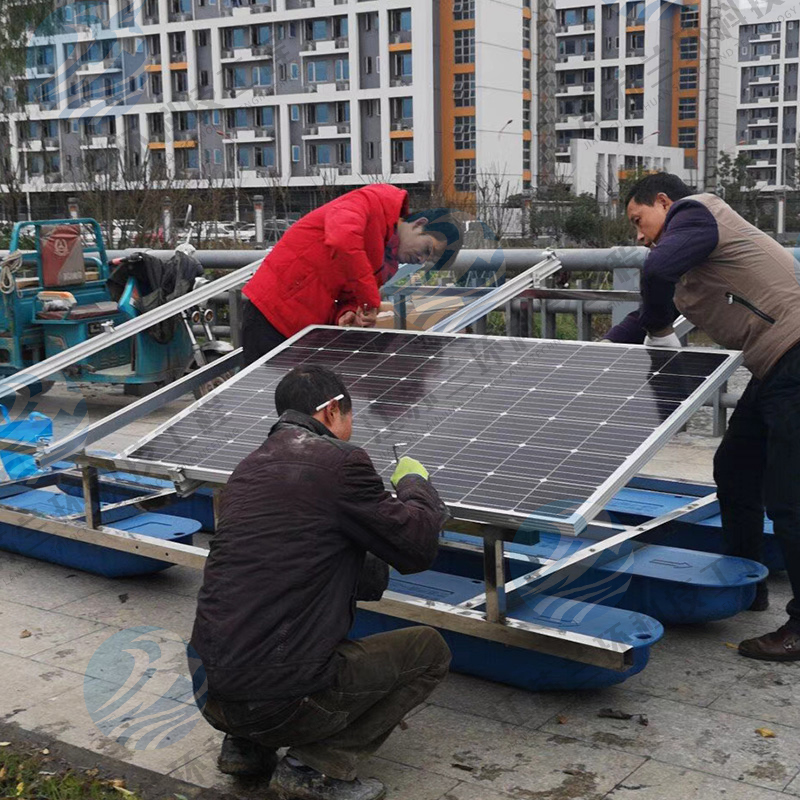
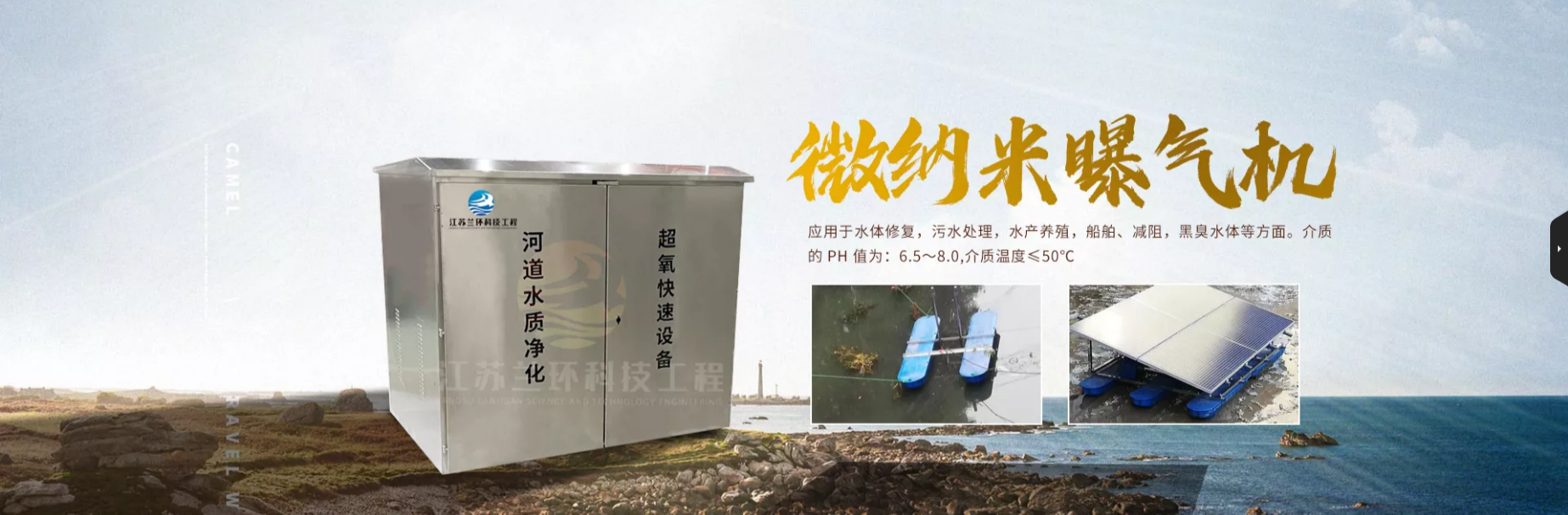
The solar destratification aeration machine consists of main components such as photovoltaic panel modules, battery packs, surface aeration pumps, floatation devices, and supports. The photovoltaic panels power the surface aeration pump blades, which rotate to stir the water, creating water sprays and films to increase the water-air interface. This allows oxygen and aerobic substances on the surface, as well as algae, to quickly infiltrate the bottom of the water, facilitating a rapid exchange of water quality between the surface and lower layers. It also expels bottomwater gases, helping to maintain the ecological balance of the water body.
Application Range:
Reservoirs, rivers, lakes, and other deep water bodies, where surface and bottom waters interact, are effective for algae treatment.
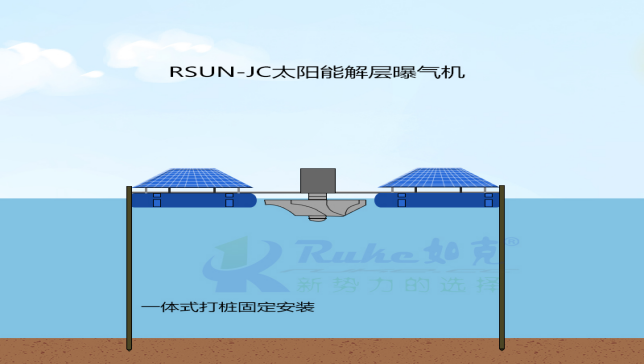
Installation Method
1. Integrated Cable Fastening 2. Integrated Anchor Fastening 3. Integrated Piling Fastening 4. Integrated Cantilever Fastening 5. Disassembled Fastening
Features:
1. Achieve rapid water circulation between the surface and the bottom layer. 4. Easy installation, no daily manual operation required.
2. Suitable for water depths greater than 3 meters, 5. Buoy installation, unaffected by water level.
3. No need for chemical additives to prevent re-contamination.
Function: Up-down exchange mixing aeration: The delamination process is a mixing aeration process, transferring dissolved oxygen-rich surface water to the bottom, increasing the dissolved oxygen content in the bottom water, preventing the water body from deteriorating due to oxygen deficiency, and preventing the emission of chemicals such as sulfides and amines. It promotes the biochemical purification effect of the bottom water, while the oxygen-rich bottom water prevents anaerobic release of phosphorus, and the suspended sludge can effectively adsorb soluble phosphates.
Enhance Environmental Self-Cleaning: In conditions of increased temperature and dissolved oxygen, the bottom water body decomposes harmful substances such as animal waste, organic sludge, and decaying algae, improving the substrate, activating the ecological functions of the bottom sediment, and enhancing the water body's self-cleaning ability.
Powerful Recirculating Manufacturing of Live Water: Live water is the second life of lakes, creating a strong main current and induced currents through stratification aeration, effectively breaking the natural stagnation zones formed by temperature stratification, enabling the entire water body to form a circulating live water flow.
Quickly Inhibit and Eliminate Algal Blooms: By destratifying the water body, dissolve oxygen, temperature, and salinity stratification is eliminated, stabilizing water quality. The surface water with high algal concentration is transferred to the bottom, where it is suppressed under low temperature and lightless conditions. The surface algae rapidly decreases, with some being consumed and eliminated by plankton in the lower layer, allowing for quick elimination of algal blooms and preventing recurrence.
Resource utilization of pollutants: High concentrations of algae in surface water are transferred to the bottom of the water body, where some become feed for fish and shellfish.
Enhance Aesthetics and Ecosystem: Reduce Biochemical Oxygen Demand (BOD) in the short term, decrease Total Suspended Solids (TSS) in water, improve water visibility, eliminate odors, and degrade bottom sediment in water bodies. Additionally, it can prevent seasonal fish mortality and suppress the growth of harmful aquatic weeds.
Key Technologies and Parameters
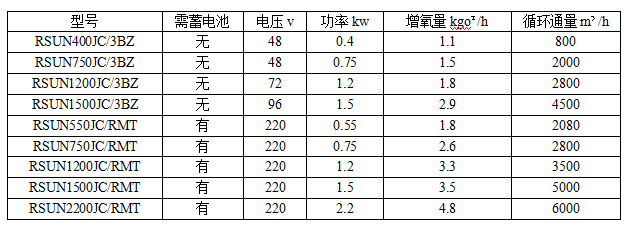
Recirculating Flow: The water flow around the equipment; Inductive Flow: The water flow that interacts with the equipment to generate dynamic induction.
Usage Instructions & Installation
1. Use and fill the reducer with 20# gear oil from the filling hole, then tighten the oil hole plug. After refueling, the gear box should be placed upright; do not lay it flat to prevent gear oil from leaking into the motor.
2. Ensure the voltage used matches the voltage specified on the motor. Install a shock protection device and strictly inspect for cable damage. Connections must be secure, properly grounded, and the rubber pads in the junction box must be tightly sealed to prevent water entry. The impeller must rotate in the direction of the arrow.
3. Install the oxygenator in the center of the floating barge to prevent it from tipping over during operation.
4. When the aerator is in operation, the impeller should be level with the water surface. In case of unstable or low voltage, raise the impeller to reduce the motor load.
5. Always use a fuse with the power supply, no one should be in the water while in operation, and the oxygenator should be turned off before moving.
Terms of Use
When using the machine in a pond with mud bottom, the water depth should exceed 1 meter to prevent stirring up sediment from the bottom during impeller operation.
2. The operating voltage of the motor is within ±5% of the rated voltage.