




- AllProduct Category
-
Wastewater Pumps
Wastewater Treatment
Suction Mud Remover
Waste Retention & Conveyance
Aeration Oxygenation Equipment
Blender Mixers


详情描述
Product Introduction:
Submersible mixers have been developed through years of practical exploration, thanks to their innovative design in form, structure, and testing methods, which result in a good performance-to-price ratio. They enhance the mixing efficiency of wastewater, primarily used in wastewater treatment plants to agitate suspended wastewater, thin sludges, and industrial process liquids. They create water currents, strengthen mixing functions, prevent sludge sedimentation, and ensure uniform mixing of solid, liquid, and gas phases in both municipal and industrial wastewater treatment processes.
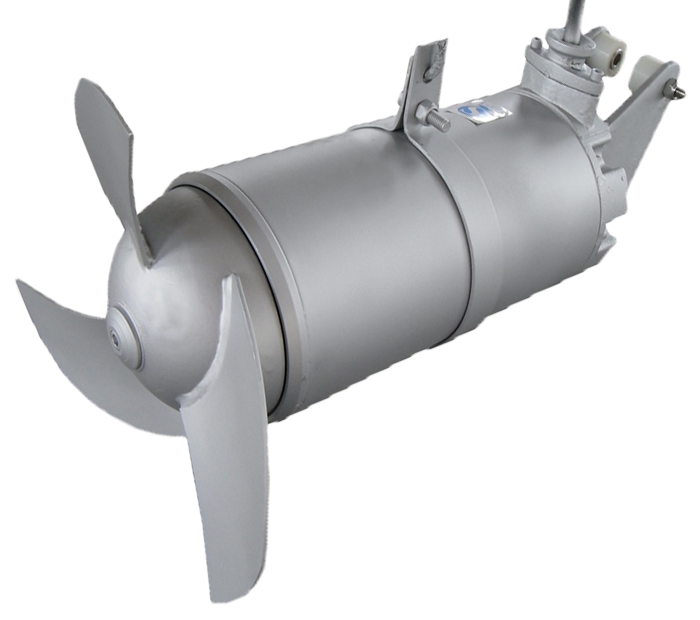
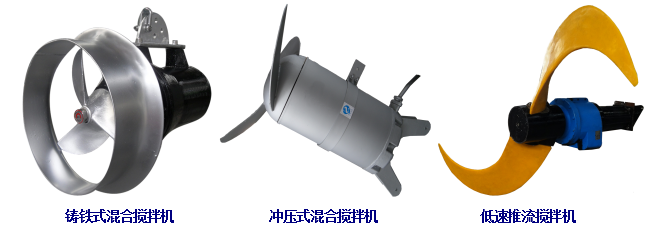
The QJB type submerged mixer is divided into two main series: mixing and low-speed flow propulsion.
The Mixed Series Agitator is suitable for wastewater treatment plants and industrial processes, where it agitates aeration and anaerobic ponds. It creates water currents by circulating pond water, suspended solids, and during the nitrification, denitrification, and phosphorus removal stages.
Low-speed impeller mixers are suitable for industrial and urban wastewater treatment plant aeration tanks, generating strong water currents with low tangential flow, which can be used to create water currents for circulation, nitrification, denitrification, and phosphorus removal stages.
Application Scope:
The blender should be able to operate continuously under the following conditions:
1 Medium temperature not to exceed 40°C.
The pH value of the 2 mediums ranges between 5~9.
3 The liquid density does not exceed 1150 kg/m³.
4 Long-term dive operations, with dive depths generally not exceeding 20 meters.
Cautionary Notes:
Submersible mixers must be fully submerged in water for operation; they cannot be used in environments with flammable, explosive, or highly corrosive liquids. The steel expansion bolts must be secured according to specifications, and the cables must be tightened and securely fastened after installation.
When selecting a submersible propeller, if the blade diameter exceeds 2M, it is recommended to use a gear box reducer.
Performance Features:
Compact structure, easy operation and maintenance, convenient installation and inspection, and long service life.
2 The impeller conforms to hydraulic design structure, boasts high work efficiency, and the swept-back blades have self-cleaning capabilities, preventing debris entanglement and clogging.
Combining with the aeration system can significantly reduce energy consumption, improve oxygenation, and effectively prevent sedimentation.
4 Motor winding with F-grade insulation, IP68 protection class, using better bearings and motor anti-condensation devices for enhanced safety in operation; 5 Double mechanical seals.
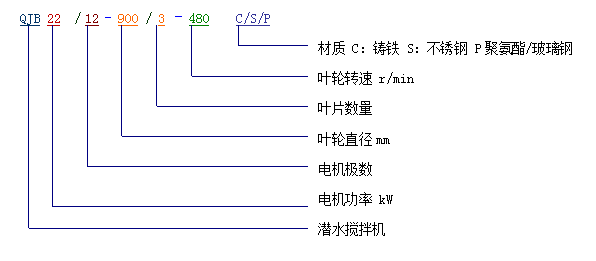
Model Representation Method:
Performance Parameters:
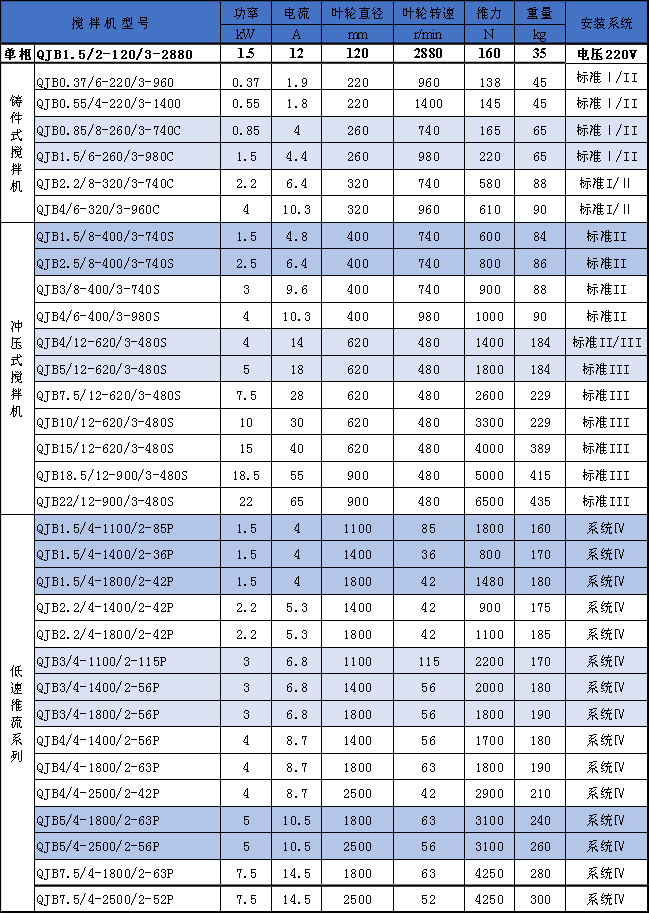
The mixer operates at a rated voltage of 380V, a frequency of 50Hz, with a F-grade winding insulation, IP68 protection rating, and under working mode Ⅰ.
Submersible mixer design:
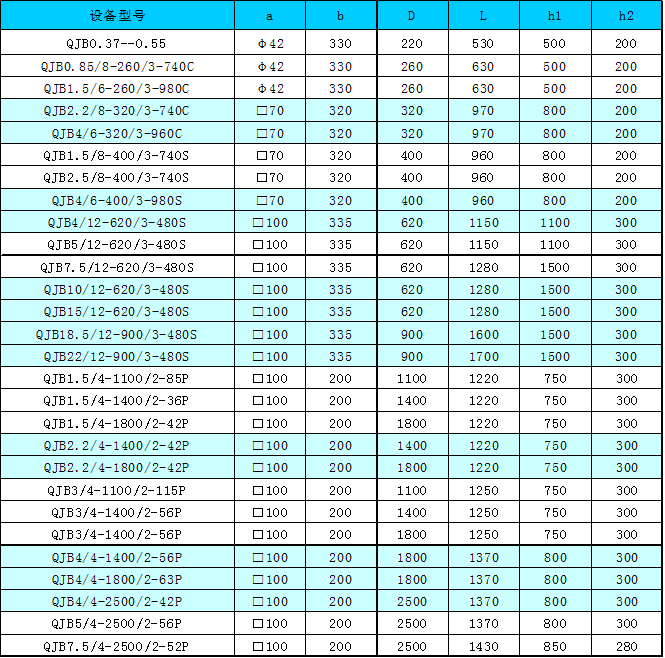
Mixing Machine Installation Dimensions:
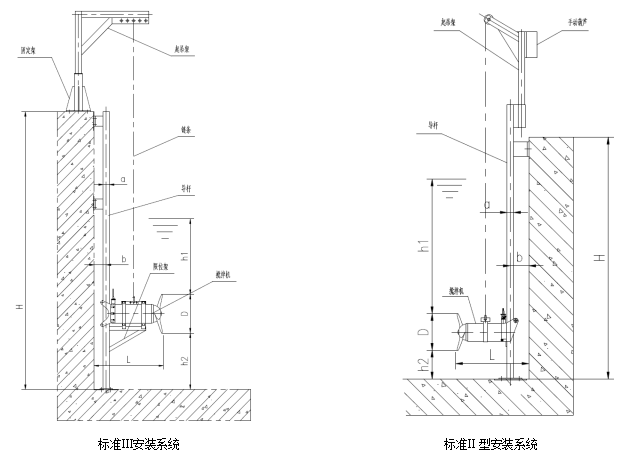
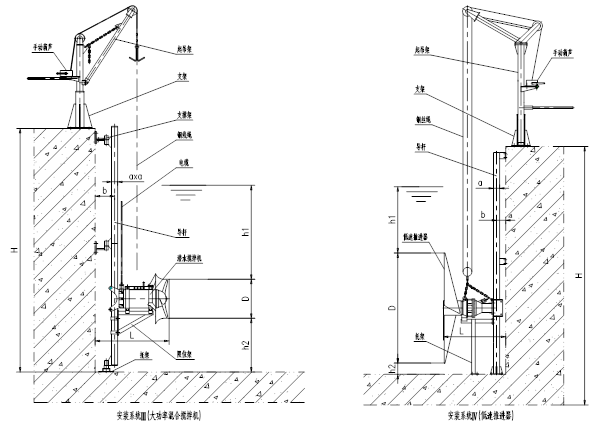
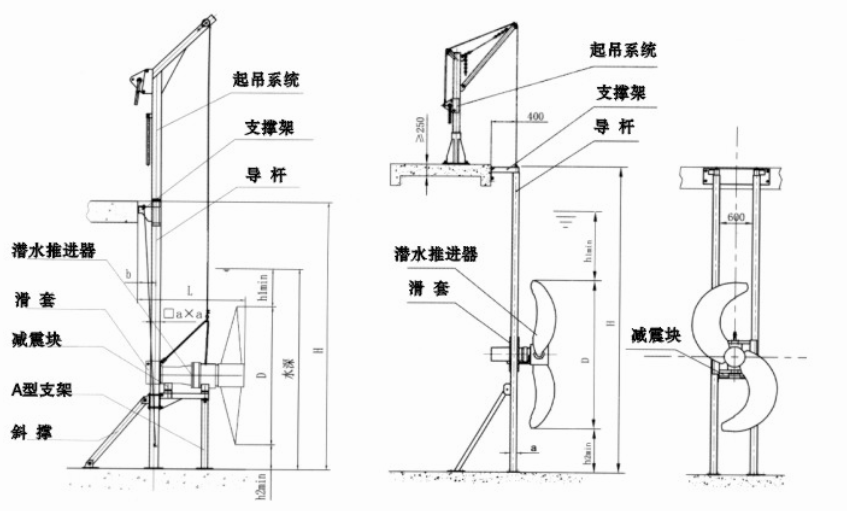
Installation System (Bracket Optional):


Selection Considerations:
Selecting a submersible mixer is a complex task, as the correctness of the selection directly affects the normal operation of the equipment. The principle of selection is to ensure that the mixer performs full mixing functions within an appropriate volume, typically determined by flow rate. According to the different process requirements of wastewater treatment plants, the mixer flow rate should be maintained between 0.15~0.3 m/s. A flow rate below 0.15 m/s fails to achieve plug flow mixing, while a rate above 0.3 m/s can affect process efficiency and lead to waste. Therefore, before selecting, it's crucial to determine the application site of the submersible mixer, such as: sewage pond, sludge pond, biochemical pond; followed by medium parameters like suspended solids content, viscosity, temperature, and pH value; and also the shape and depth of the pond.
The required配套power for mixers is determined by the volume size, the density of the mixing liquid, and the mixing depth; a single mixer or multiple mixers are used based on specific conditions.
Blended Mixing Type
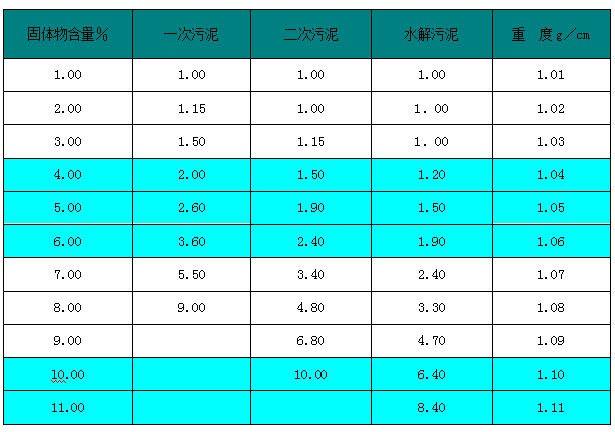
Determine the sludge correction factor for the medium to be mixed based on Figure B1 or Table B1.
Determine the mixing tank type correction coefficient according to Figure B2 or Table B2.
3 Multiply the 5 W required per cubic meter of clean water by the sludge correction factor, then by the tank type correction factor, to get the actual power required per cubic meter for the mixture to be blended. Multiply this by the volume of the mixture to be blended, and you'll obtain the total power needed for blending the entire tank's mixture.
Low-speed Turbulent Flow Type
1. Determine the mixing tank's type correction factor based on Figure B1 or Table B1.
Determine the sludge correction factor for the medium to be mixed based on Figure B2 or Table B2.
3 Determine the power consumption per unit volume based on the initial flow velocity y of the mixing medium, as indicated in Figure B3.
Calculate the flow rate of the agitator by multiplying the initial flow velocity of the mixing medium (y) by the cross-sectional area formed by the impeller as it rotates.
Multiply the flow rate by the unit flow power consumption using the mixer, then further multiply by the sludge correction factor and the tank type correction factor to obtain the total power required for the entire tank medium.
Table B1 Pond Correction Coefficient Table
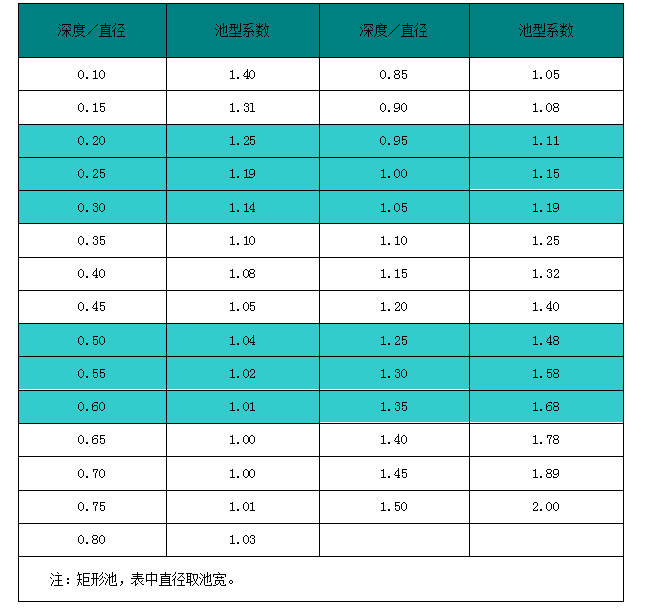
Table B2 Sludge Correction Coefficient Table

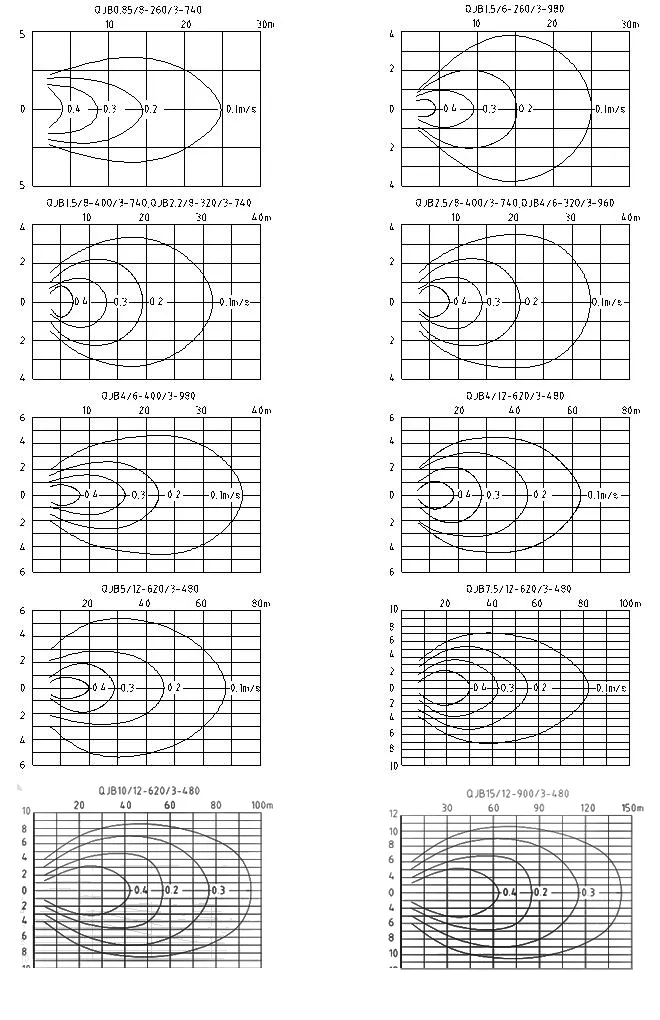
Diving Agitator Flow Rate Diagram:
The following flow field is under the condition of clear water with a boundary flow velocity of V=0.1 m/s:
Operating Conditions:
Blended Mixing Series
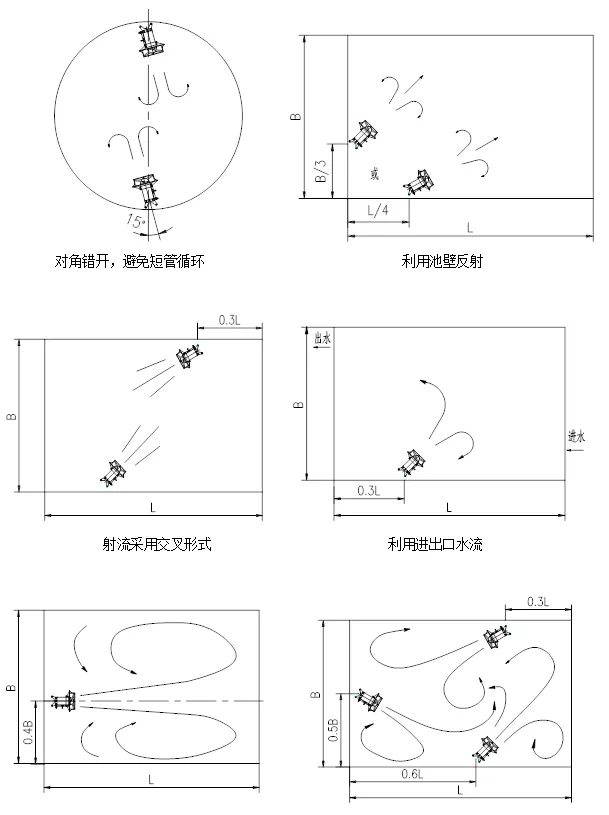
For regular pool types, it is recommended to arrange face-to-face with offsets.
Low-speed Turbulence Agitator Series
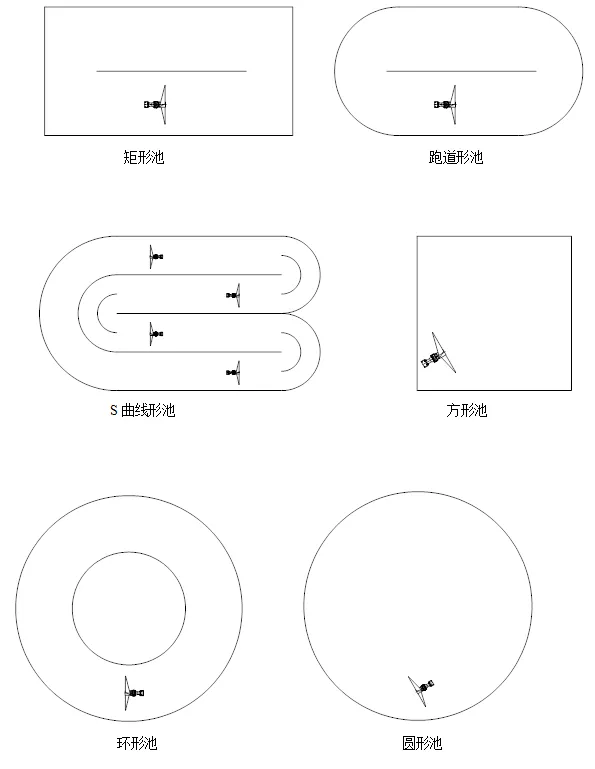
For regular pool-type arrangements, it is recommended to face each other with staggered placement.


