




- AllProduct Category
-
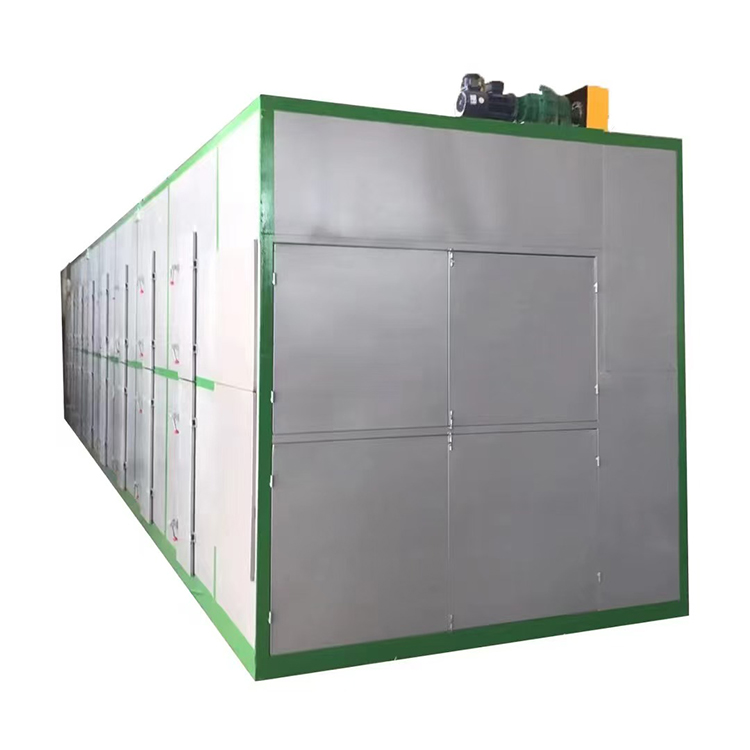
Hot Air Circulation Dryer Oven
Pulverizer
Pellet Mill
Blender
Screw Conveyor Dryer
Rotary Kiln Dryer
Spiral Vibratory Dryer
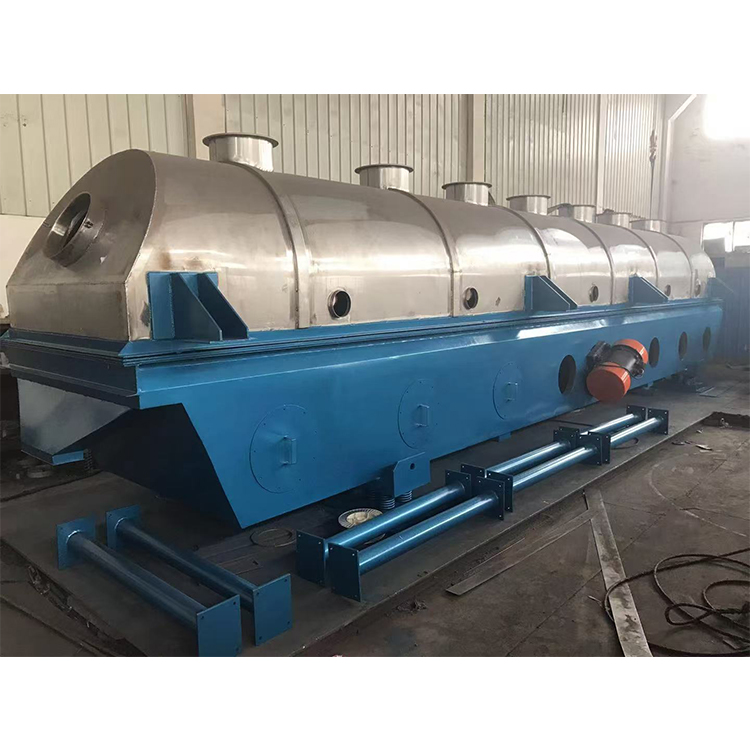
Fluidized Bed Dryer
Disk Dryer
Propeller Dryer
Rake Dryer
Spiral Blade Dryer
Vacuum Dryer
Boiling Dryer
Belt Dryer
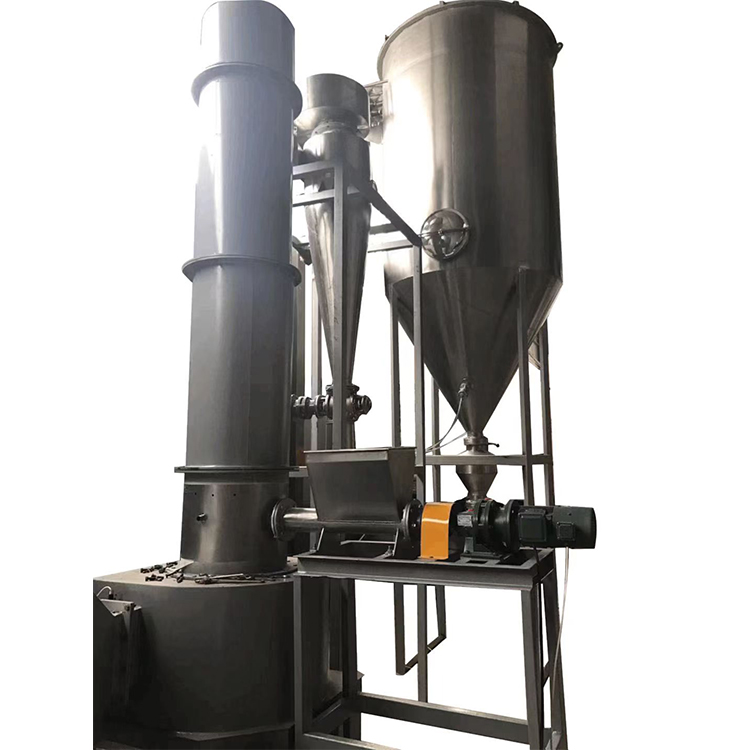
Flash Dryer
Spray Drying Machine





详情描述
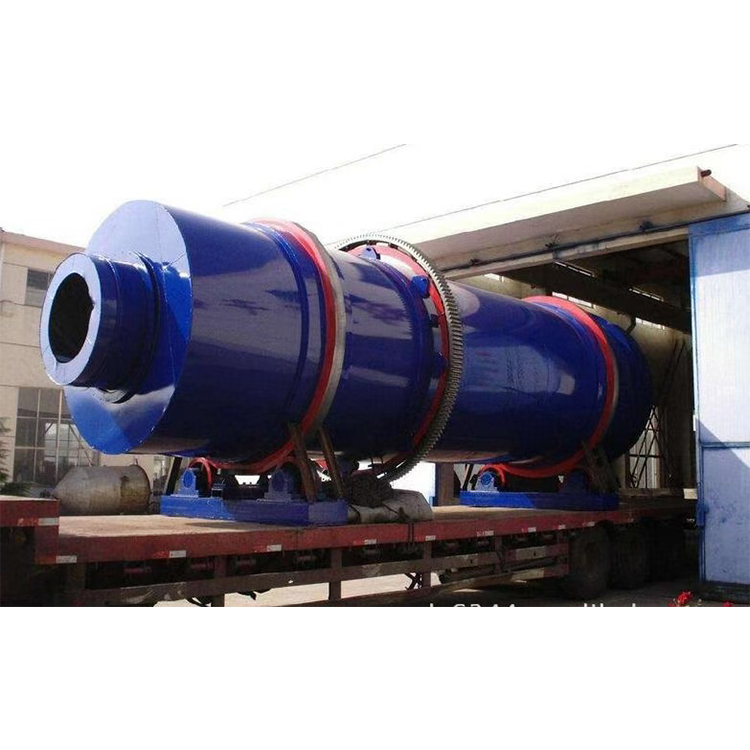
Rotary Kiln Drying Machine
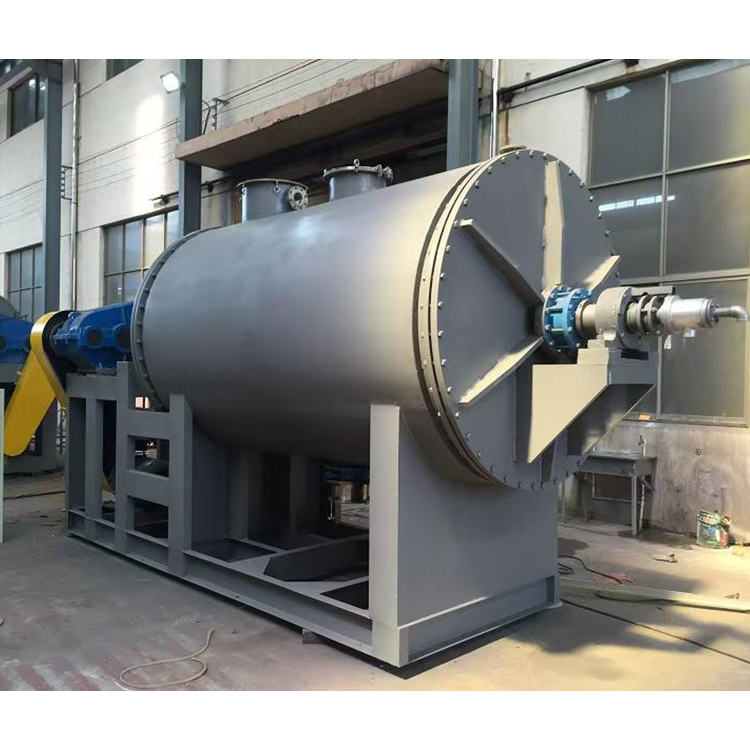
The HZG rotary kiln dryer is a cylindrical body with a slight inclination and adjustable speed within a certain range. Wet materials are fed into the cylinder by a feeding machine. Under the action of the抄板 distributed in the inner cylinder, the materials are evenly distributed and dispersed within the dryer, where they have ample contact with the hot air passing through the cylinder (either co-current or counter-current), accelerating the heat transfer and mass transfer, thereby achieving the drying purpose. The equipment can be equipped with various types of抄板 to accommodate different materials, featuring a simple structure and reliable operation.
Tilting Kiln DryerCurrently, most applications are in industries such as chemicals, mining, metallurgy, and fertilizers, where materials have high bulk density and large particle size, allowing for higher intake air temperatures, making them suitable for use. However, materials with a fibrous original form, low density, high moisture content, and those that are not suitable for high-temperature processing (such as: curcumin) have always been a challenging key issue.
Our company has developed multi-loop rotary kiln dryers, combining the inherent characteristics of the rotary kiln dryer itself with the properties of the materials.
classifications of rotary kiln dryers:
Currently, rotary dryers for kilns can be categorized by their shape into variable diameter kilns and uniform diameter kilns; by the type of material processed, they can be classified as cement kilns, metallurgical and chemical kilns, and limestone kilns; and by the energy supply effect, they are further divided into gas-fired kilns, coal-fired kilns, and mixed fuel kilns.
The function of the rotary kiln dryer:
In the building materials industry, the rotary kiln dryer is not only used for calcining cement clinker but also for sintering clay, materials, and for slag drying. Particularly in the production of refractory materials, using the rotary kiln dryer for sintering raw materials ensures stable dimensions and increased strength.
During the ore dressing process, the rotary kiln dryer can magnetize and roast low-grade iron ore, converting weakly magnetic ore into strongly magnetic ore, which is conducive to magnetic separation.
In the chemical industry, rotary kiln dryers can be used to produce soda, calcine phosphate fertilizer, barium sulfide, etc.
The entire production process of cement is summarized as "two grindings and one burning," where "one burning" refers to the process of calcining the raw materials that have been ground and mixed into clinker in a rotary kiln dryer under high temperatures. Therefore, the rotary kiln dryer is a crucial tool in cement production, commonly known as the "heart" of the cement factory.
In terms of environmental protection, the rotary kiln dryer can incinerate hazardous waste and garbage, not only reducing and rendering waste harmless, but also utilizing it as fuel, saving coal powder, and achieving resource utilization of waste.
Technical Features of the rotary kiln dryer:
The internal structure of the rotary kiln dryer is advanced, featuring a vertical preheater with low pressure loss that effectively enhances the preheating effect of the material. The decomposition rate of the material after preheating can reach 20-25% or more, and it can directly utilize fine-grained materials of 10-15mm for calcination.
Optimized sealing design with reliable rotary kiln end combination type scale sealing design. Achieves air leakage coefficient less than 10% by using new composite refractory insulating materials, effectively reducing radiant heat loss and saving fuel.
Circular or square vertical coolers with filled design and partitioned ventilation are used to cool lime to 800℃ at the outlet, with ambient temperature, facilitating transportation and storage. Additionally, the secondary air entering the kiln can be preheated to over 700 degrees, reducing moving parts and special materials while enhancing the purpose of heat recovery.
Main Structure of the rotary kiln dryer:
◎ Kiln Head - The kiln head is the discharge section of the kiln dryer, with a diameter larger than that of the kiln. Its main components include inspection openings, coal nozzles, trolleys, observation holes, etc.
The kiln body, which is the main part of the rotary kiln dryer, is typically 30 to 150 meters long, cylindrical, with 3 to 5 roller rings in the middle.
The kiln tail, a crucial part of the rotary kiln, resembles a lid at the feeding end of the kiln, primarily responsible for feeding materials and sealing.
Bracket for rotary kiln dryer; the support bracket ensures the equipment is more sturdy, preventing movement during operation, stabilizing production, and safeguarding against equipment deformation.
Preheat tower, also known as a preheater, is a device that uses the waste heat from the flue gas emitted by the rotary kiln to preheat materials before they enter the kiln, typically in a vertical structure.
Cooling machines and cooling towers are devices used to rapidly cool the materials after the sintering process in a rotary kiln, primarily for quickly lowering the temperature of the finished products.
Conveyor belts are the material conveying devices for the rotary kiln.
Rotary Kiln Dryer Suitable Material:
Large particle dryers for industries such as chemicals, mining, and metallurgy, including heavy material with high specific gravity like mine slag, coal, metal powder, phosphate fertilizer, and ammonium sulfate.
Specialty drying services for powders and granular materials with specific requirements, such as: HP foaming agent, distiller's grains, light calcium carbonate, activated clay, magnetic powder, graphite, and drug residues.
Materials requiring low-temperature drying and continuous bulk drying.
Performance Advantages of the rotary kiln dryer:
The drum dryer has a high degree of mechanization and a large production capacity.
Flow resistance through the cylinder is low, with low functional consumption.
Strong adaptability to material characteristics.
Operational stability, low operational costs, and excellent uniformity in product drying.
Rotary Kiln Dryer Working Principle:
The wet material enters the inner layer of the three-layer roller from the feeding device for a downstream drying process. The material is continuously lifted under the scrape plates in the inner layer, forming a spiral progression for heat exchange. As the material moves to the other end of the inner layer, it enters the middle layer for an upstream drying process. The material is repeatedly lifted and dropped in a two-step-forward-one-step-back manner in the middle layer, absorbing both the heat emitted by the inner roller and the heat of the middle roller, thereby extending the drying time and achieving optimal drying. The material falls to the other end of the middle layer and drops into the outer layer. Inside the outer roller, the material moves in a rectangular multi-loop pattern. The material that has reached the desired dryness is quickly propelled out of the roller by the hot air. Wet material that has not reached the dryness standard cannot move quickly due to its weight and is fully dried within the rectangular scrape plates, accomplishing the drying objective.
Heated hot air enters the kiln and quickly exchanges heat and mass with the material. Upon contact with wet material, the humidity drops rapidly. The material absorbs heat and quickly evaporates the moisture, with the fine dust in the moist air being filtered through cyclone and bag dust removal before being exhausted to the outside by a desiccant fan. The material enters the dryer from the feed end and is discharged from the other end, operating continuously. The entire process includes the material preheating process, water evaporation process, and material warming process. The hot air intake is in the same direction as the material movement, indicating a countercurrent operation.
Rotary Kiln Dryer Highlights:
1. During the continuous forward movement of wet material within the dryer drum, the lifting plate device established based on the rotary kiln dryer concept continuously lifts and throws the material within the drum, accelerating the heat exchange process.
2. Materials are indirectly or directly heated by the heat carrier, enabling the continuous drying target of the rotary kiln dryer to fully reflect the scientific nature of the equipment concept.
3. Arrangement is quite convenient for relocation, with the multi-way lifting plates of the rotary kiln dryer distributed throughout each cylinder to increase the contact surface area of the material. Additionally, spiral guide plates can be installed at 1-5 meters from the feeding end of the rotary kiln dryer to prevent wet material from sticking and make discharge easier. Since dried material is prone to飞扬, relative protection methods for the dryer are required.
4. Wet materials are continuously dried within the dryer, with the rotary kiln dryer achieving the buyer's specified degree of moisture content. The finished product is then discharged from the discharge device of the rotary kiln dryer, encompassing all aspects of the drying concept.
5. High operational flexibility; the rotary kiln dryer does not require highly technical demands in operation. Even individuals without special training can perform remote control operations. The dryer allows for a wide fluctuation range in product output without compromising quality.
6. A破碎 shaft has been added inside the original single-tube rotary kiln dryer, and the internal feeding plate of the rotary kiln dryer has been appropriately improved to handle high-moisture materials. Some also refer to the rotary kiln dryer as a high-moisture material dryer.


